Markets · Explainer
How to Value Saudi Rights Issues Before They Expire
Amiantit’s 2024 offering granted 3.5 rights per old share. Two deadlines and a separate subscription payment determined what investors could do with them.

Kunkafa News · Published · 4 min read
 By Kareem FaridDiscuss with the author on X
Here is a visual story in summary
Key points
- Amiantit offered 34.65 million new shares at SAR10 each, equivalent to 3.5 new shares for each existing share.
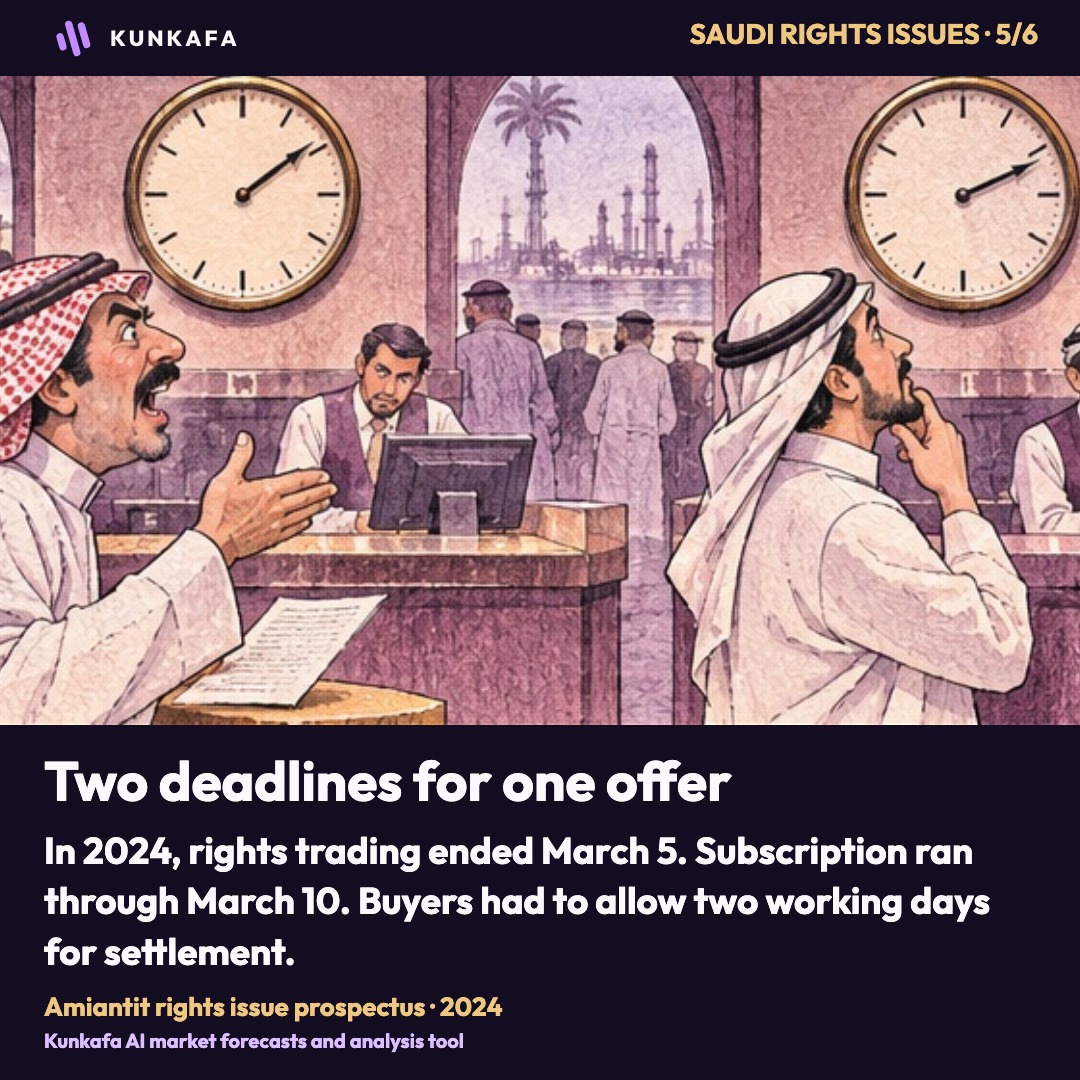
- Rights trading ended March 5, 2024. Subscription continued through March 10.
A Saudi rights issue puts a new security beside the old share in an investor’s portfolio. That entry gives its holder the right to subscribe at a specified price, until a deadline. Saudi Arabian Amiantit’s 2024 offer shows why a low subscription price alone tells investors little. The company offered 34.65 million new shares at SAR10, against 9.9 million shares already outstanding. It planned to fund working capital and repay specified bank obligations. [1]
Turn the entitlement ratio into a cash requirement
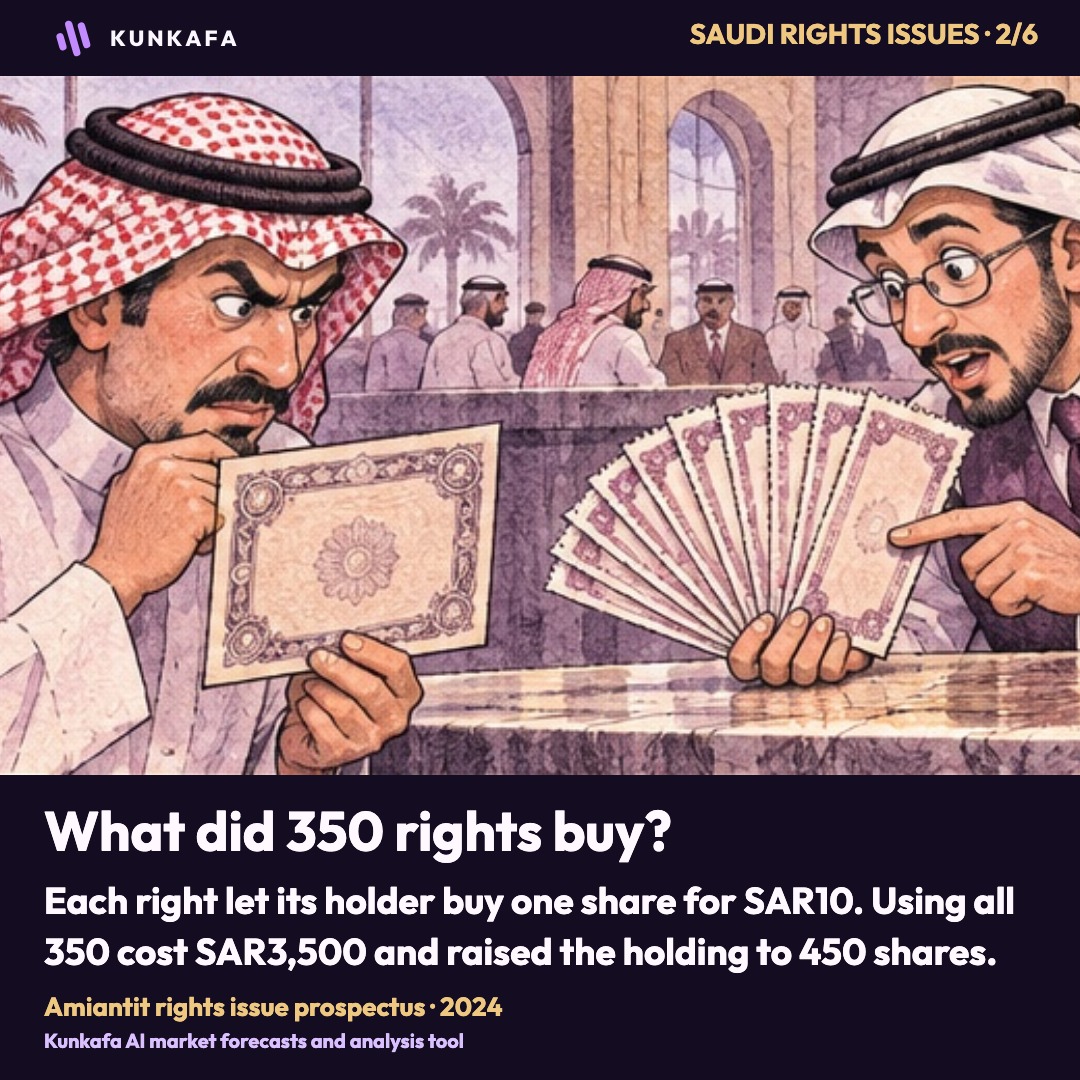
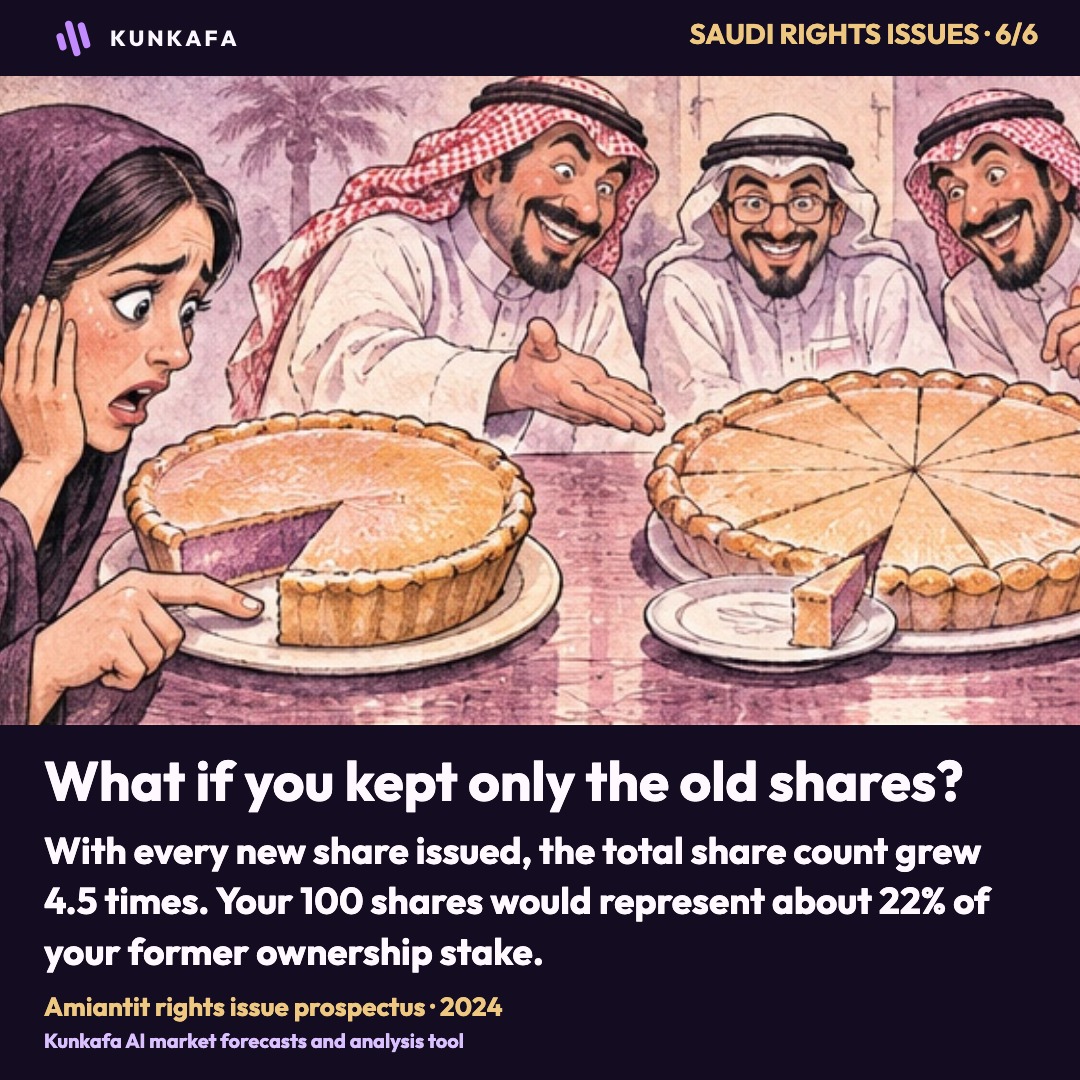
The ratio was 3.5 rights for each old share. Someone with 100 qualifying shares therefore received 350 rights. Exercising them all required a further SAR3,500, bringing the holding to 450 shares. If every offered share is issued, the company’s share count grows 4.5 times. A holder keeping just the original 100 then owns about 22.22% of the ownership percentage they held before. That describes dilution of the ownership fraction, not a 77.78% fall in the share price. [1]
A theoretical right in riyals
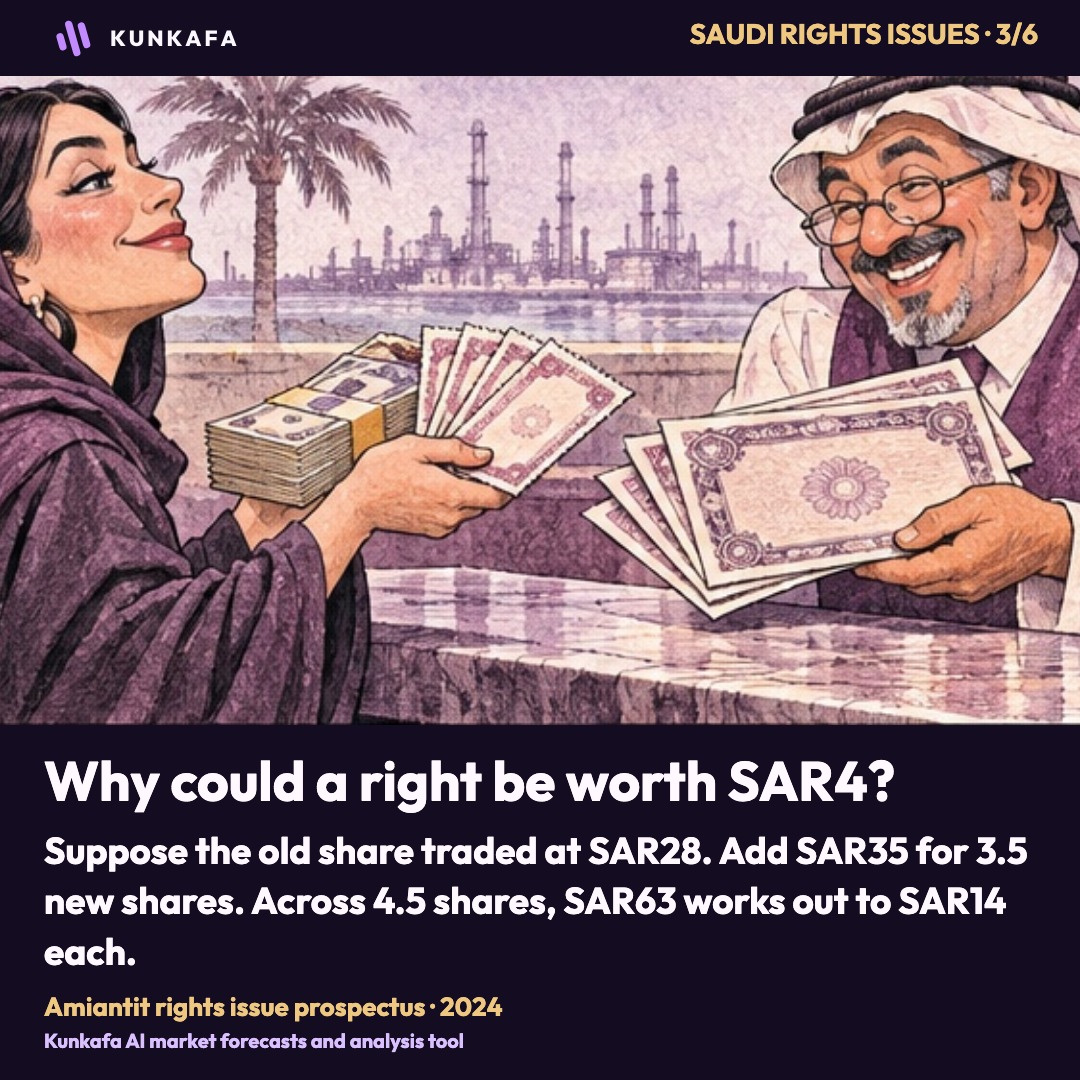
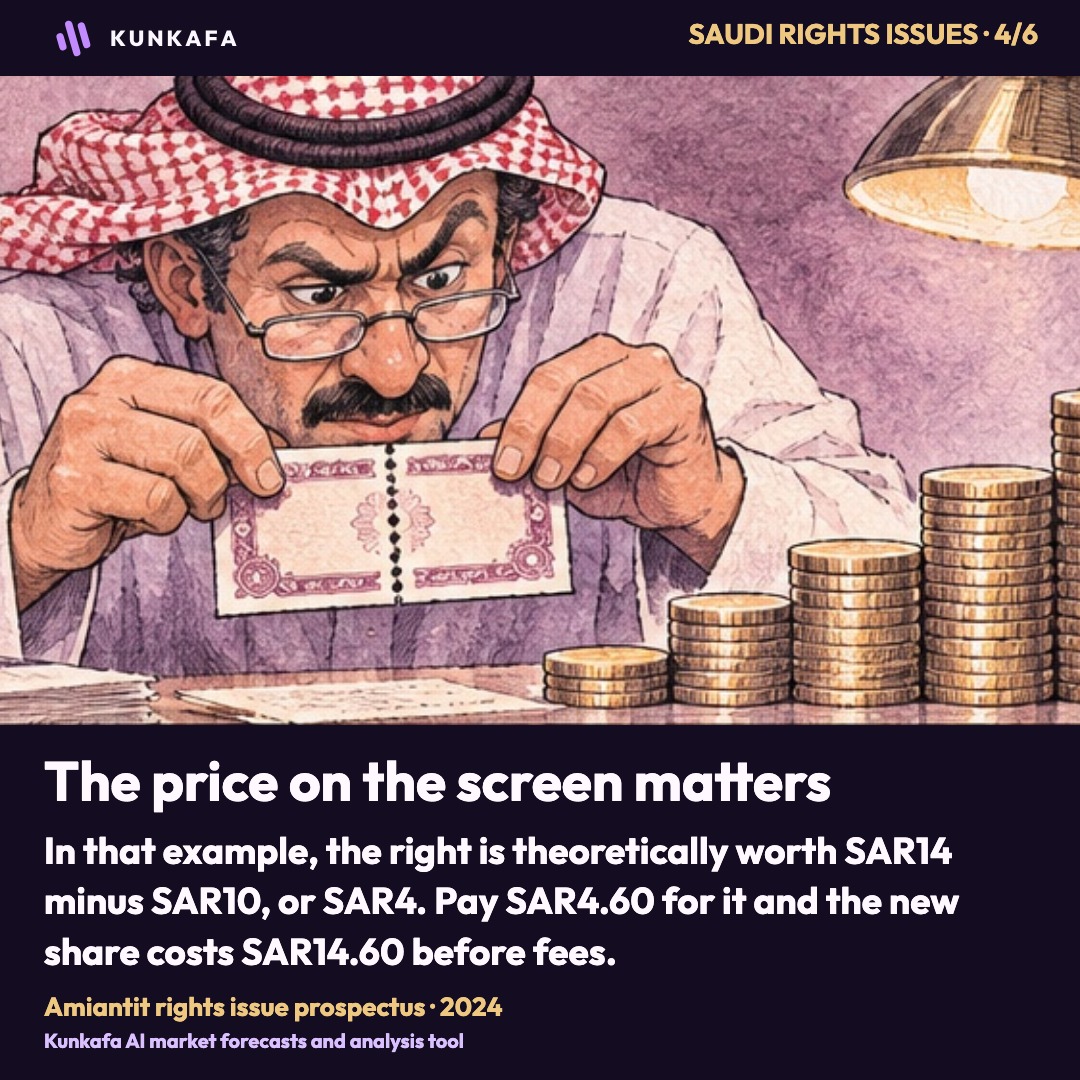
For an illustration, assume an old share traded at SAR28 including the rights. This is an invented reference price. One old share plus 3.5 new shares brings combined value of 28 + 3.5 × 10, or SAR63, spread over 4.5 shares. The theoretical ex-rights price is SAR14. A right to pay SAR10 for one new share then has a theoretical value of SAR4. For 100 old shares the 350 rights account for SAR1,400, exactly matching the modelled fall from SAR28 to SAR14 on those 100 shares. The calculation assumes no other change in business value. [1]
The Capsule
- Multiply the original share count by the entitlement ratio and then by the subscription price.
- Divide old market value plus new cash by the post-issue share count.
- Compare the right price plus subscription cash with the current share quote.
- Record the final trading day, settlement period and subscription deadline separately.
Selling a right and subscribing use different clocks
Amiantit’s rights trading and subscription opened together on February 27. Trading stopped March 5, while subscription continued through March 10. The prospectus allowed buyers of rights to subscribe after settlement of their purchase, specified as two working days. Buying a right on the exchange paid its seller. A separate subscription payment went toward the new share, so buying on the final trading day did not complete both steps. [1] [2] [3]
An investor buying a right at SAR4.60 in this example would spend SAR14.60 before costs to obtain a new share, compared with the hypothetical SAR14 benchmark. Actual prices for the share and right can move while settlement is pending. Unexercised shares enter a rump offering under the prospectus. Only proceeds above the offer price can support compensation, so an unused right carries no assured cash recovery. Reading the current market quote alongside both deadlines is more informative than relying on the original theoretical price. [1] [2] [3]
Sources: [1] Amiantit, rights issue prospectus · [2] Amiantit, February 25 trading schedule · [3] Argaam, March 5 contemporaneous market report
Kunkafa forecasts
S&P 500 Index
How far it could move, which way, by when, and how confident Kunkafa is.
Check the latest forecastsMore in Markets

The 2007 Merger That Created Emirates NBD
On a single October trading day, two listed Dubai banks made way for one stock.

How Much Interest Does a $1,000 US Treasury Bill Pay?
In one US auction, a buyer paid $988.78 for a bill worth $1,000 at maturity. Here’s how to turn an auction price into dollars of interest.

Why a Call Option Can Lose Money When the Stock Rises
A buyer can call the direction of an earnings move correctly and still lose $200 on a standard contract when the event premium falls.