Markets · Q&A
How Much Interest Does a $1,000 US Treasury Bill Pay?
In one US auction, a buyer paid $988.78 for a bill worth $1,000 at maturity. Here’s how to turn an auction price into dollars of interest.

Kunkafa News · Published · 4 min read
 By Kareem FaridDiscuss with the author on X
Here is a visual story in summary
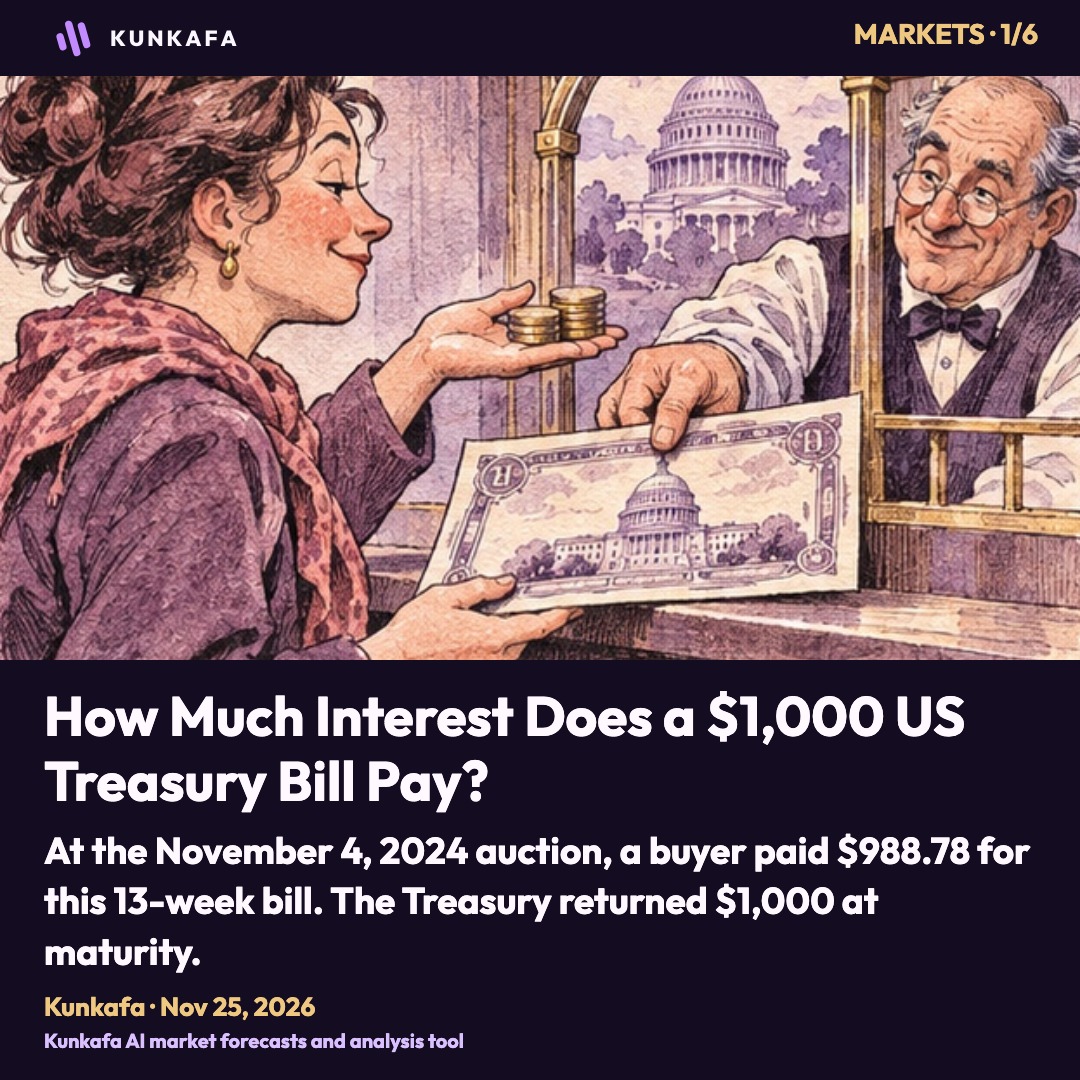
A $1,000 US Treasury bill pays back $1,000 at maturity. The interest is the difference between that sum and the purchase price. At the Treasury’s November 4, 2024 auction, a 91-day bill with that face value cost $988.78. Holding it to maturity earned $11.22 before tax. [1] [2]
Key points
- Treasury auction prices are quoted per $100 of face value.
- Interest arrives at maturity as part of the face-value payment.
Where do you find the price you pay?
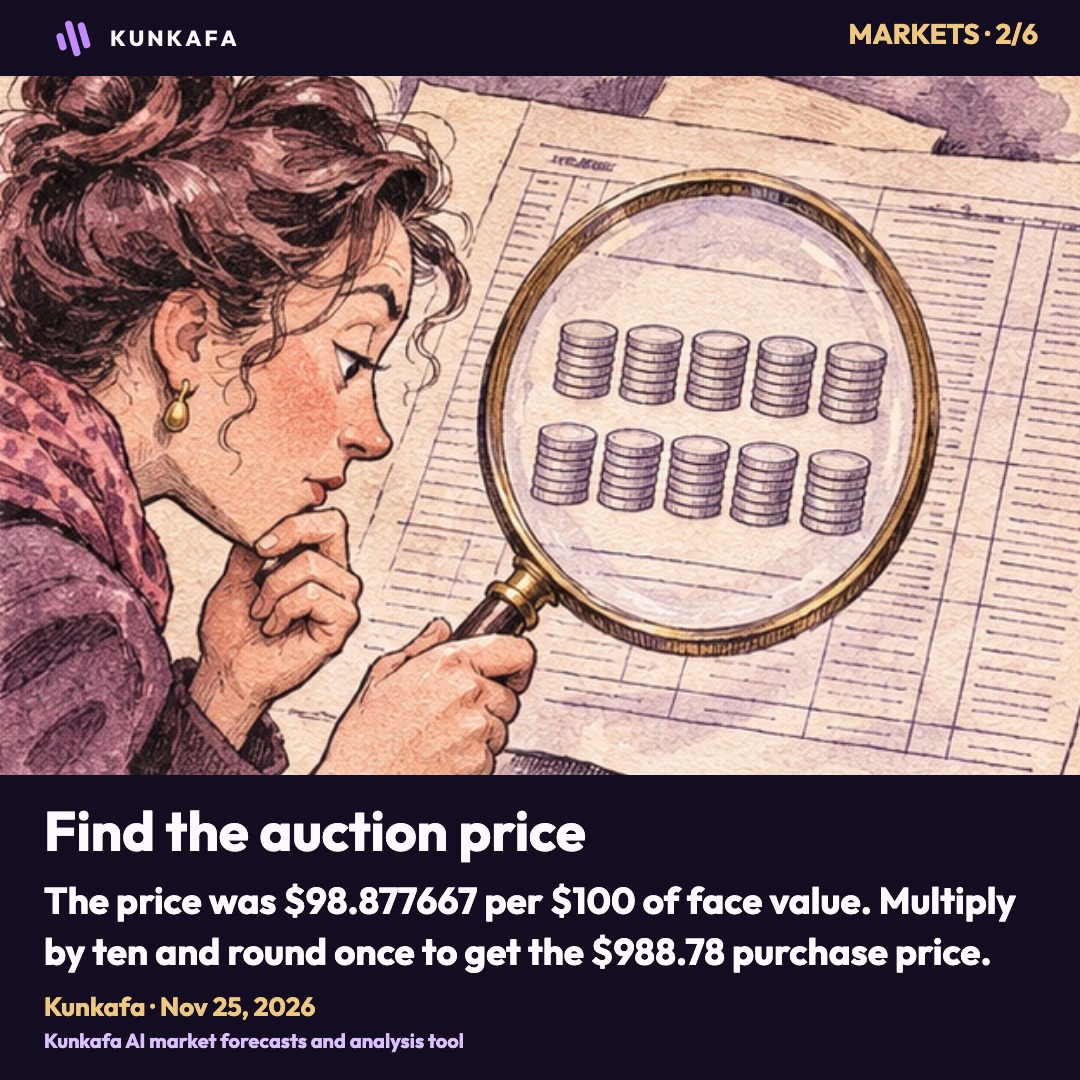
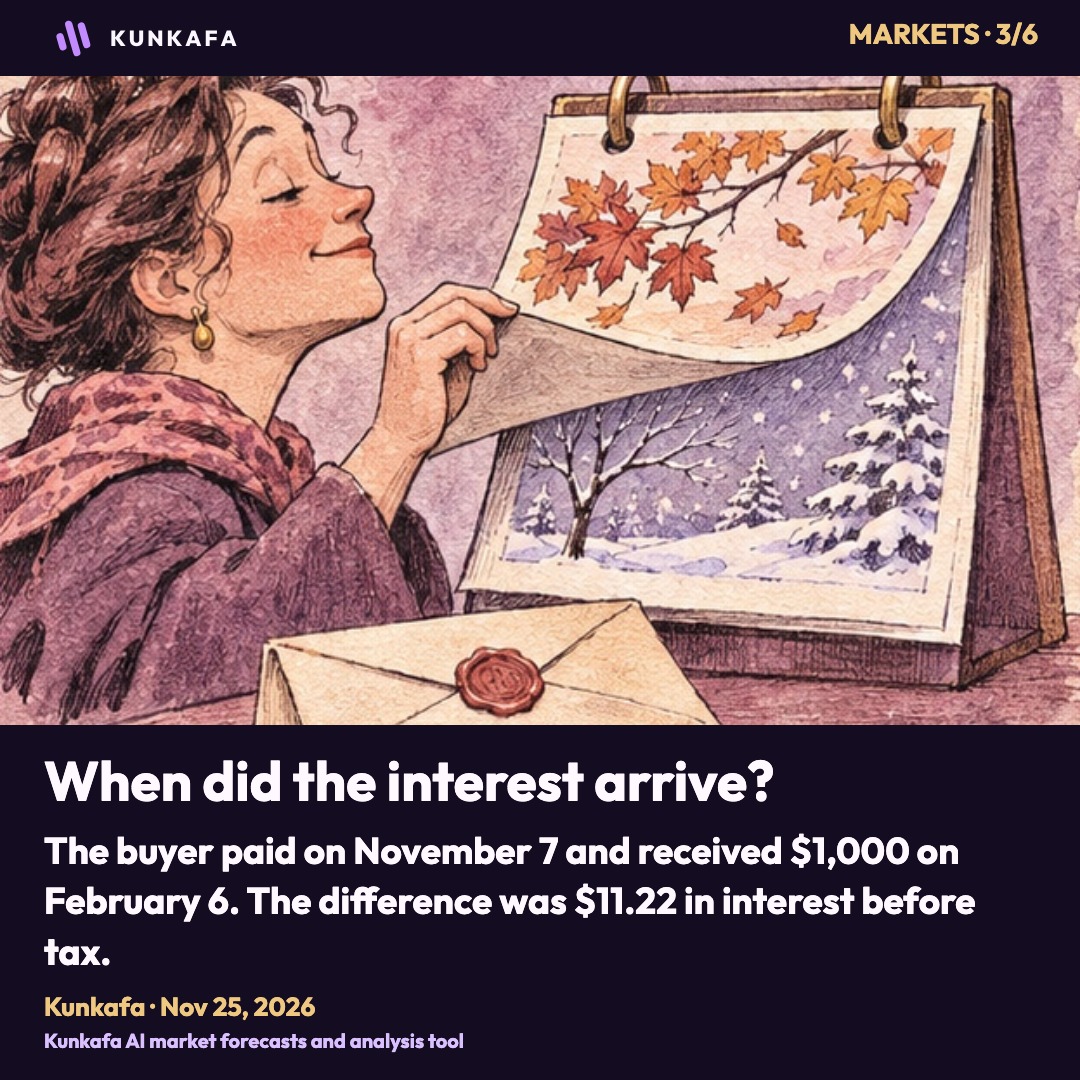
Look for the line marked Price on the auction result. TreasuryDirect quotes it per $100 of face value. In the November auction that line read 98.877667. Multiply by ten for a $1,000 bill and round to the nearest cent. The buyer paid $988.78 on November 7 and received $1,000 on February 6, 2025. [1] [3]
A buyer who places a noncompetitive bid through TreasuryDirect specifies the face amount before the auction and agrees to the rate it produces. That means a $1,000 order describes the amount due at maturity. The exact purchase cost appears after the auction. TreasuryDirect customers can find the price per $100 under Current Holdings, then Pending Purchases and Reinvestments. [3]
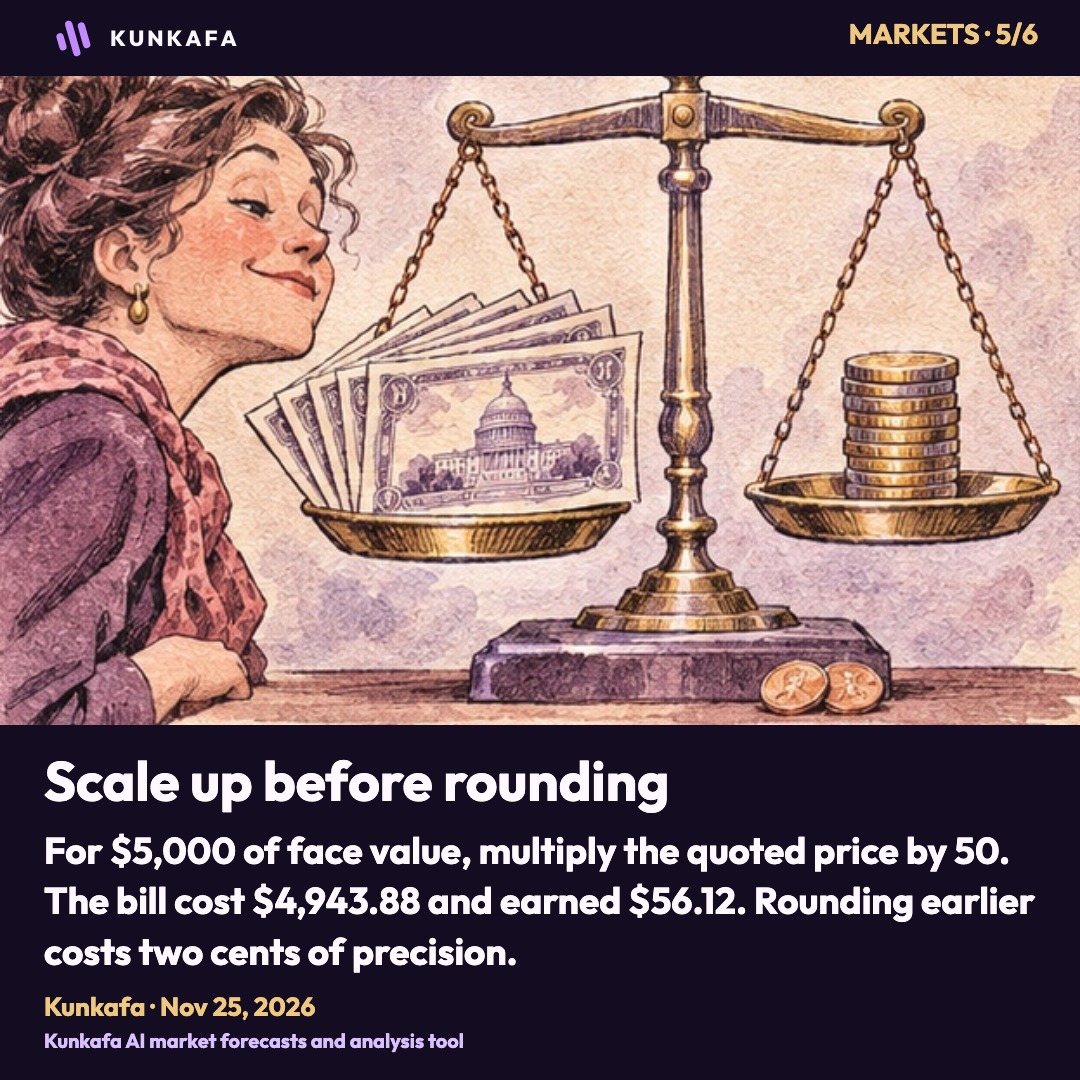
A second order with a $5,000 face value at the same auction shows how to scale the calculation. Multiply 98.877667 by 50 before rounding. The cost comes to $4,943.88 and the interest to $56.12. Multiplying the already rounded $11.22 by five gives a two-cent discrepancy. [1]
Why does the result show two rates?
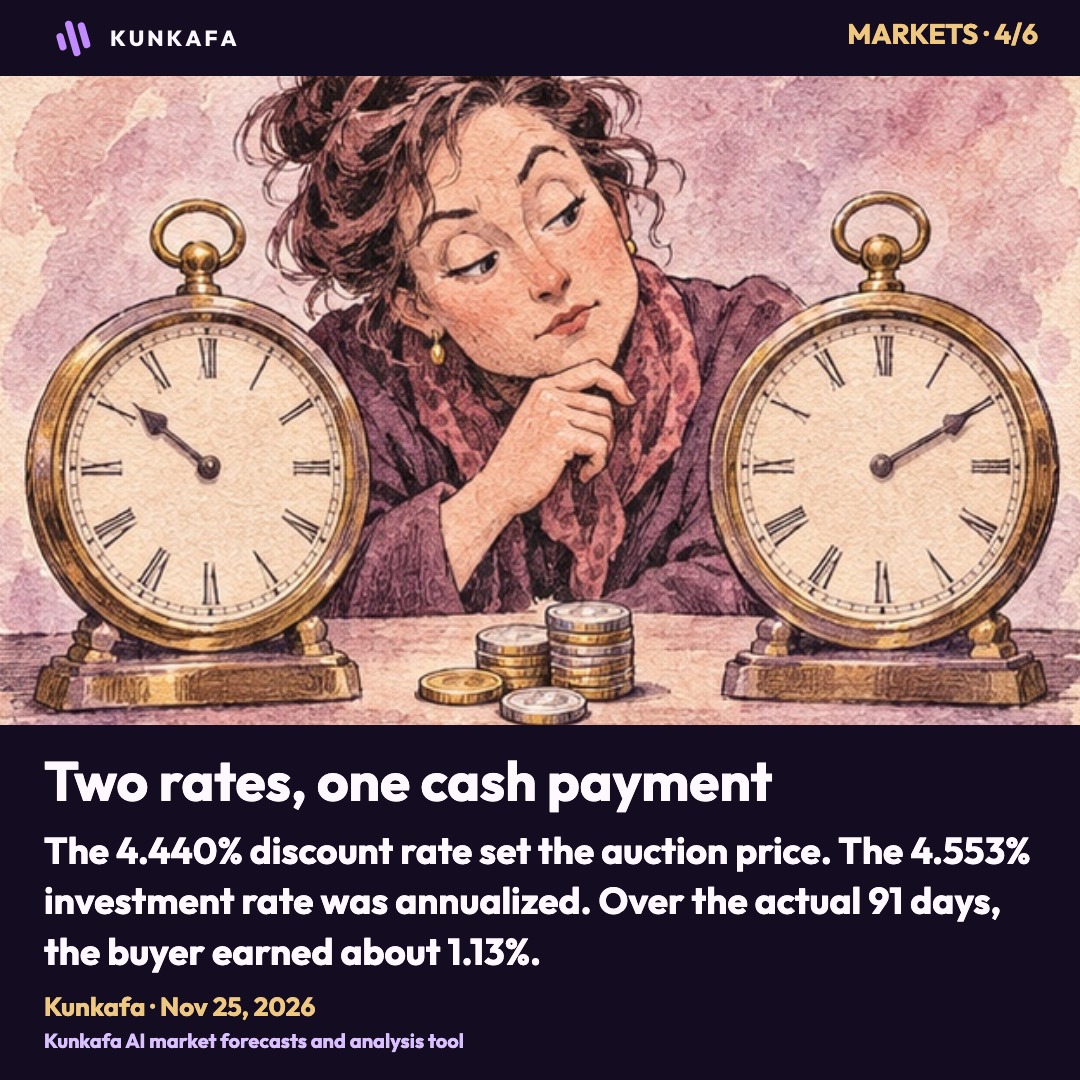
The high rate of 4.440% was the annual discount rate used to set the auction price. Treasury calculates the discount on the face value using a 360-day year. For this bill, $1,000 × 0.0444 × 91 ÷ 360 gives $11.22 to the nearest cent. [1] [2]
The Capsule
- Read the issue and maturity dates to establish the holding period.
- Multiply the quoted price by the face amount divided by 100. Round only the final dollar cost.
- Subtract the cost from the maturity payment to obtain gross interest.
- For an early sale, substitute the actual sale proceeds for the maturity payment.
The auction also listed an investment rate of 4.553%, an annualized yield for comparison with coupon-paying securities. To find the return actually earned over the 91 days, divide $11.22 by the $988.78 paid. That gives about 1.13% for the holding period. [1]
What happens if you sell early?
TreasuryDirect says a bill can be held to maturity or sold beforehand. An early seller uses the actual sale price to calculate the gain or loss. The $1,000 face value in this example is the payment due on the maturity date. [4]
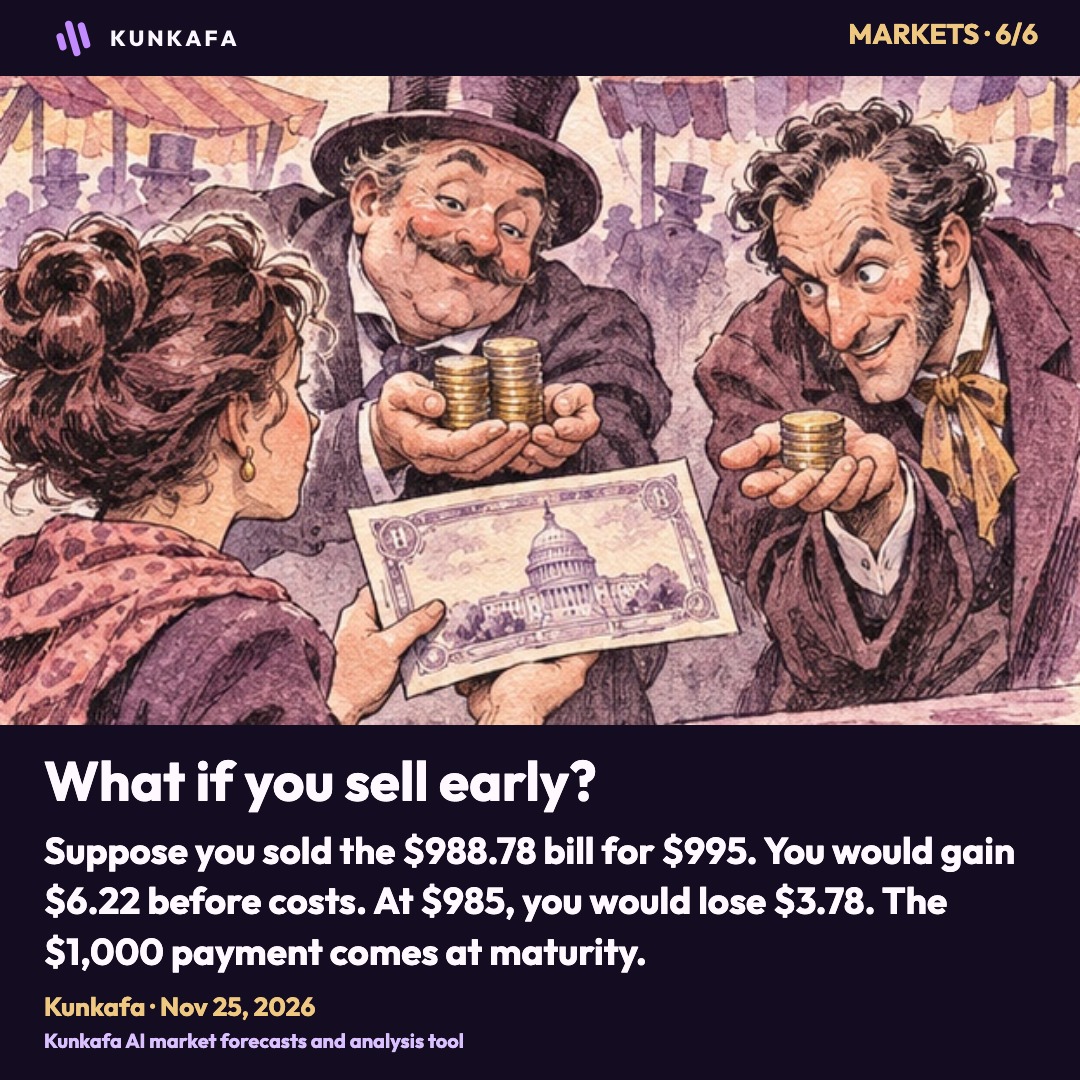
For example, a sale that brings in $995 on the $988.78 purchase produces a $6.22 gain before costs. A sale that brings in $985 produces a $3.78 loss. Those are illustrative sale prices. The published auction result supplies the purchase price, while the amount an early seller receives depends on the price available at the time of sale. [1] [4]
Sources: [1] US Treasury auction results, November 4, 2024 · [2] TreasuryDirect, pricing and interest · [3] TreasuryDirect, auction guide · [4] TreasuryDirect, Treasury bills.
Kunkafa forecasts
Euro - Dollar
How far it could move, which way, by when, and how confident Kunkafa is.
Check the latest forecastsMore in Markets

Why a Call Option Can Lose Money When the Stock Rises
A buyer can call the direction of an earnings move correctly and still lose $200 on a standard contract when the event premium falls.

Cboe Lets You Bet on Nvidia’s Sales Even if Its Stock Falls
New $1-or-$0 contracts cover more than 100 company metrics, including Amazon’s cloud sales and Tesla’s car production. Robinhood is rolling them out first.

Dow Tops 50,000 as Nasdaq Gives Back 24% of Monday’s Gain
All three indexes opened lower. The Dow reversed course, the S&P 500 pared its losses and chip stocks fell almost 8% a day after Jensen Huang’s return.