Markets · Explainer
Why a Call Option Can Lose Money When the Stock Rises
A buyer can call the direction of an earnings move correctly and still lose $200 on a standard contract when the event premium falls.

Kunkafa News · Published · 4 min read
 By Kareem FaridDiscuss with the author on X
Here is a visual story in summary
Key points
- A call premium includes the value of buying below the market and the amount buyers pay for time and uncertainty.
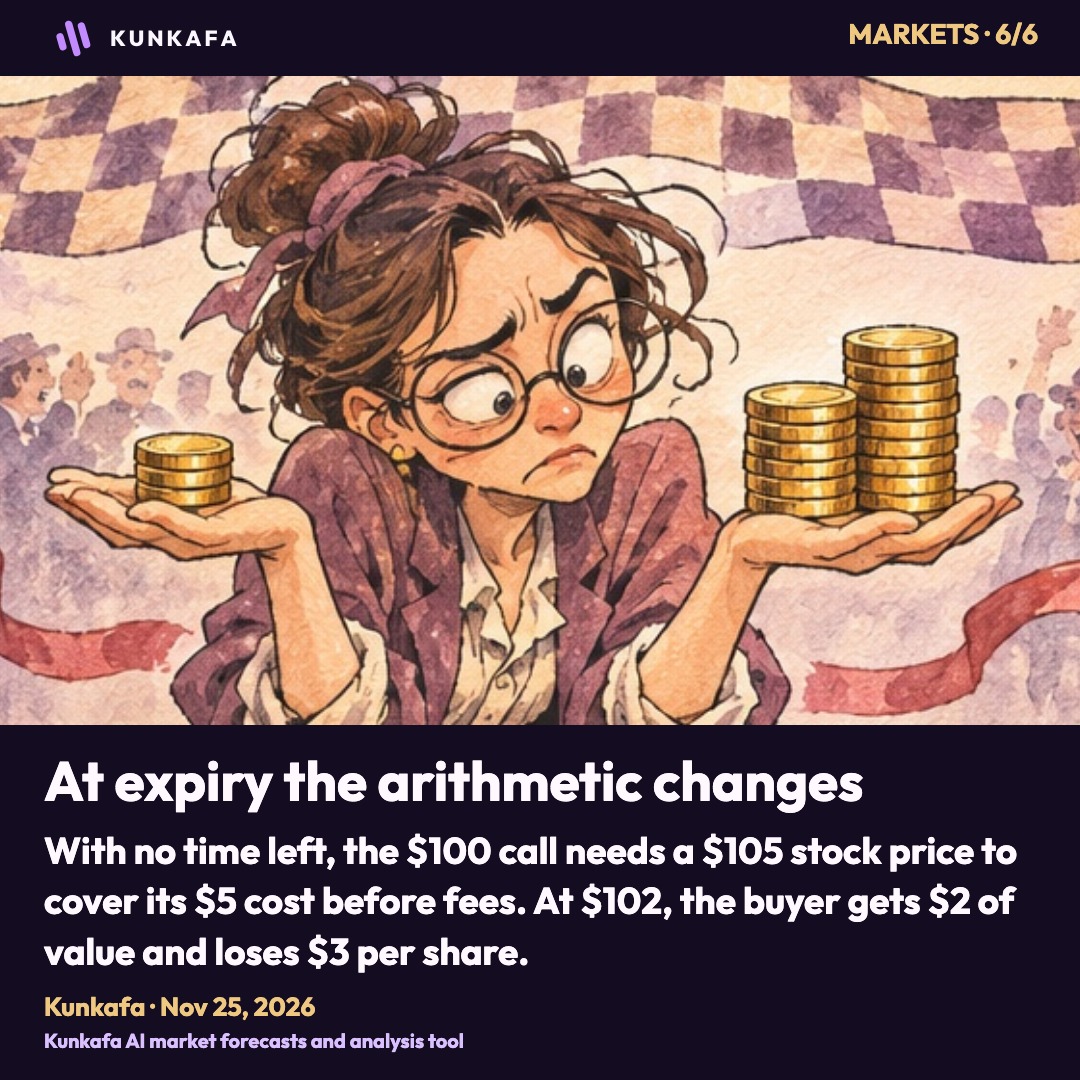
- A $100 call bought for $5 breaks even at $105 at expiry, before fees.
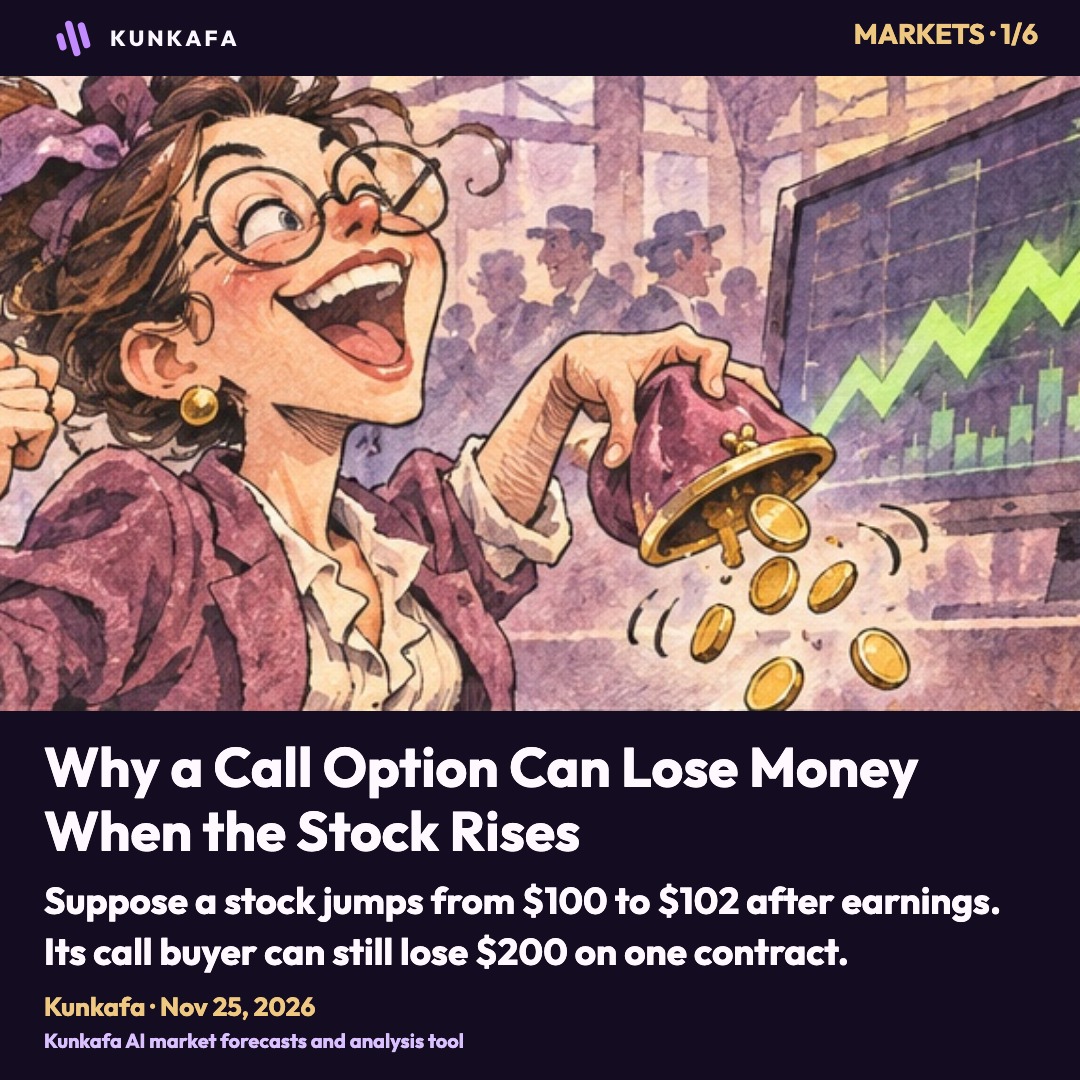
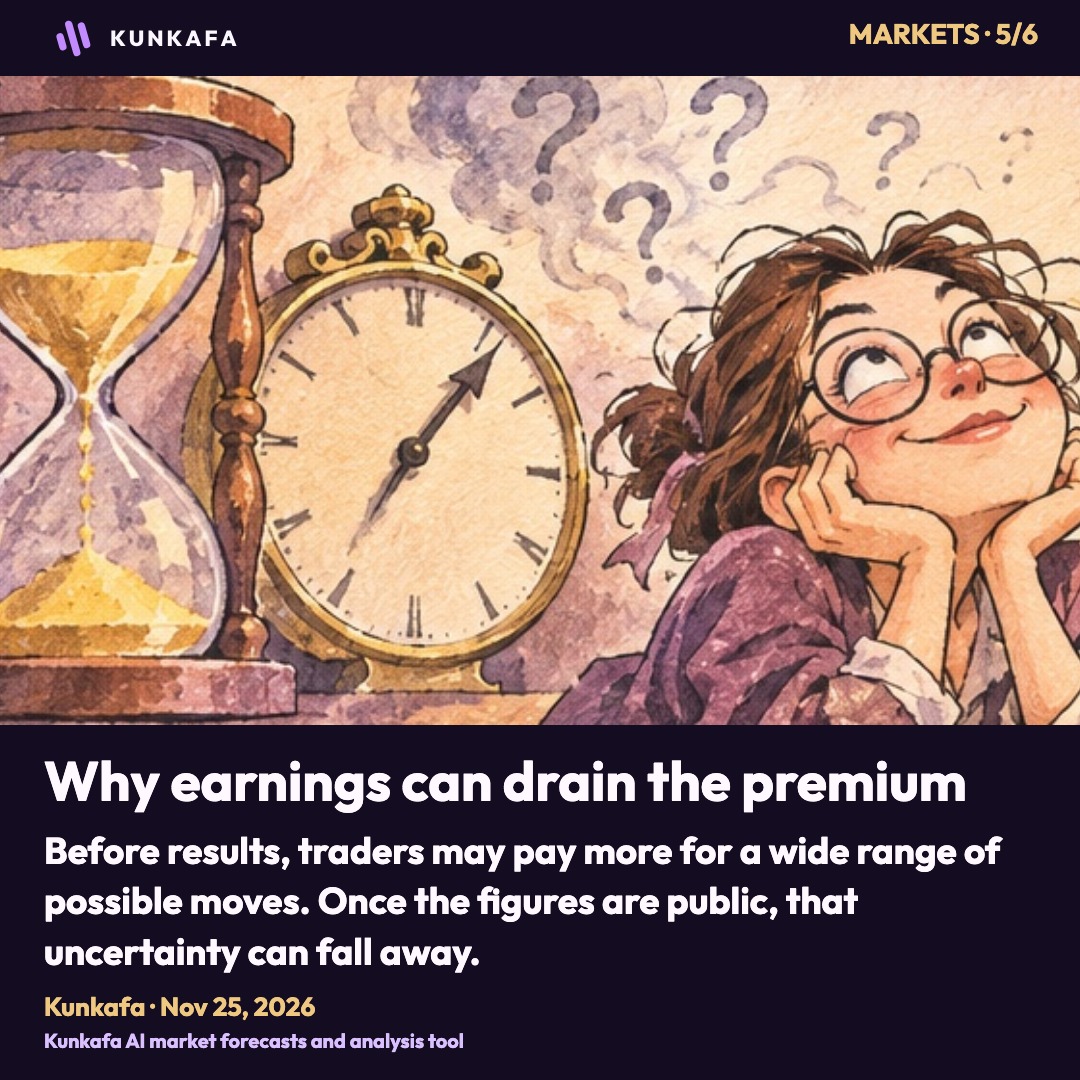
A company beats earnings expectations and its shares rise from $100 to $102. An investor who bought the right to purchase those shares at $100 opens the account and sees a loss. The earnings result settled a question traders had paid to keep open. A modest share-price rise can add less value to the contract than the amount that disappears once the announcement is out. [1]
What the buyer paid for on earnings eve
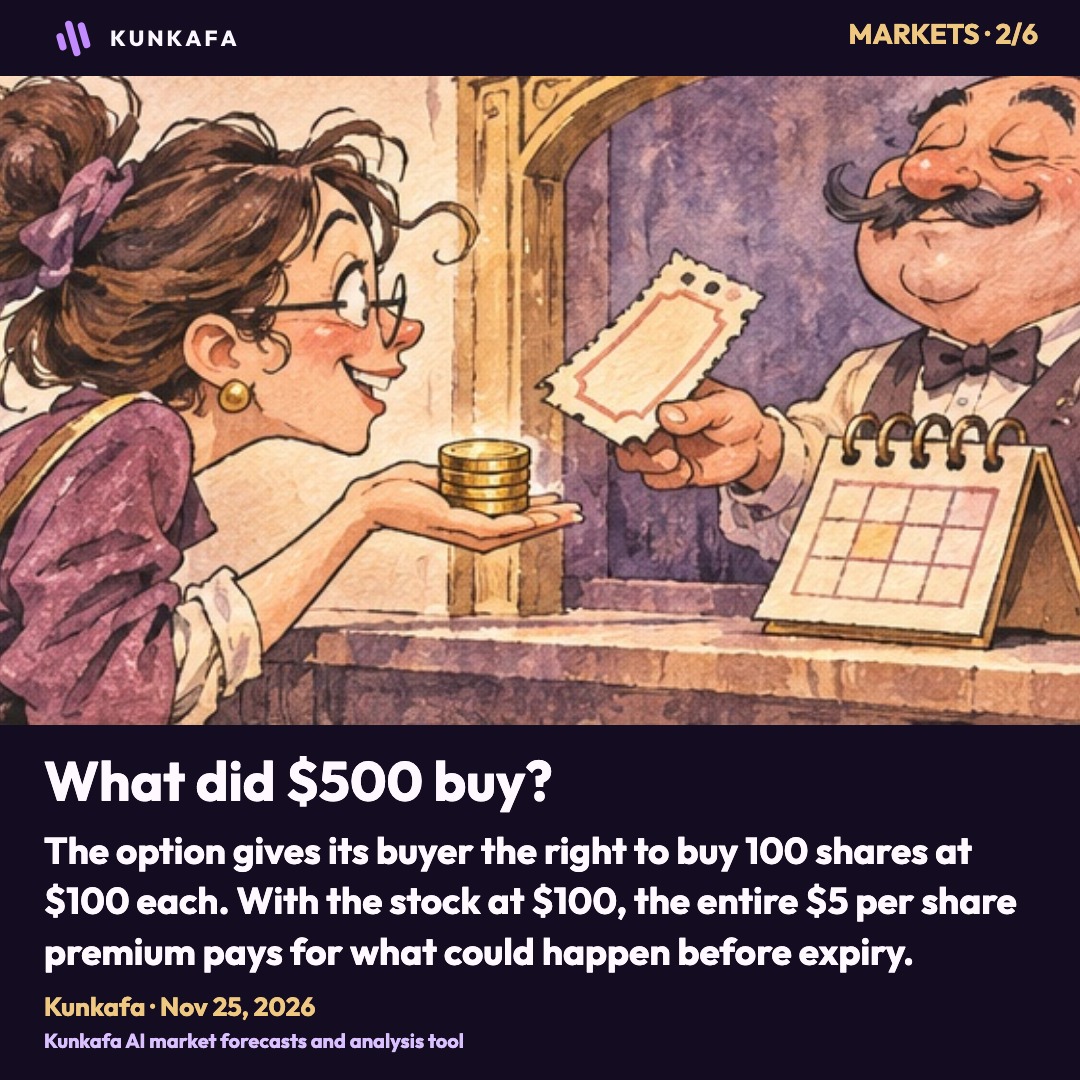
Consider a hypothetical standard US equity call covering 100 shares. At a $100 stock price, the right to buy at $100 has zero intrinsic value, because those shares already cost $100 in the market. If the call trades at $5 a share, its entire $500 price buys the remaining opportunity for a favorable move. Before an announcement that leaves a wide range of possible outcomes, buyers may be willing to pay more for that opportunity. [1] [2]
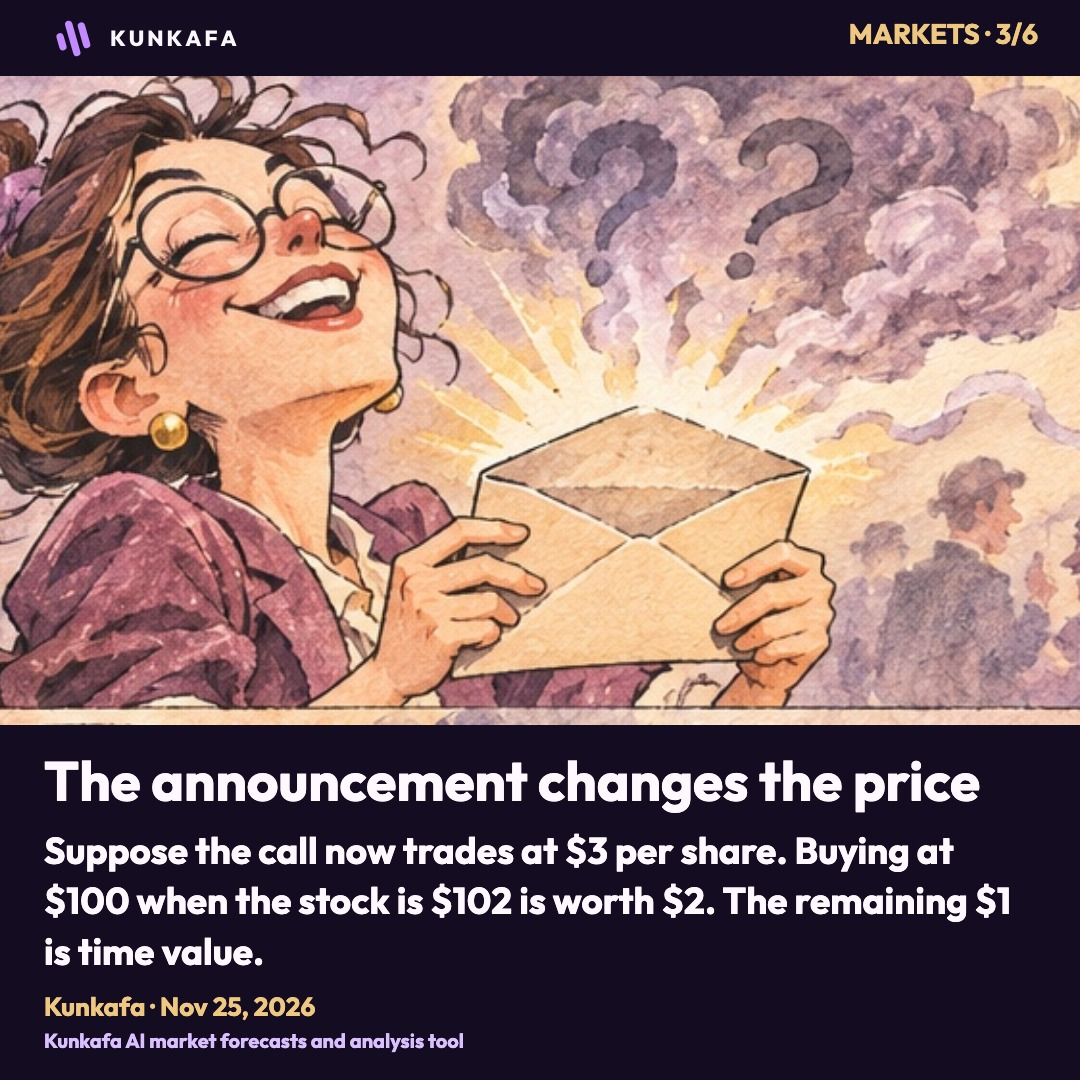
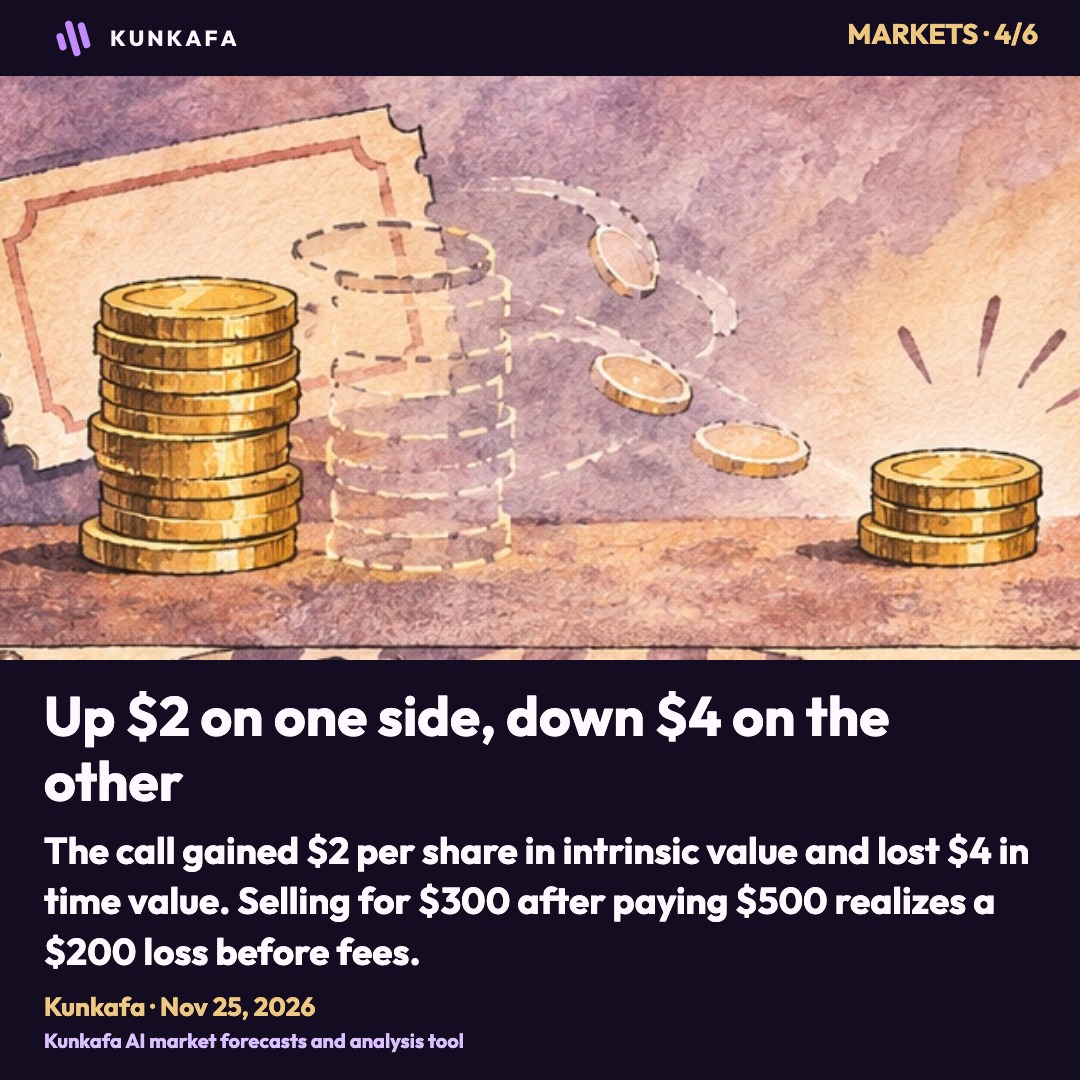
After the announcement the stock is $102 and the same call trades at $3. It now contains $2 of intrinsic value and $1 of time value. The buyer gained $2 on the first component and lost $4 on the second. A sale at $3 returns $300 on the contract and realizes a $200 loss before fees. These invented prices illustrate the arithmetic. The size of the share-price move alone cannot identify how much volatility changed. [1] [2]
The Capsule
- Compare the purchase and sale quotes for the same strike and expiration.
- Subtract intrinsic value from each premium and compare the remainder.
- Multiply the per-share change by the contract’s actual deliverable.
- Use strike plus premium for the expiration break-even calculation.
What happened to implied volatility?
Implied volatility describes the level of variability consistent with the market price of the option in a pricing model. It can rise ahead of results and fall once the uncertainty is resolved. Delta, by comparison, estimates the option’s response to a small stock-price change with other inputs held steady. An estimate made on earnings eve loses that assumption as soon as time passes and the market changes its expectations. Even when implied volatility falls, a sufficiently large stock move can still leave the call buyer ahead. [1]
Why $105 matters at expiry
At expiration the remaining time value is zero. A $105 share price then leaves $5 of intrinsic value, covering the original $5 premium. At $102 the call finishes in the money by $2, but its buyer still loses $3 per share against the purchase price. Before expiration, the contract can be sold for more or less than the original $5 while the stock is below $105, because remaining time still has a price. Comparing a quote today with an expiry payoff answers two different questions. [3]
Sources: [1] Options Industry Council, option price behavior · [2] Options Industry Council, contract basics · [3] Options Industry Council, long call
Kunkafa forecasts
S&P 500 Index
How far it could move, which way, by when, and how confident Kunkafa is.
Check the latest forecastsMore in Markets

Cboe Lets You Bet on Nvidia’s Sales Even if Its Stock Falls
New $1-or-$0 contracts cover more than 100 company metrics, including Amazon’s cloud sales and Tesla’s car production. Robinhood is rolling them out first.

Dow Tops 50,000 as Nasdaq Gives Back 24% of Monday’s Gain
All three indexes opened lower. The Dow reversed course, the S&P 500 pared its losses and chip stocks fell almost 8% a day after Jensen Huang’s return.

Anthropic Can Finish Flat and Both Its New 2× ETFs Can Lose
The short fund traded 4.4 times as many shares as the long fund on their debut. A two-day trade shows why neither belongs in a buy-and-hold portfolio.