Startups · Explainer
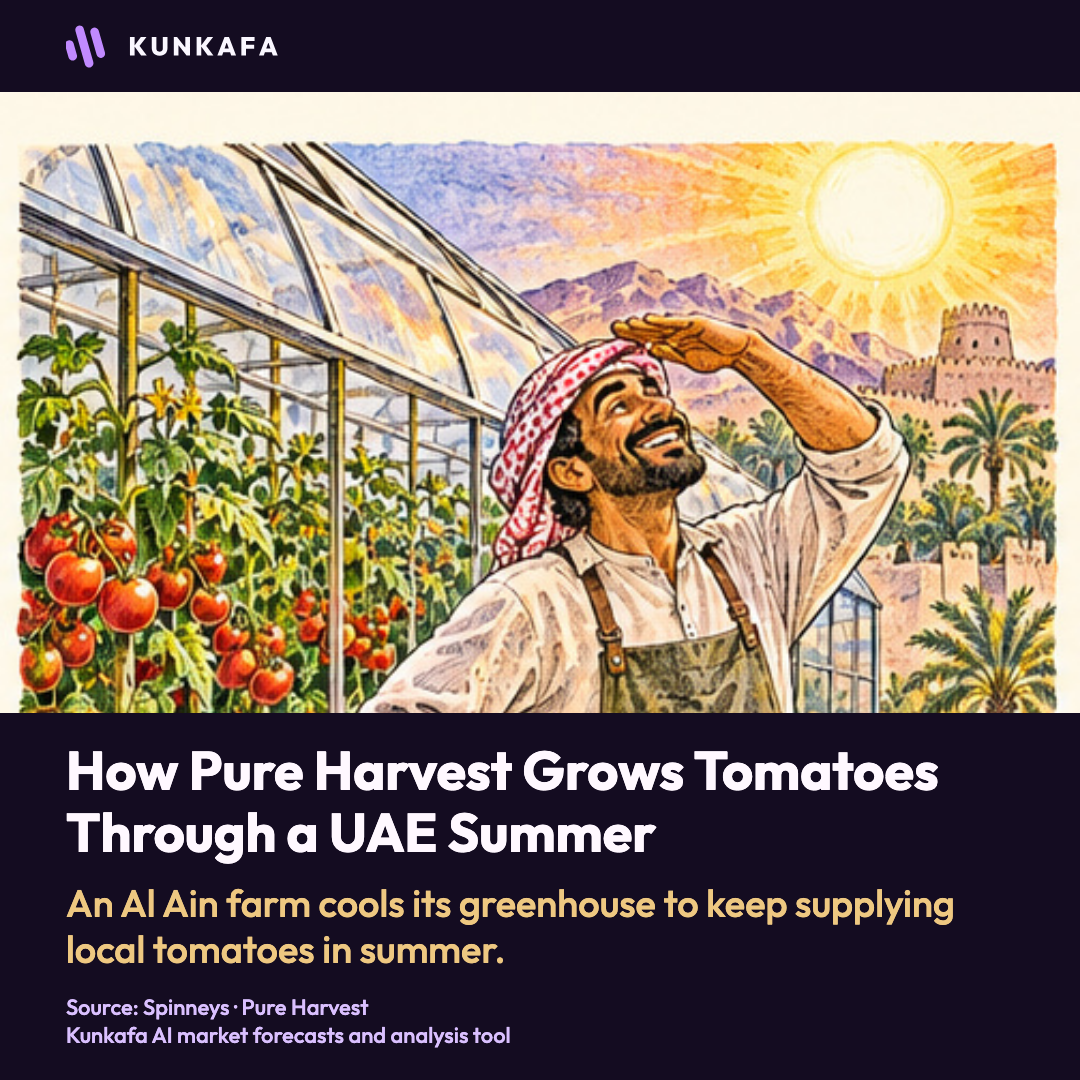
How Pure Harvest Grows Tomatoes Through a UAE Summer
The Al Ain grower trades the long journey of imported fruit for the cost of keeping a crop cool beside its customer.

Kunkafa News · Published · 3 min read
 By Kareem FaridDiscuss with the author on X
Here is a visual story in summary


Key points
- Spinneys partnered with Pure Harvest to supply locally grown tomatoes throughout the year.
- Cooling controls the greenhouse climate and also recovers condensation for irrigation.
The most valuable thing about a tomato grown near Al Ain may be the month it reaches the shelf. Retailer Spinneys partnered with Pure Harvest Smart Farms for a year-round local supply. Keeping that promise in a UAE summer requires more than a roof and irrigation. The company buys and runs the equipment that creates the weather its tomato vines need. [1][2]
From Nahel to a supermarket shelf
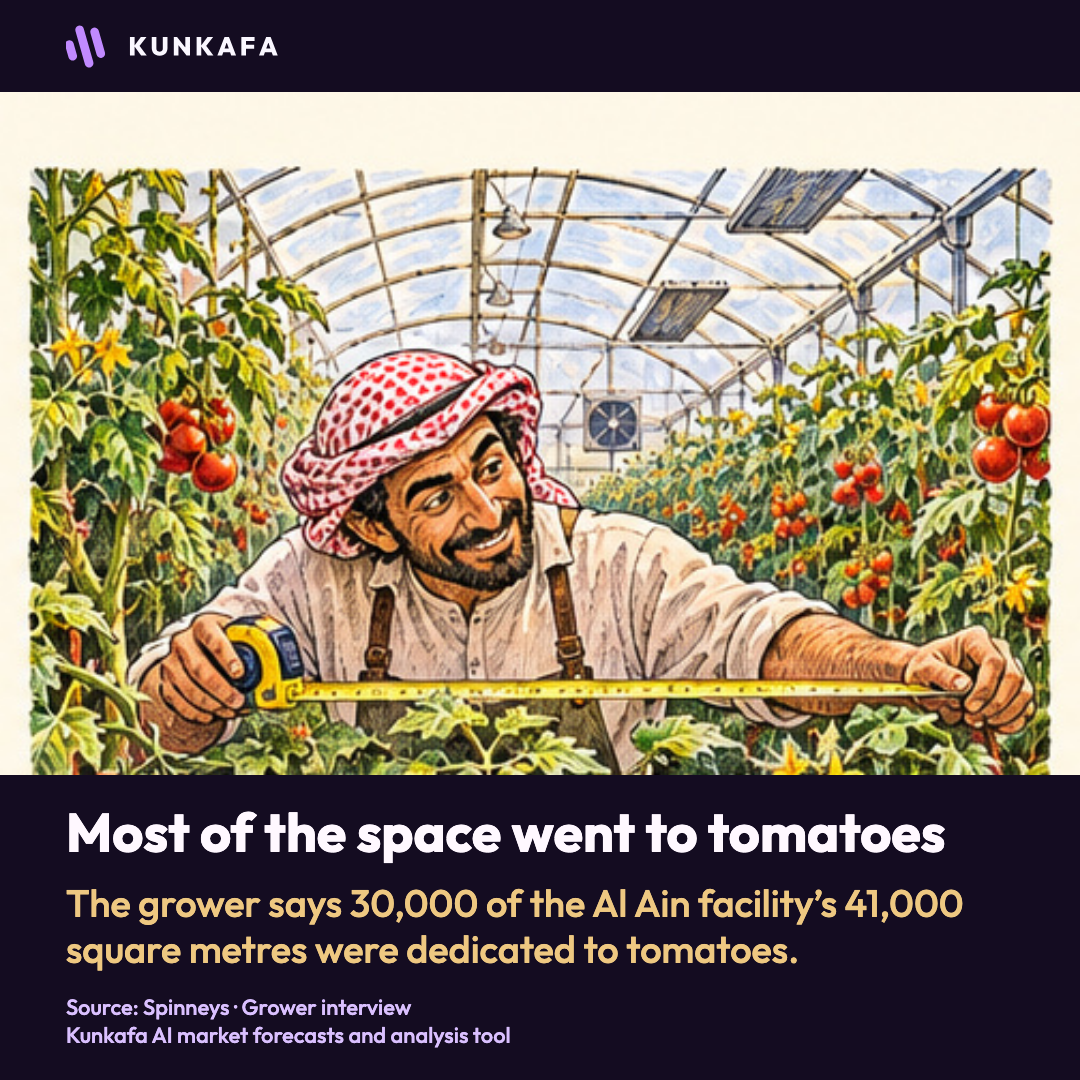
The founders first proved their approach in Nahel, where production started in October 2018. A grower told Spinneys the next Al Ain facility covered 41,000 square metres. Of that area, 30,000 square metres was dedicated to tomatoes and the balance to leafy greens. Sunlight supplies the crop’s light. Climate equipment monitors or adjusts temperature, humidity and air movement inside. [1][2]
The same equipment that keeps the crop cool tackles another scarce input. Water condenses as air cools, and the grower collects it for reuse. Capturing some of that water reduces the amount that has to come from groundwater or municipal supplies. It does not remove the need to run pumps and cooling equipment. Trane describes electric heat pumps, centrifugal chillers and controls in the Pure Harvest installation it supplied in the UAE. [1][2]
The Capsule
- Compare a local and imported tomato of the same grade in the same month.
- Count electricity and refrigeration alongside water saved in irrigation.
- Use saleable output from one site for a cost-per-kilogram estimate.
- Separate contracted shelf supply from the company’s total production capacity.
Which cost does growing closer actually remove?
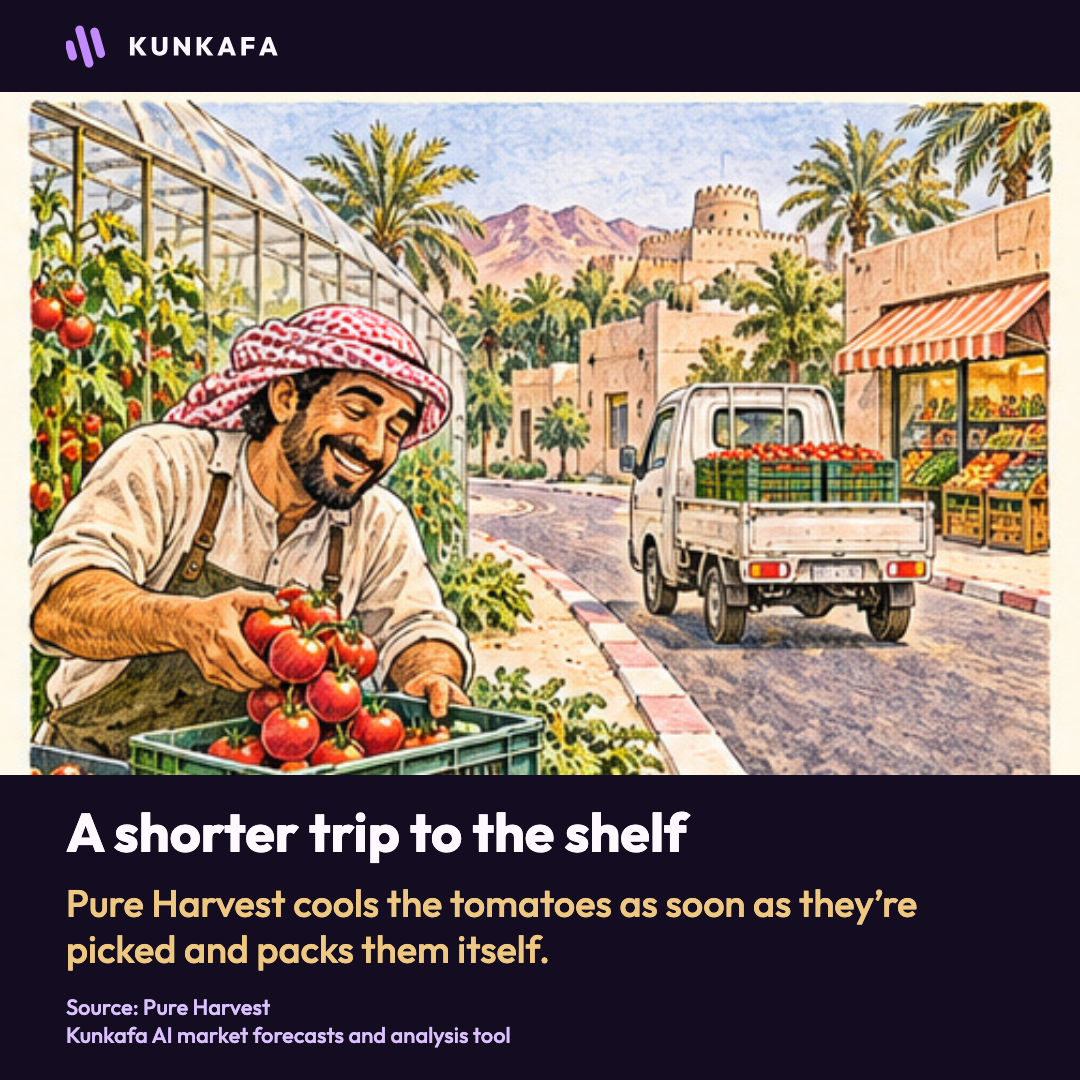
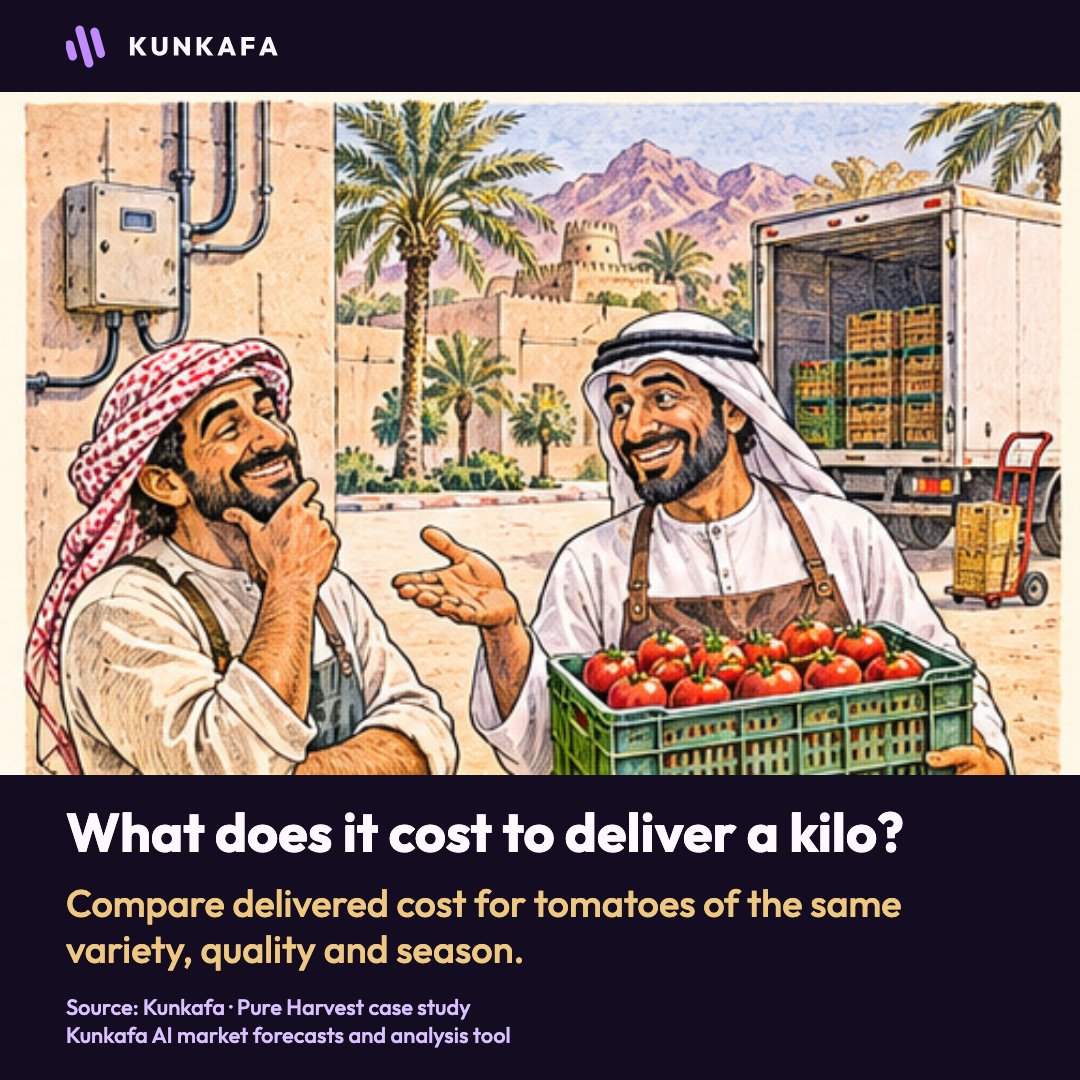
A local crop can travel a shorter distance from packing to the supermarket than imported fruit. Pure Harvest says it cools the produce immediately after picking and handles packing itself. There is still a cold chain, as well as the cost of a greenhouse and the electricity to keep it productive. A useful comparison would put the full delivered cost per saleable kilogram alongside an imported tomato of the same variety, quality and season. [2][4]
The company lists a dedicated Al Ain tomato farm and reports more than 13,000 tonnes of annual capacity across its UAE and Saudi farms. Capacity covers multiple crops and sites. The grower, retailer and equipment supplier do not give a farm-level electricity bill, saleable tomato yield and cost per kilogram for the same year. What their accounts do establish is a customer, a crop and a technical way of delivering it when the weather outside would otherwise break the supply. [1][2][3]
Sources: [1] Spinneys interview with the grower · [2] Trane’s UAE greenhouse equipment case study · [3] Pure Harvest farm directory · [4] Pure Harvest on cooling after picking.
Kunkafa forecasts
Brent oil
How far it could move, which way, by when, and how confident Kunkafa is.
Check the latest forecastsMore in Startups

Where Does GreenPan Take Egypt’s Used Cooking Oil?
An Egyptian household can exchange a few kilos of used oil for household goods. Tagaddod’s real customers sit farther along the chain: fuel producers buying a filtered raw material.

How Dubai’s The Surpluss Found a Buyer for Used Pallets
An Ajman manufacturer was paying to dispose of used pallets. A Sharjah carpenter 30 kilometres away could put the wood to work.

What Redwood Recovers From Spent EV Batteries
A metal recovery figure, a cathode supply agreement and a factory’s cell output answer three different questions about battery recycling.