Startups · Explainer
How Dubai’s The Surpluss Found a Buyer for Used Pallets
An Ajman manufacturer was paying to dispose of used pallets. A Sharjah carpenter 30 kilometres away could put the wood to work.

Kunkafa News · Published · 4 min read
 By Kareem FaridDiscuss with the author on X
Here is a visual story in summary
Key points
- The Surpluss says it matched Cytech FZC with Nejoum Al Lail Carpentry, giving the Ajman manufacturer an outlet for ten tonnes of pallets a month.
- The platform earns membership fees. The World Economic Forum’s company profile says it charges no commission on trades.
For Cytech FZC in Ajman, ten tonnes of used wooden pallets a month were a disposal bill. For a carpentry business in Sharjah, the same load was usable timber. Dubai startup The Surpluss says it matched the two businesses and turned a recurring expense into AED 515 in monthly revenue for Cytech. [1]
Why the distance mattered
Cytech had been paying AED 50–100 per tonne to dispose of the pallets, according to the startup’s case study. On ten tonnes, that works out to AED 500–1,000 in monthly disposal costs. The AED 515 the startup reports as revenue is a separate figure. The study gives no transport or handling bill from which to calculate net profit. [1]
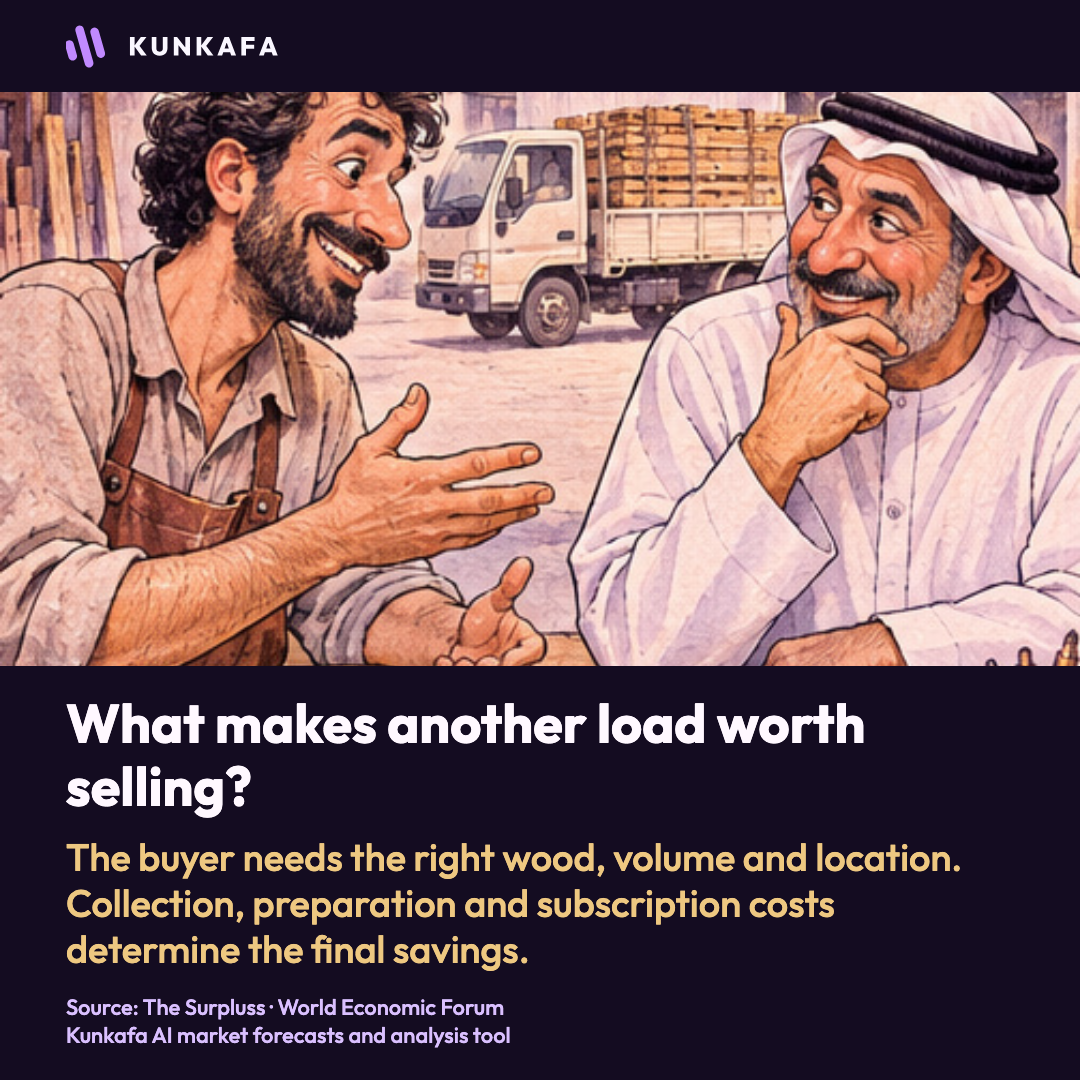
A pile of wood can look valuable on a factory balance sheet and still be expensive to shift. A buyer has to want the material in the condition offered, in the quantity available and close enough to collect it. The Surpluss puts the carpenter about 30 kilometres from the Ajman site. The material was already in the area where the buyer could use it; the missing piece was each side knowing about the other. [1]
The Capsule
- Identify the surplus precisely: the material, its condition and the quantity available each month.
- Compare the present disposal bill with the buyer’s price and the cost of getting the material to the workshop.
- Keep the sales proceeds and the disposal costs avoided as separate figures.
What the startup sells
The World Economic Forum’s profile describes a subscription service that matches spare materials, equipment or other resources across businesses. Its pitch to a factory owner is access to companies outside the usual supplier list. In the Ajman case, the buyer was a woodworker in another industry and another emirate. The reported quantities and proceeds come from The Surpluss’s account of the deal. [2] [1]
What ten tonnes can tell a factory owner
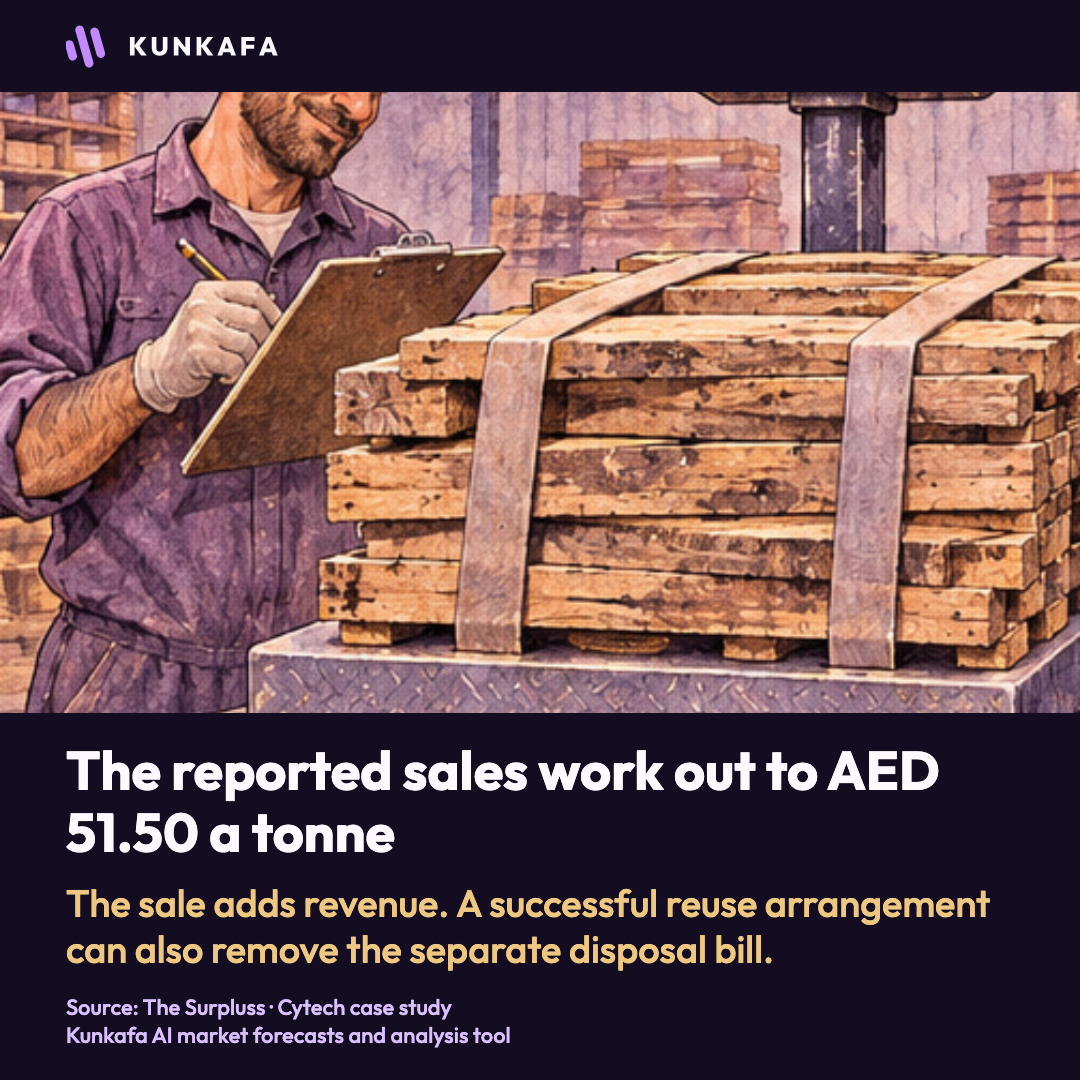
Using the startup’s figures, monthly sale proceeds work out to about AED 51.50 per tonne. Compare that with the reported disposal charge of AED 50–100 per tonne. One figure is new revenue; the other is an outgoing bill that a successful reuse arrangement can remove. A factory pricing its own surplus would still need the local collection quote, the cost of preparing the load and any subscription charge before treating the difference as savings. [1] [2]
Sources: [1] The Surpluss, Cytech case study, accessed November 24, 2026 · [2] World Economic Forum, company profile, accessed November 24, 2026
Kunkafa forecasts
Brent oil
How far it could move, which way, by when, and how confident Kunkafa is.
Check the latest forecastsMore in Startups

What Redwood Recovers From Spent EV Batteries
A metal recovery figure, a cathode supply agreement and a factory’s cell output answer three different questions about battery recycling.

UAE’s defenseAI launches four defense software products
The startup says it put its first defense systems into use before its public launch and built a team of more than 100 engineers.

3 Best Qatar Startup Programs, From Idea to First Customer
An idea camp, a four-month accelerator and a state-backed investment program offer three different deals. One asks for 1.5% equity in exchange for services.