Startups · Explainer
What Redwood Recovers From Spent EV Batteries
A metal recovery figure, a cathode supply agreement and a factory’s cell output answer three different questions about battery recycling.

Kunkafa News · Published · 3 min read
 By Kareem FaridDiscuss with the author on X
Here is a visual story in summary
Key points
- Redwood’s recovery figure covers critical materials in the feed.
- A buyer’s factory milestone does not identify the source of each cell’s cathode.
Redwood Materials says it recovers more than 95% of critical materials including nickel, lithium, cobalt and copper from used products. That percentage answers how much target material it recovers. A cell maker needs another number entirely: how much usable material arrives to its specification. [1] [2]
Follow the nickel. Redwood receives spent packs, discarded devices and production scrap, refines their contents and makes battery materials. Panasonic’s Nevada plant has supplied production scrap for recycling since the partners began working together in 2019. [1] [2]
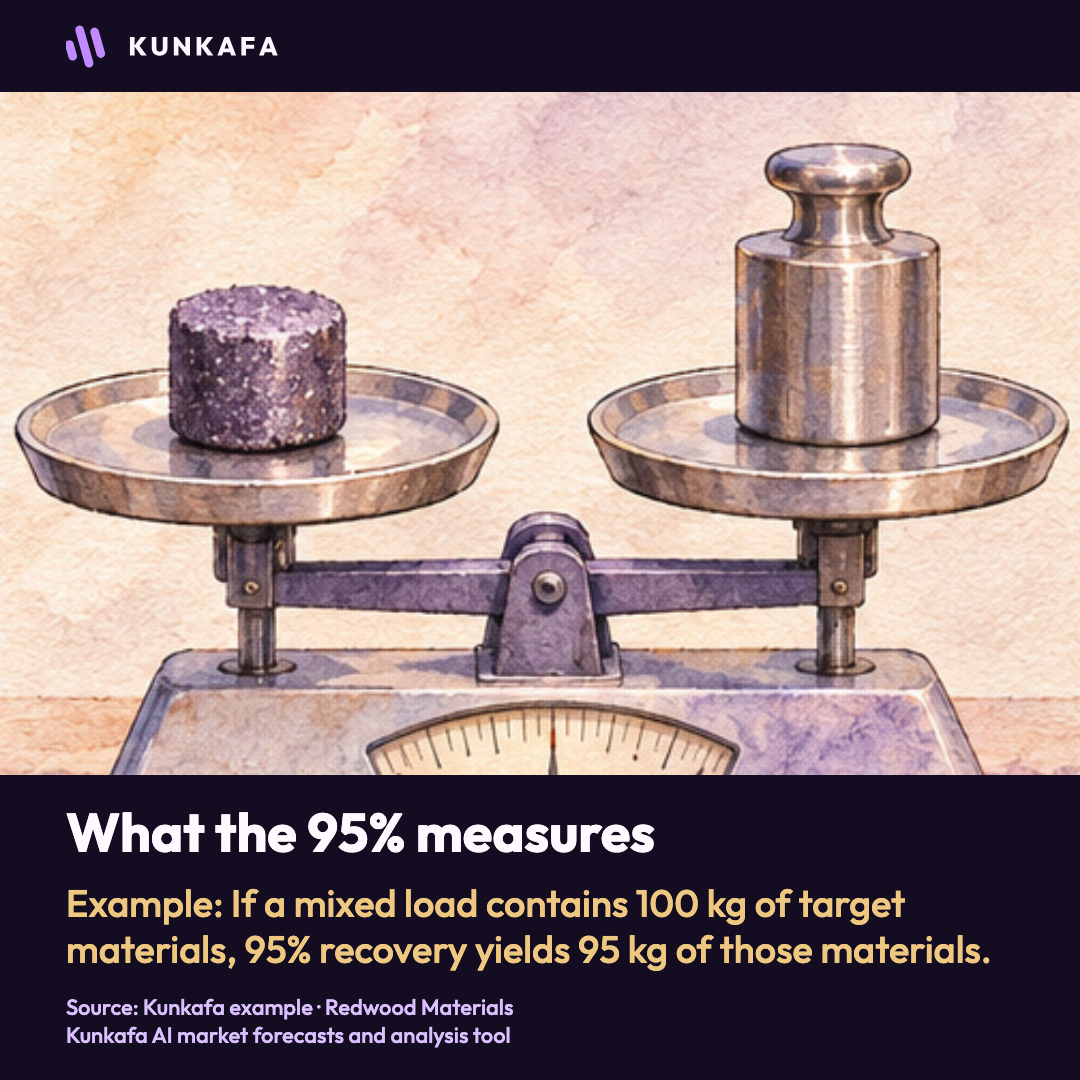
A simplified example shows the denominator. If a mixed load contains 100 kilograms of the target materials, 95% recovery would mean 95 kilograms recovered. It says nothing about the weight of the discarded casing or the quantity of finished cathode a customer accepts. [1]
Why Panasonic needed a different product
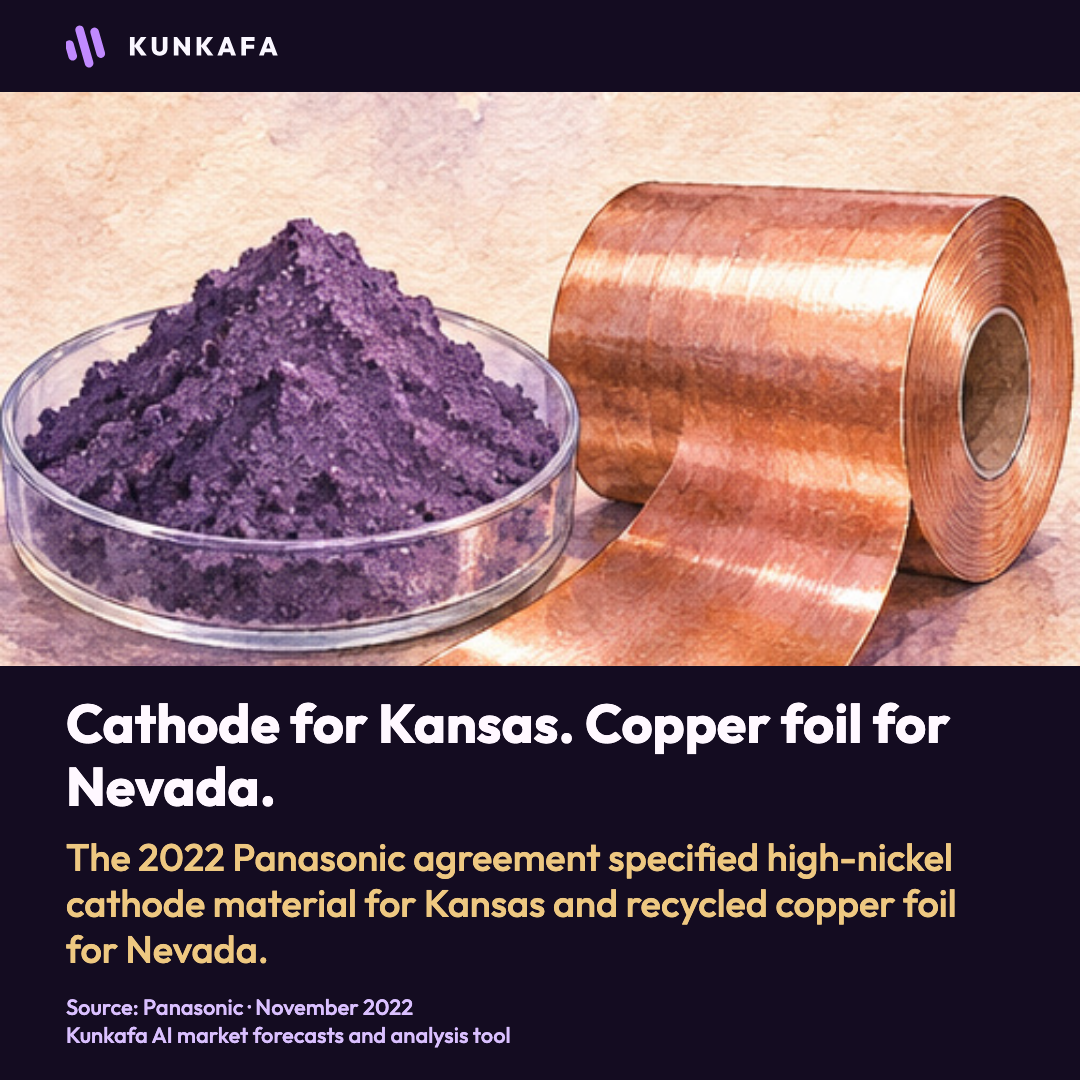
Panasonic’s November 2022 agreement identified high-nickel cathode active material for its planned Kansas cell plant. Recovered nickel supplies one ingredient. The cathode material combines ingredients in a composition that affects battery performance and safety. [2] [3]
The Capsule
- Ask what material sits in the recovery denominator.
- Distinguish production scrap from vehicle packs at end of life.
- Look for accepted cathode tonnes and customer delivery dates.
The same contract named recycled copper foil for Panasonic’s Nevada plant. Foil is a separate battery component. Counting tonnes of foil as tonnes of Kansas cathode would mix two products and two destinations. [3]
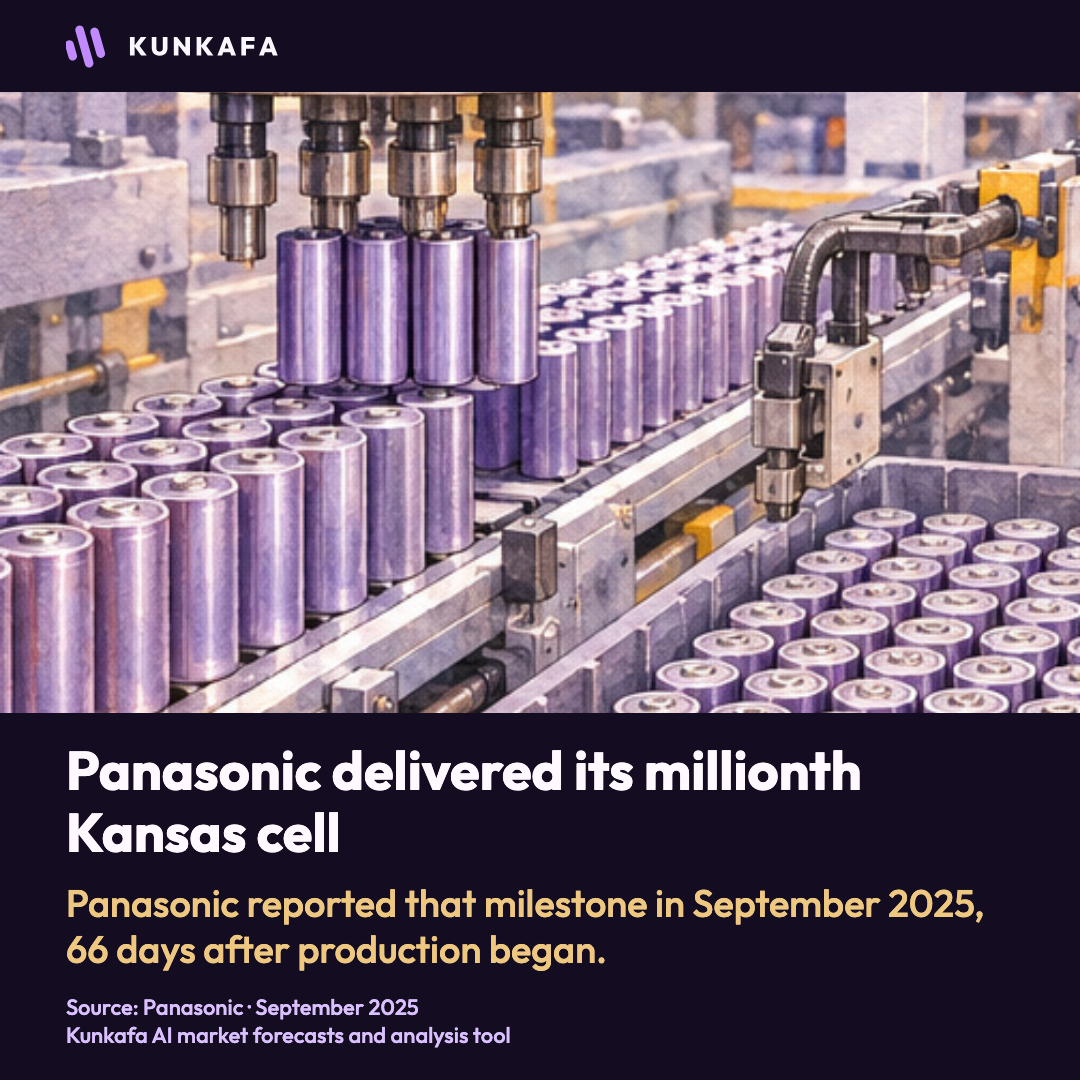
Kansas provides an independent checkpoint from the buyer. Panasonic opened the plant in July 2025 and said it delivered its millionth cell on September 9, 66 days after production started. The milestone identifies actual cells delivered. [4]
Neither the milestone nor the 2022 agreement gives the weight of Redwood cathode in that million-cell shipment. Estimating it would require the cells’ specification, actual sourcing mix and accepted deliveries for that period. [3] [4]
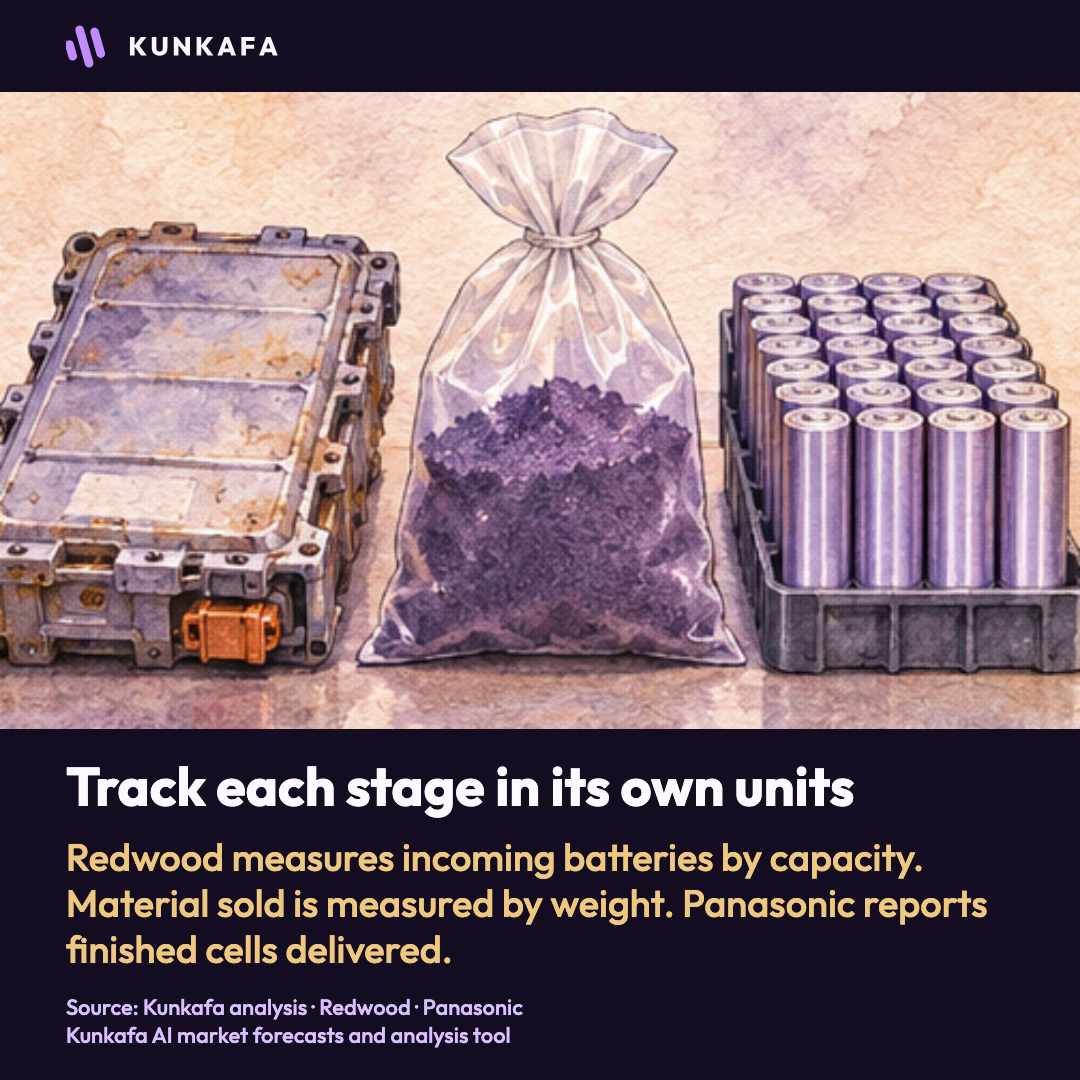
Redwood puts its recycling throughput above 20 gigawatt-hours of batteries a year. Gigawatt-hours describe the capacity of the batteries entering the process. Tonnes of material sold and cells delivered belong to later stages, each with a different unit and customer test. [1] [4]
Sources: [1] Redwood materials and recovery disclosures · [2] Redwood, November 2022 partnership · [3] Panasonic supply agreement, November 2022 · [4] Panasonic Kansas output, September 2025
Kunkafa forecasts
Nasdaq 100
How far it could move, which way, by when, and how confident Kunkafa is.
Check the latest forecastsMore in Startups

UAE’s defenseAI launches four defense software products
The startup says it put its first defense systems into use before its public launch and built a team of more than 100 engineers.

3 Best Qatar Startup Programs, From Idea to First Customer
An idea camp, a four-month accelerator and a state-backed investment program offer three different deals. One asks for 1.5% equity in exchange for services.

Europe’s €5bn Scaleup Fund Runs Into a Delaware Snag
More European tech companies on the fund’s radar than expected have a Delaware parent. Its rules limit how much it can invest in those businesses.