Tech · Brief
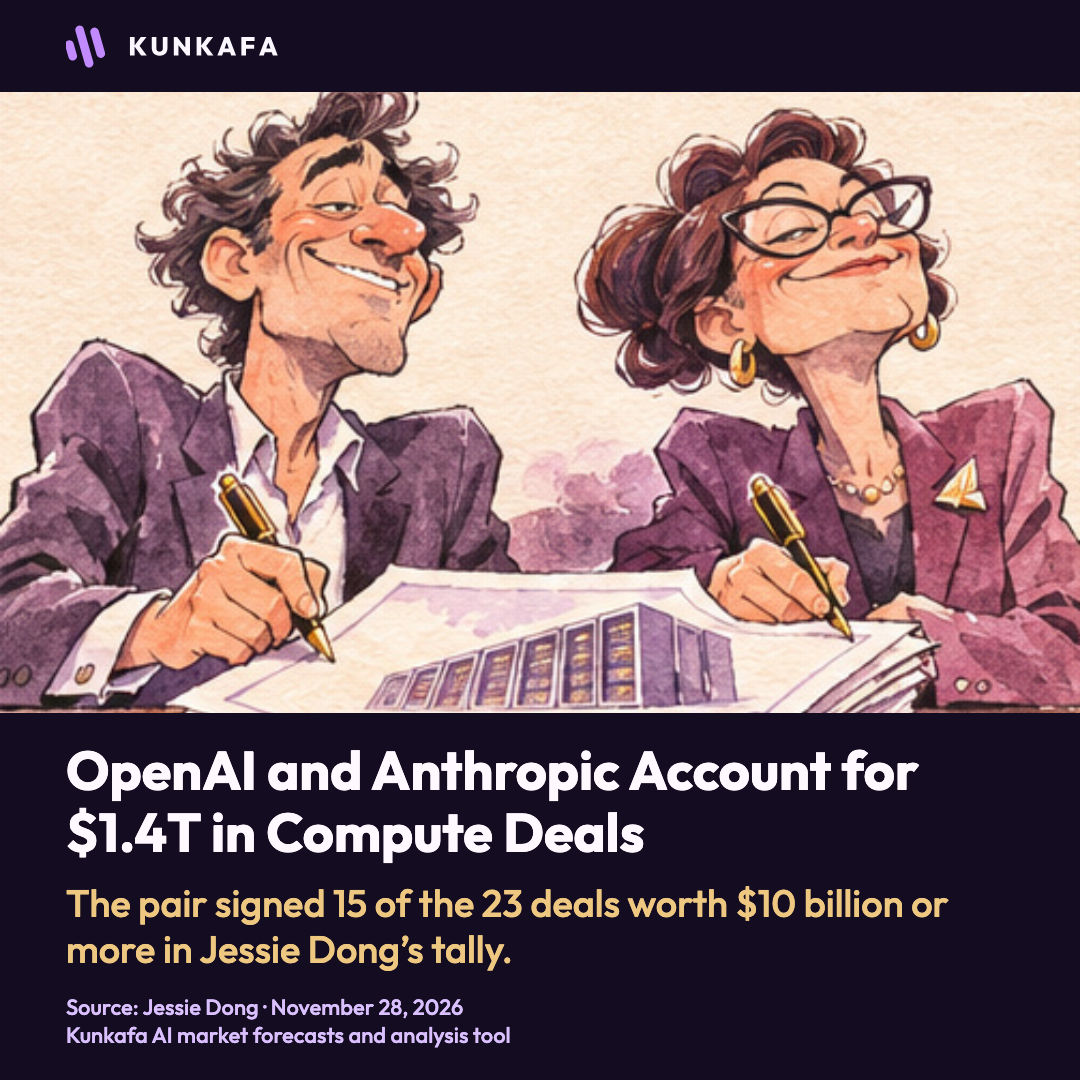
OpenAI and Anthropic Account for $1.4T in Compute Deals
The two companies accounted for 15 of the 23 contracts worth at least $10 billion each in a tally shared by Jessie Dong.

Kunkafa News · Published · 2 min read
 By Kareem FaridDiscuss with the author on X
Here is a visual story in summary
Key points
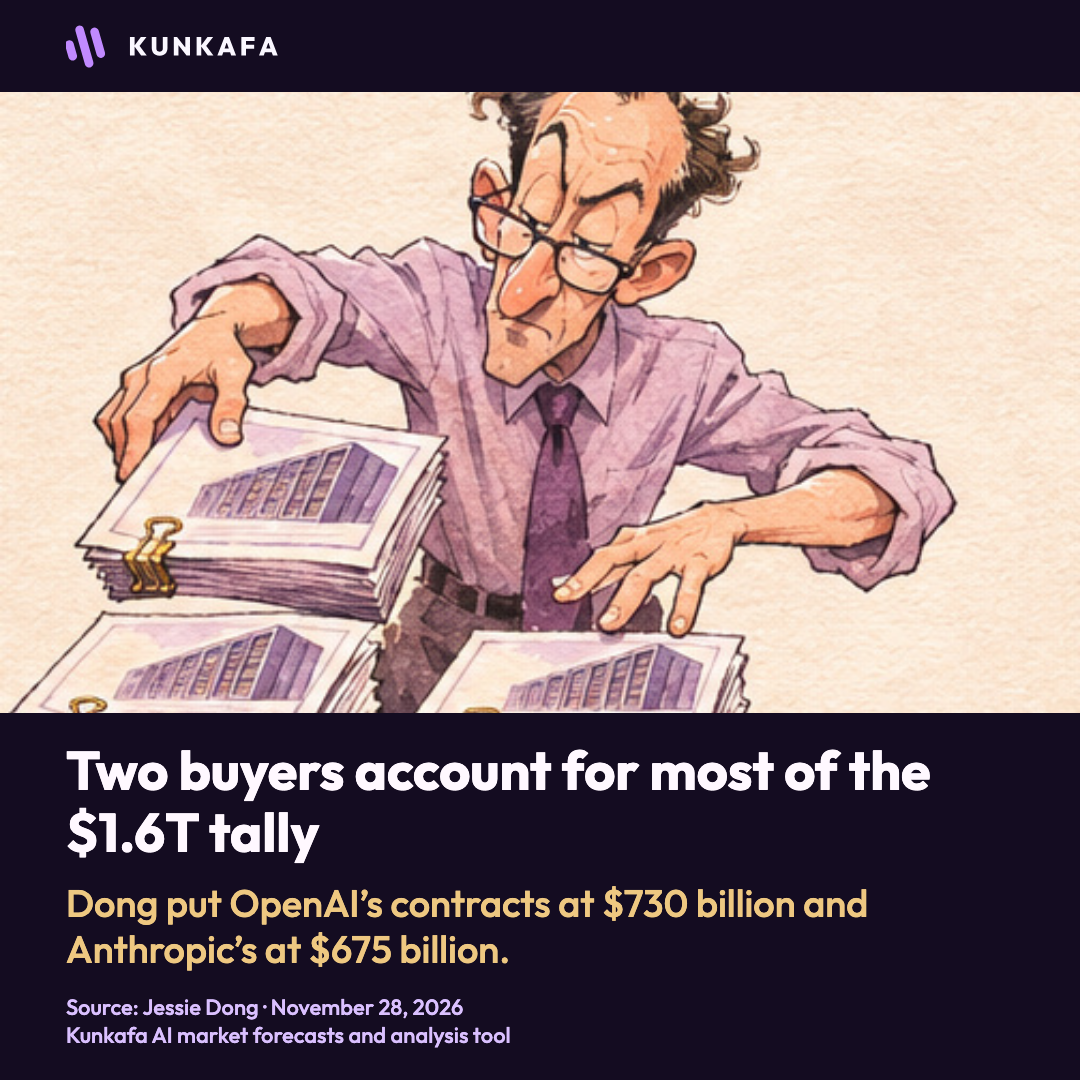
- The tally puts OpenAI’s contracts at $730 billion and Anthropic’s at $675 billion.
- The list includes multiyear agreements with minimum payments and others with spending caps.
OpenAI and Anthropic accounted for about $1.4 trillion of the $1.6 trillion in AI computing contracts that Jessie Dong tallied on November 28. The two companies signed 15 of the 23 deals on her list, which covers contracts worth at least $10 billion apiece. [1]
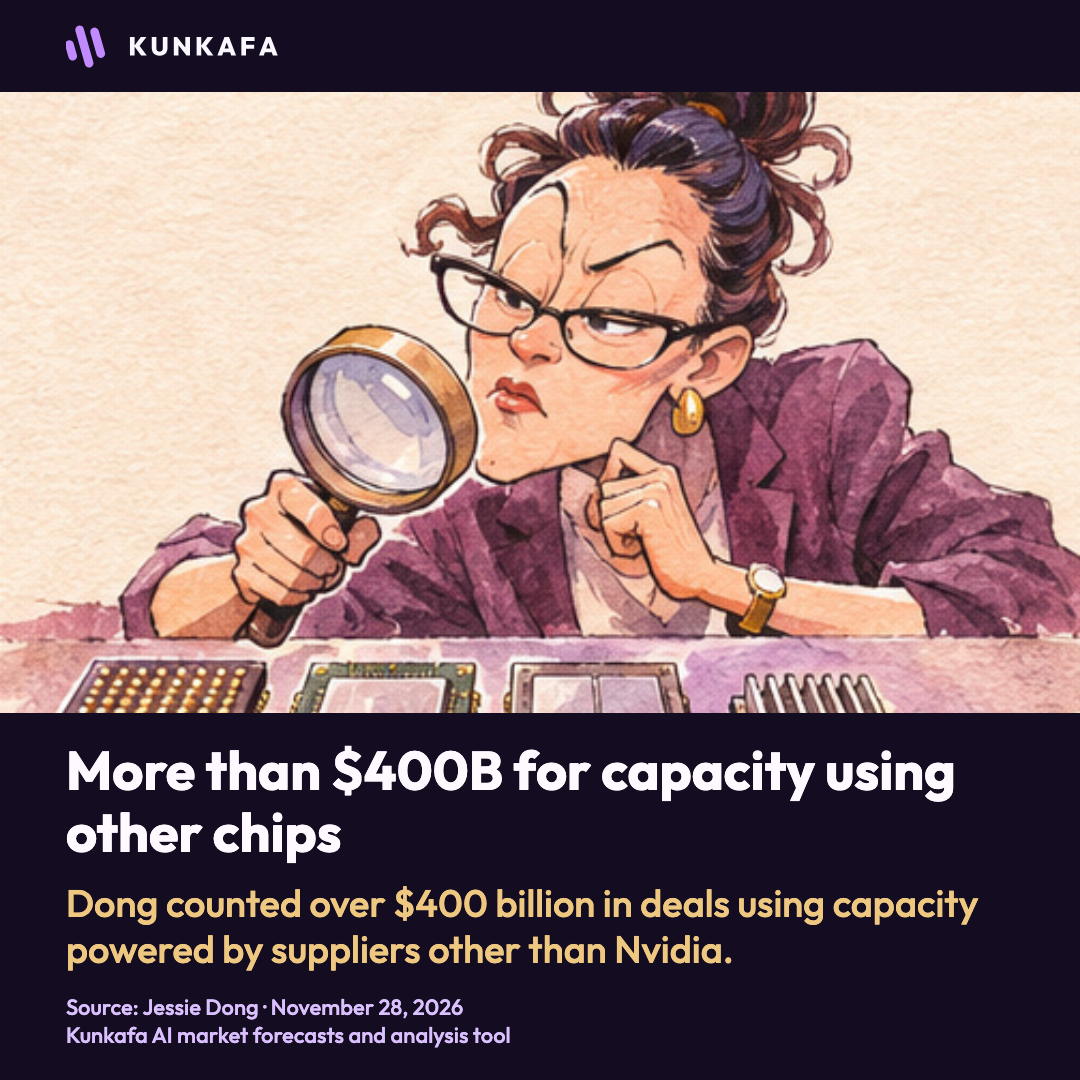
Dong put OpenAI’s share at $730 billion and Anthropic’s at $675 billion. She counted more than $400 billion in deals for computing capacity using chips from suppliers other than Nvidia. [1]
$1.6 trillion in compute contracts. 23 contracts, each $10B+ @OpenAI and @AnthropicAI signed 15 of the 23 ($1.4 trillion) somewhat surprisingly, over $400B is for non-nvidia chips
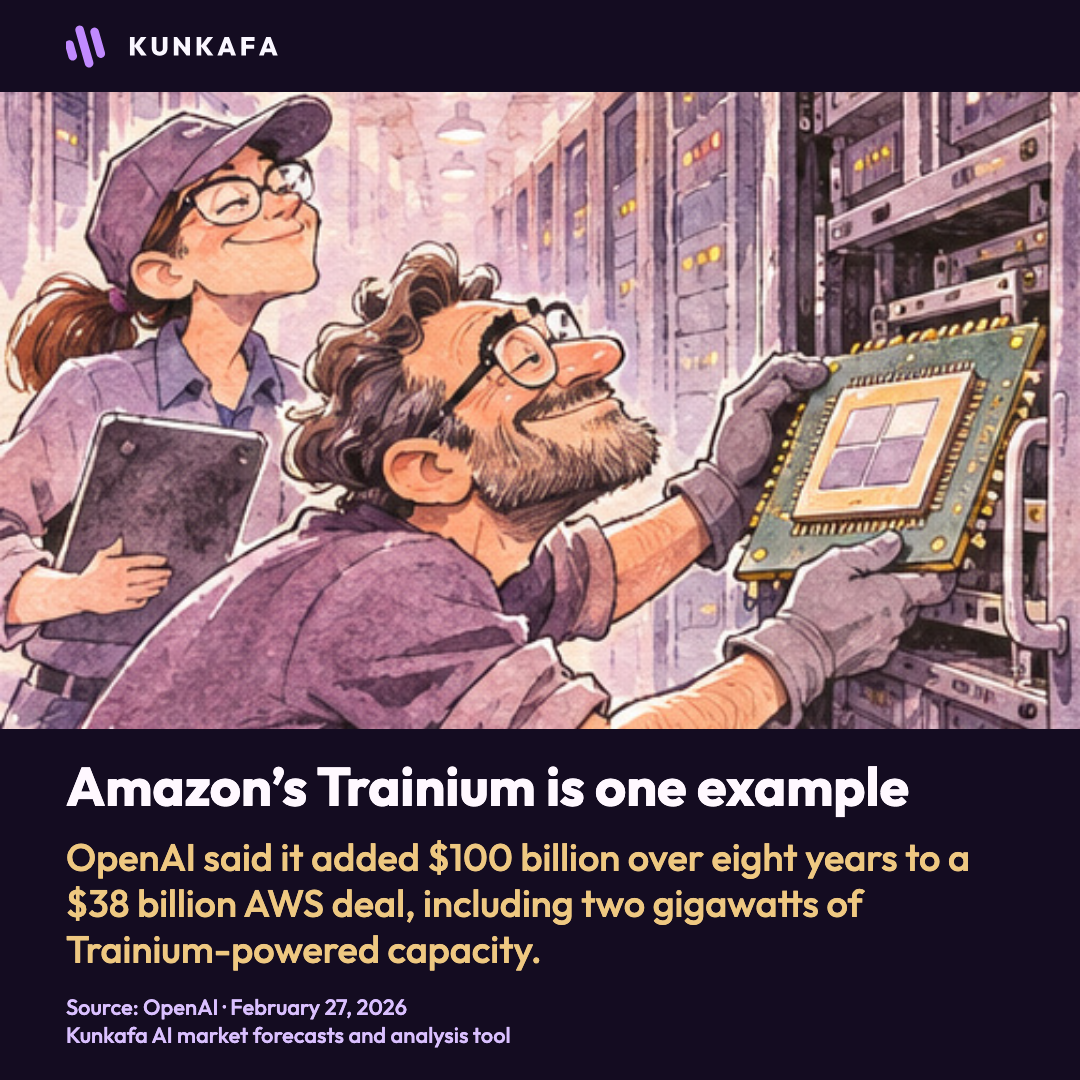
One such deal gives OpenAI access to Amazon’s Trainium chips. In February, OpenAI said it had expanded its existing $38 billion agreement with Amazon Web Services by $100 billion over eight years. The deal includes two gigawatts of computing capacity powered by Trainium. [2]
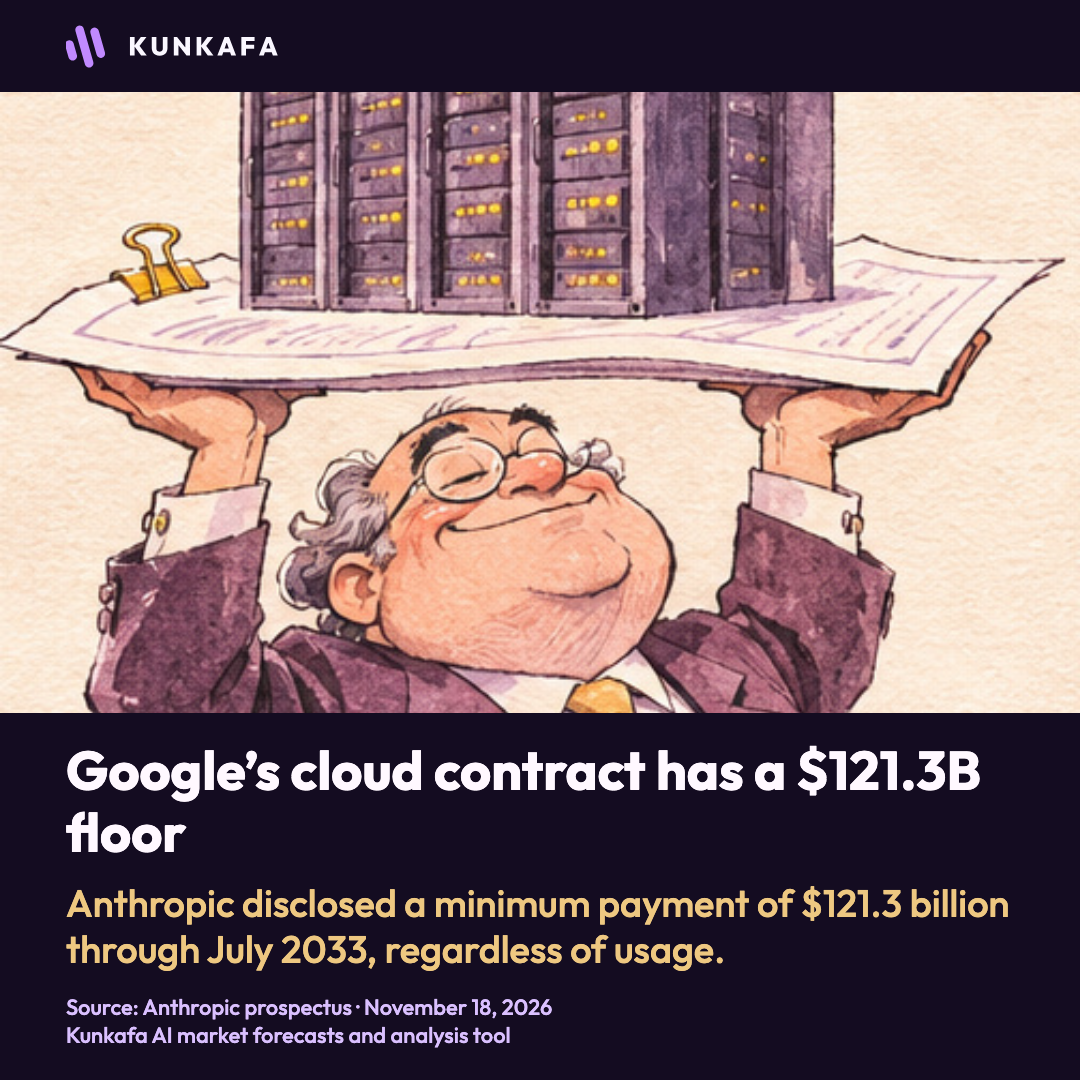
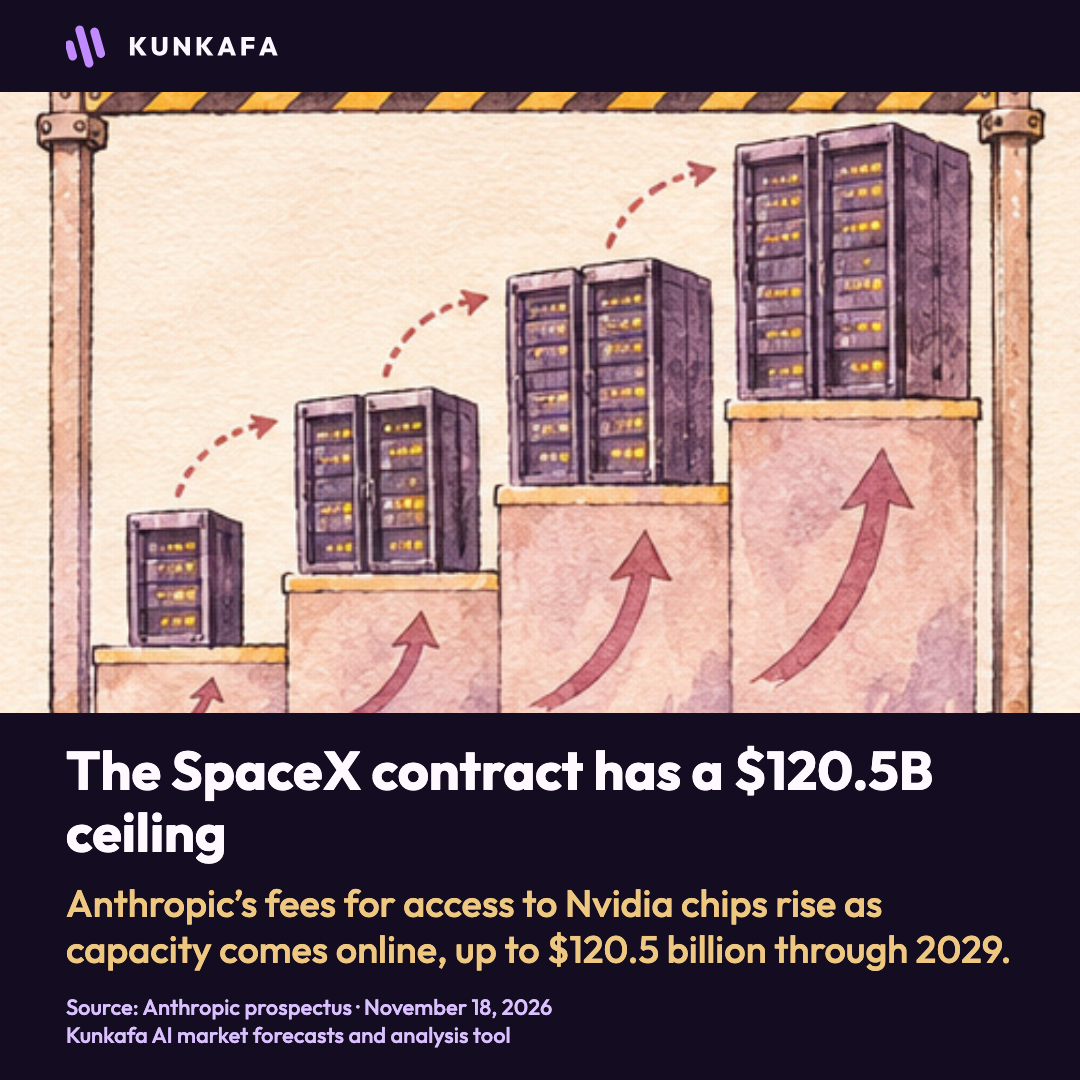
The contracts commit buyers to different payment terms. Anthropic disclosed a minimum of $121.3 billion for Google’s cloud services through July 2033, regardless of usage. Its agreement to use Nvidia chips at SpaceX puts the maximum at $120.5 billion through 2029, with fees rising as capacity comes online. [3]
Sources: [1] Jessie Dong, November 28, 2026 · [2] OpenAI, February 27, 2026 · [3] Anthropic prospectus, November 18, 2026.
Kunkafa forecasts
NVIDIA
How far it could move, which way, by when, and how confident Kunkafa is.
Check the latest forecastsMore in Tech

Cairo students sweep ACM’s spatial computing podium
A phone that can tell which floor it is on took first place. The other two teams mapped routes for aircraft above cities and robots between rows of crops.

Situational Awareness Says AI Could Break Nvidia’s Chip Grip
The fund expects Nvidia to sell more chips than Wall Street anticipates over the next two years. Its warning concerns who gets to design the chips after that.

How GSM Made International Mobile Roaming Possible
The first official GSM call reached another city in Finland. A separate agreement the following year took the service across a national border.