Tech · Explainer
How GSM Made International Mobile Roaming Possible
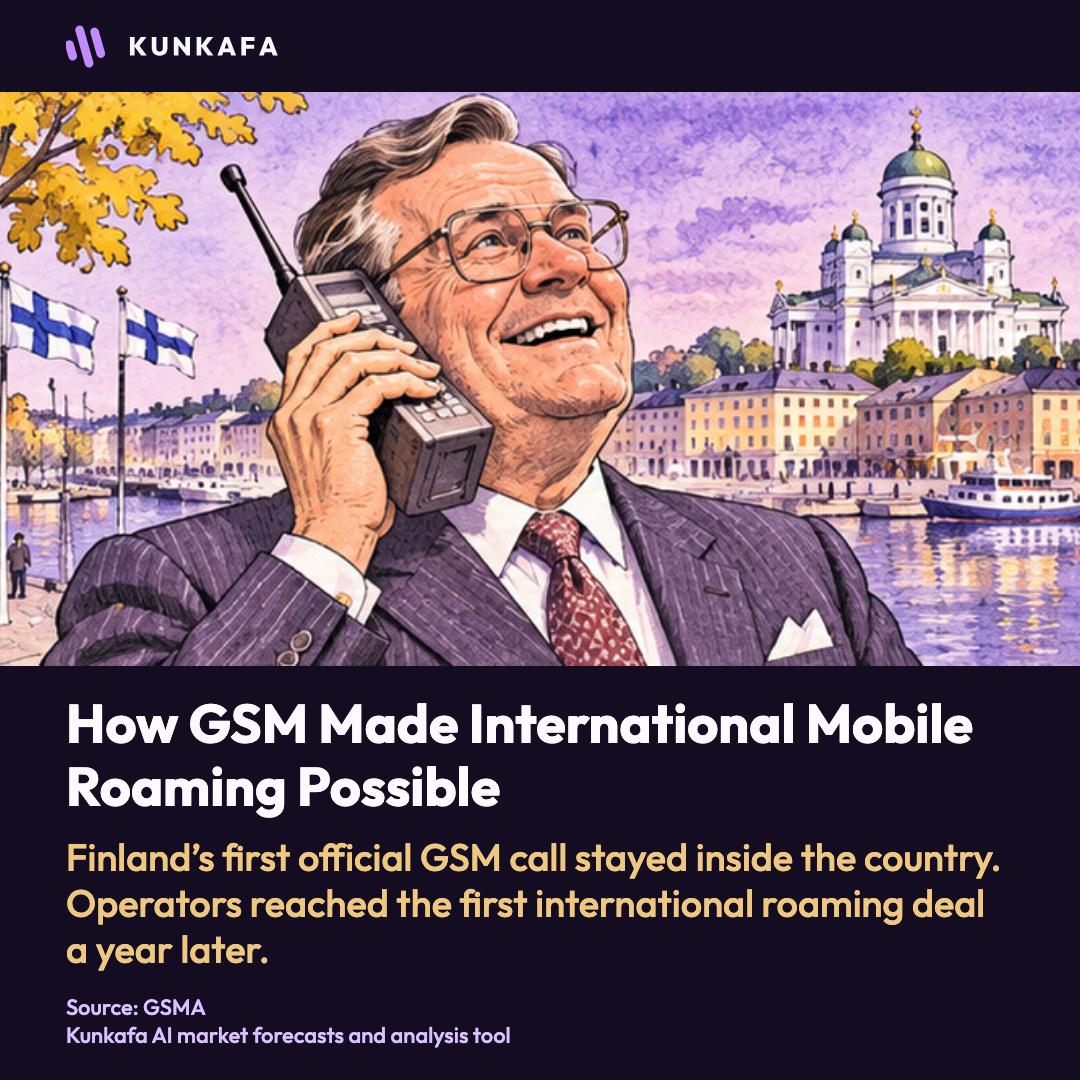
The first official GSM call reached another city in Finland. A separate agreement the following year took the service across a national border.

Kunkafa News · Published · 3 min read
 By Kareem FaridDiscuss with the author on X
Here is a visual story in summary
Key points
- A 1987 commitment brought together 15 members in 13 countries.
- Finland’s domestic call and the first bilateral roaming agreement came in different years.
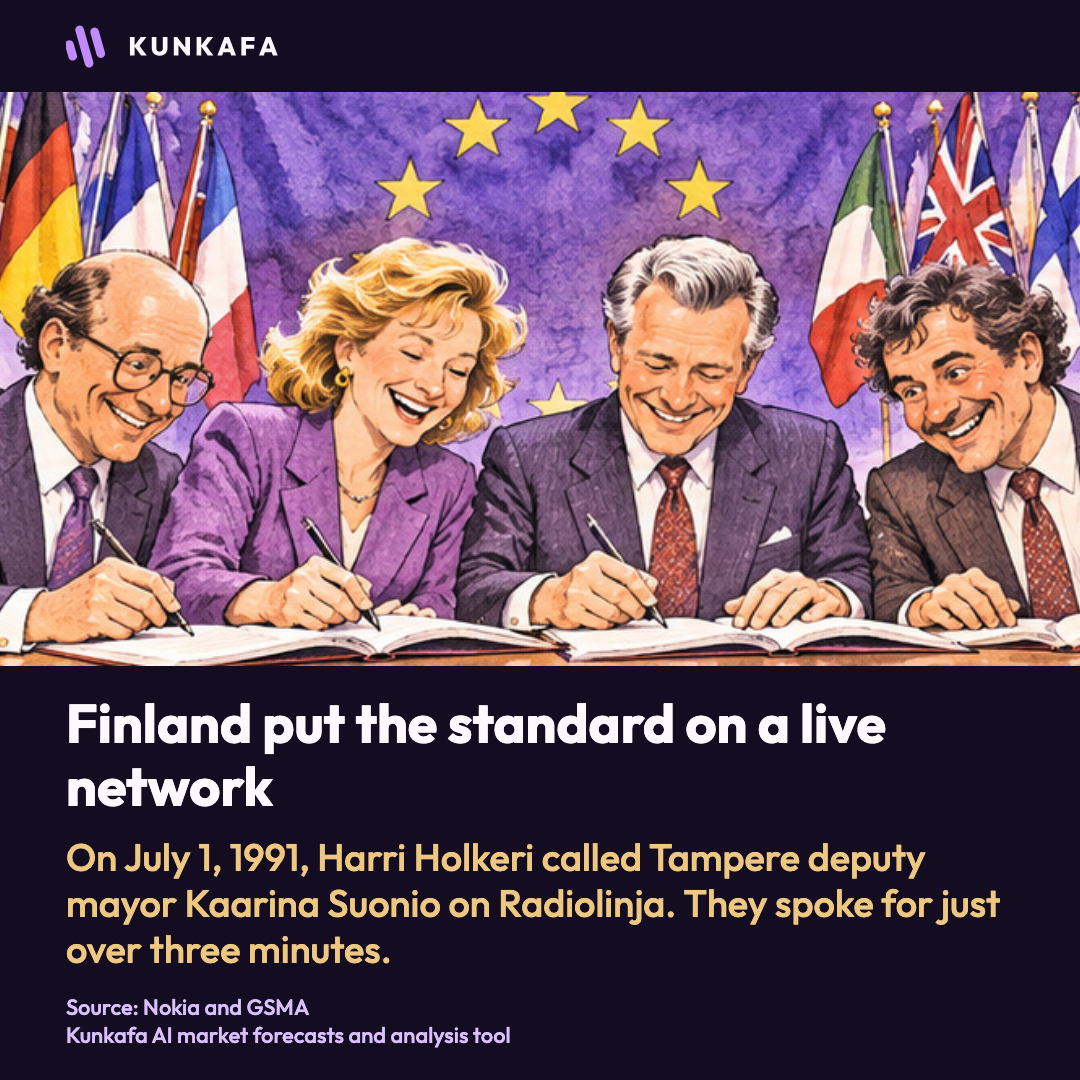
The call lasted just over three minutes. On July 1, 1991, former Finnish prime minister Harri Holkeri spoke to Kaarina Suonio, Tampere’s deputy mayor, over Radiolinja’s new digital mobile network. The first official GSM call connected two people in Finland. International roaming still needed a deal between operators. [1][2]
A handset for more than one national market
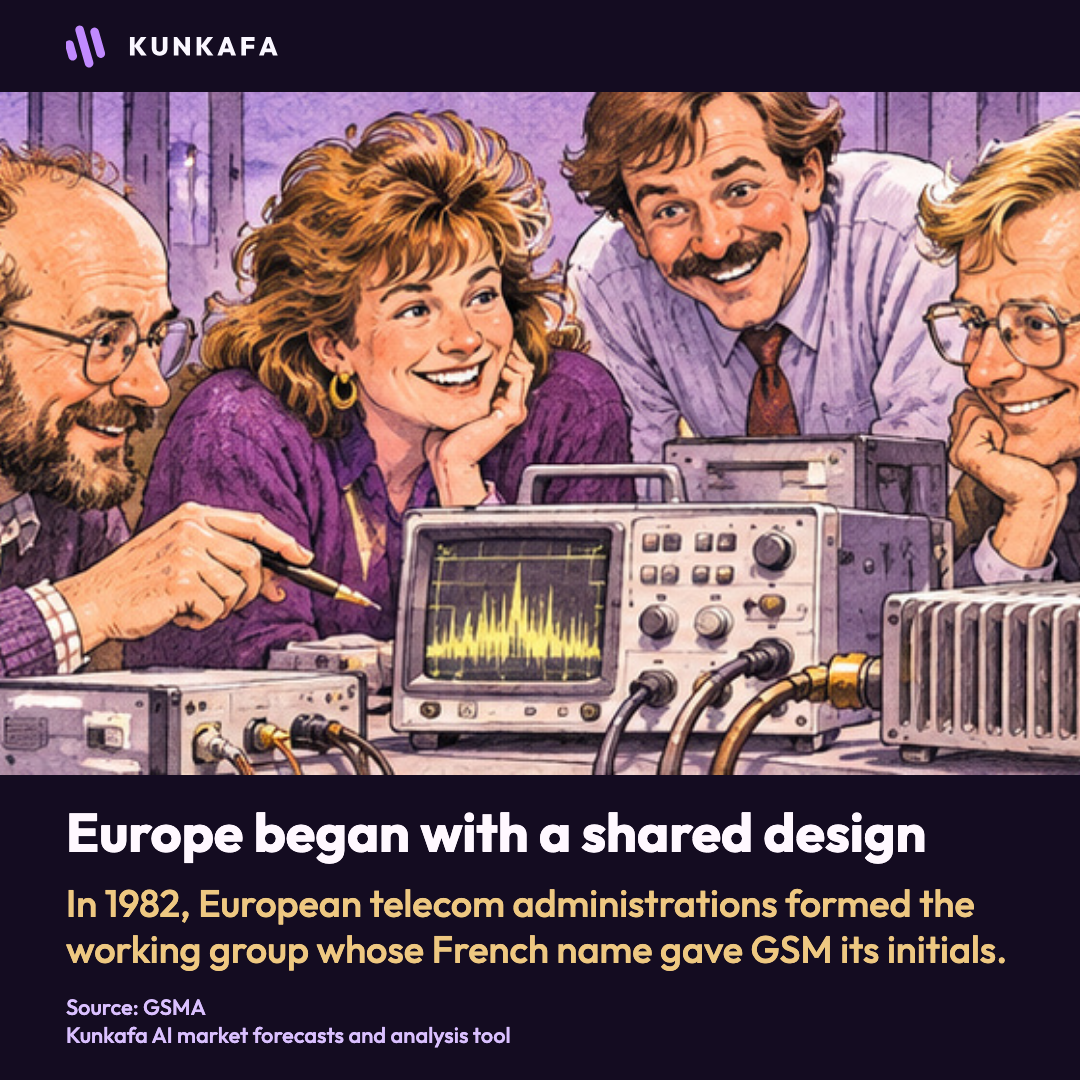
The effort started nine years earlier. In 1982, European postal and telecommunications administrations formed a working group to design a common mobile system. The initials of its French name, Groupe Spécial Mobile, supplied the letters GSM. [1]
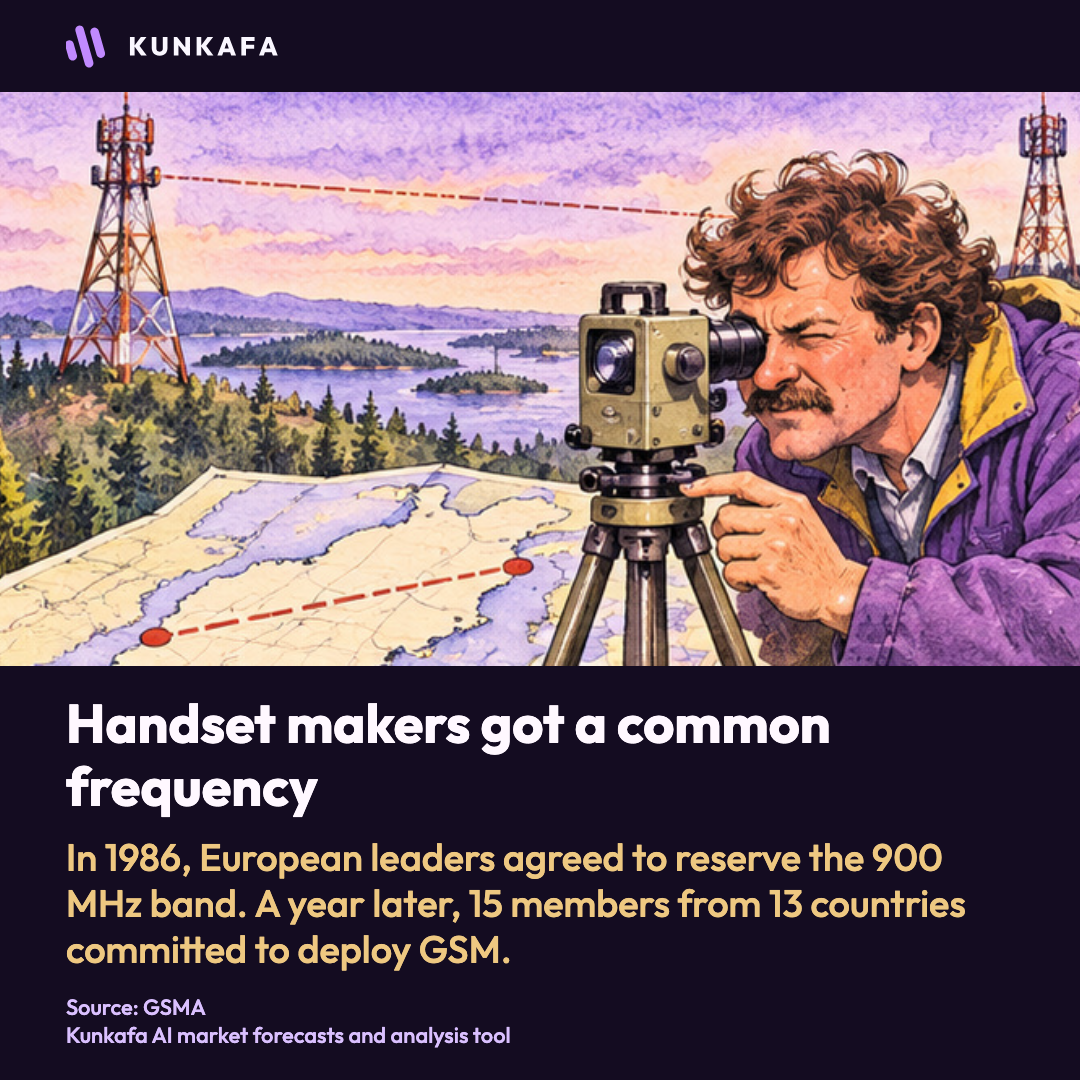
A manufacturer building a handset for a national system faced a basic problem at the border. If the next network used incompatible radio technology, the handset could lose access even where coverage was strong. European leaders agreed in 1986 to reserve the 900 MHz band for GSM, giving equipment makers a common frequency range to design for. [1]
The commitment before the first call
In 1987, 15 members from 13 countries signed a memorandum committing to deploy GSM. An operator buying equipment could now see prospective networks in other markets. Suppliers had a stronger reason to build compatible products in volume. [1]
The Capsule
- Date the common deployment commitment to 1987.
- Use Finland in 1991 for the first official GSM call.
- Use the Finland–Vodafone agreement of 1992 to explain international roaming.
Validation trials followed in 1988. In 1989, the European Telecommunications Standards Institute established GSM as a digital cellular standard. Finland’s 1991 call supplied a different kind of proof: the technology worked on an operator’s network with people at both ends of the line. [1][2]
The deal that let subscribers travel
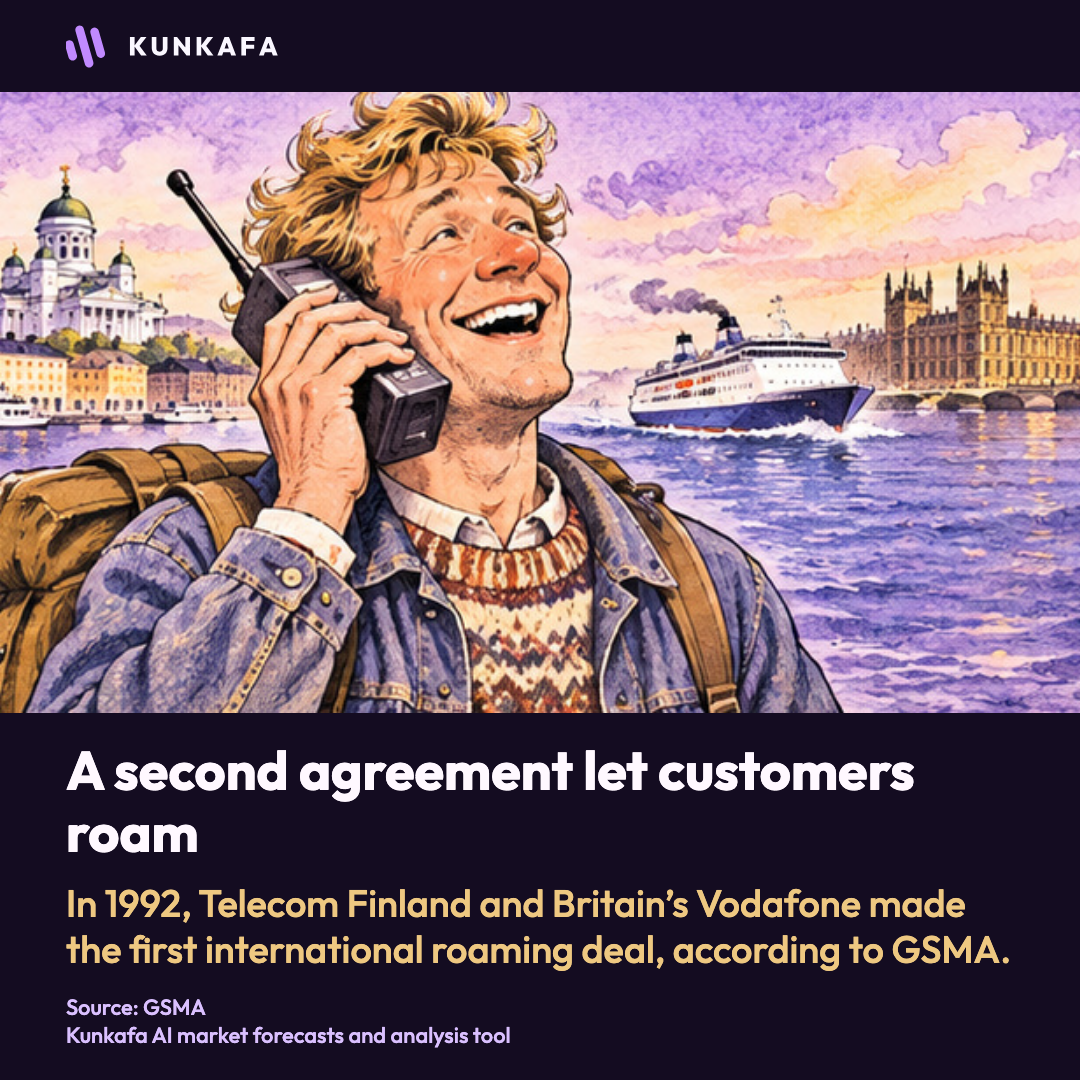
GSMA dates the first international roaming agreement to 1992, between Telecom Finland and Britain’s Vodafone. A shared radio standard meant a compatible handset could communicate with the visited network. The commercial arrangement gave the visitor access as a customer of the home operator. [3]
For a traveller, those were two distinct hurdles. The handset needed support for the local network, and the home operator needed a relationship with the visited operator. Shared technology alone settled neither the price of a call abroad nor the charges on a subscriber’s bill.
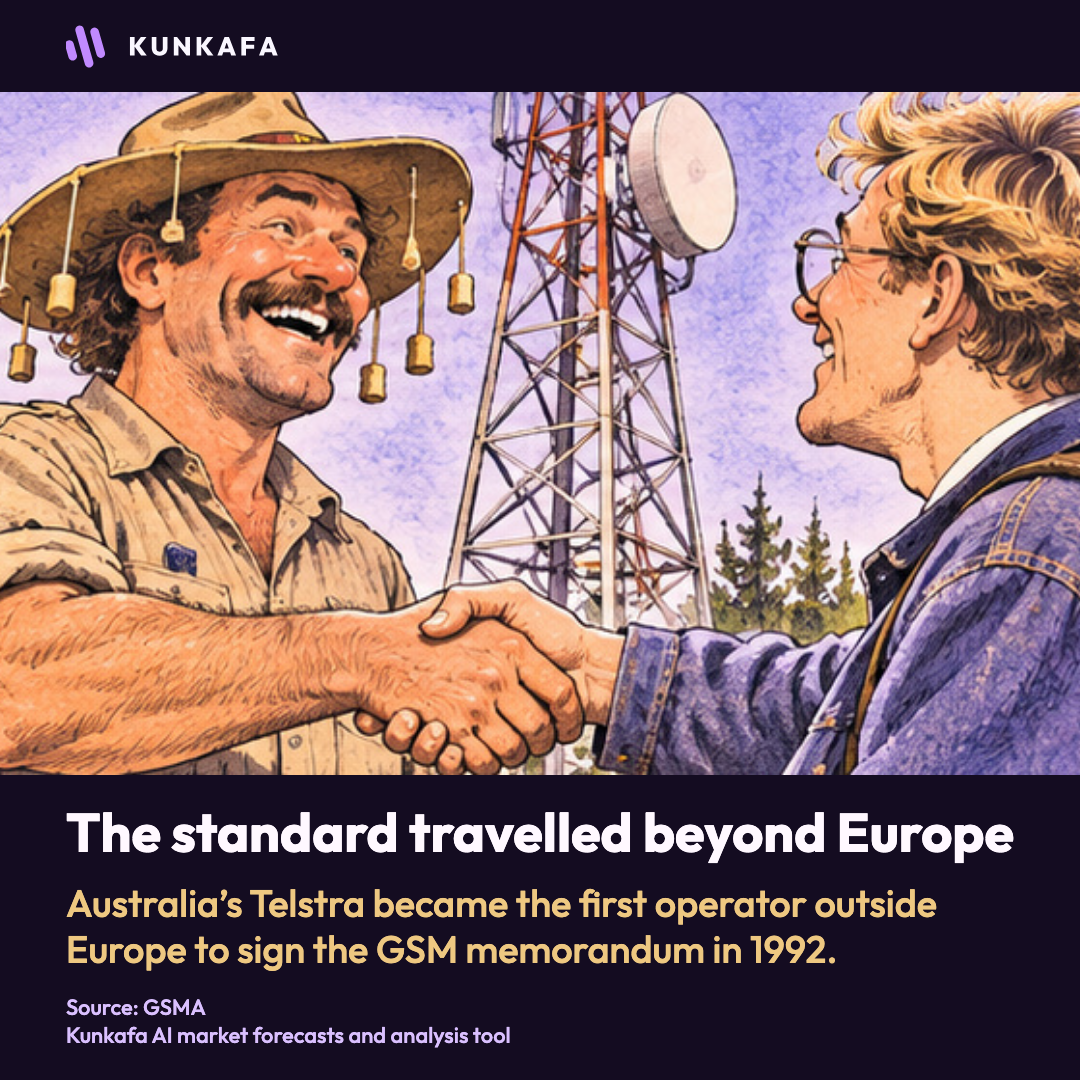
The market also spread beyond the countries that signed the original memorandum. In 1992 Australia’s Telstra became the first operator outside Europe to sign it, according to GSMA. A standard designed for European borders had found a customer far beyond them. [3]
Sources: [1] GSMA history of the European mobile standard · [2] Nokia on the first official GSM call · [3] GSMA operator milestones.
Kunkafa forecasts
Euro - Dollar
How far it could move, which way, by when, and how confident Kunkafa is.
Check the latest forecastsMore in Tech

3 Best Payment Options for a Saudi Merchant’s First Sales
A SAR 1,500 mada sale can cost SAR 12 to accept in person or SAR 28 by link before VAT. The customer’s location and the merchant’s monthly volume decide which option fits.

Which Size of Falcon-H1-Arabic Fits the Task?
The UAE research team reports three sizes. The middle version has the same published context limit as the largest, a useful distinction for long Arabic documents.

Google Cloud lets GLM 5.2 train eight open models
Developers can use answers from Z.ai’s GLM 5.2 to train smaller Qwen and Gemma models on tasks of their choice.