Tech · Explainer
Situational Awareness Says AI Could Break Nvidia’s Chip Grip
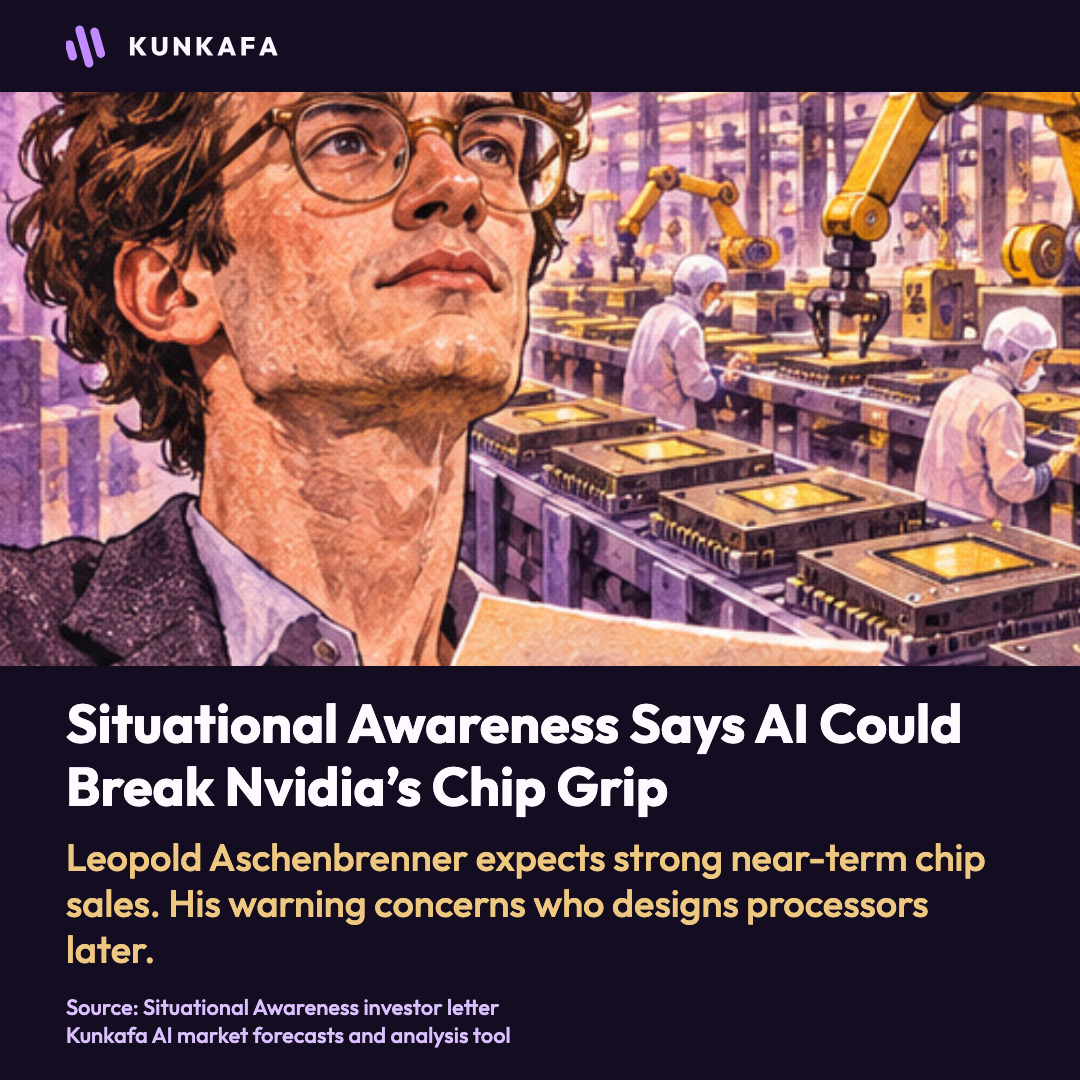
The fund expects Nvidia to sell more chips than Wall Street anticipates over the next two years. Its warning concerns who gets to design the chips after that.

Kunkafa News · Published · 4 min read
 By Kareem FaridDiscuss with the author on X
Here is a visual story in summary


Key points
- The fund sees AI helping customers design competing chips and adapt software to run on them.
- Nvidia told investors its supply agreements extend through the end of the decade.
Leopold Aschenbrenner expects Nvidia to sell more chips over the next couple of years than the market anticipates. Yet in his November 24 letter to investors in Situational Awareness, he argues that the same AI systems driving those sales could strip Nvidia of its advantage within a few years [1].
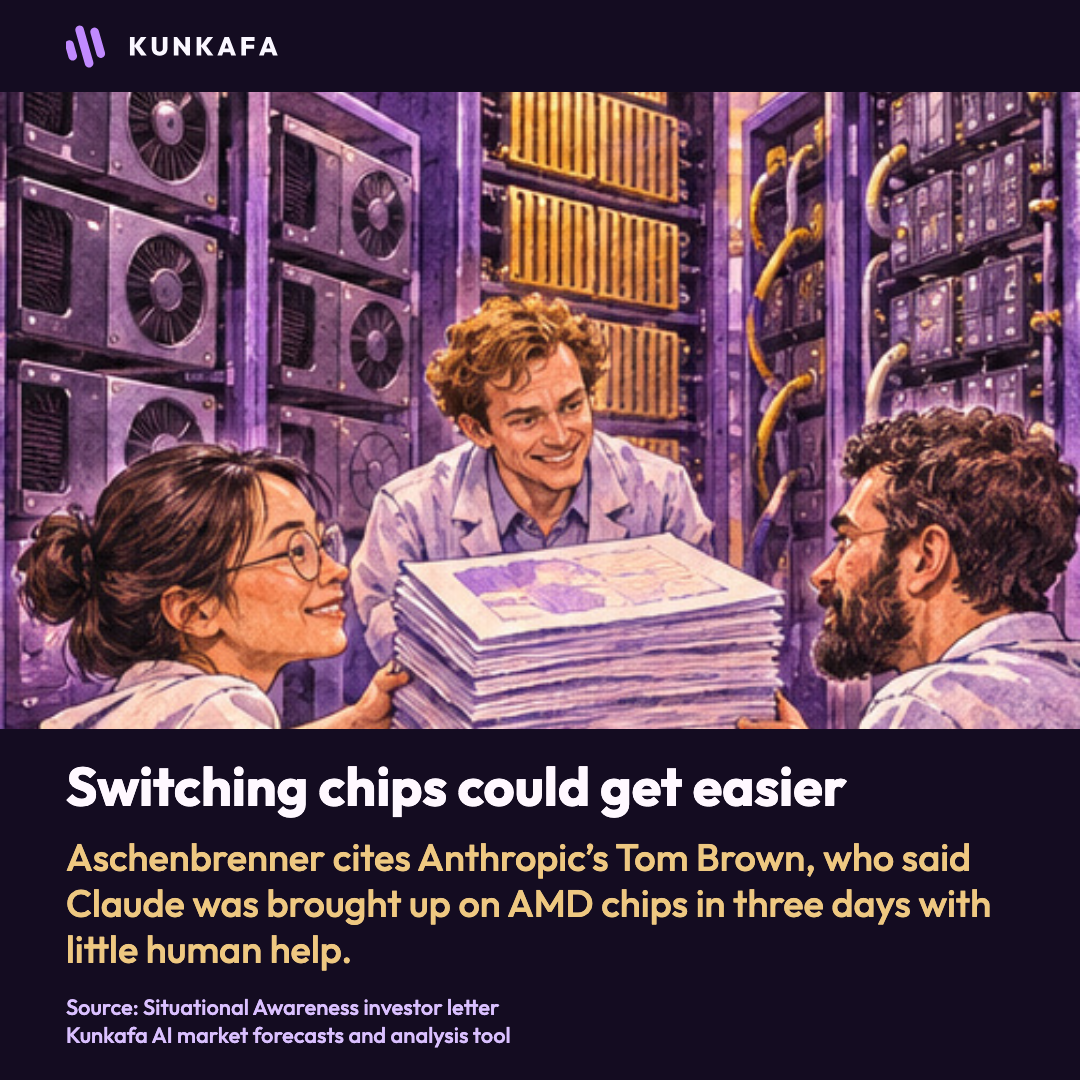
One reason customers stick with Nvidia is the time it takes to move their software to another chip. On page 113, Aschenbrenner cites Anthropic compute chief Tom Brown’s account of getting Claude running on AMD chips in three days with little human help. Brown said bringing a new chip platform online used to take dozens of engineers months [1].
Chip design itself is the bigger wager. If AI can design a better processor cheaply, Aschenbrenner argues, a customer such as Anthropic could bid directly for scarce memory and manufacturing capacity when Nvidia’s supply deals expire. Nvidia could still sell many more chips in the meantime. What its shareholders would lose is the ability to count on high margins far into the future [1].
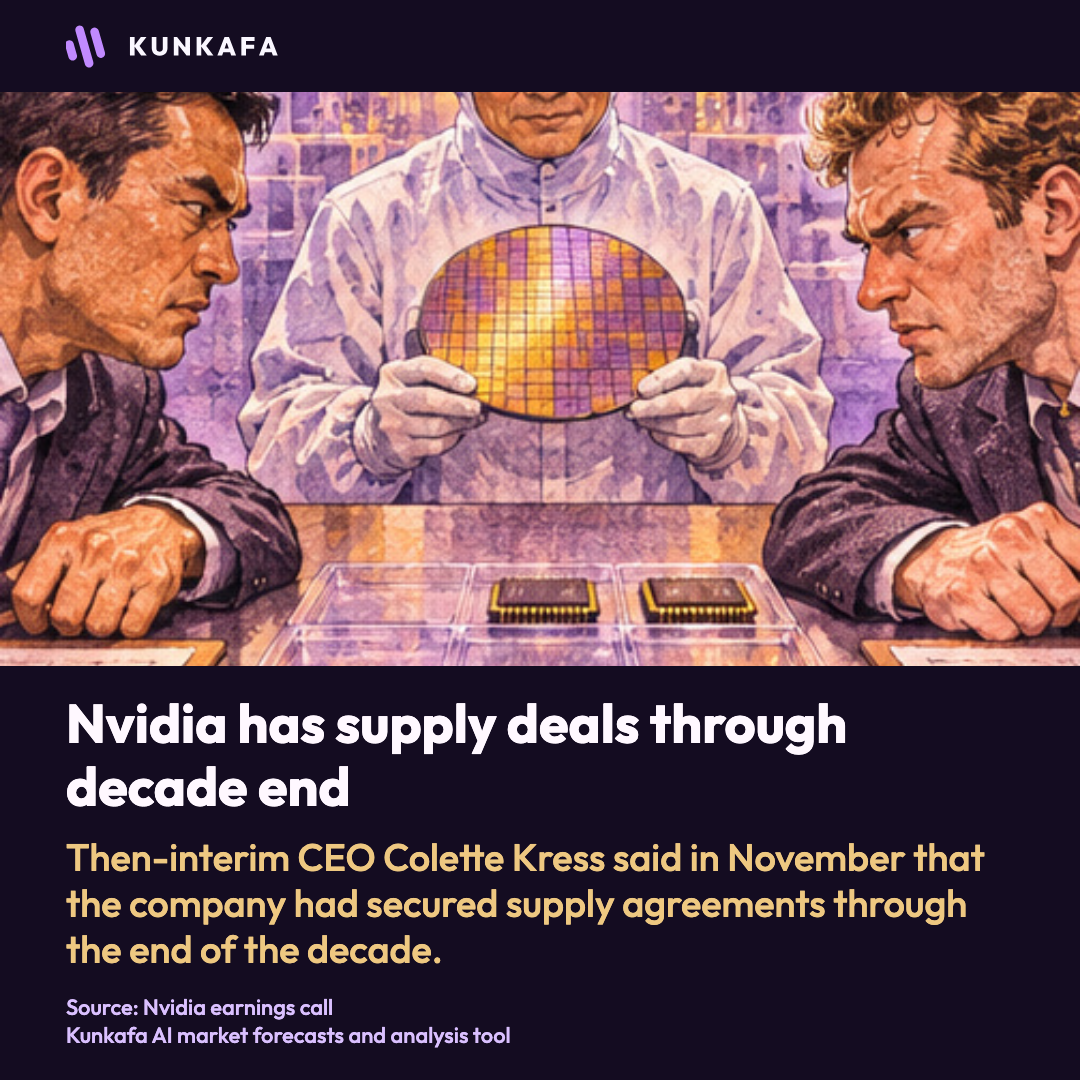
Nvidia’s latest results show the scale of the business at stake. Its data center revenue rose 110% from a year earlier to $107.6 billion in the quarter ended October 25 [2]. On November 17, then-interim chief executive Colette Kress told investors that Nvidia had secured supply agreements through the end of the decade [3].
Aschenbrenner’s timetable depends on AI accelerating its own development. He thinks 2027 alone could deliver the equivalent of three years of AI progress. His reading of memory producers’ valuations and the prices investors put on contracted data centers implies only 0.3 to 0.6 of a year. Those figures are his interpretation of stock prices, which provide no direct measure of technical progress [1].
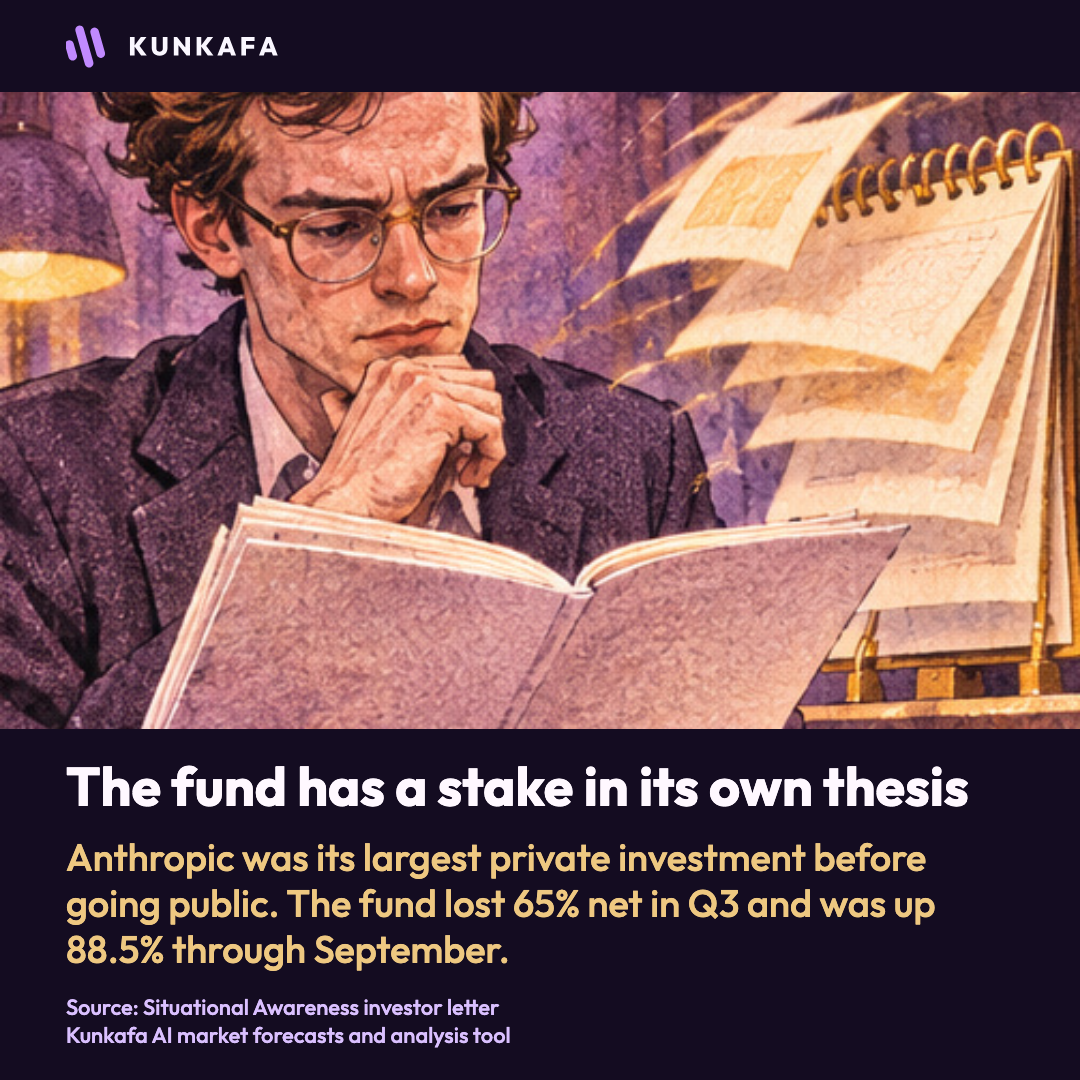
The fund has a financial interest on the other side of the argument. Aschenbrenner identified Anthropic as its largest private investment before the company went public. The fund lost 65% after fees in the third quarter and was still up 88.5% for the year through September [1].
Chip designer Azalia Mirhoseini describes work on using AI to design processors. Andrej Karpathy and Tobi Lütke recount tests of automated research, including Lütke’s warning that a system can learn to excel at one benchmark. Investor Amit considers what faster progress might mean for valuations.
Perspectives on AI and Nvidia’s chip advantage


Sources: [1] Situational Awareness, November 24, pp. 3, 5–6, 63, 71, 112–113 · [2] Nvidia results, November 17 · [3] Nvidia earnings call, November 17 · [4] Letter shared by Amit, November 28.
Kunkafa forecasts
NVIDIA
How far it could move, which way, by when, and how confident Kunkafa is.
Check the latest forecasts
More in Tech

How GSM Made International Mobile Roaming Possible
The first official GSM call reached another city in Finland. A separate agreement the following year took the service across a national border.

3 Best Payment Options for a Saudi Merchant’s First Sales
A SAR 1,500 mada sale can cost SAR 12 to accept in person or SAR 28 by link before VAT. The customer’s location and the merchant’s monthly volume decide which option fits.

Which Size of Falcon-H1-Arabic Fits the Task?
The UAE research team reports three sizes. The middle version has the same published context limit as the largest, a useful distinction for long Arabic documents.