Startups · Explainer
How Saudi Startup Iyris Filters Heat in Greenhouses
A lamp test and field results answer different questions about heat, crop light and water use.

Kunkafa News · Published · 3 min read
 By Kareem FaridDiscuss with the author on X
Here is a visual story in summary
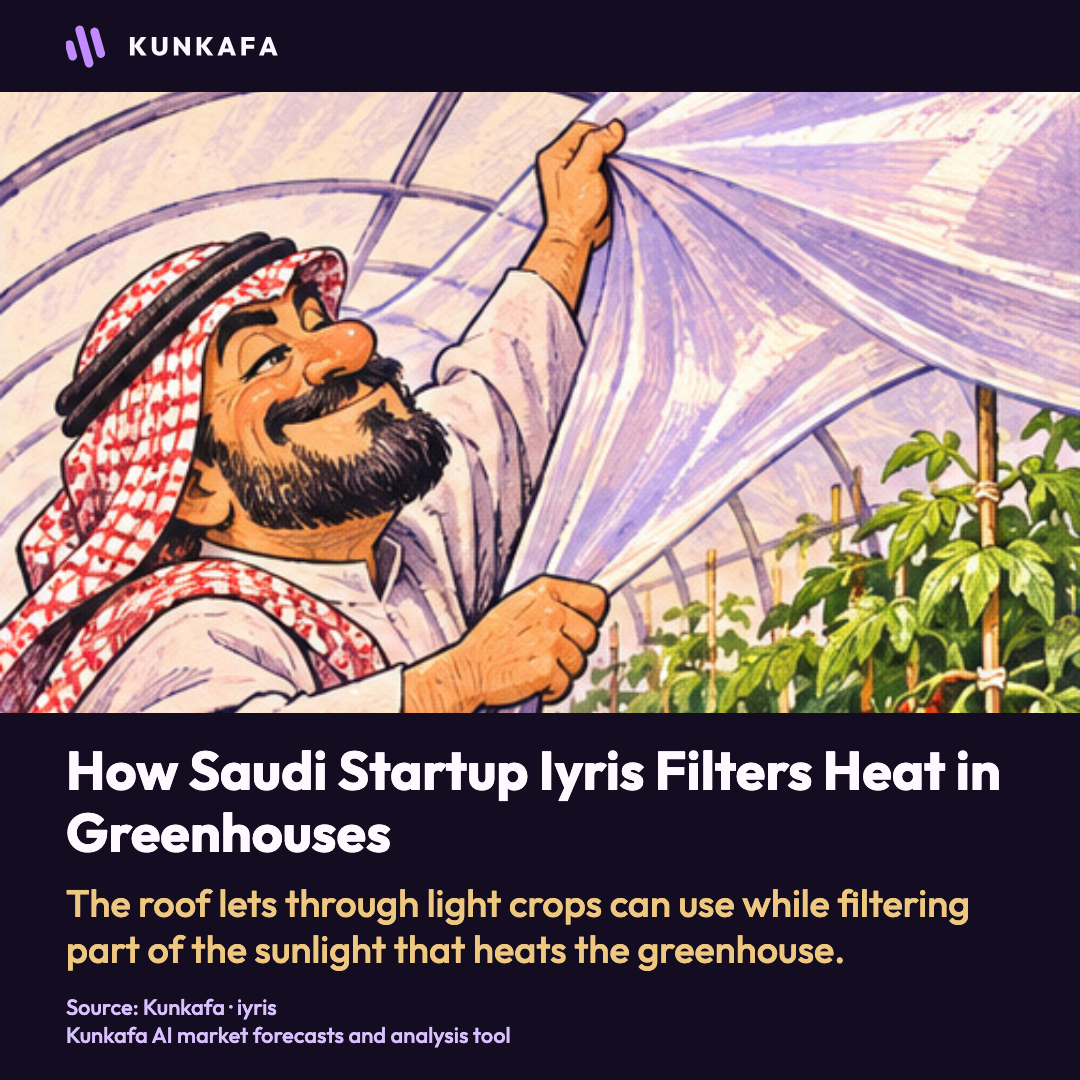



Under a near-infrared lamp, an ordinary greenhouse film transmitted about 670 watts per square metre in a demonstration by iyris. Switching to the Saudi startup’s SecondSky film more than halved the meter reading, according to the engineer who performed the test. [1]
Key points
- The additive goes into the plastic during production of the film.
- Cooling, crop light and marketable yield need separate measurements.
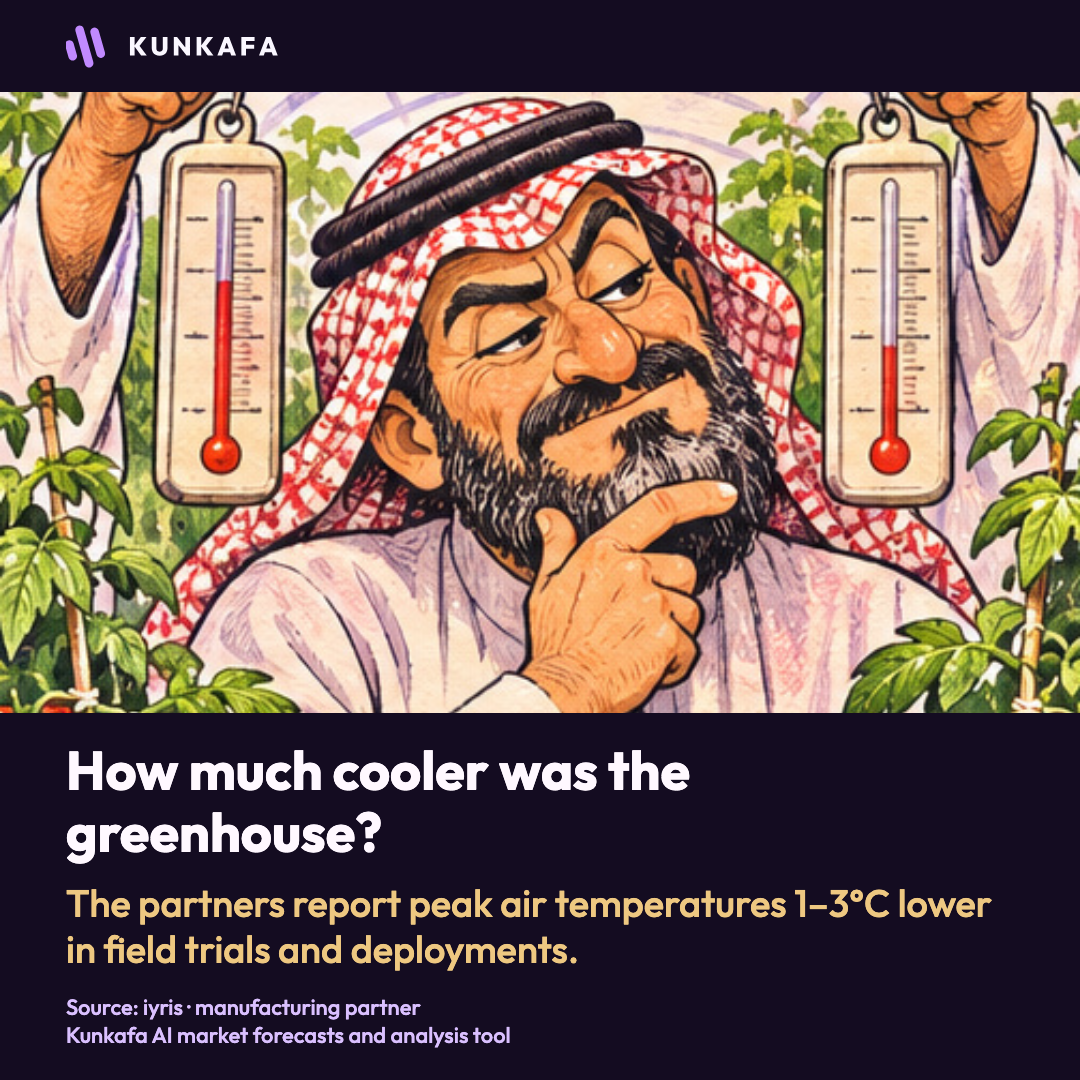
That is a measurement of energy under a lamp. The more relevant number for a grower is smaller: the partners report peak temperatures one to three degrees Celsius lower across field trials and deployments. [1] [2]
Keeping the light that pays for the crop
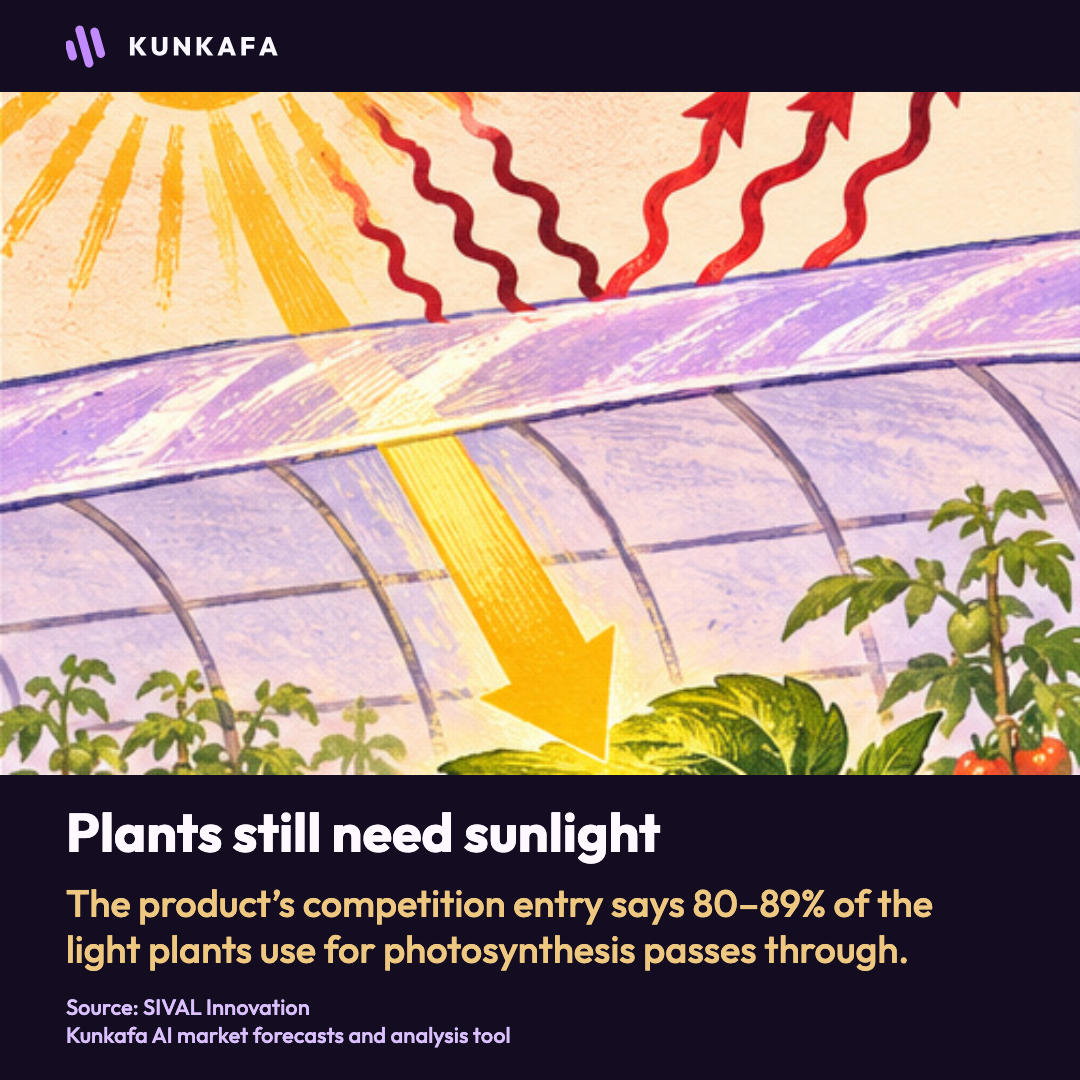
The technology grew out of optoelectronics research at KAUST. Materials that transmitted light used in photosynthesis could still block part of the near-infrared radiation that heats a greenhouse. [3]
Manufacturer Grupo Armando Álvarez blends the additive into the film as it is extruded. A grower buying a replacement roof can therefore change its optical properties without installing a separate cooling machine. [2] [3]
The product’s SIVAL competition entry reports retaining 80–89% of photosynthetically active light. That specification describes light transmission; it cannot on its own establish how much a crop yields over a season. [4]
The Capsule
- Separate the lamp’s energy reading from greenhouse air temperature.
- Compare usable light at crop height during the same season.
- Track saleable kilograms as well as litres of irrigation water.
- Compare the new cover with the film or shade net it replaces.
What happens in a working greenhouse?
The manufacturing partner cites Mexican growers whose yield rose from 20 to 25 tonnes per hectare. The 25% increase is a partner-reported result from Mexico, with no equivalent Saudi harvest series in the demonstration. [1] [2]
A separate King Saud University cucumber trial in Riyadh shows why the comparison matters. A different experimental film produced a whole-period average of 22.27°C against 23.80°C and 25.42°C under two commercial covers, with all three houses using fan-and-pad cooling. [5]
The Riyadh result establishes that cover choice can matter even with cooling already installed. For a buyer considering SecondSky, the missing comparison is its own crop, its existing cover and the value of any extra saleable harvest after paying for the replacement. [2] [5]
Sources: [1] Armando Alvarez, iyris engineer’s lamp demonstration · [2] iyris and Grupo Armando Álvarez, OASIS SecondSky field cases · [3] KAUST, development of the heat-blocking roof · [4] OASIS SecondSky entry in the SIVAL Innovation competition · [5] King Saud University researchers, comparative Riyadh greenhouse study
Kunkafa forecasts
Brent oil
How far it could move, which way, by when, and how confident Kunkafa is.
Check the latest forecastsMore in Startups

How Pure Harvest Grows Tomatoes Through a UAE Summer
The Al Ain grower trades the long journey of imported fruit for the cost of keeping a crop cool beside its customer.

Where Does GreenPan Take Egypt’s Used Cooking Oil?
An Egyptian household can exchange a few kilos of used oil for household goods. Tagaddod’s real customers sit farther along the chain: fuel producers buying a filtered raw material.

How Dubai’s The Surpluss Found a Buyer for Used Pallets
An Ajman manufacturer was paying to dispose of used pallets. A Sharjah carpenter 30 kilometres away could put the wood to work.