Startups · Explainer
How Foodics and Qlub Connect a Restaurant Bill to Its Table
Paying by QR code can finish the diner’s evening before it closes the cashier’s ticket.

Kunkafa News · Published · 3 min read
 By Kareem FaridDiscuss with the author on X
Here is a visual story in summary
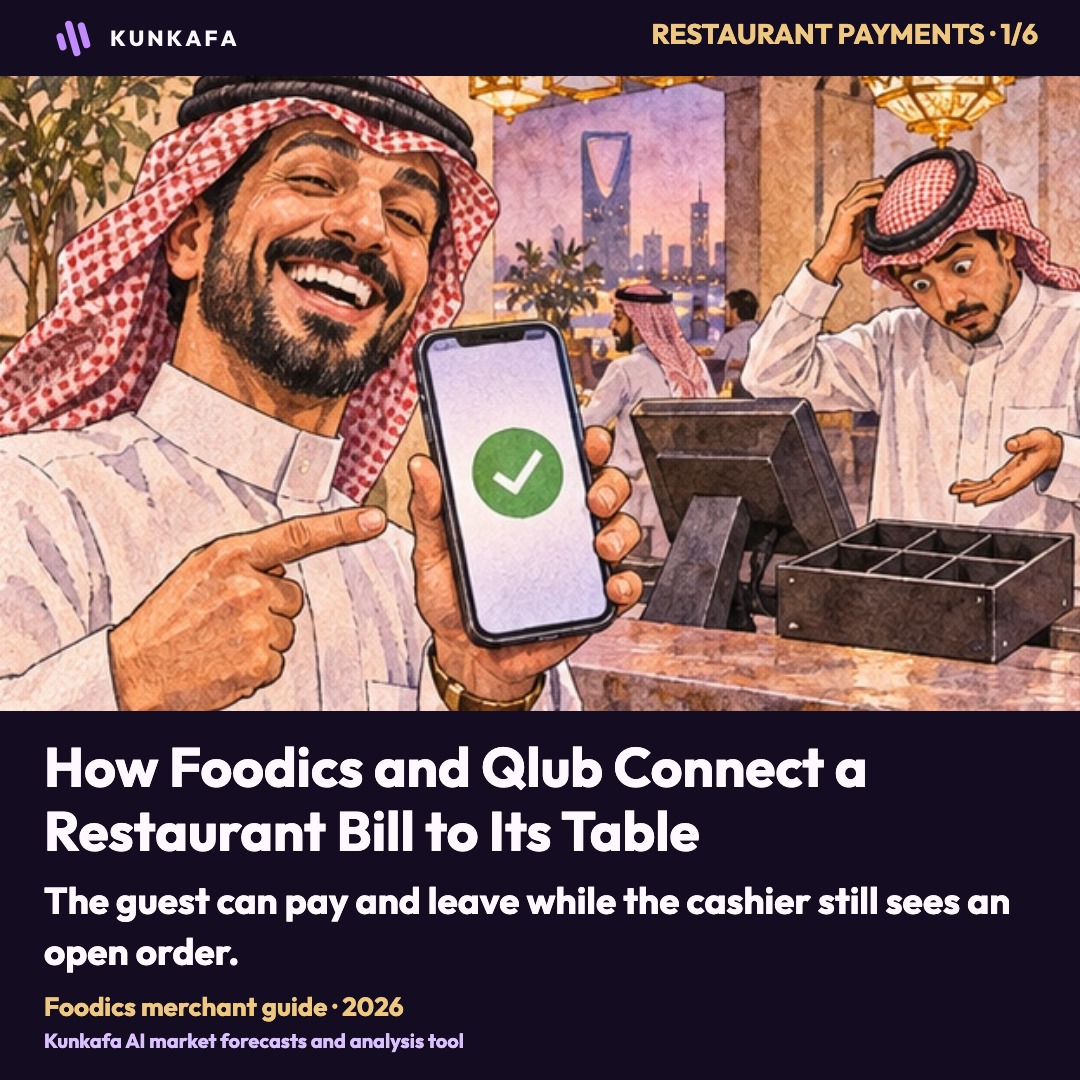
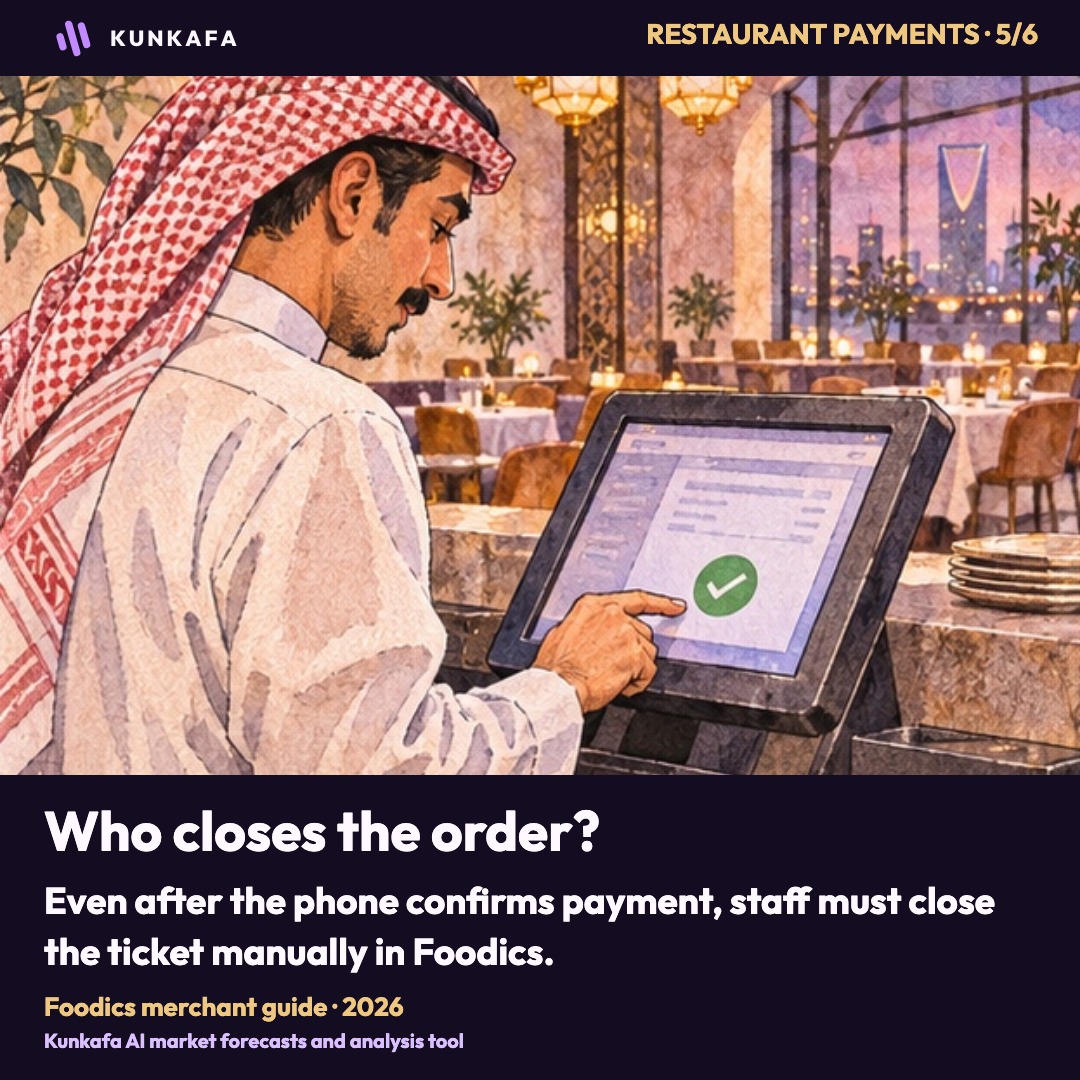
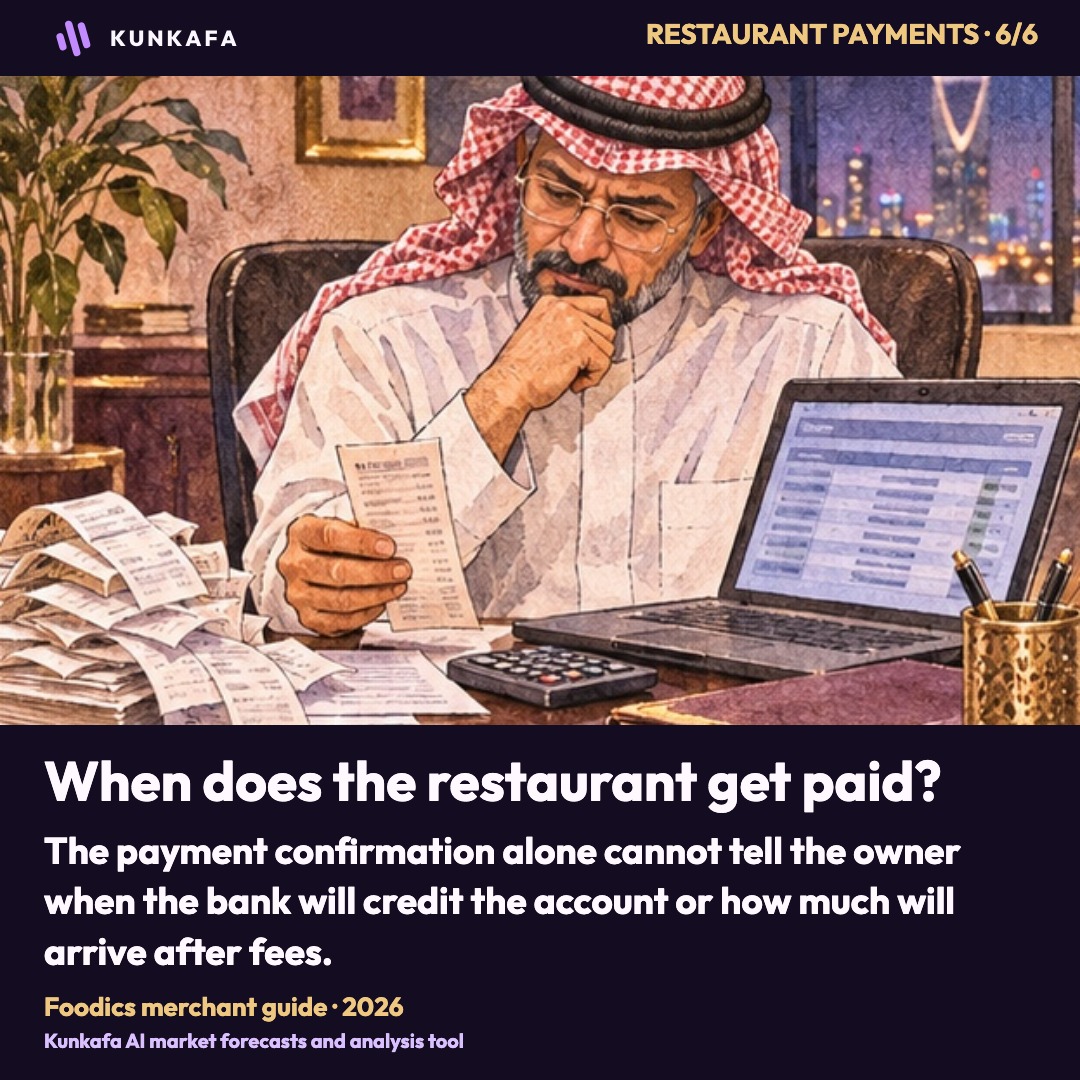
A diner can leave a restaurant with a successful payment on their phone while the same table remains open on the cashier’s screen. Saudi restaurant-technology company Foodics and payments startup Qlub describe exactly that handoff in their merchant instructions. Foodics identifies the order and table, Qlub records the payment and tip, and a member of staff closes the ticket. [1] [2]
Key points
- Each table receives its own QR code under the Qlub integration.
- The merchant can see a confirmed payment in Qlub before the Foodics order is closed.
The order is the useful starting point
A Stanford teaching case based on a 2021 interview with Foodics chief executive Ahmad Al-Zaini describes a group entering orders on the company’s point-of-sale system at a Riyadh Starbucks. That is an example of Foodics capturing the order. A different capability emerged in the Qlub partnership announced in Riyadh in 2022: an existing dine-in ticket could be called up on a guest’s phone without asking the guest to install an app. [1] [3]
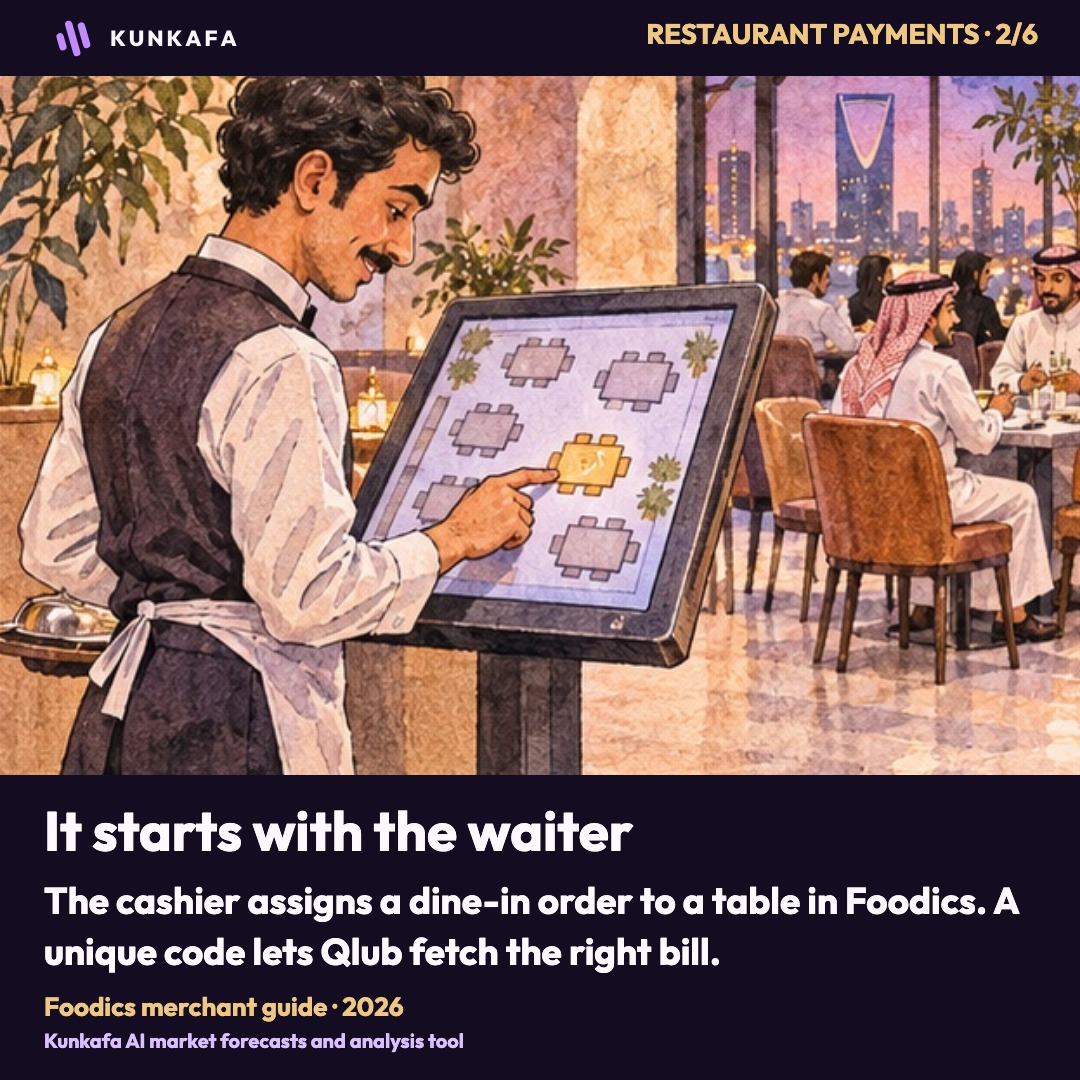
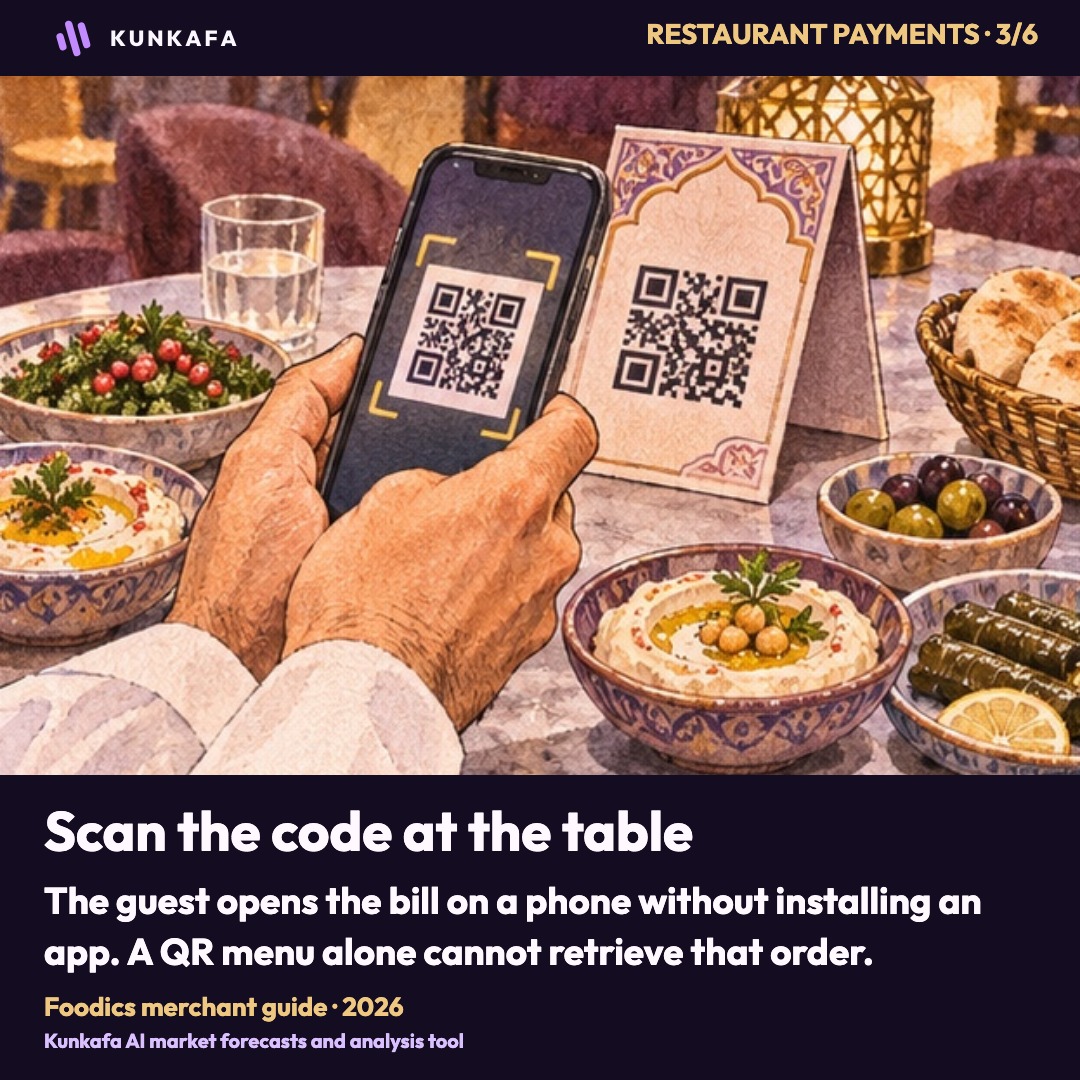
The merchant needs a Qlub account and the owner’s permission to connect it to Foodics. The cashier assigns the order to the table. Its unique code gives the payment service a way to retrieve the right bill. A generic QR code linking to a menu cannot supply that order information. [2]
The Capsule
- Foodics holds the ticket and its table assignment.
- Qlub displays the successful payment and any tip.
- Staff mark the order paid in Foodics after confirmation.
- The bank payout is a separate entry for reconciliation.
Where the integration stops
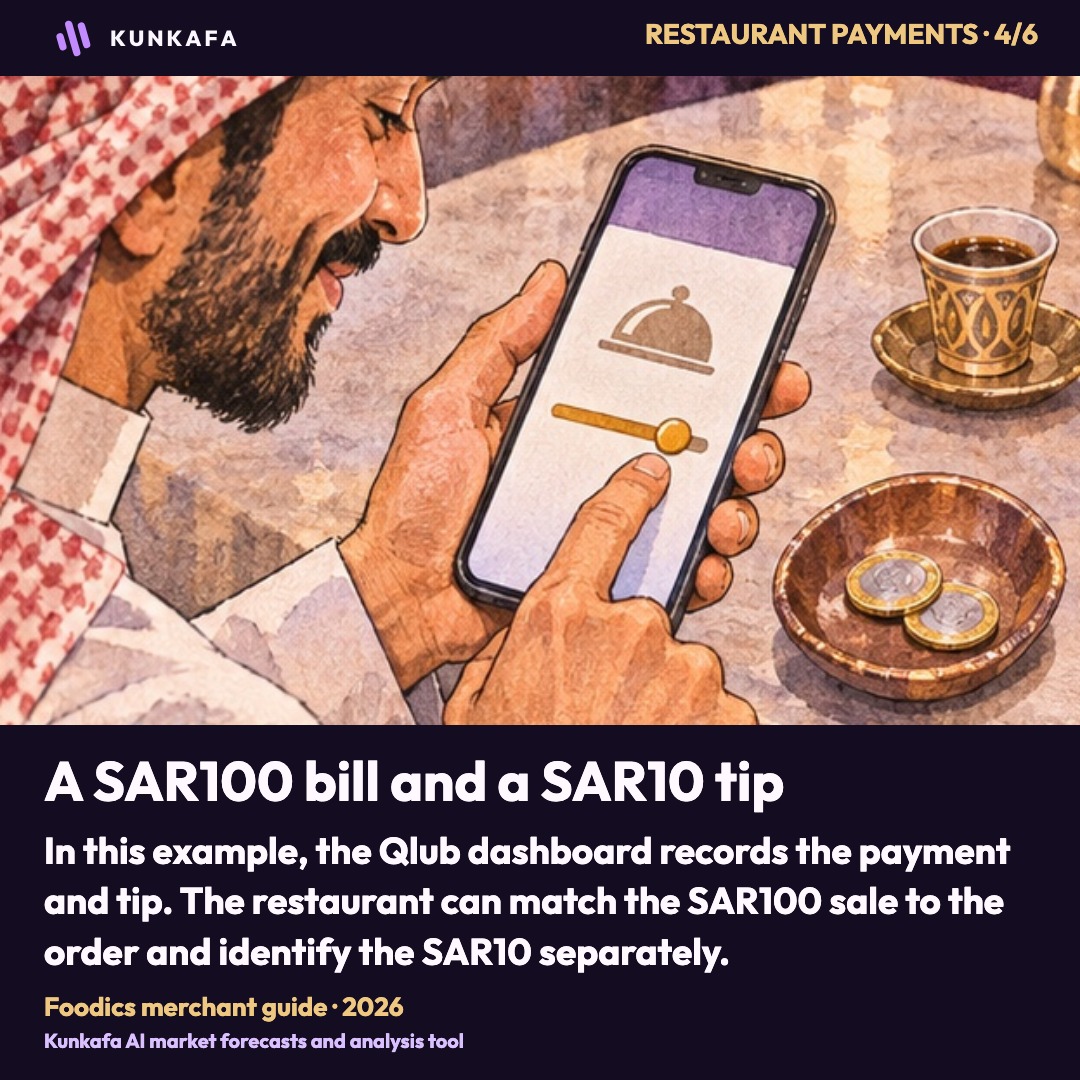
Consider an illustrative SAR100 tax-inclusive bill and a SAR10 tip. The Qlub dashboard shows the payment and tip. The restaurant can reconcile the SAR100 sale with its order and separately identify the SAR10. The documented integration leaves the cashier to close the ticket manually. Nor does that confirmation establish the date or amount credited to the merchant’s bank after any fees. [2]
Foodics specifies tax-inclusive pricing for this connector. Discounts flow into the total but do not appear as separate receipt lines in Qlub, and this integration has no menu view. Those distinctions matter to a restaurant deciding what the guest and the closing-shift team can each verify from the screen in front of them. [2]
Sources: [1] Foodics partnership announcement, 4 August 2022 · [2] Foodics merchant documentation for Qlub · [3] Jada/Stanford case, CEO interview, 2021
Kunkafa forecasts
Euro - Dollar
How far it could move, which way, by when, and how confident Kunkafa is.
Check the latest forecastsMore in Startups

Why Form Energy Is Building a Battery That Rusts
A Minnesota utility wants power for a prolonged shortage. Its Cambridge pilot separates Form Energy’s 100-hour design from what has been verified on the grid.

Three xAI Founders Launch Epochal to Outpredict Humans
Their first tool rewinds the web. On 347 forecasting tasks, Epochal tested whether an AI could revisit the past without seeing how events turned out.

How Cartona Stocks Egypt’s Corner Shops Without Warehouses
Its marketplace gives grocers competing wholesale offers and ways to pay. The supplier’s delivery promise and the credit agreement still determine what reaches the shop and who gets paid.