Startups · Explainer
Why Form Energy Is Building a Battery That Rusts
A Minnesota utility wants power for a prolonged shortage. Its Cambridge pilot separates Form Energy’s 100-hour design from what has been verified on the grid.

Kunkafa News · Published · 4 min read
 By Kareem FaridDiscuss with the author on X
Here is a visual story in summary
Key points
- Iron oxidizes as the battery supplies power. Charging converts the rust back to metallic iron.
- Great River Energy designed the Cambridge pilot for 1.5 MW over 100 hours. An operator filing separately tracks the path to commercial operation.
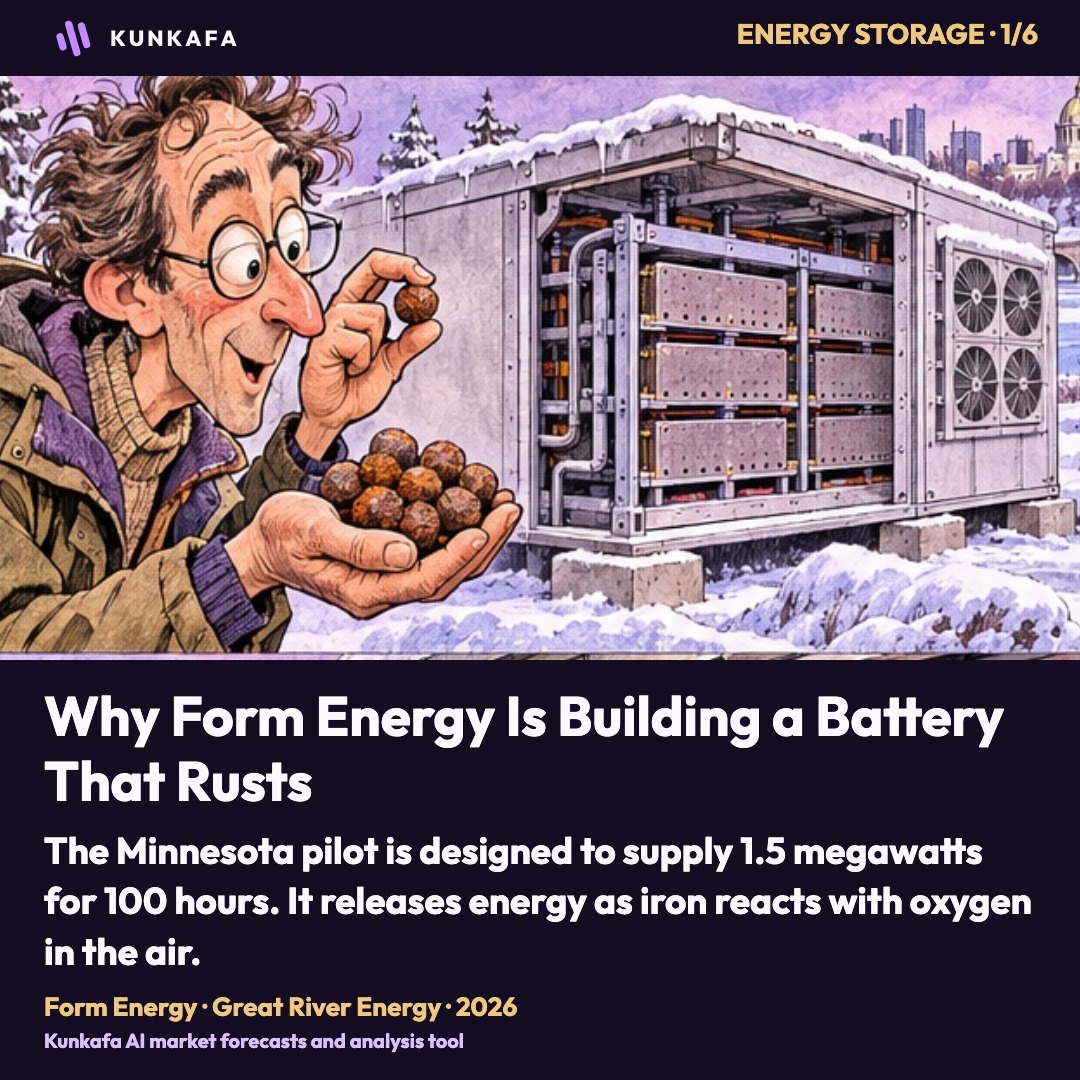
At a Minnesota power plant built to meet peaks in electricity demand, Great River Energy has been preparing a test of a very different resource. Its partner Form Energy offers batteries designed to keep discharging after a short evening peak has passed. In Cambridge the partners chose a 1.5-megawatt pilot with a rated duration of 100 hours. What makes that duration conceivable is a chemical process familiar to anyone who has left iron in wet air. [1] [2]
A battery that can reverse rust
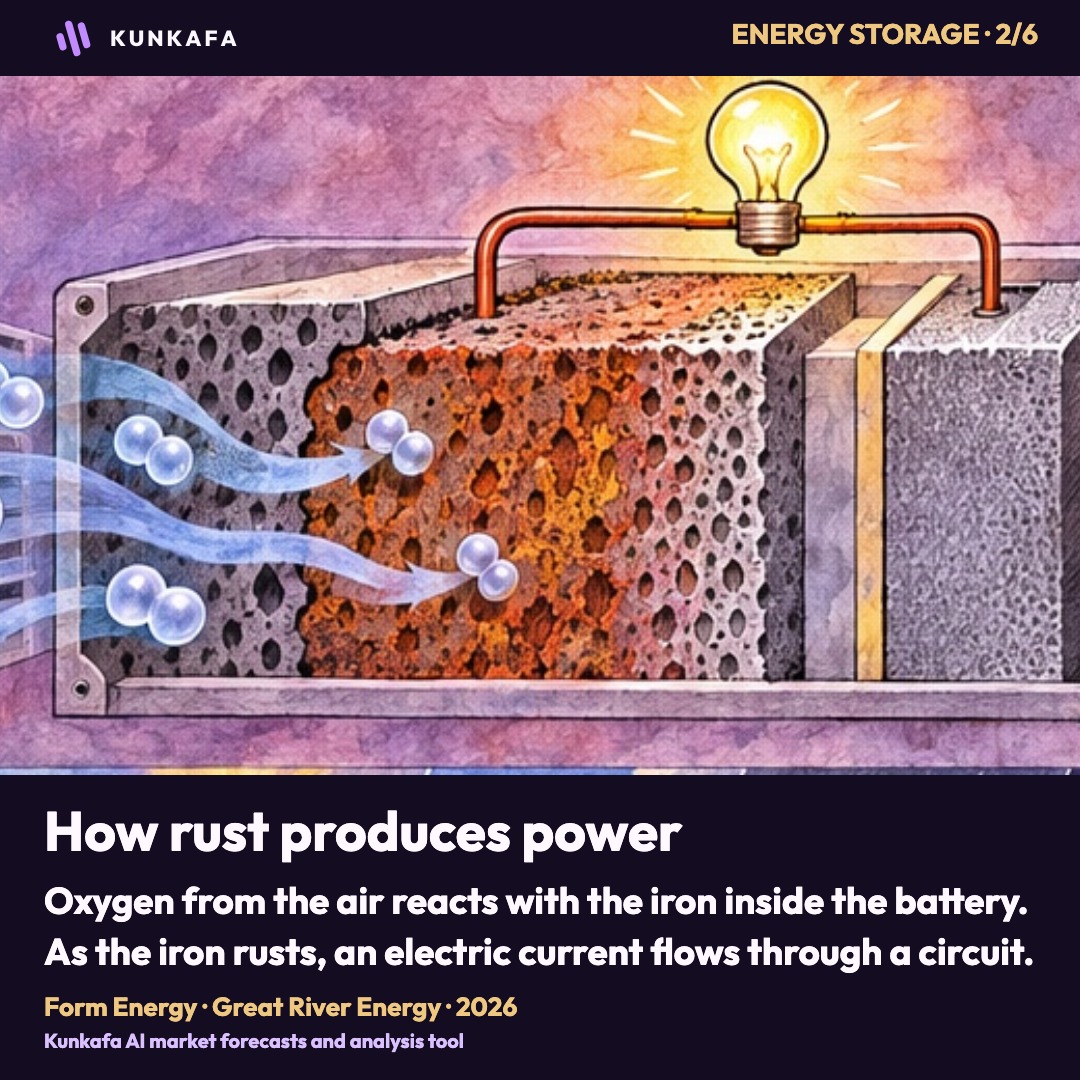
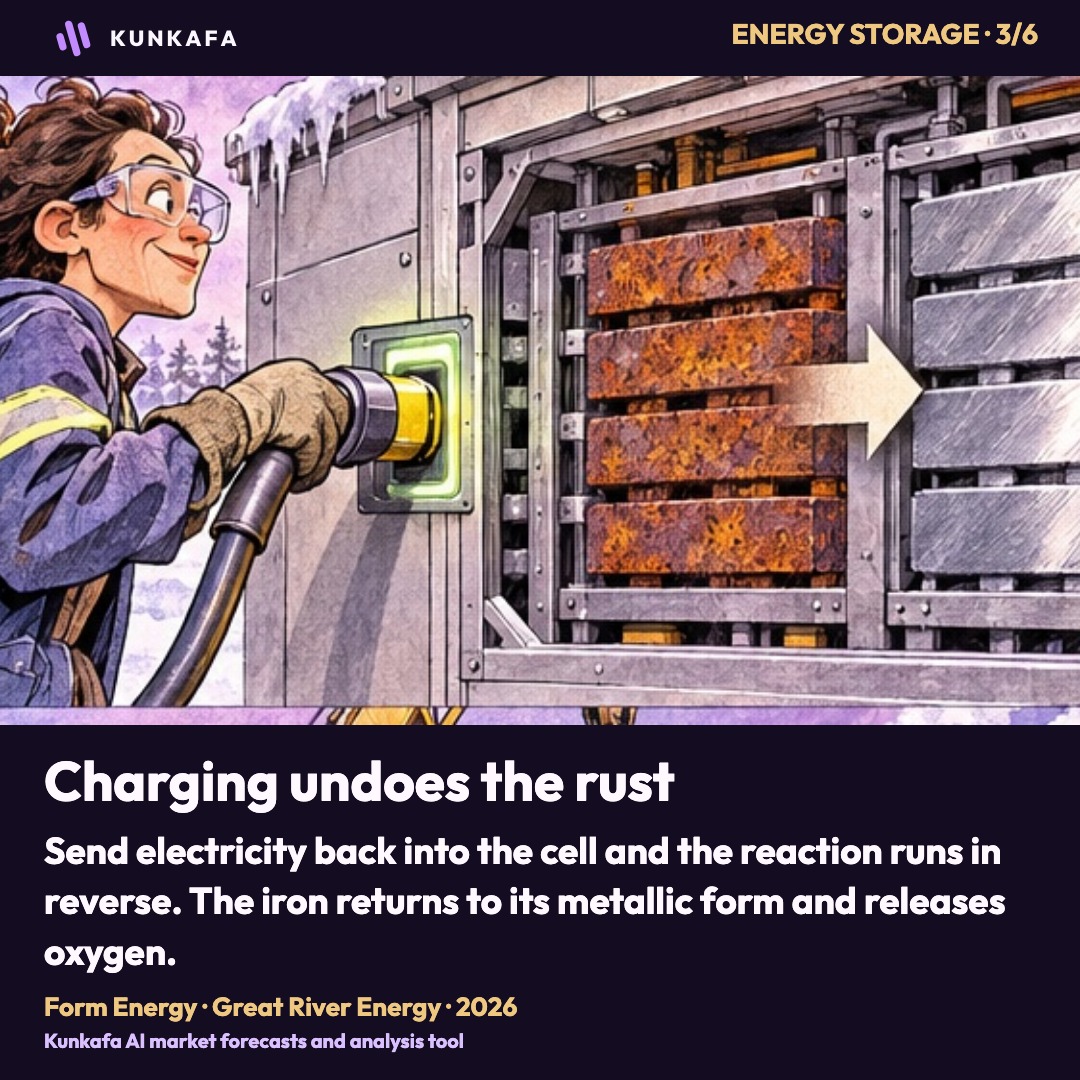
During discharge, oxygen drawn from the air reacts with metallic iron. Oxidation releases energy that the cell delivers through a circuit. Supplying electricity reverses the process, restoring the iron and releasing oxygen. Form stacks cells containing iron and air electrodes with a water-based electrolyte into modules, then groups the modules in enclosures. Iron is abundant, and the company is betting that a stationary utility can devote space to a long-duration system built around it. [2]
What four days of electricity means
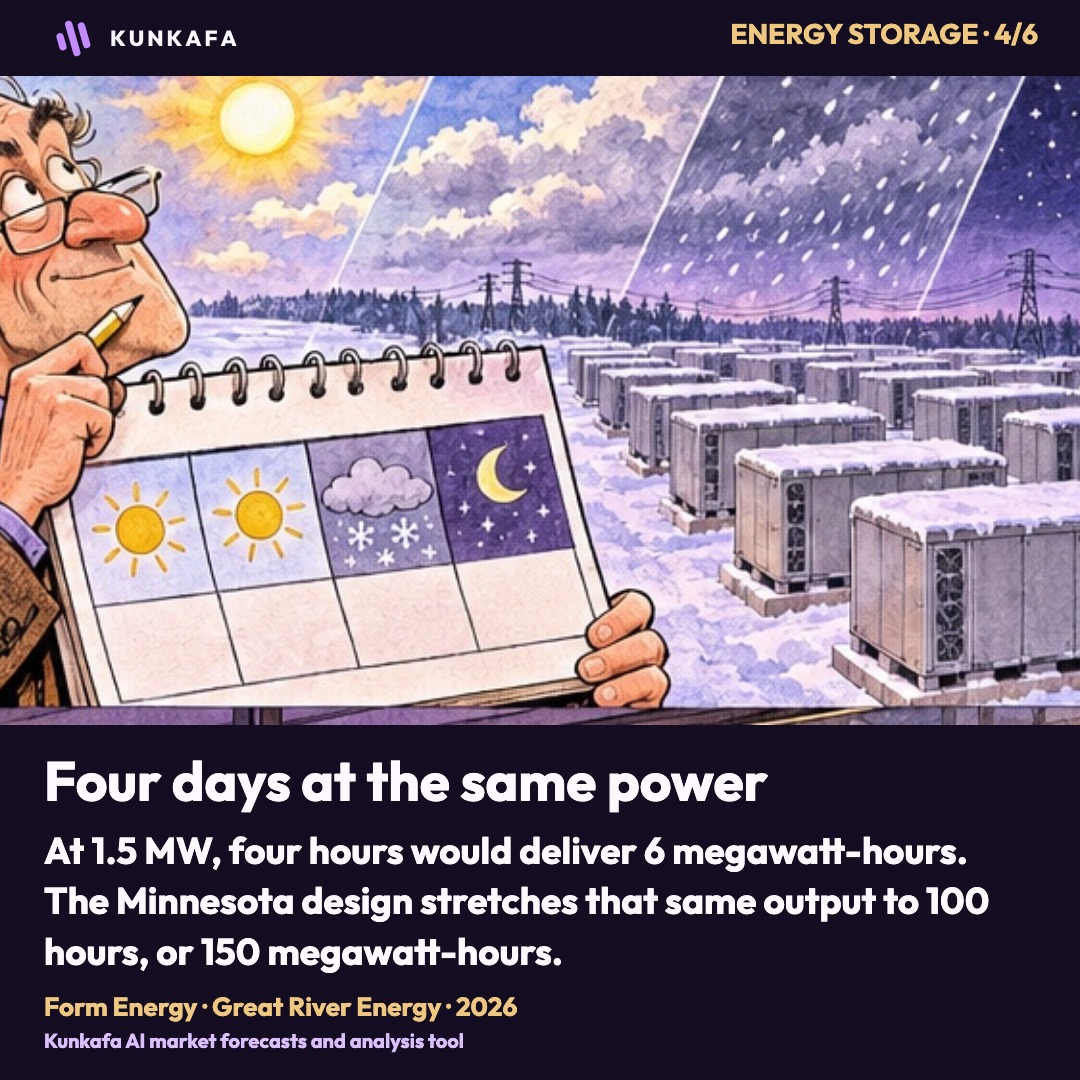
At the Cambridge rating, multiplying 1.5 MW by 100 hours gives 150 megawatt-hours of designed output. A four-hour system at the same power would supply 6 MWh. The longer system addresses a shortage that outlasts several overnight cycles. It still supplies only 1.5 MW at rated output. A utility facing a 10 MW shortfall cannot cover it with this single pilot simply because the project has many hours of energy available. [1] [2]
The Capsule
- Read megawatts as instantaneous power and megawatt-hours as energy across time.
- Multiply 1.5 MW by 100 hours to read the Cambridge design as 150 MWh.
- Check whether a reported test names this site, its power and run time.
- Look for the utility’s commissioning record when tracking commercial readiness.
The chronology at Cambridge
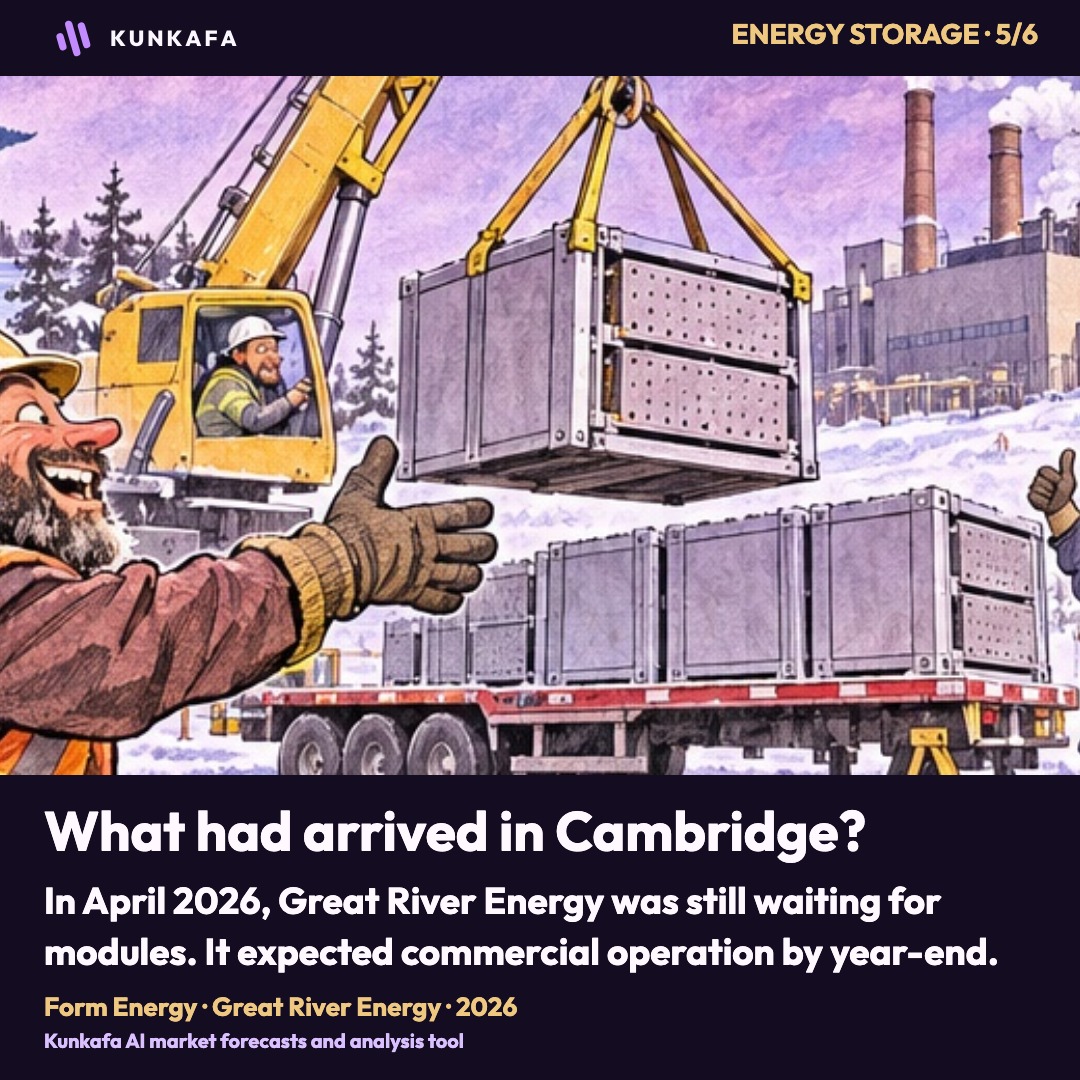
The partners began working together in 2020 and broke ground in 2024. Form lists deployment of its first system for commercial demonstration with Great River Energy as a 2025 milestone. In its April 2026 resource plan, the utility said site structures and other construction were substantially complete, it was awaiting remaining modules, and it anticipated commercial operation by year-end. Deployment can begin with equipment on site well before an operator accepts a complete plant. [1] [3] [4]
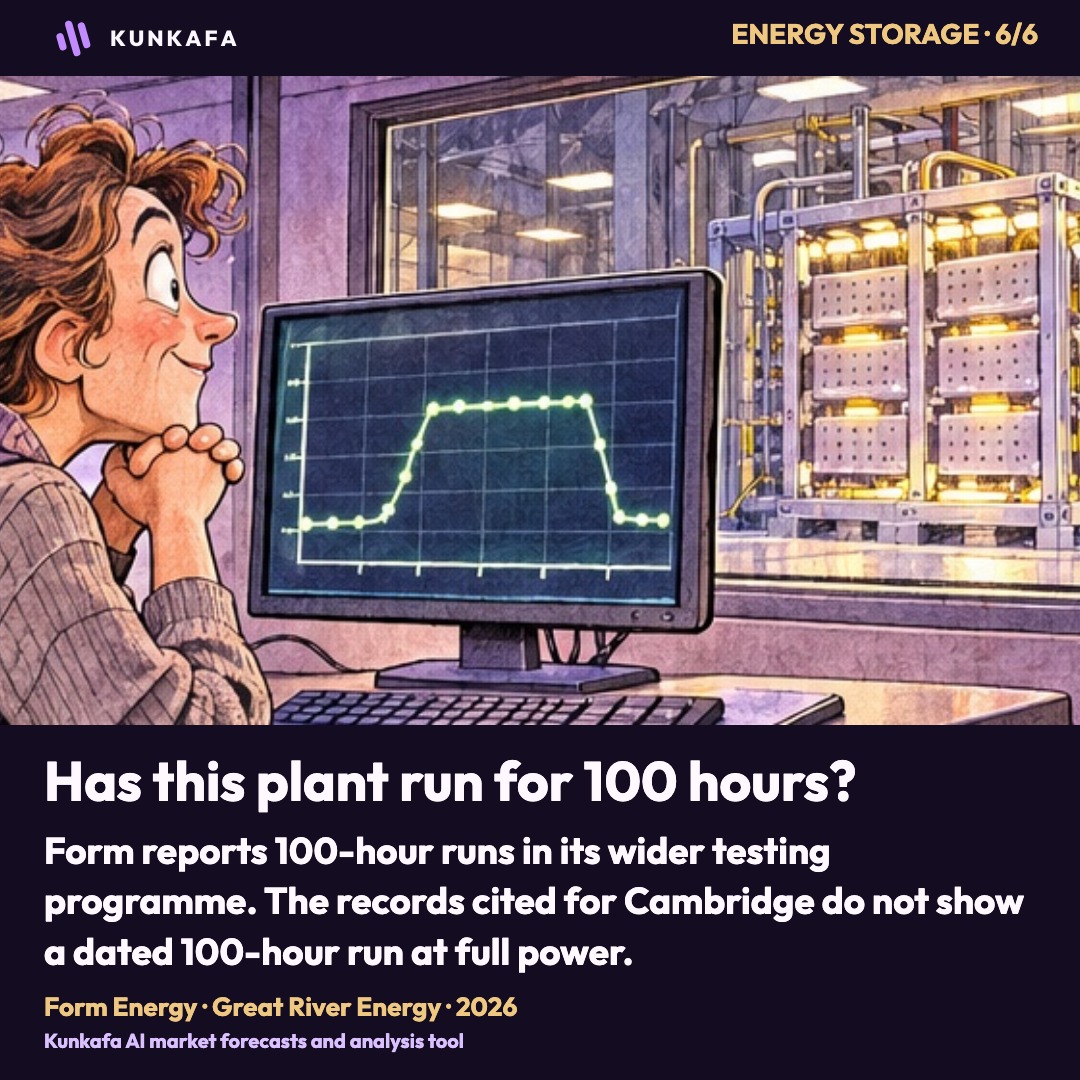
Form also reports continuous 100-hour performance in its wider 2026 test programme. That evidence addresses the technology across its testing fleet. The operator records cited for Cambridge supply no dated, site-specific result showing 1.5 MW delivered for 100 consecutive hours. For this particular plant, a dispatch trace, measured energy at the grid connection and the operator’s acceptance date would establish what it supplied, how long it ran and when it became available for service. [3] [4]
Sources: [1] Great River Energy, Cambridge groundbreaking · [2] Form Energy, battery design · [3] Form Energy, test and deployment milestones · [4] Great River Energy, April 2026 integrated resource plan
Kunkafa forecasts
Nasdaq 100
How far it could move, which way, by when, and how confident Kunkafa is.
Check the latest forecastsMore in Startups

Three xAI Founders Launch Epochal to Outpredict Humans
Their first tool rewinds the web. On 347 forecasting tasks, Epochal tested whether an AI could revisit the past without seeing how events turned out.

How Cartona Stocks Egypt’s Corner Shops Without Warehouses
Its marketplace gives grocers competing wholesale offers and ways to pay. The supplier’s delivery promise and the credit agreement still determine what reaches the shop and who gets paid.