Markets · Explainer
Why UK Pension Funds Sold Gilts as Prices Fell in 2022
A pension hedge generated a cash demand that could not wait for pensions to fall due. The Bank of England bought £19.3 billion of gilts to arrest a forced-sale cycle.

Kunkafa News · Published · 3 min read
 By Kareem FaridDiscuss with the author on X
Here is a visual story in summary


Key points
- The Bank estimated margin and collateral calls above £70 billion between September 23 and October 14.
- The operation bought time for funds to raise liquidity and reduce leverage.
As British gilt prices fell in late September 2022, some of the pension funds that needed those bonds to hedge long-term obligations had to sell them immediately. The cash was due on their financial contracts long before pension payments came due. [1]
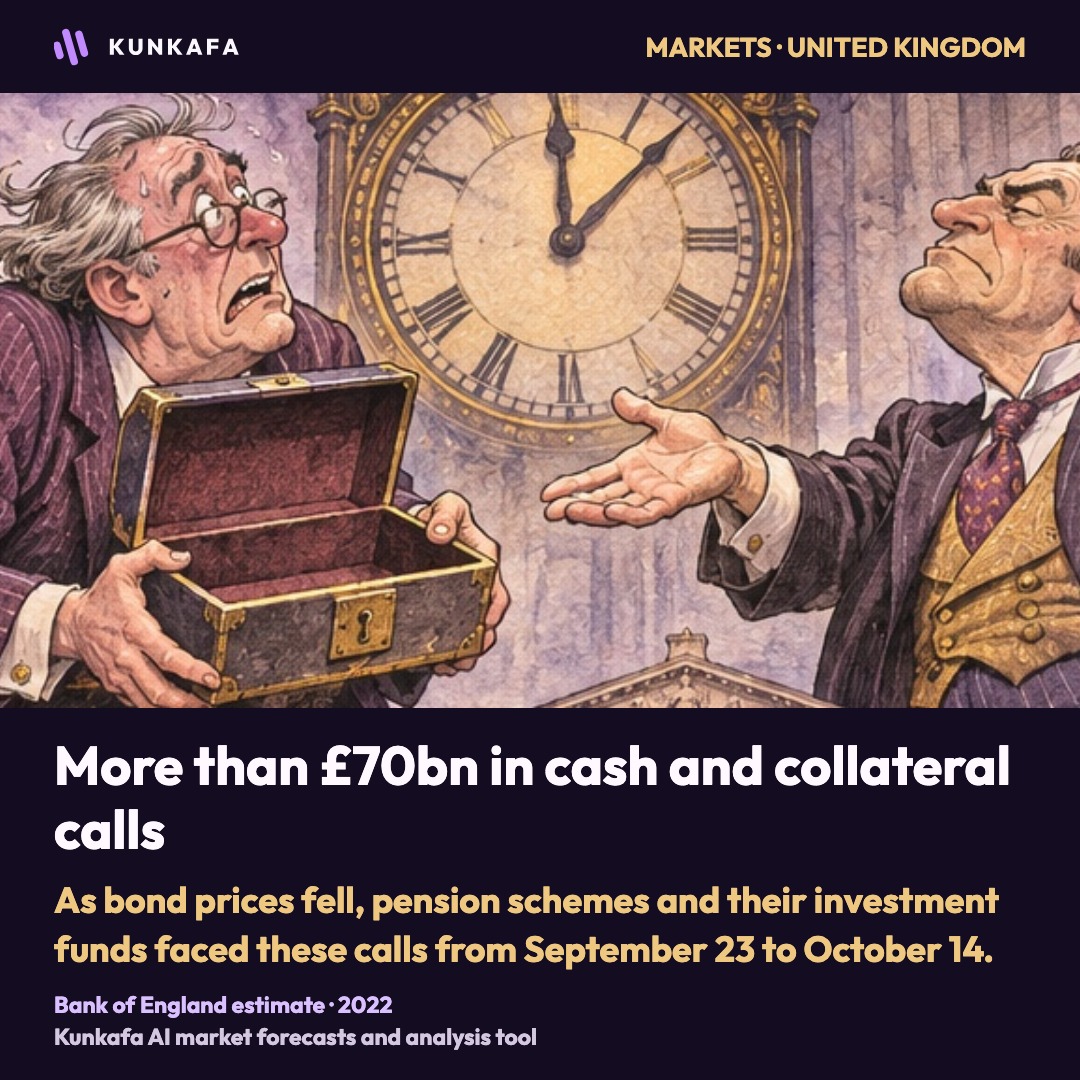
The Bank of England estimated more than £70 billion of margin and collateral calls on liability-driven investment funds and pension schemes from September 23 to October 14. [1]
A hedge with an immediate cash bill
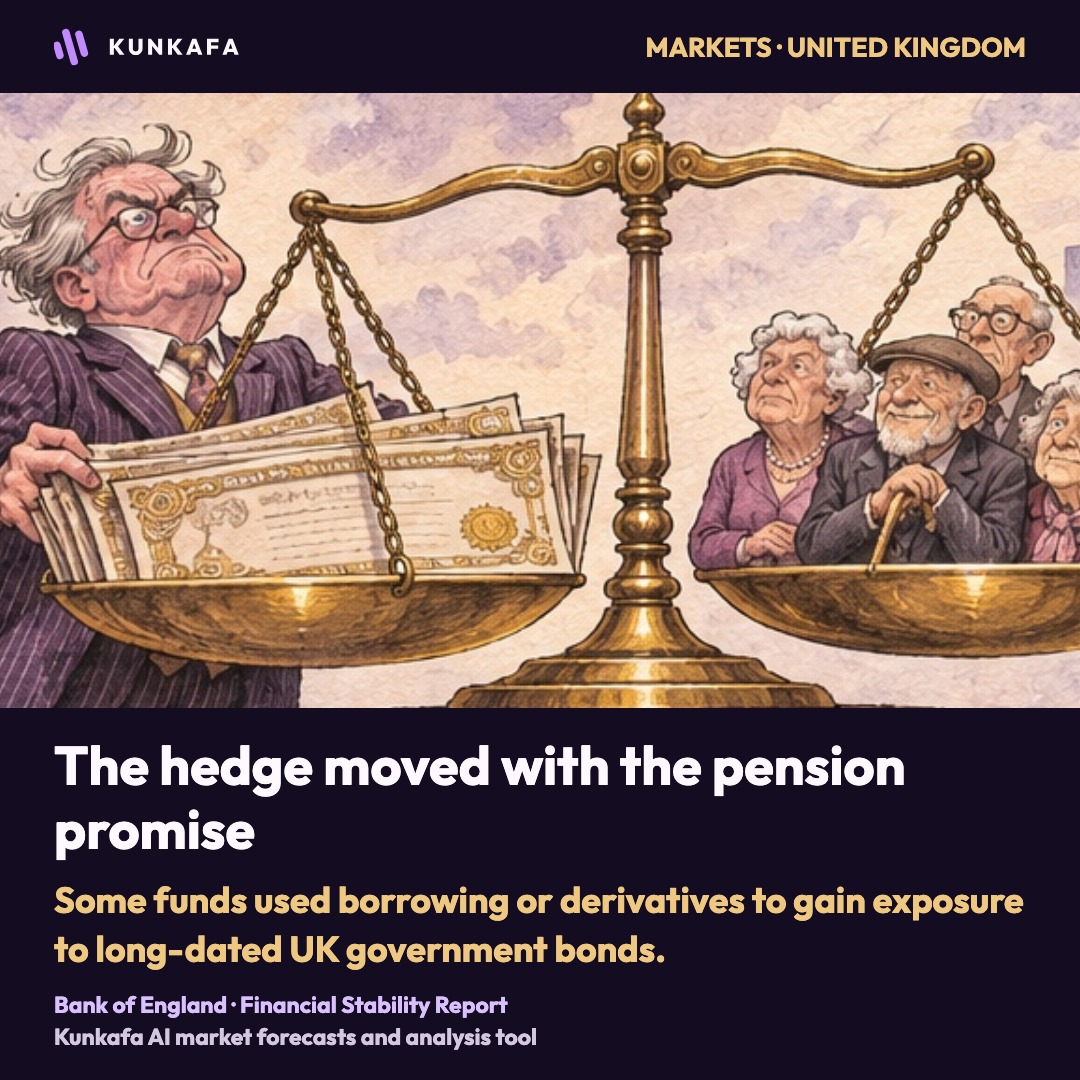
Defined-benefit schemes promise members future payments. Some used leveraged exposure to long-dated gilts, through derivatives or borrowing against securities, to match the way those liabilities change in value when interest rates move. [1]
When long-term yields rose rapidly, gilt prices fell. A lower present value for future pensions did not put cash into a fund’s account to cover a collateral call that afternoon. [1]
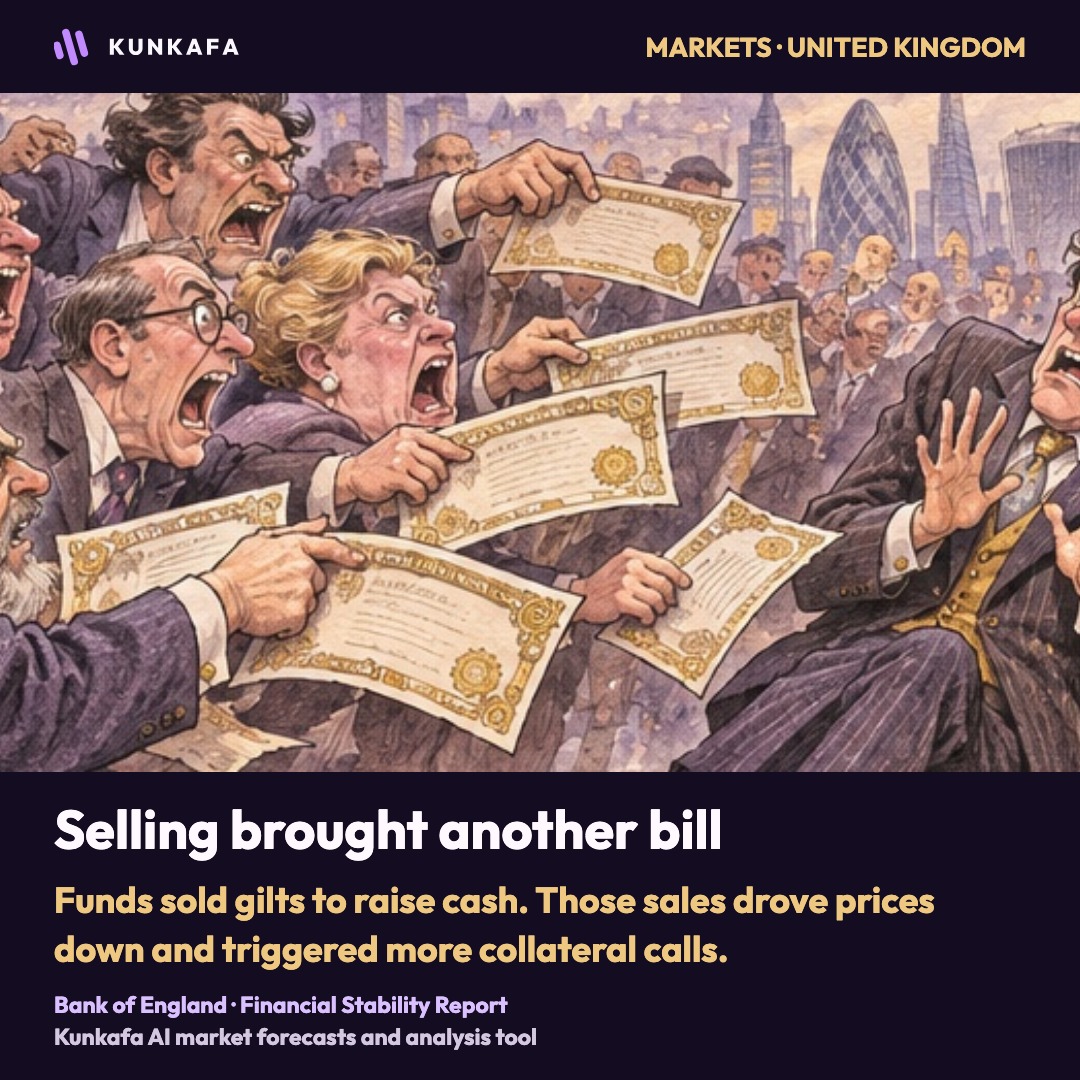
Funds could call their pension investors for cash, draw on buffers or sell assets. Selling gilts into an already thin market pushed prices lower and generated another round of margin calls. [1]
The Capsule
- Follow the timing of collateral calls separately from the pension payment dates.
- Distinguish a decline in the value of future obligations from cash available today.
- Watch what many funds must sell at once to understand why a price fall can accelerate.
- Compare actual central-bank purchases with the total collateral calls.
A buyer with a fixed departure date
On September 28, the Bank stepped in to buy long-dated conventional gilts. It later included inflation-linked gilts. Purchases ended on October 14 as announced, giving funds a window to raise cash and reduce leverage. [1][2]
The Bank estimated about £23 billion in gilt sales by LDI funds and £14 billion by defined-benefit schemes over the period. Those amounts fell short of the collateral calls because schemes also used cash and sold other assets. [1]
The central bank bought £12.1 billion of conventional gilts and £7.2 billion of index-linked bonds. By January 2023 it had sold its entire £19.3 billion crisis portfolio. The intervention had provided a temporary buyer while funds repaired their cash positions. [2][3]
Sources: [1] Bank of England financial stability report · [2] Bank of England temporary purchase programme · [3] Bank of England portfolio unwind.
Kunkafa forecasts
Euro - Dollar
How far it could move, which way, by when, and how confident Kunkafa is.
Check the latest forecastsMore in Markets

How to Compare Two MSCI World ETF Fees in France
Two French disclosures model the same €10,000 over one year. One shows €20 in product costs, the other €38. The five-year column needs a different reading.

Can a Covered Call Cost You a Stock Dividend?
A shareholder can lose an upcoming dividend if an American-style call is exercised early. The timing of exercise can matter more than the notification.

US Stocks Close at 1 p.m. New York Time on Black Friday
The day after Thanksgiving cuts three hours from Friday’s regular stock trading session.