Tech · Explainer
The UAE Is Pulling Water From Desert Air
A salt-filled gel can absorb moisture. A mesh can catch fog. Researchers in the UAE and US plan to test whether the two together can supply water as the weather changes.

Kunkafa News · Published · 5 min read
 By Kareem FaridDiscuss with the author on X
Here is a visual story in summary
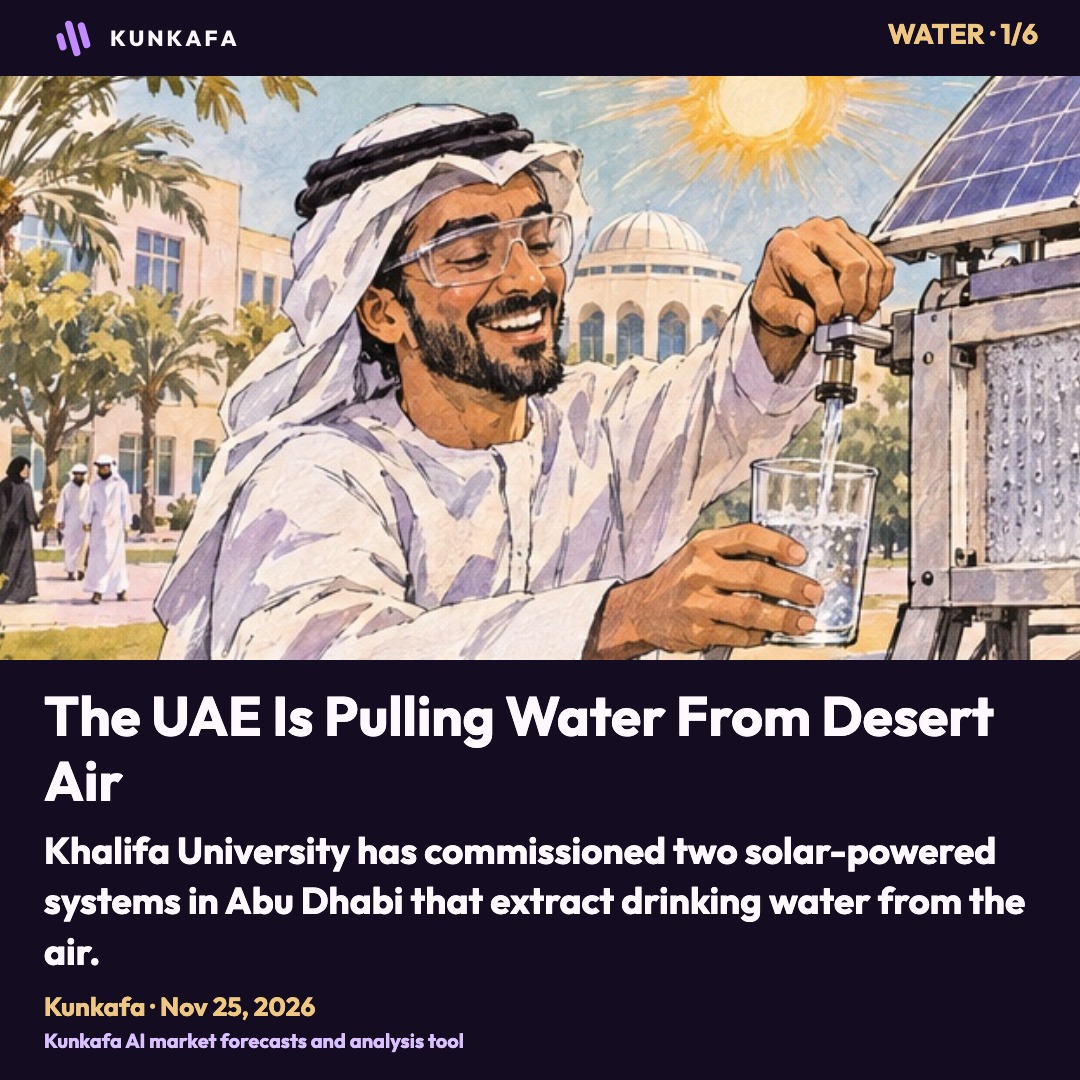
Khalifa University has commissioned two solar-powered systems in Abu Dhabi that extract drinking water from the air. [12]
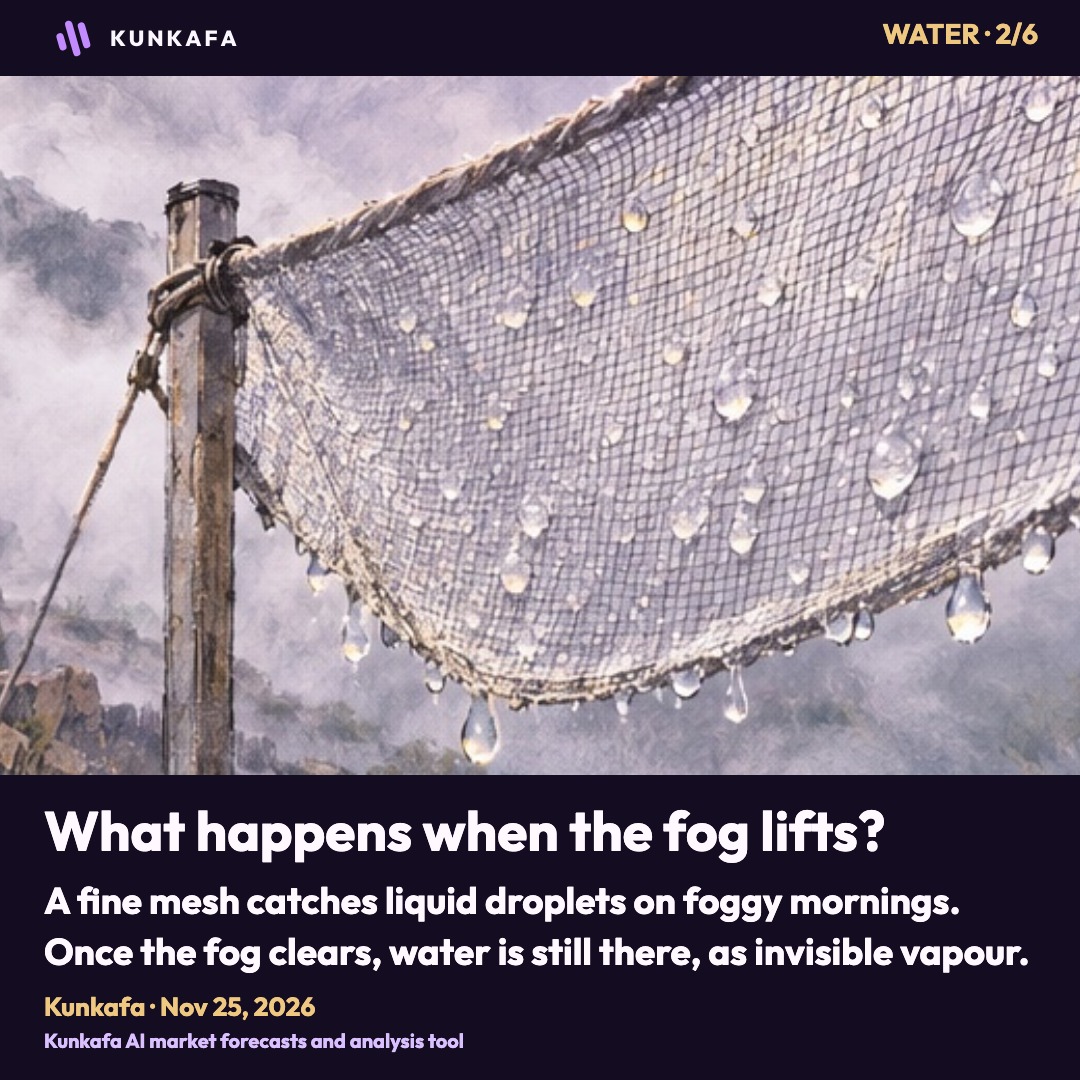
On a foggy morning, a fine mesh can catch water droplets. When the fog lifts, a different material can still draw moisture from the air.
The UAE is funding researchers at United Arab Emirates University, Georgia Tech and MIT to put both methods into one device. The UAE embassy in Washington highlighted the project on November 24, a week after the grant was announced. [1] [2]
How much water can a square metre of air collector yield?
💧 @mbzwi is funding a joint research project between @UAE_University, @GeorgiaTech and @MIT to develop technology that pulls water directly from air — no conventional desalination required. uaeinusa.co/4sCd1E7A
Bachir El Fil, a Georgia Tech mechanical engineer, leads the two-year project.
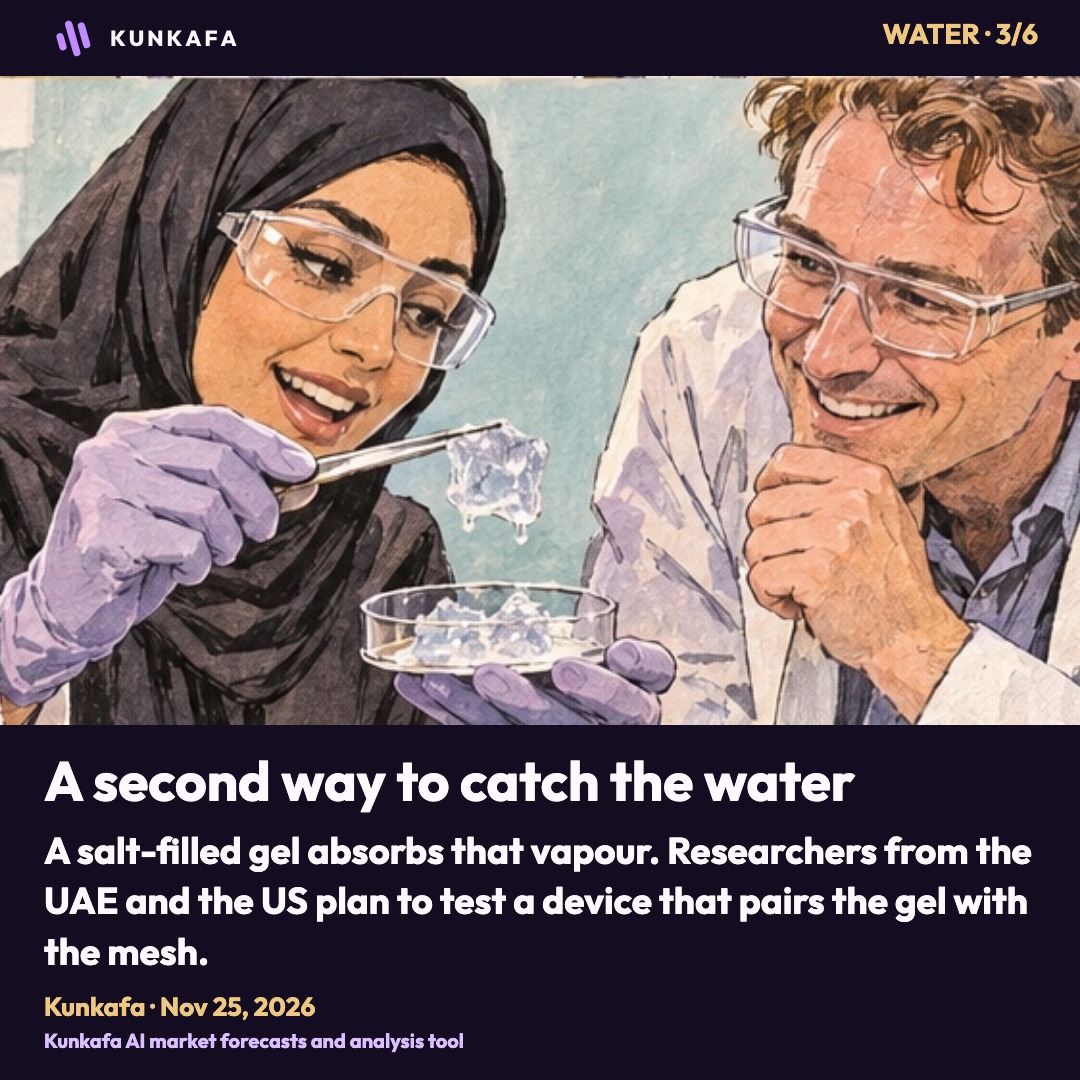
His team plans to pair a salt-infused gel that absorbs water vapour with a mesh that catches liquid droplets, then test the equipment in the UAE. The Mohamed bin Zayed Water Initiative chose it for its first Water Catalyst research grant. [2]
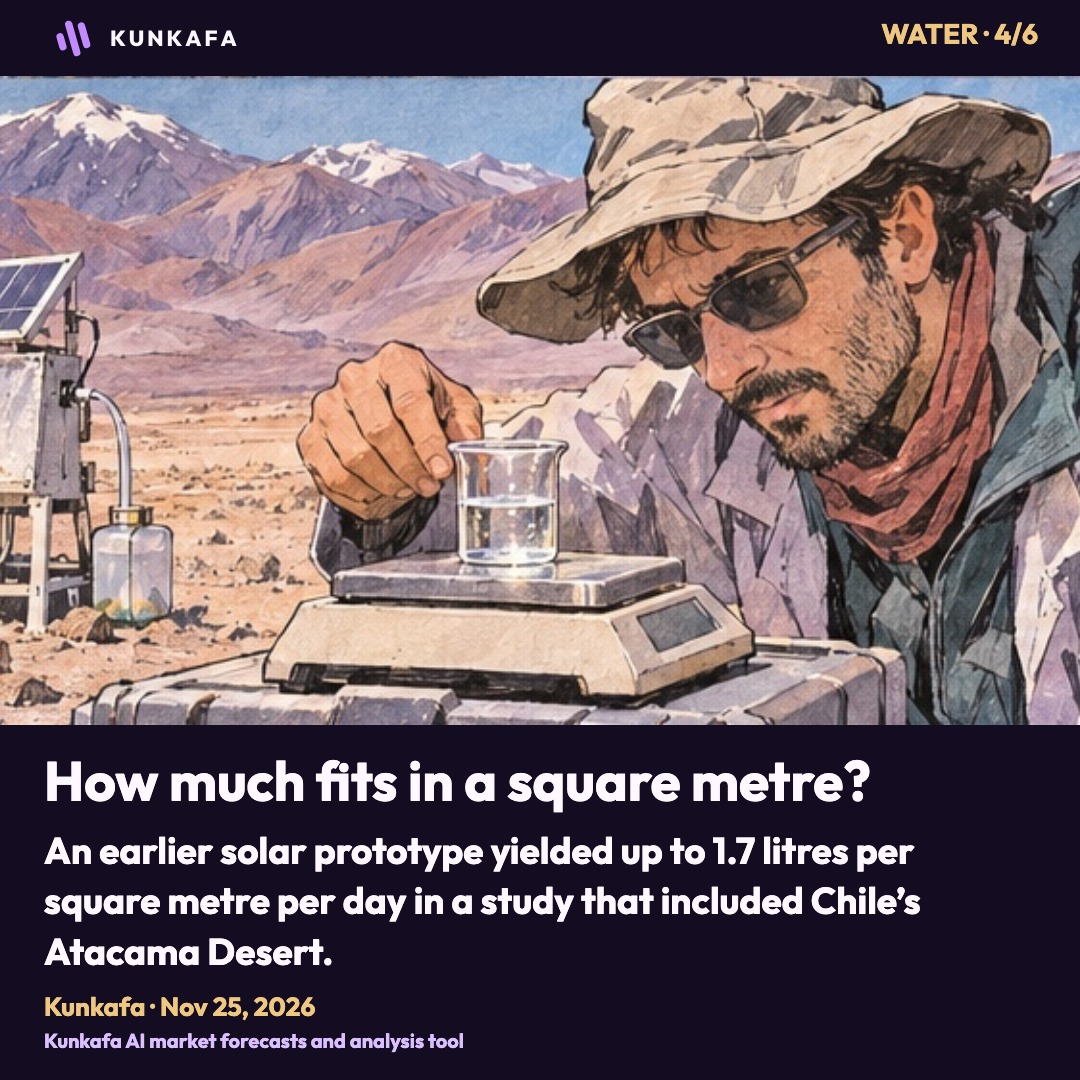
An earlier study co-authored by El Fil, which included trials in Chile’s Atacama Desert, reported up to 1.7 litres per square metre per day with a solar-powered prototype. [3]
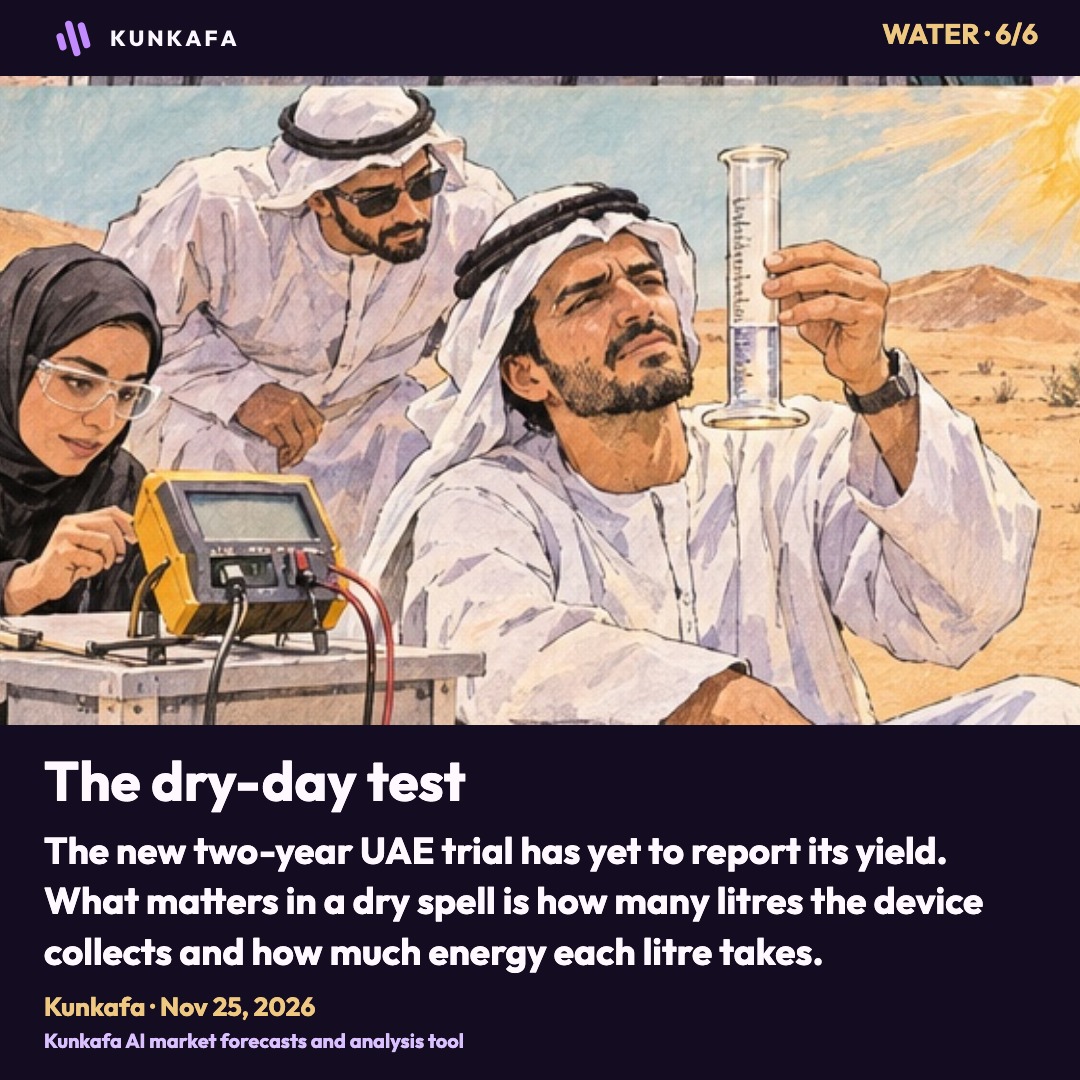
The new UAE trial has yet to report a yield. Two figures matter to communities considering the technology: how many litres it delivers on dry days and how much energy each litre takes.
The $1.43 billion behind the chip partnership
Water was one of six developments in the embassy’s roundup. At a Silicon Valley gathering, Khaldoon Al Mubarak, Mubadala’s managing director and group CEO, put the investment case in one sentence: “We’re betting on the US technology stack.” [4] [5]
On November 15 the UAE joined the US and eight other governments in signing the San Francisco declaration on securing sensitive technology and critical infrastructure. Assistant Foreign Minister Omran Sharaf signed for the UAE, the embassy said. [6]
The embassy highlighted G42’s early backing of US chipmaker Cerebras and put the partnership at $1.43 billion. [7]
That figure has a specific history. In May 2024, G42 agreed to buy, or arrange purchases of, that amount in computing systems and services. [8]
Cerebras disclosed in its April 2026 prospectus that the agreement had ended in 2025. The companies’ work on supercomputers continued, a distinction that matters when putting a dollar value on their ties today. [9]
A December 13 deadline for founders
In Dubai, Nextgen joined OpenAI’s Select Partner network to help local businesses and government bodies put GPT models to work. [10]
Abu Dhabi’s Hub71 is pursuing a different route with Q-Branch in Austin, Unicorn Factory Lisboa and Brazil’s Instituto Caldeira. Their six-month programme offers up to 12 growing companies introductions in four markets.
Applications close December 13. The open-call fee is €5,500 plus VAT, with travel and accommodation extra. Lisbon and Abu Dhabi are the two required stops. [11]
Salim Akil asked Hub71 who would help founders choose and enter their first market. Cerebras chief executive Andrew Feldman had made the case for his own partnership with G42.
On water, Ahmed Galal Ismail shared an earlier demonstration at NEOM, while futurist Thomas Frey saw promise in a separate German student prototype.
Perspectives on harvesting water and backing AI


Sources · [1] UAE embassy · [2] Mohamed bin Zayed Water Initiative · [3] Device · [4] Embassy roundup · [5] Mubadala interview · [6] San Francisco declaration · [7] Cerebras interview · [8] 2024 filing · [9] 2026 filing · [10] Nextgen partnership · [11] Programme and applications · [12] Khalifa University
Kunkafa forecasts
Nasdaq 100
How far it could move, which way, by when, and how confident Kunkafa is.
Check the latest forecastsMore in Tech

OpenAI’s Protein Designs Hit All Five Targets in Lab Tests
Of 322 proteins tested by Onava, 35 attached to their intended targets. Specialist models helped choose which GPT-6.2 designs reached the lab.

Amateur Astronomer Flags 49 Possible Planets With AI
Ethan Byrd searched observations of 19 million stars with OpenAI’s Astra. One candidate is awaiting review by researchers on NASA’s TESS mission.

Hack Exposed Unclassified CIA and ODNI Data, NYT Reports
The CIA and the US intelligence chief’s office discovered the breach. Even when a source is public, the questions an analyst asks of it can be sensitive.