Tech · Explainer
Trelis Teaches an AI Voice to Read Arabic Like a Cairene
One letter can give away an accent. On a private test, the new research model halved one rival’s mistakes on the Arabic letter qaf.

Kunkafa News · Published · 5 min read
 By Kareem FaridDiscuss with the author on X
Here is a visual story in summary
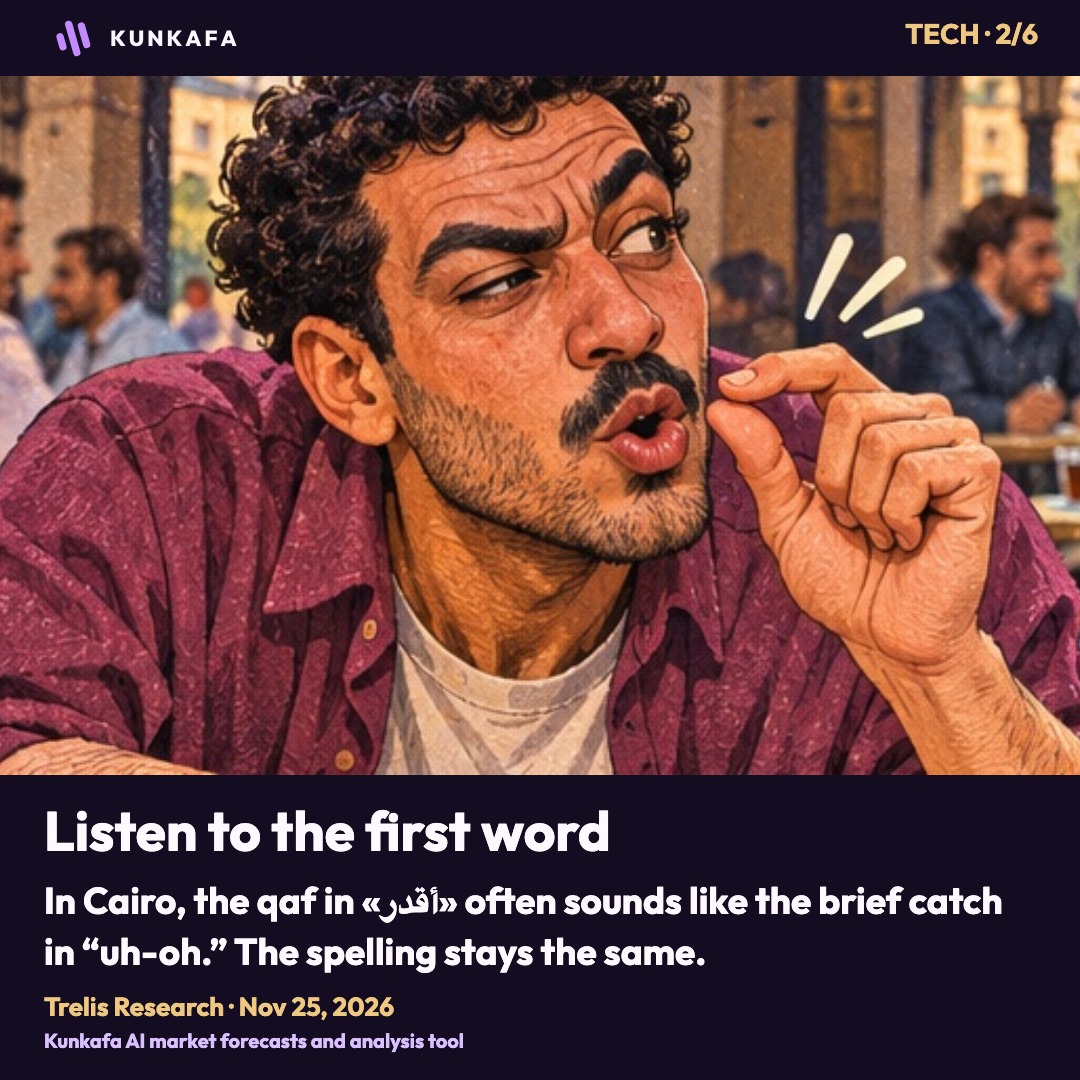
An AI voice answering the phone in Cairo can give itself away with one word. In «أقدر أساعدك إزاي؟» (“How can I help you?”), a formal reading gives the letter ق in the first word a deep q sound. In everyday Cairo speech, it often sounds like the brief catch in the middle of “uh-oh.” [2]
Trelis Research released a text-to-speech model on November 25 designed for that everyday register. The team adapted the existing VoxCPM2 speech model to read Egyptian text aloud with a Cairene accent. [1] [2]
Trelis Research introduces its Egyptian Arabic speech model.
What a synthetic voice gets wrong
Written Arabic commonly leaves short vowels unmarked. A system can preserve the spelling yet choose a formal vowel or add a grammatical ending that would sound out of place in conversation. Trelis identifies both as recurring problems alongside the qaf. [1] [2]
Trelis compared its default synthetic voice with Cartesia Sonic 3.5 on 100 private Egyptian Arabic replies containing 1,852 checked words. It reports that its model mispronounced 1.9% of words, against 2.3% for Cartesia. [2]
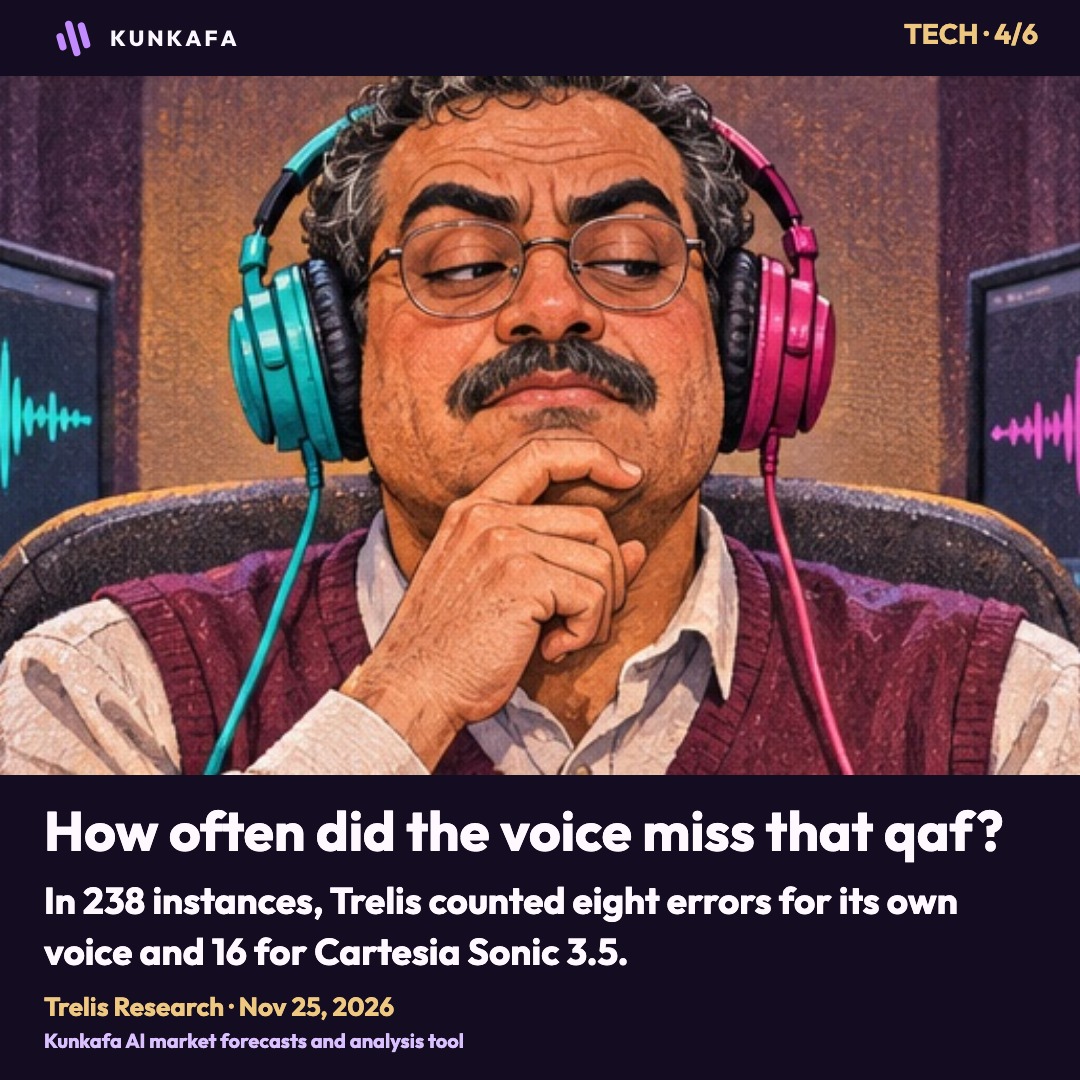
The difference was clearest on qaf. Of 238 instances, Trelis counted eight errors for its model and 16 for Cartesia. On a separate count of errors in reproducing the text, Cartesia came out ahead, with three against four. [2]
The team used Gemini 4 Argon to judge pronunciation against a Cairene checklist, then reviewed each flagged case blind. The replies are private, and the comparison covers one competing model. Preferences among Egyptian listeners, or performance on accents from Alexandria to Upper Egypt, remain open questions. [2]
A voice researchers can try
The release includes an example researchers can run with the VoxCPM software. They can start with the supplied greeting and generate an audio file in the default voice without recording a speaker. It reads the answer supplied by the researcher; a system that answers customer questions would need a separate component to decide what to say. [2]
Trelis also supports matching a voice from a short reference recording. It asks users to obtain the speaker’s permission and tell listeners when the speech is synthetic. Trelis chose a Creative Commons attribution and noncommercial license, which limits its use in a paid service. [2] [3]
The effort to get a local voice right starts with human speakers. In July, Nikitha Annam advertised a separate voice-data project offering Egyptian Arabic speakers $30–$65 an hour to record natural, expressive speech.
On November 18, a developer posting as Ali described collecting his own recordings to fine-tune a Moroccan Darija voice after searching for a model with natural pronunciation.
Work on recognizing speech offers a clue to what gets missed. In 2024, Muhammad AbdulMageed described how 27 coauthors built Casablanca, a speech corpus spanning Egyptian and seven other Arabic dialects.
In October, Essam Al Gobaisi described how Saudi recordings helped systems recognize Najdi and Hijazi speech. Both projects illustrate why the regions represented in a dataset matter when assessing a model.
Perspectives on teaching AI to speak local Arabic


Sources: [1] Trelis announcement · [2] Model card and test results · [3] License
Kunkafa forecasts
Nasdaq 100
How far it could move, which way, by when, and how confident Kunkafa is.
Check the latest forecastsMore in Tech

Neuralink Gets FDA OK to Test a Brain Implant for Hands-Free Typing
The LINK study tests whether people who lose the use of their hands can reliably control a computer by imagining movement. People with ALS may qualify.

1Password Breach Exposes Customer Details. Are Vaults Safe?
The company says the attacker copied names and email addresses but could not open customer vaults. Akash founder Greg Osuri says the breach still cost it his trust.

Anthropic CEO Says Some AI Rollouts May Need to Stop
The Claude maker’s CEO challenged rivals to explain what human control means in the products they actually sell.