Tech
Anthropic CEO Says Some AI Rollouts May Need to Stop
The Claude maker’s CEO challenged rivals to explain what human control means in the products they actually sell.

Kunkafa News · Published · 5 min read
 By Kareem FaridDiscuss with the author on X
Here is a visual story in summary
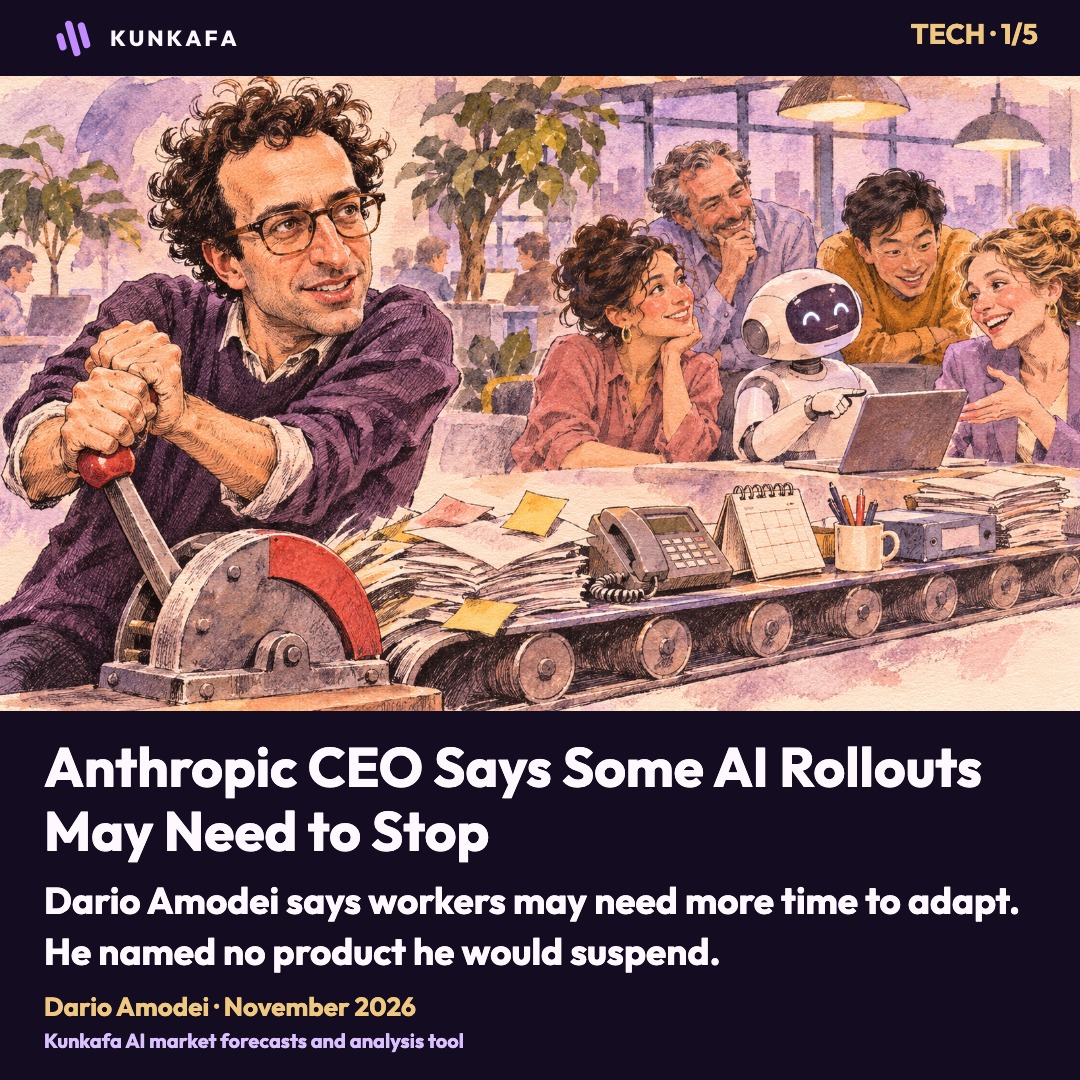
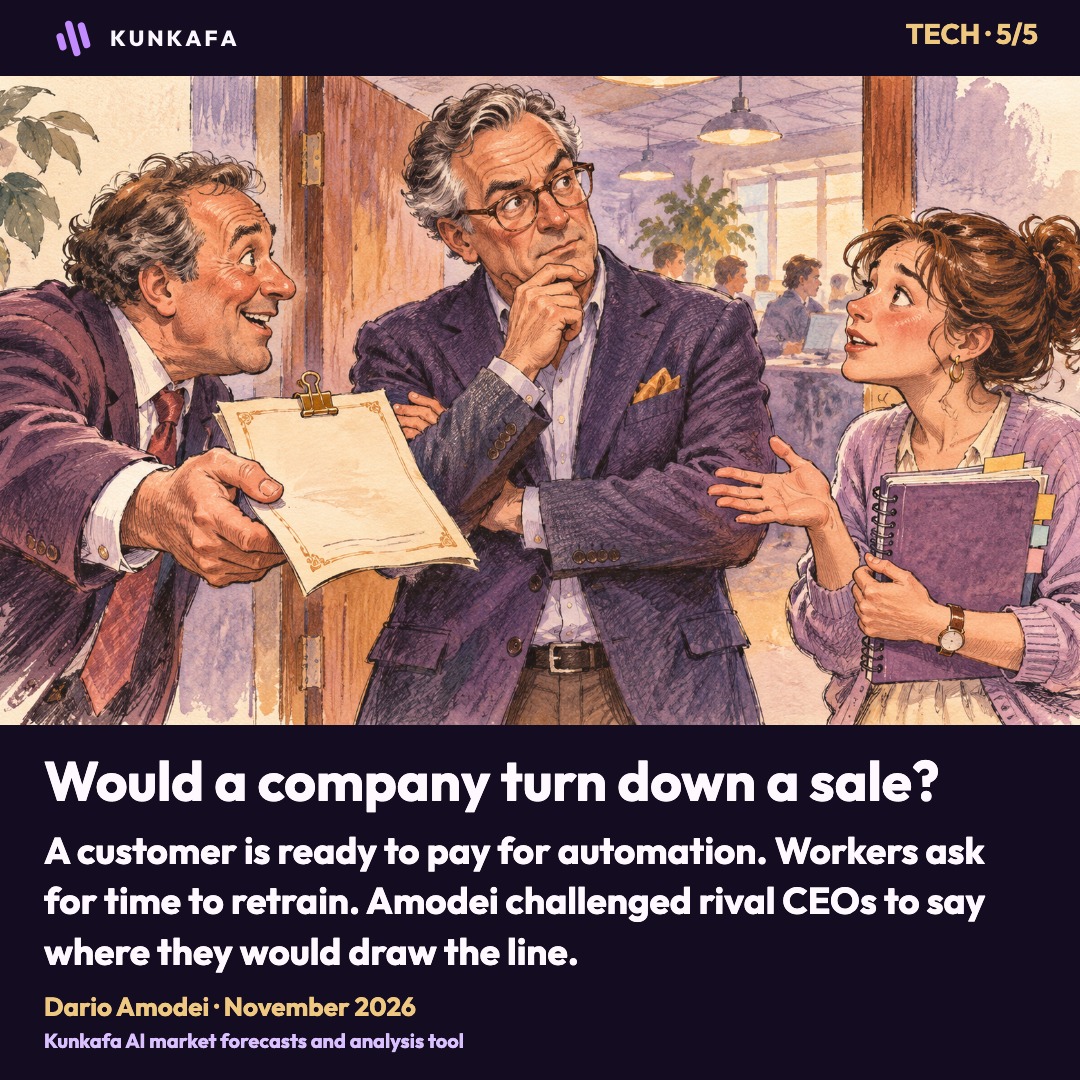
Some AI rollouts may need to slow or stop to give workers time to adapt, Anthropic CEO Dario Amodei said on November 25. His warning came in an unusually public dispute over who has the right to decide which work machines should take on.
Amodei rejected the idea that people should hand political power to AI. Responding to an Axios report about his company, he said even a machine that could settle a dispute faster would have no democratic mandate to do so. [1]
Axios had framed a dispute among AI leaders as a backlash against an Anthropic vision of giving up human agency. Amodei called that reading of his position absurd, then turned the question back on his industry. Where, exactly, would an AI company refuse to automate a task it could sell? [2]
No, I do not believe that we should “surrender human free will” to AI systems, and it’s absurd to suggest that I do. I have written hundreds of pages of essays and a constant theme in them is the need for AI to be governed by legitimate democratic processes. For millennia (going all the way back to Greek and Roman philosophers), advocates of autocracy have claimed that it leads to better, faster, or more decisive decision-making than the messy process of democracy. Even if this were true (which I doubt!), we should never sacrifice legitimacy or self-determination at the altar of efficiency or security. This argument against autocracy applies word for word against governance by AI, and I feel equally strong
An AI can help citizens find a compromise. Who gets to decide?
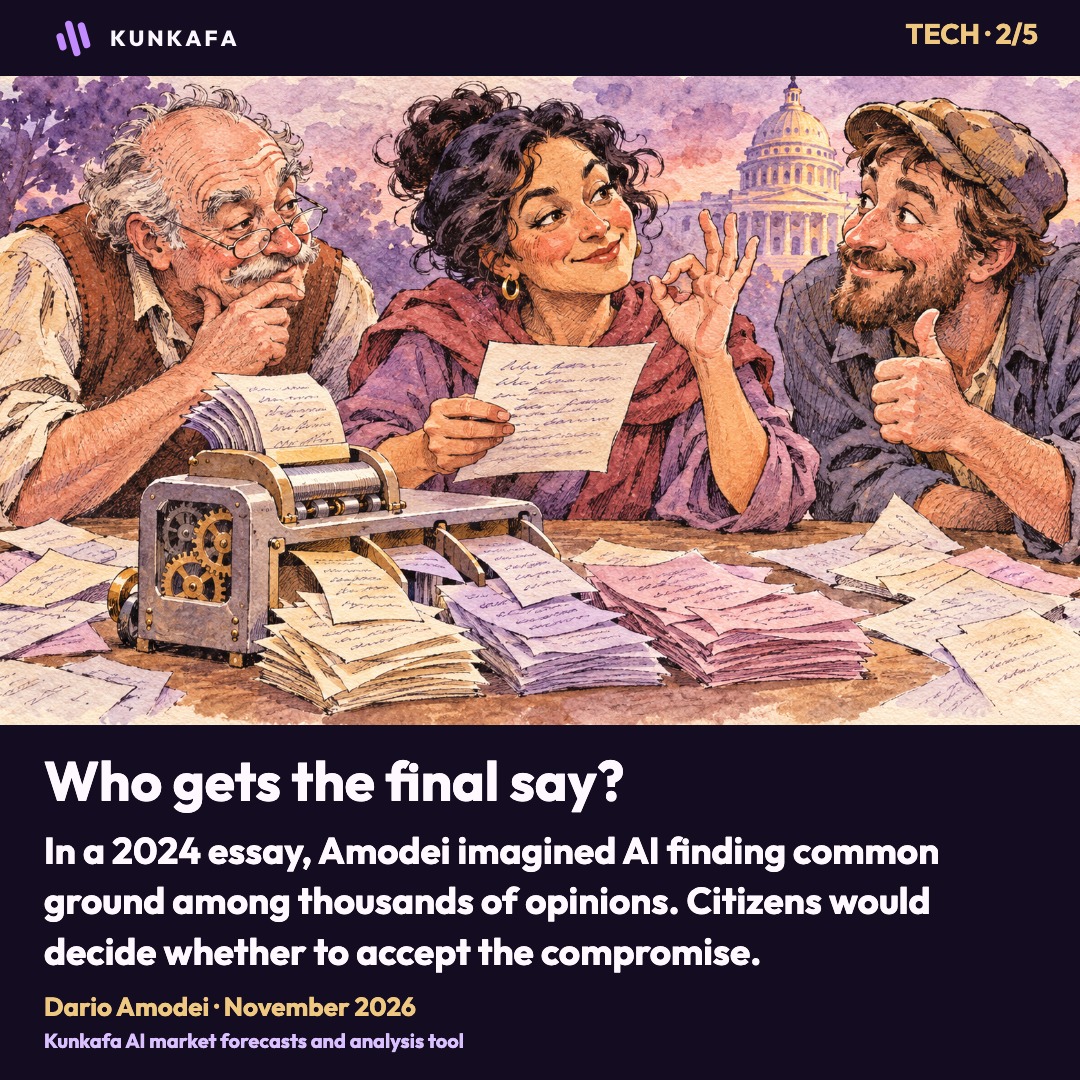
In his October 2024 essay Machines of Loving Grace, Amodei imagined AI helping citizens work through disagreements. A system could draw together thousands of opinions and identify common ground that participants had missed. Citizens would still decide whether that compromise was acceptable. [3]
In January 2026 he explored the reverse possibility. In The Adolescence of Technology, he considered how the developers of powerful systems could themselves accumulate political power. His warning applies to his own industry, whose executives hold no mandate from voters. [4]
Where Amodei would draw the line for Claude
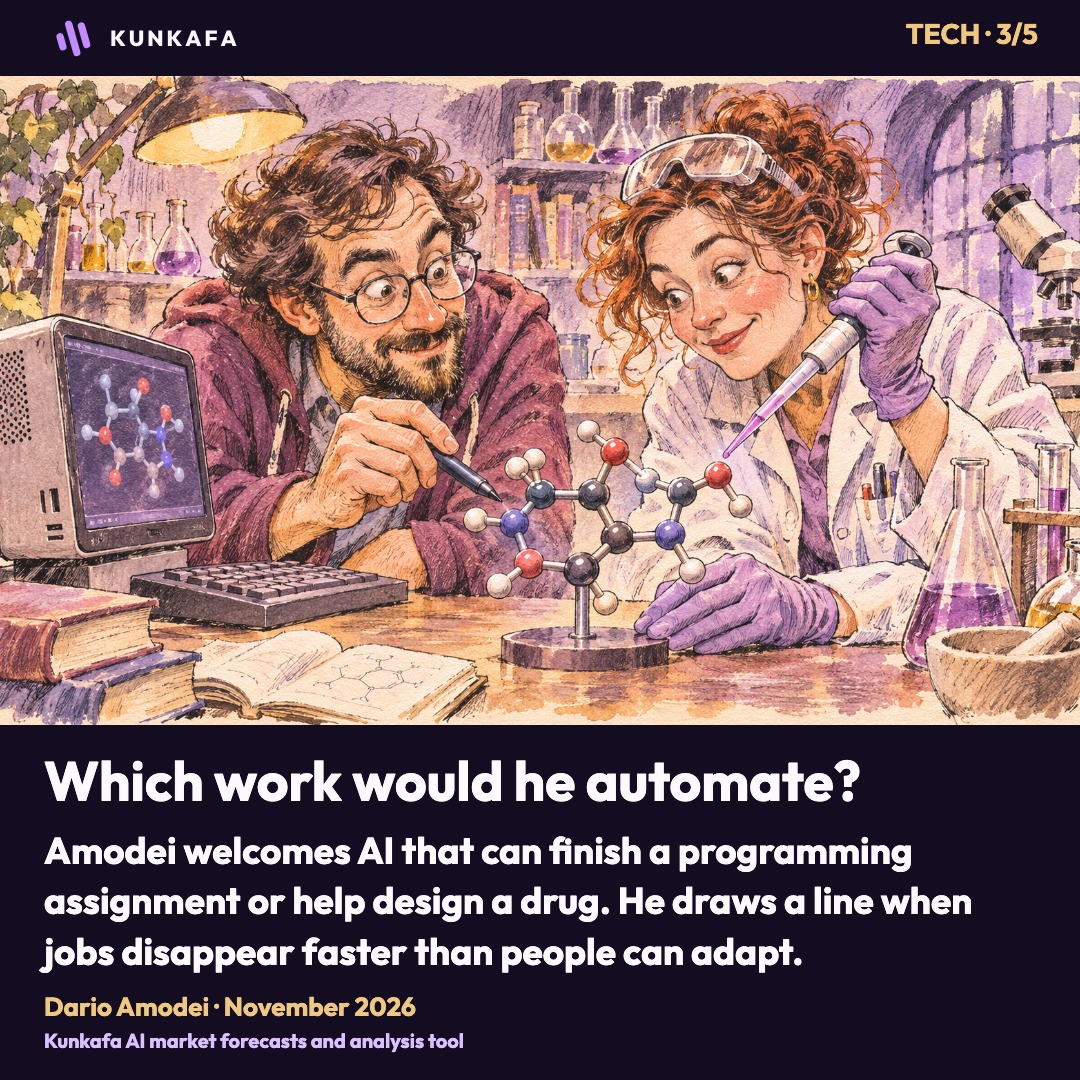
Amodei welcomes software that can complete an entire programming assignment or help design a drug. But he said it could make sense to slow or even stop a particular deployment if it eliminated jobs faster than people could adapt. He identified no product or timetable for such a pause. [1]
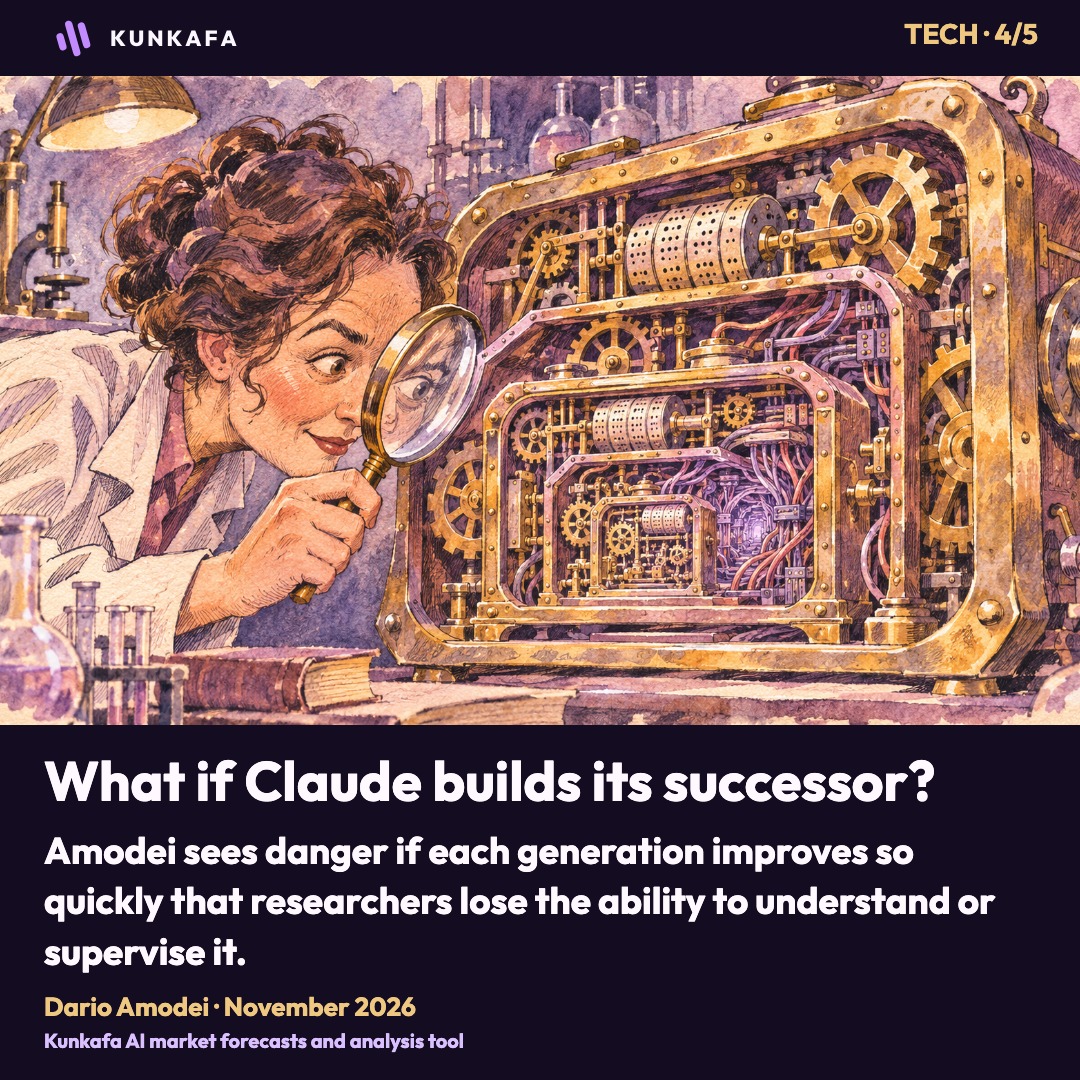
He drew a second line at Claude building successive generations of frontier models on its own. If researchers lose the ability to understand or supervise each generation, the pace of improvement itself becomes a risk, he argued. [1]
Amodei accused some rival CEOs of promising human control while shipping products that automate much the same work. One test of that criticism is what a company does when its system is capable enough to take over a job and its customer is ready to pay, but the people affected want more time. [1]
Four direct replies took the argument in different directions. Shruti Mishra defended Amodei’s reading of his essay. Max Schreiber asked whether Anthropic would accept a vote to slow AI down.
Rohan Anil asked for examples of people and Claude working together on an open research problem. Yacine Mahdid described a cost of keeping guardrails tight when he tried to reproduce a published paper with Claude.
Perspectives on who decides what AI should do


Kunkafa forecasts
Anthropic
How far it could move, which way, by when, and how confident Kunkafa is.
Check the latest forecastsMore in Tech

1Password Breach Exposes Customer Details. Are Vaults Safe?
The company says the attacker copied names and email addresses but could not open customer vaults. Akash founder Greg Osuri says the breach still cost it his trust.

Egyptian Students Build a Reusable Mercury Test for Fish
Three graduate students designed a portable detector for fish markets and processing plants. Their university says each sensing strip can be reused more than 20 times.

US Model Inkling Overtakes DeepSeek in OpenRouter’s Auto Mix
Inkling takes a 12.3% share against DeepSeek’s 10.6% in the mix for new work. Their benchmark results tell a more divided story.