Tech · Explainer
Saudi Scientists Grow Red Sea Corals on Land
A coastal nursery can grow up to 360,000 corals a year. Saudi divers and scientists face a harder task once those colonies reach Shushah Island.

Kunkafa News · Published · 4 min read
 By Kareem FaridDiscuss with the author on X
Here is a visual story in summary
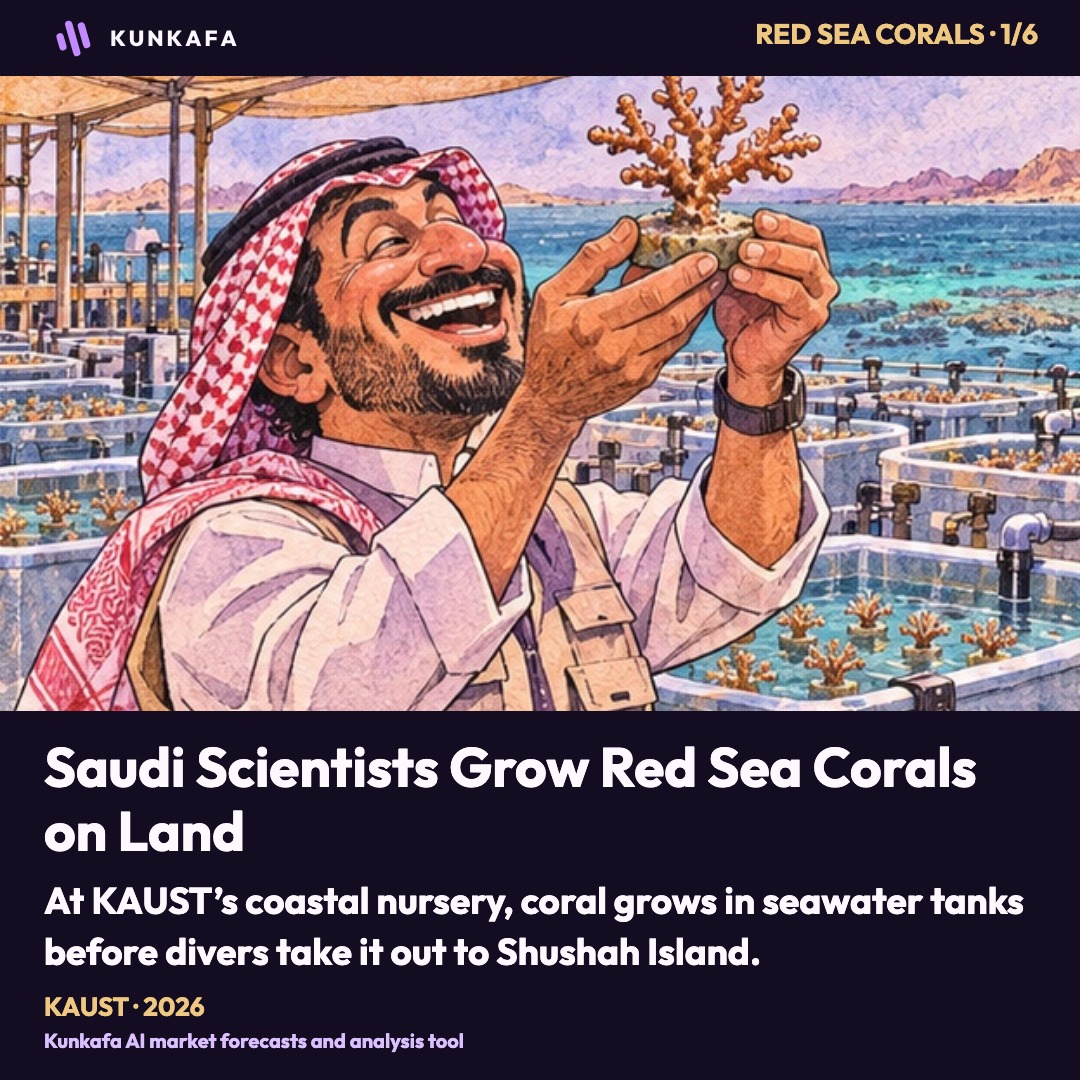
Off Saudi Arabia’s northwestern coast, divers are working to bring coral back to the reefs around Shushah Island. Part of that job now starts on dry land. On November 11, King Abdullah University of Science and Technology (KAUST) announced that its large coastal nursery was growing corals in tanks. At full capacity, it is designed to produce up to 360,000 a year. [1]
Key points
- The land-based nursery is designed to produce up to 360,000 coral colonies annually.
- The restoration team aims to plant more than two million corals across one square kilometre of reef by 2030.
At COP31, Saudi Arabia is showcasing the KAUST Coral Restoration Initiative and its work to restore reefs in the Red Sea. The initiative’s facility is designed to produce up to 360,000 coral colonies a year.
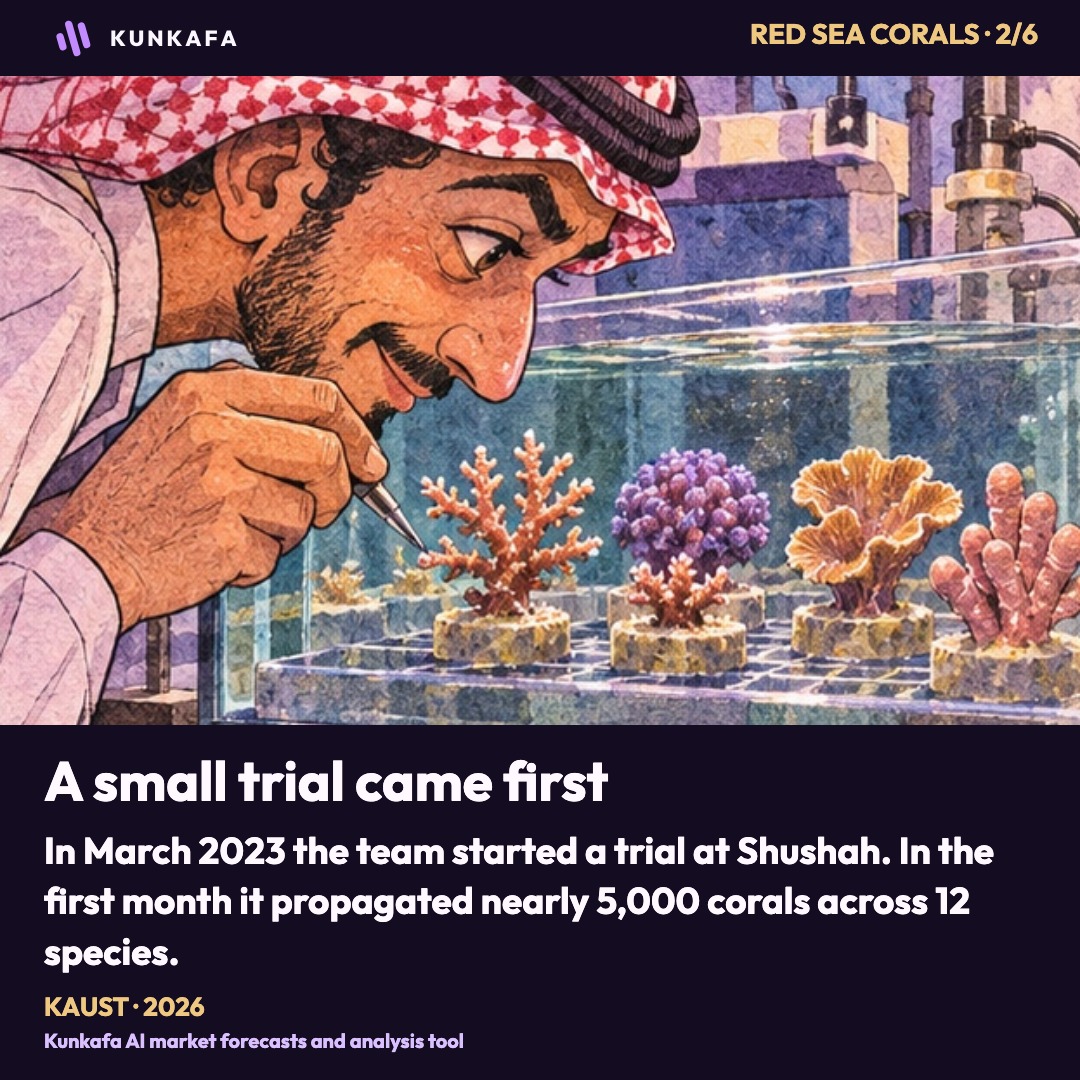
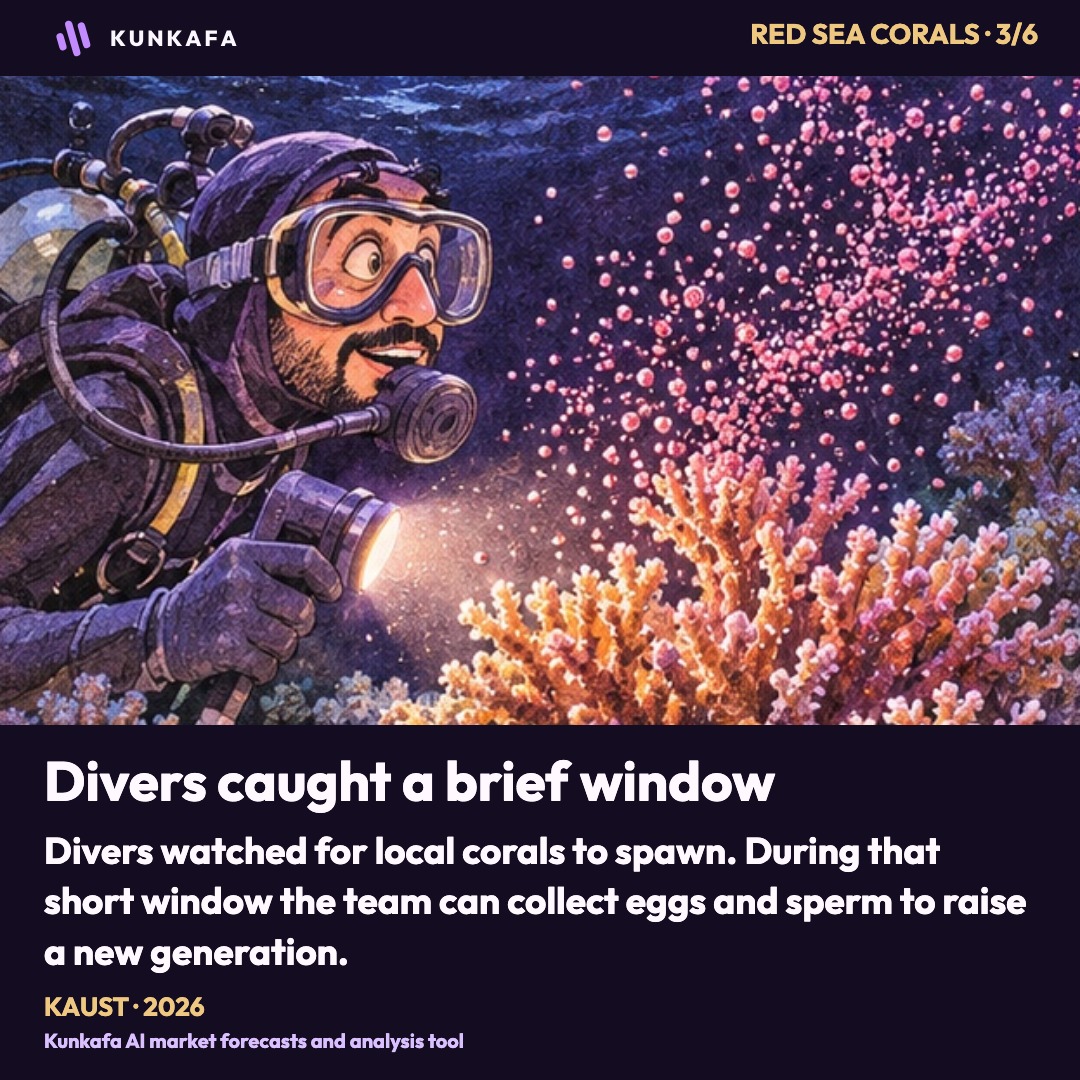
The first trial was far smaller. In March 2023, the team began testing ways to grow coral at Shushah. In the first month, it propagated nearly 5,000 corals from a dozen species. Divers also observed when corals spawned locally, a narrow window when researchers can collect eggs and sperm to raise a new generation. [2]
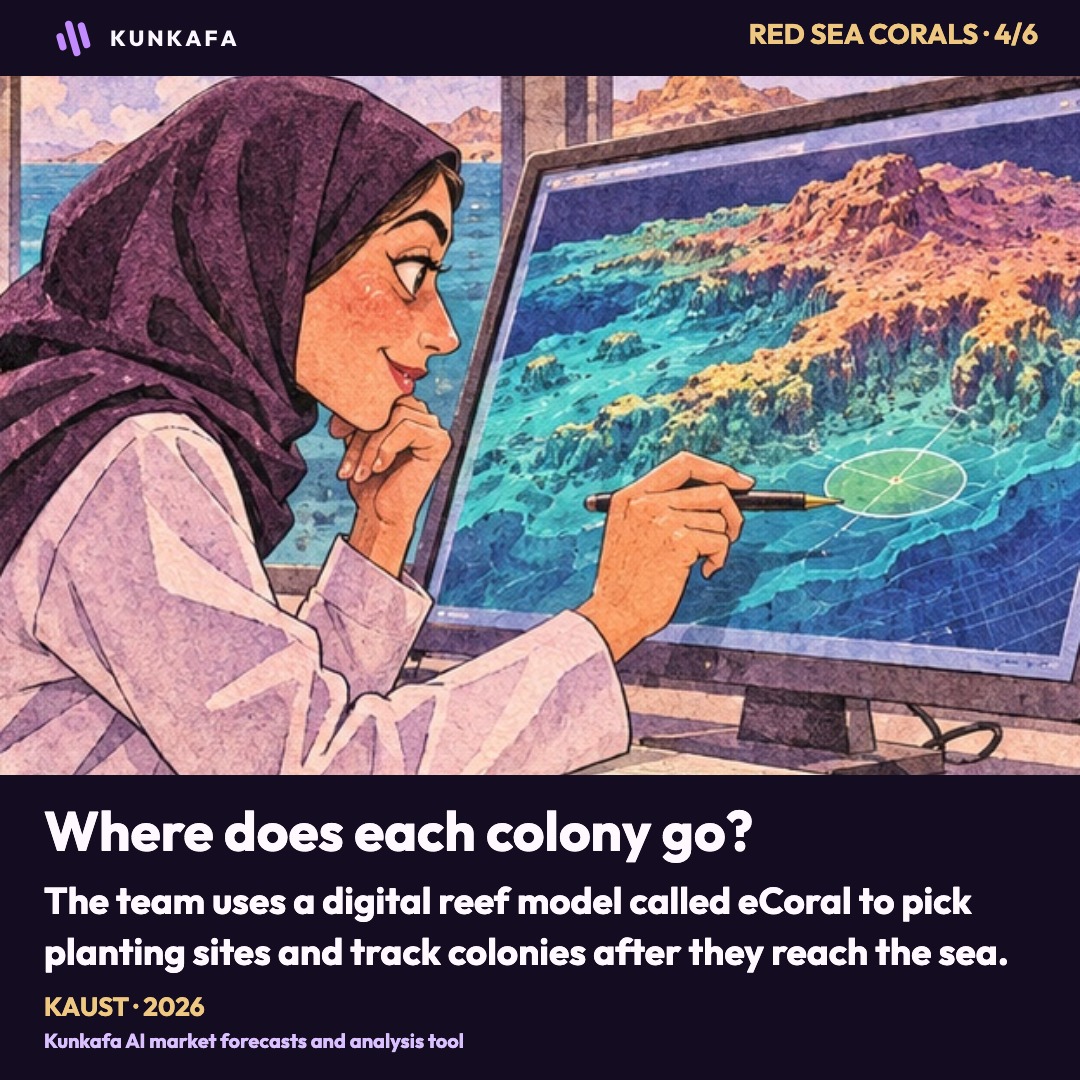
Saudi aquarists tend the nursery colonies, while divers and marine scientists work on the reef. Between them lies a practical question. Where should each coral go? A digital model called eCoral helps the team choose planting sites and track what happens to the colonies once they reach the sea. [1]
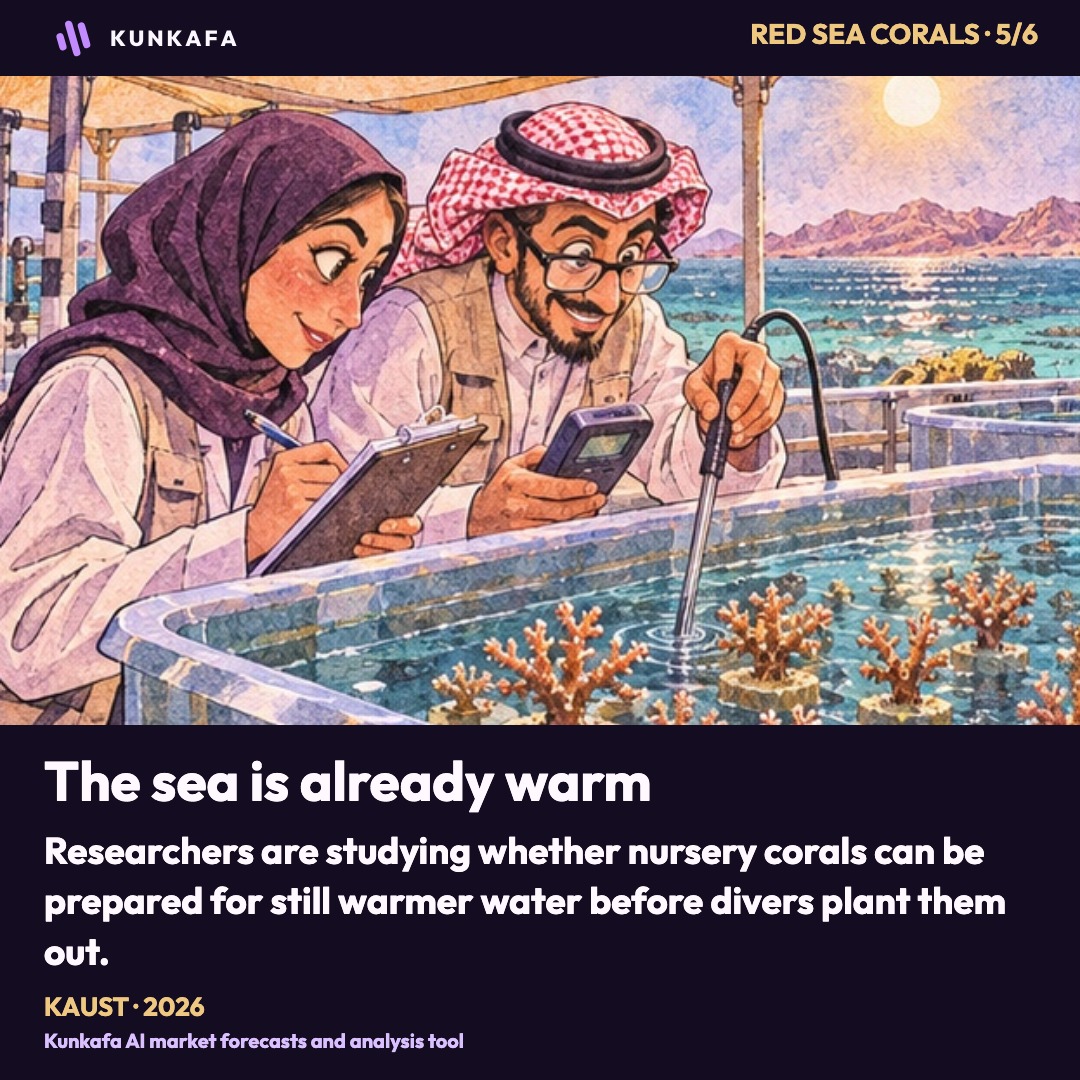
The Red Sea offers a demanding test. Its corals already live in unusually warm, salty water. Researchers are studying whether they can prepare nursery-grown colonies for warmer conditions before divers plant them out. [1]
For Saudi marine biologist Abdulrahman Aljahdali, the route into restoration began with a separate local project. Writing about his training on LinkedIn, he recalled how joining the Adopt a Coral initiative and watching the tiny animals living on the reef made him want to help restore it. [3]
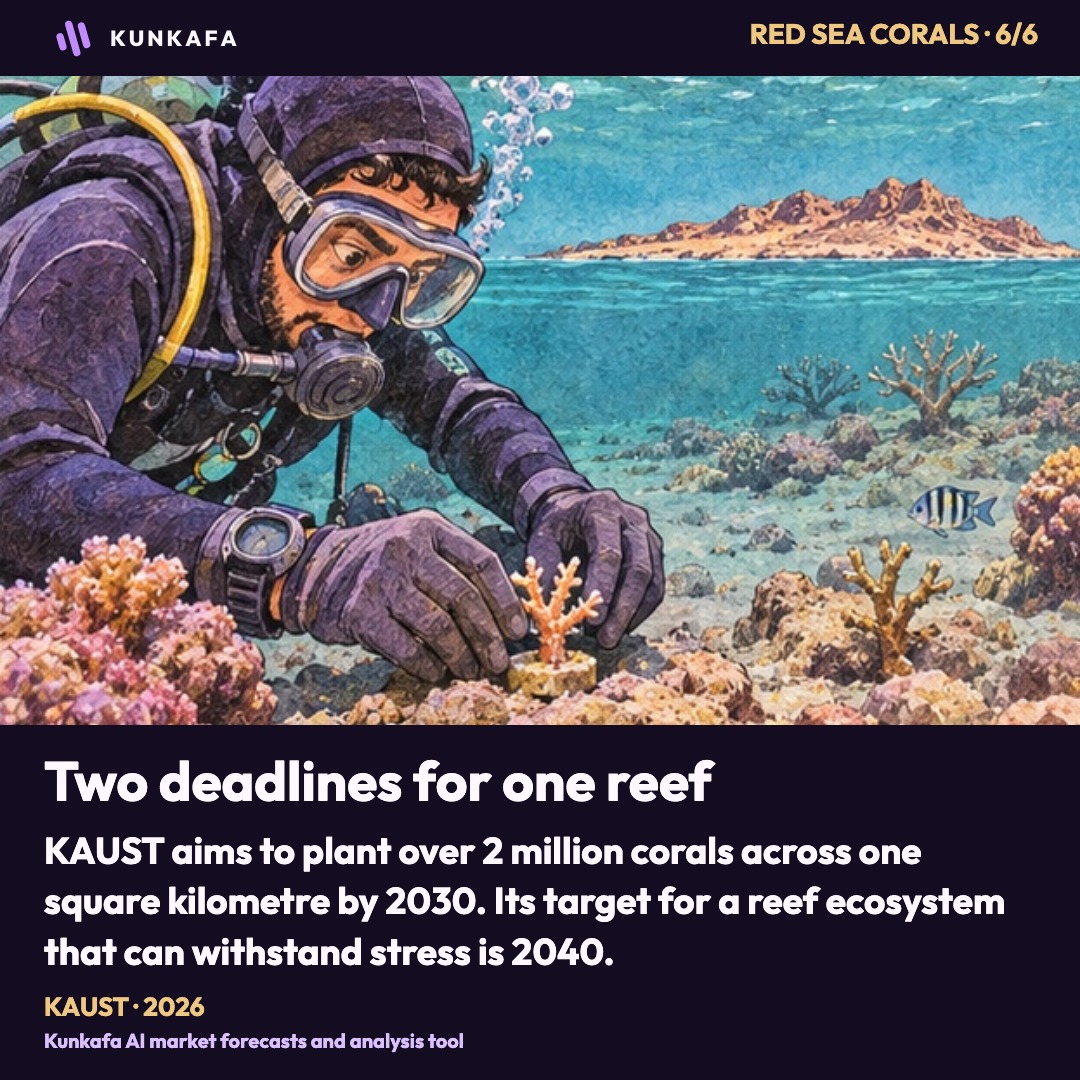
By 2030, KAUST aims to plant more than two million corals across 100 hectares around Shushah, an area of one square kilometre. It gives the reef itself another decade, until 2040, to develop into an ecosystem that can withstand stress. That longer timetable captures what the divers are ultimately trying to grow here. A coral can leave the nursery in their hands. A reef takes years to build. [1]
In earlier posts about coral restoration, scientists and a journalist described what happens after corals leave a nursery. The distance between colonies can affect reproduction, and heat tolerance alone offers limited protection as seas warm.
Perspectives on what helps a coral reef recover


Sources: [1] KAUST, November 11, 2026 · [2] KAUST, August 23, 2023. · [3] Abdulrahman Aljahdali, personal account.
Kunkafa forecasts
Brent oil
How far it could move, which way, by when, and how confident Kunkafa is.
Check the latest forecastsMore in Tech

Italy Says AI Agents Breached Systems at Scale in Hours
Italian incident responders saw several agents working in parallel during attacks on live systems. They warn that isolated alerts can hide the scale of a breach.

Judge Grants Ex-OpenAI Engineer Alfozan Release on $1M Bond
Abdulrahman Alfozan is to post $500,000, with three friends standing surety for the rest. He has pleaded not guilty to intercepting conversations at OpenAI.

The UAE Is Pulling Water From Desert Air
A salt-filled gel can absorb moisture. A mesh can catch fog. Researchers in the UAE and US plan to test whether the two together can supply water as the weather changes.