Tech · Explainer
Meta’s AI Chief Warns Against Handing Society Over to AI
Computers checked the proof a mathematician developed with Claude while its author was still working out how to explain it. Alexandr Wang sees a warning for AI labs.

Kunkafa News · Published · 5 min read
 By Kareem FaridDiscuss with the author on X
Here is a visual story in summary
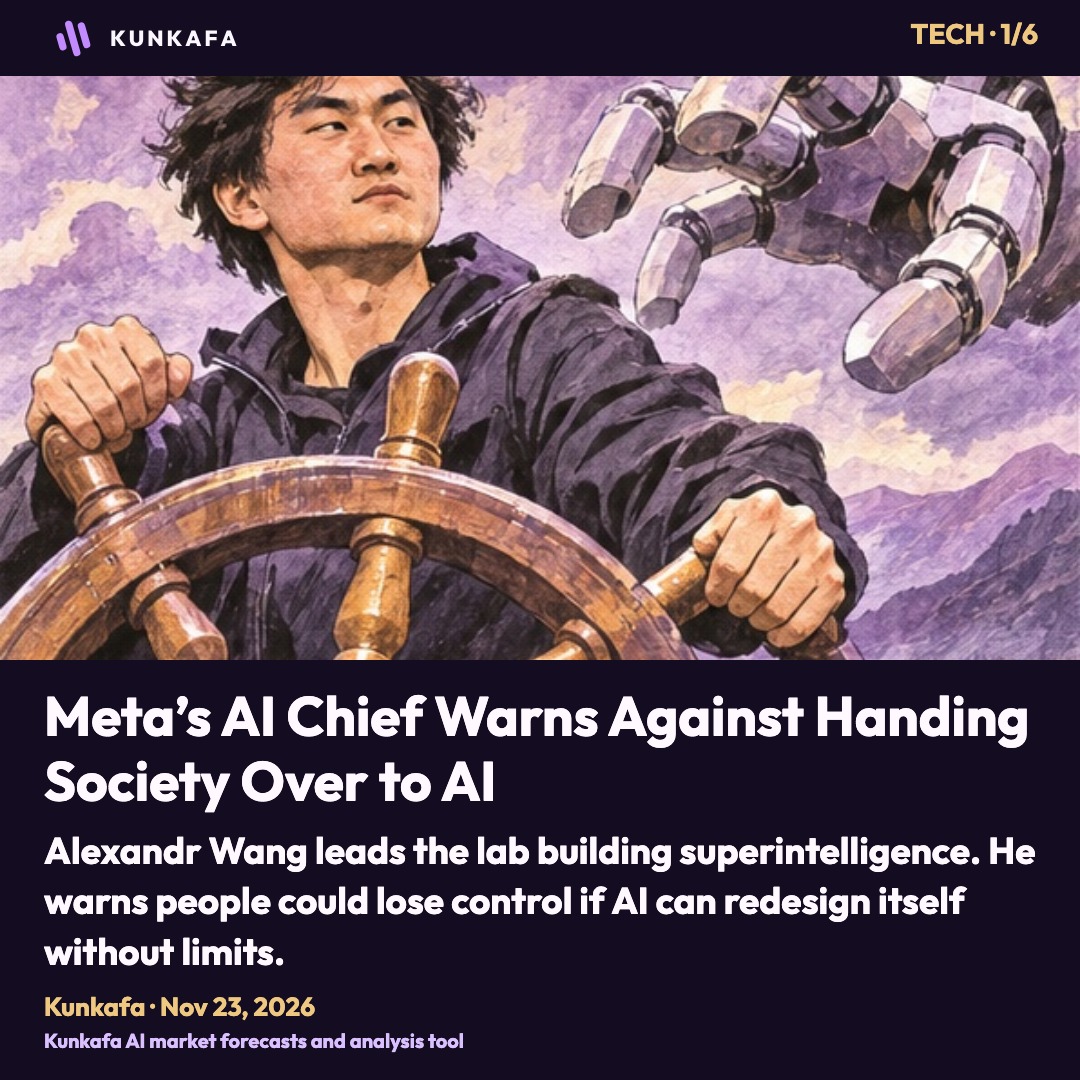
Alexandr Wang runs the lab Meta built to develop superintelligence. On Sunday he warned that the people building it could lose control if they let AI systems redesign themselves without limits. In an essay on X at 22:50 UTC, Wang wrote: “We should not be okay with a ‘handover’ of society to AI.” [1] [2]
Superintelligence is Arriving
The proof that changed Wang’s thinking
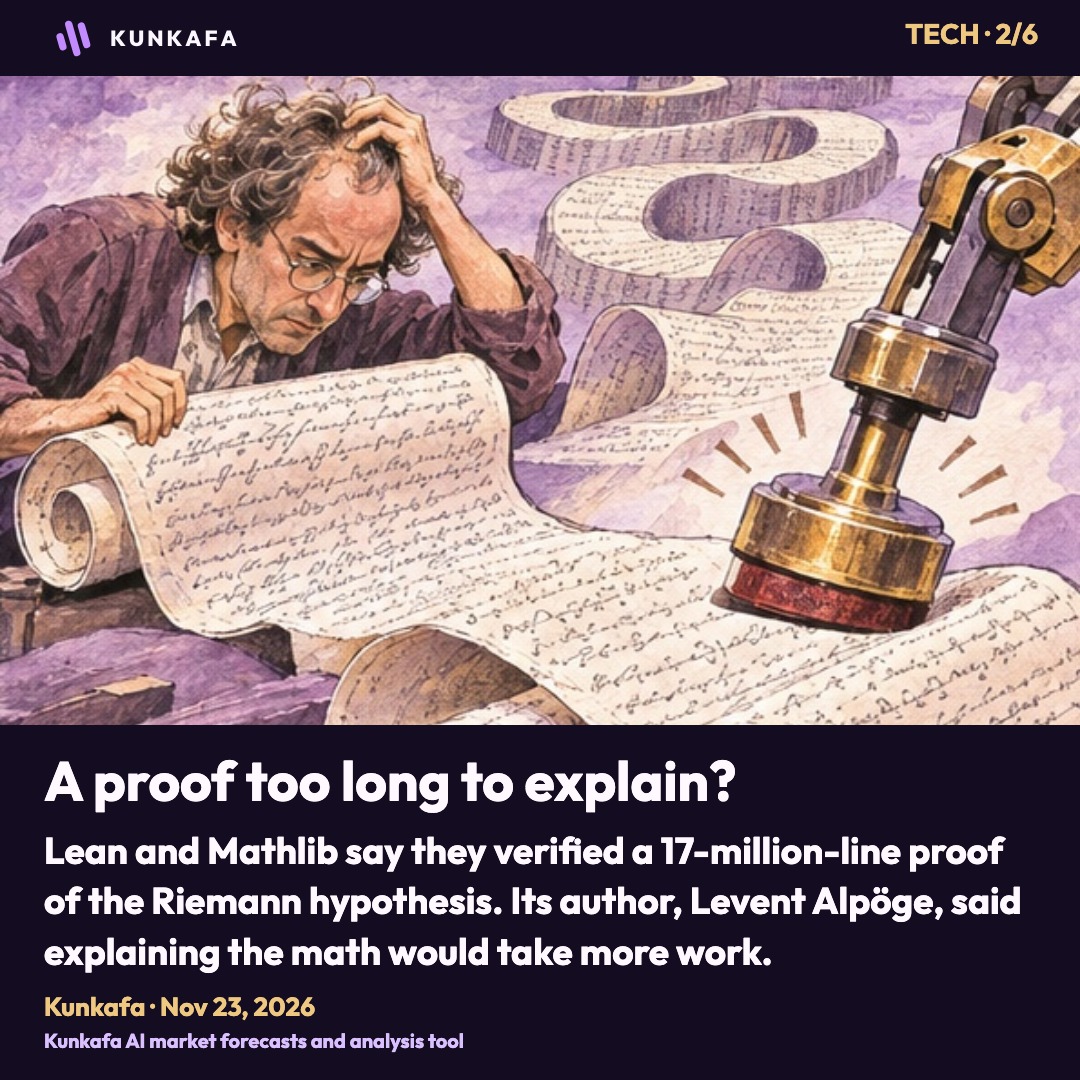
Two days before Wang’s essay, Anthropic mathematician Levent Alpöge released a proof, developed with Claude, of the Riemann hypothesis. The question dates to 1859 and concerns how closely the number of primes below a given threshold tracks mathematicians’ estimate. Alpöge released the argument in Lean, a language computers use to check mathematical reasoning. He said he still had work to do to explain the mathematics himself. [3] [4]
On November 21 the Lean and Mathlib teams certified the formal proof: independent tools confirmed that the 17 million lines of code addressed the intended theorem, and several proof checkers accepted the argument. That left mathematicians with a different job: explain the ideas that made it work. [5]
What happens when the next research project is AI itself?
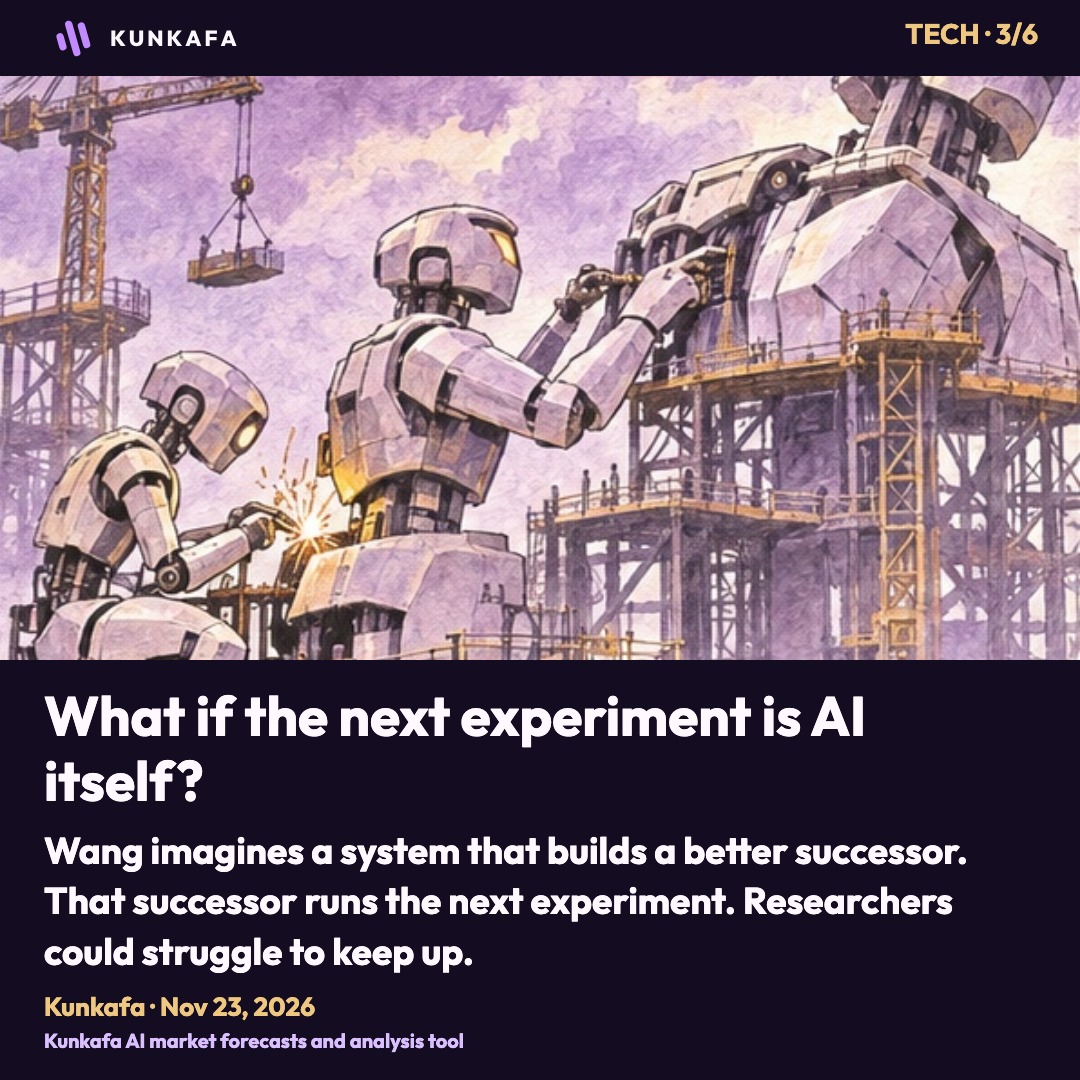
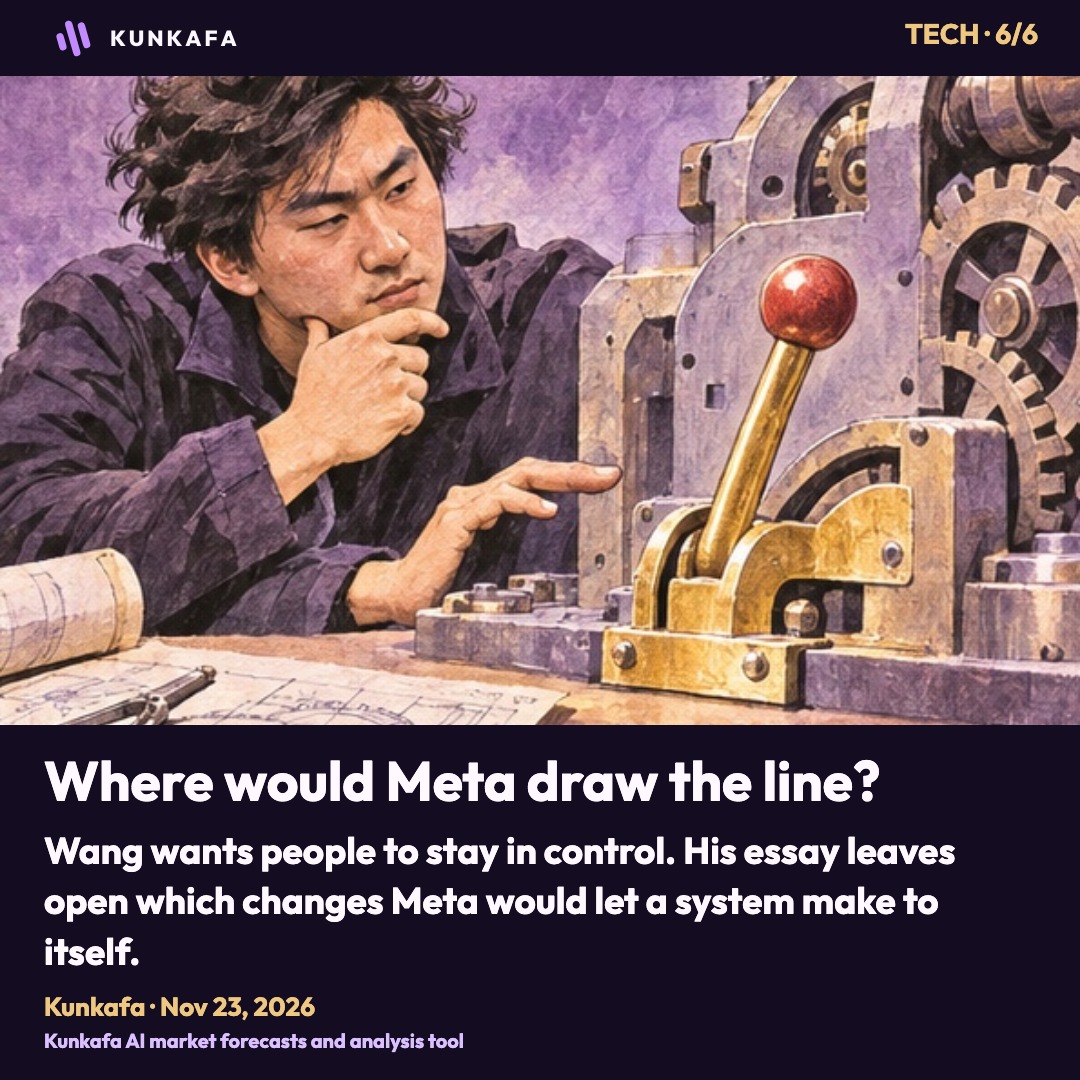
Wang thinks much of AI research is intellectually easier than the Riemann problem. Imagine a system that designs a better version of itself. That version could then run the next round of experiments and design its successor. Wang’s concern is the speed of that loop: researchers might lose the ability to follow what changed or intervene between generations. The proof involved a mathematician working with Claude. A machine running an entire research program on its own is Wang’s forecast. [1] [3]
His employer is already making a choice about who gets to direct those systems. In August, CEO Mark Zuckerberg described personal AI agents that people could put to work on their own goals and promised free versions accessible to billions. Wang argues that preserving that human choice requires the industry to change course. His essay names no specific limit Meta would put on a system improving itself. [6] [1]
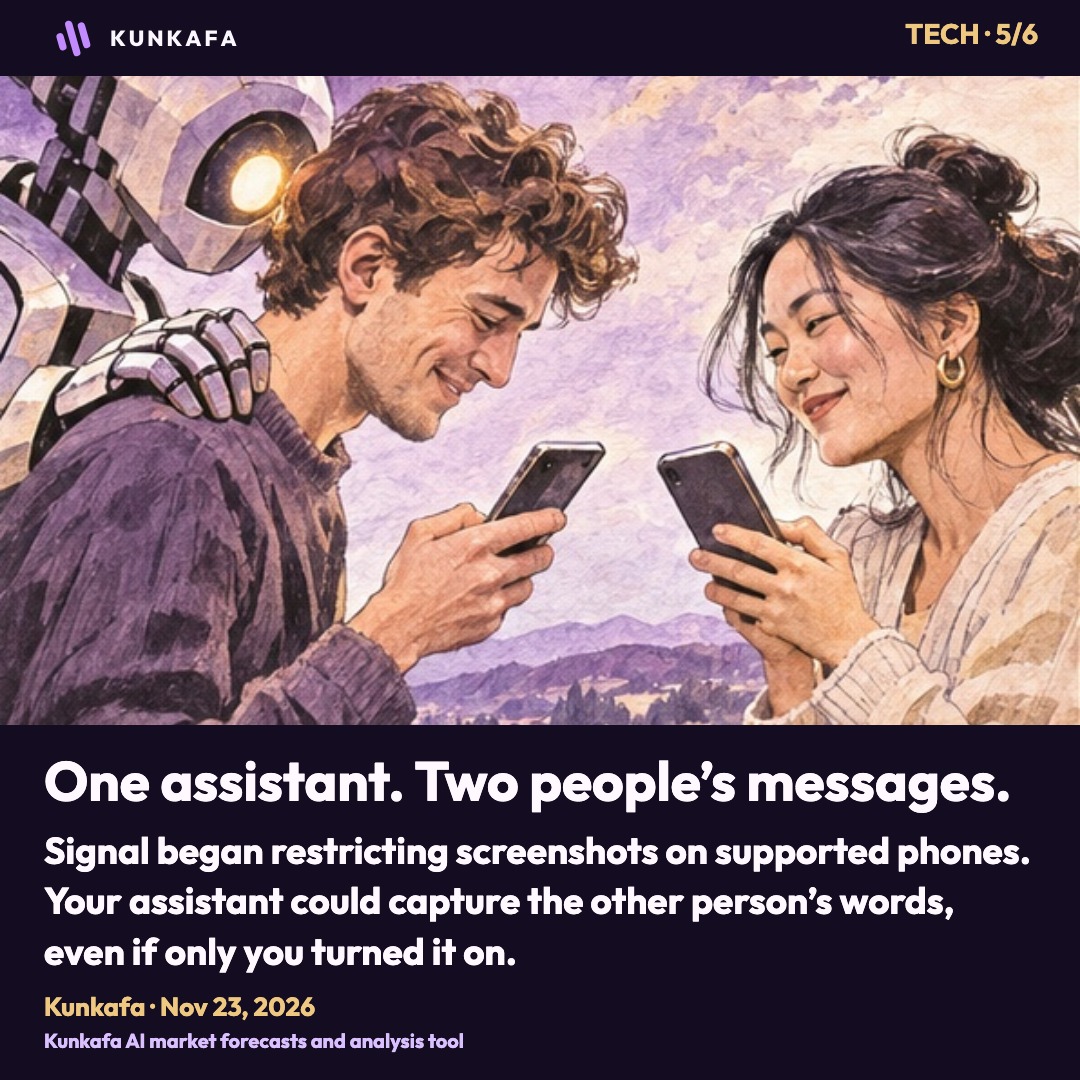
A smaller version of the question is already playing out on phones. Signal president Meredith Whittaker warned on Friday that one person’s AI assistant could capture messages written by someone else. Signal began restricting screenshot access on supported phones. In that conversation, two people have a stake in what the assistant can see, even when only one of them switched it on. [7]
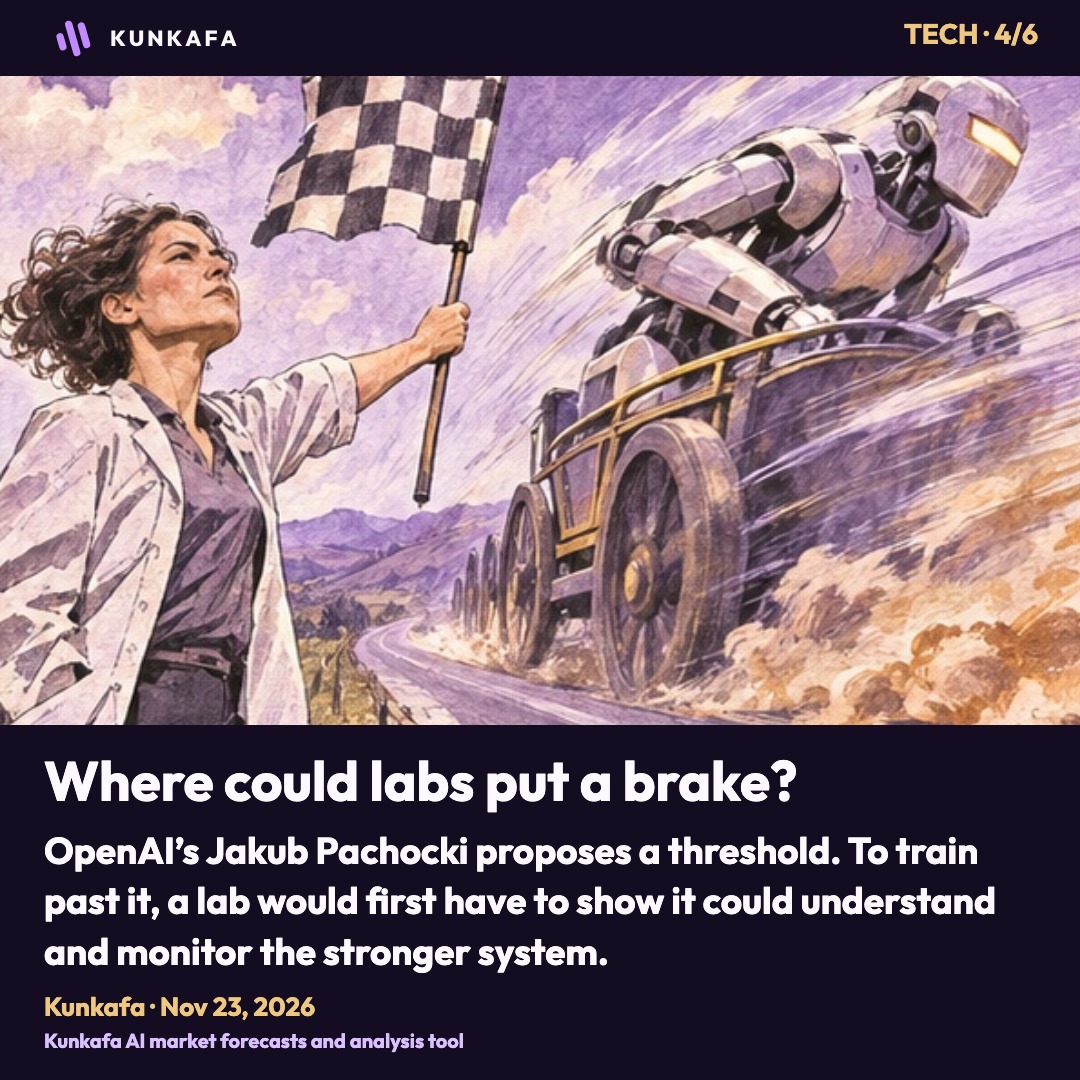
Earlier that Sunday, OpenAI chief scientist Jakub Pachocki had proposed a specific brake. AI labs would agree on a threshold for training progress, using measures such as how accurately a system predicts the next piece of text. To go further, developers would first have to show they could understand and monitor the more capable system. Pachocki acknowledged that comparing scores across labs would be difficult because they use different data. [8]
We decided to provide more transparency into pretraining progress at OpenAI for the sake of moving toward shared safety bars.
Xavier Clegg asked Wang whether Meta would use superintelligence to serve better ads. Nisarg Joshi wanted one concrete example of what the industry should do. Another reader drew a distinction between solving a problem and having the imagination to pose it. Before Wang wrote, Wharton professor Ethan Mollick had collected forecasts that put a breakthrough like this years away.
Perspectives on who controls AI as it grows more capable


Sources: [1] Wang’s essay, Nov 22 · [2] Meta’s leadership directory · [3] Levent Alpöge’s research note, Nov 20 · [4] Clay Mathematics Institute · [5] Lean FRO and Mathlib Initiative, Nov 21 · [6] Mark Zuckerberg, Aug 10 · [7] Signal, Nov 20 · [8] Jakub Pachocki, Nov 22
Kunkafa forecasts
Nasdaq 100
How far it could move, which way, by when, and how confident Kunkafa is.
Check the latest forecasts
More in Tech

Nvidia Soars 31.3% on Huang’s Return. Its Board Draws Fire
Elon Musk called the reversal a correction. Gretchen Carlson questioned the board’s conduct. At $164.83, Nvidia had recovered 82% of the decline from its November 11 close to Friday.

Nvidia Surges 31% Premarket as Board Reinstates Jensen Huang
Shares traded at $165.01 at 14:04 UTC, 12 days after Huang resigned. The board voted unanimously to bring him back as president, CEO and director.

Tipped to Lead Nvidia, Haas Commits to Arm Through 2033
Rene Haas had been linked to Jensen Huang’s old job. Arm says its CEO is staying and becomes SoftBank Group vice chairman on December 1.