Economy · Explainer
The Day Egypt Floated the Pound in November 2016
Egypt’s central bank indicated 13 pounds to the dollar. At its own auction that day the average was already 14.65. Banks soon quoted different rates again.

Kunkafa News · Published · 4 min read
 By Kareem FaridDiscuss with the author on X
Here is a visual story in summary
Key points
- Egypt’s central bank removed restrictions on bank exchange rates and raised policy rates by three percentage points on November 3.
- The 13-pound dollar was indicative. Initial auction and interbank trades soon established other prices.
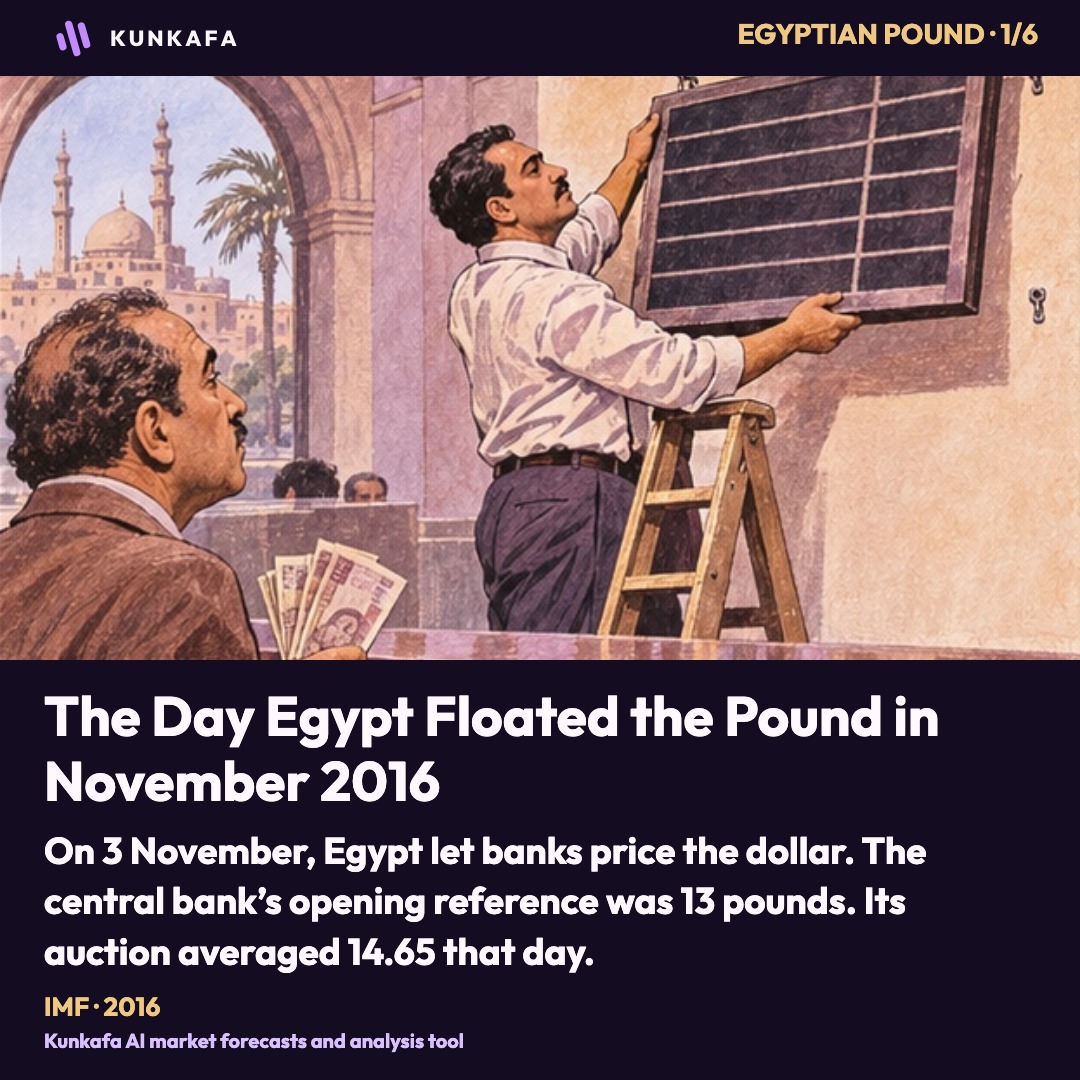
On Thursday, November 3, 2016, Egypt’s central bank put out a new number for the dollar: 13 Egyptian pounds. By the time its initial auction was over, the average was 14.65. There had been no second devaluation announcement in between. The number 13 was a starting reference for a market in which banks had just regained the right to set their own buying and selling prices. [1]
The price on the board and the dollar a bank could supply
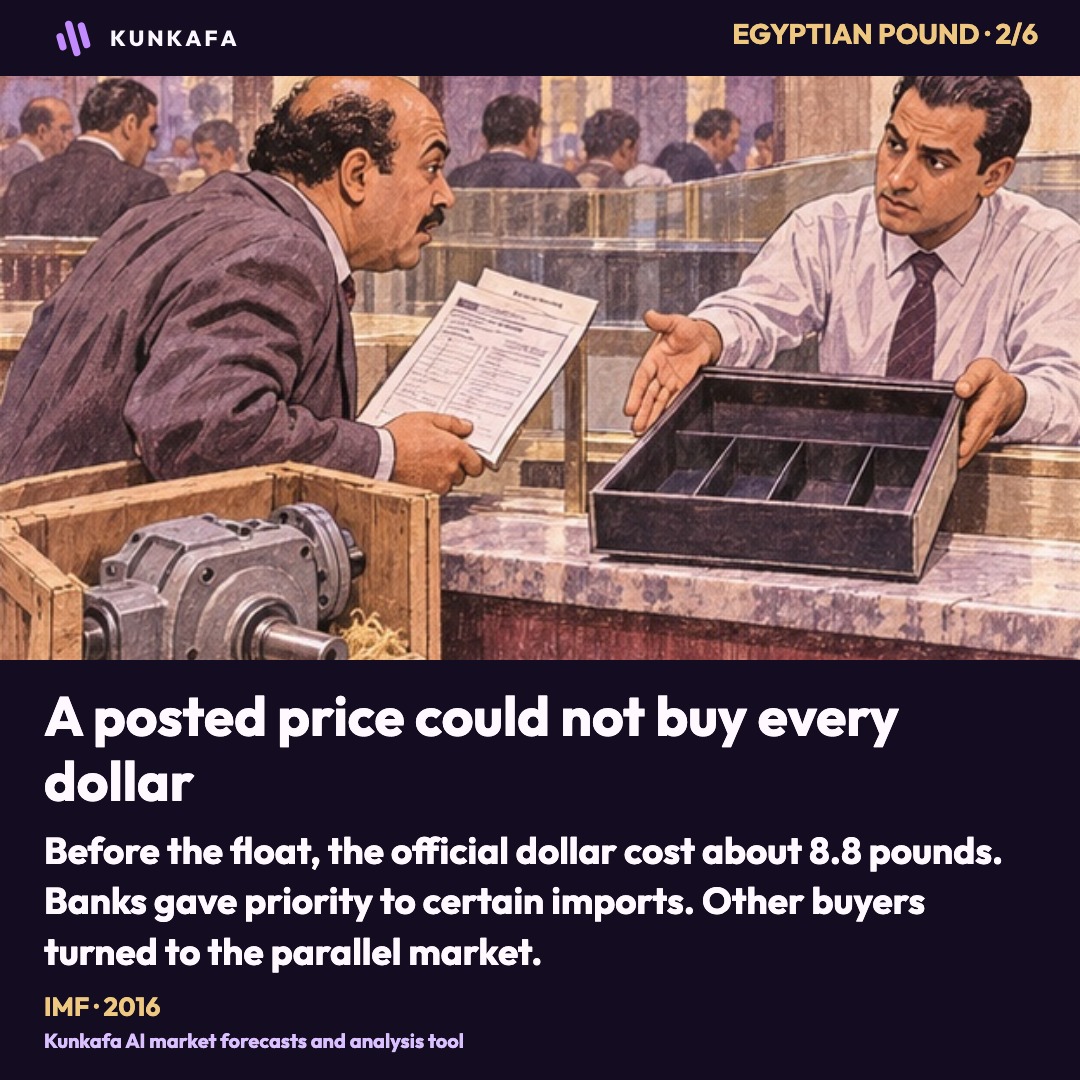
Before the float, the official rate stood near 8.8 pounds per dollar. Getting foreign currency at that price was another matter. Imports had a priority list. Those unable to get dollars through banks faced a different price in the parallel market. IMF staff put the parallel premium above 50% at the end of October, before it narrowed in the two days immediately preceding the announcement. [1]
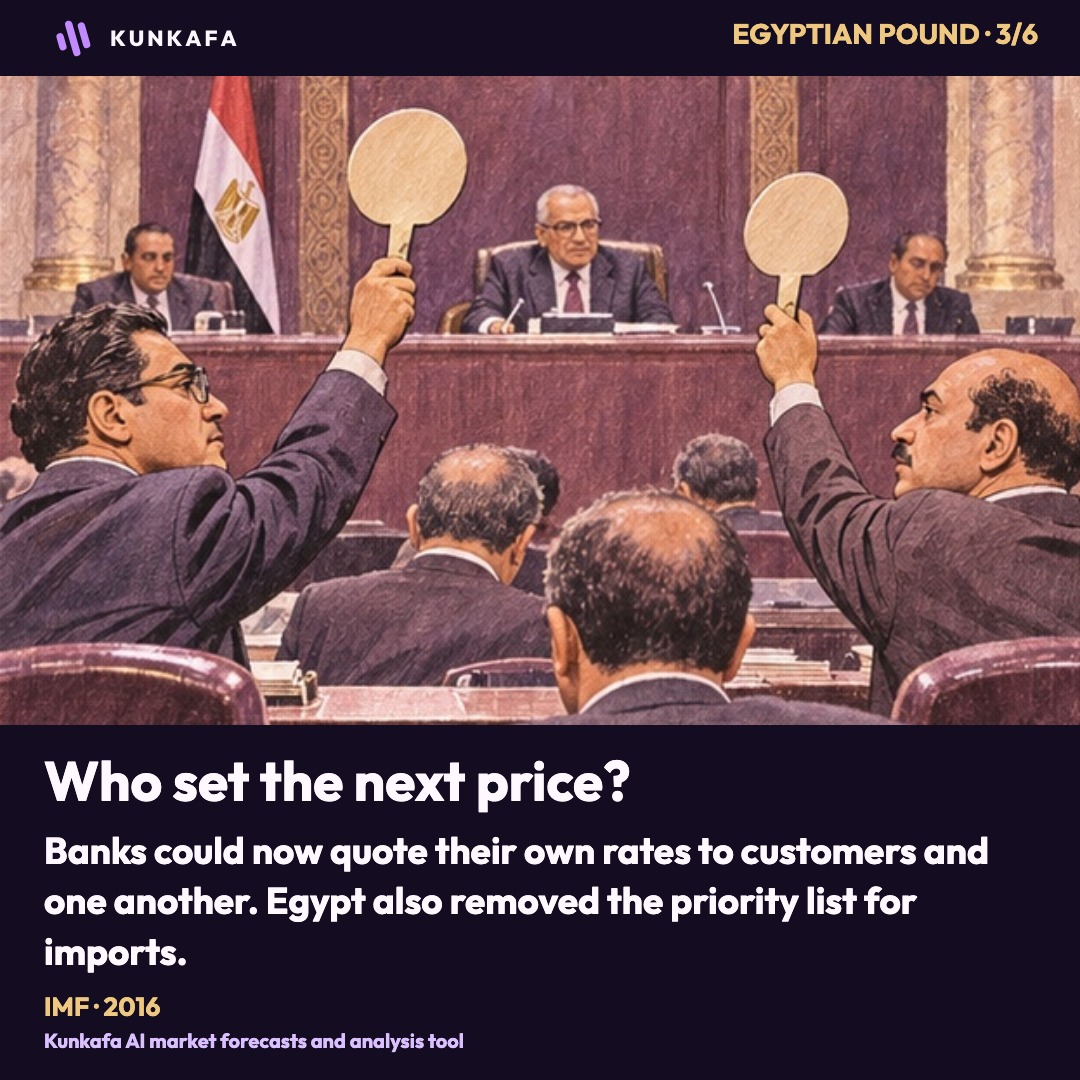
November 3 changed both the price and the way an importer could seek currency. Authorities removed the priority import list. Banks could quote customers and each other, and their foreign exchange units extended opening hours to twelve hours a day, including weekends. The central bank also increased policy rates by 300 basis points, or three percentage points. The changes altered the terms on which banks could attract pounds and bid for dollars at the same time. [1]
The Capsule
- Distinguish the indicative 13 from the auction average of 14.65 pounds per dollar.
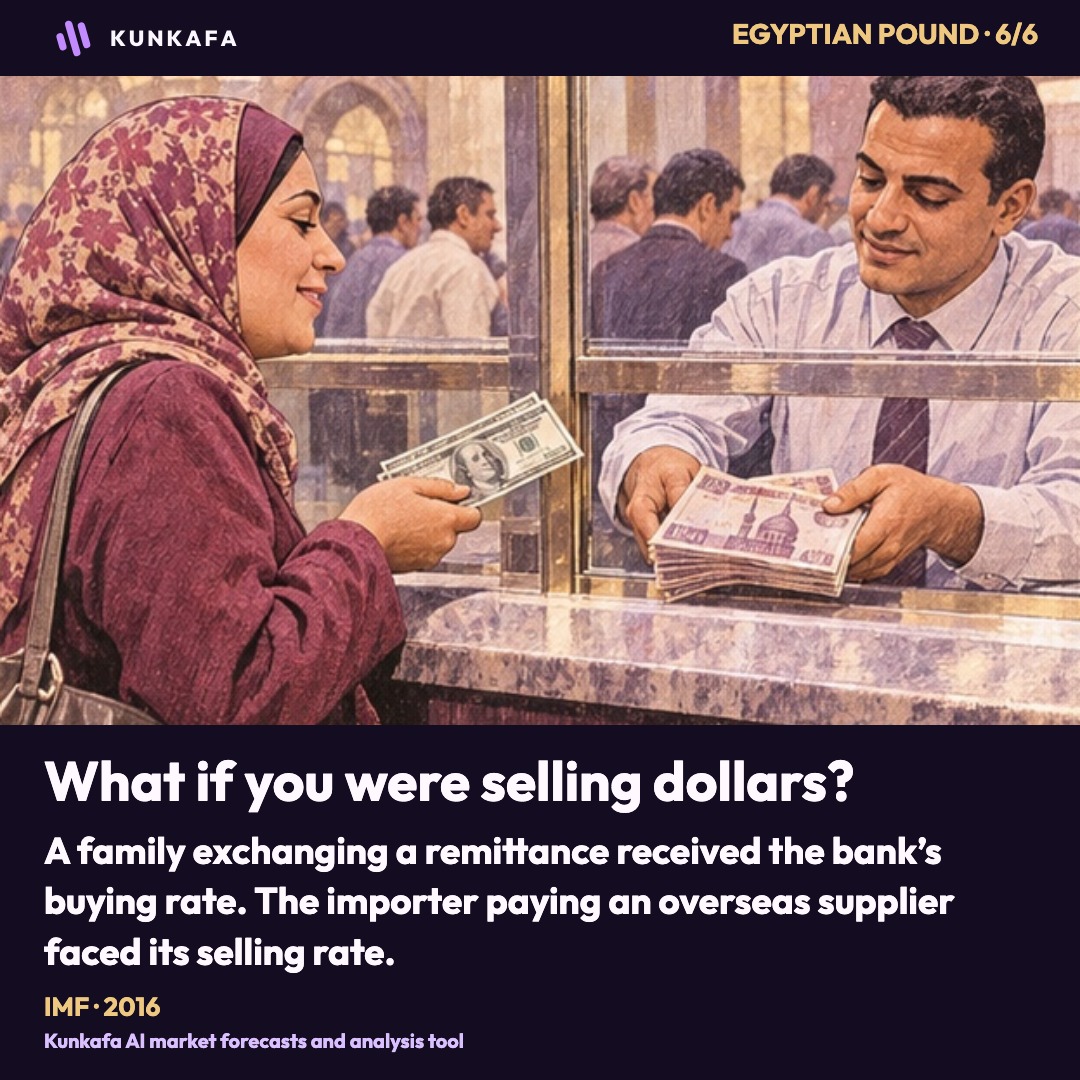
- Use the bank’s buying rate for a remittance sold to it and its selling rate for a dollar purchase.
- Read the interbank ranges as observations across three business days.
- Place the flotation on November 3 and IMF approval on November 11.
What the first three trading days revealed
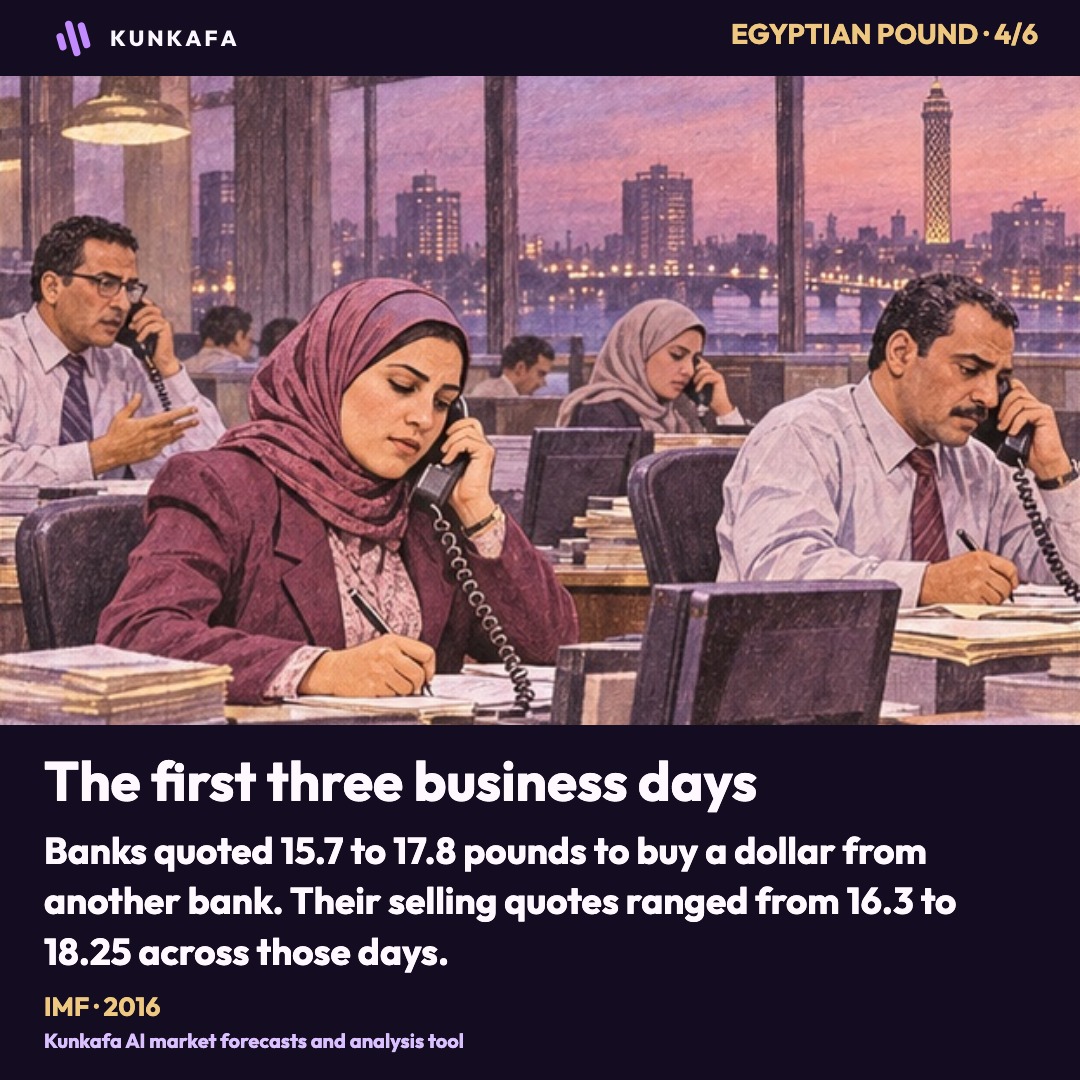
In the three business days after the auction, banks quoted between 15.7 and 17.8 pounds to buy a dollar from another bank, and between 16.3 and 18.25 to sell one, according to the Egyptian representatives’ account. Those ranges span several days, so their endpoints do not describe the spread on a single transaction. They do show how quickly actual dealing had moved beyond the initial reference. [1]
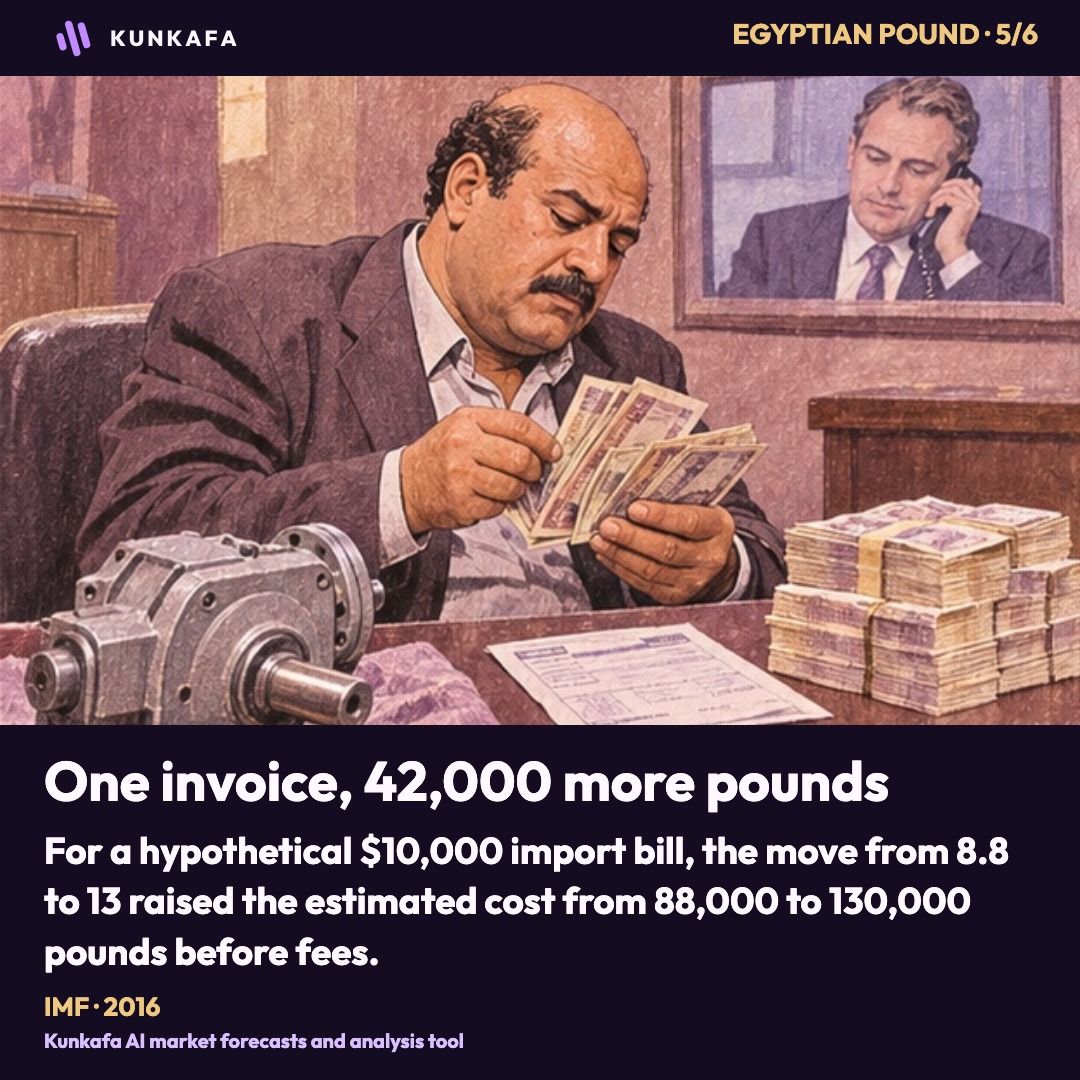
For an importer budgeting $10,000, moving the reference from roughly 8.8 to 13 raised the indicative pound cost from about 88,000 to 130,000, before fees. A recipient selling a dollar remittance faced the other side of the bank’s quote. Eight days later, on November 11, the IMF board approved a three-year, roughly $12 billion arrangement with an immediate disbursement of about $2.75 billion available. By that point banks had already begun discovering a price among themselves. [1][2]
Sources: [1] IMF staff report and Egyptian authorities’ November 11 statement · [2] IMF Board announcement, November 11, 2016.
Kunkafa forecasts
Euro - Dollar
How far it could move, which way, by when, and how confident Kunkafa is.
Check the latest forecastsMore in Economy

Why Abu Dhabi Is Backing Solar With a Dh7.76bn Gas Plant
Taweelah C is due online in 2029. Its role is to supply power when solar output falls, just as new homes and data centres are adding to demand.

The UAE Wants AI to Spot Trade Trouble Before Cargo Stalls
The trade ministry’s plan with Presight links shipping records to customs rules so exporters can spot trouble and find other markets.

Where Qatar’s Gas Wealth Goes: The Budget and QIA
Qatar expects 155 billion riyals of oil and gas revenue in its 2026 budget. That annual flow is a different measure from its sovereign fund’s accumulated assets.