Economy · Explainer
The UAE Wants AI to Spot Trade Trouble Before Cargo Stalls
The trade ministry’s plan with Presight links shipping records to customs rules so exporters can spot trouble and find other markets.

Kunkafa News · Published · 4 min read
 By Kareem FaridDiscuss with the author on X
Here is a visual story in summary
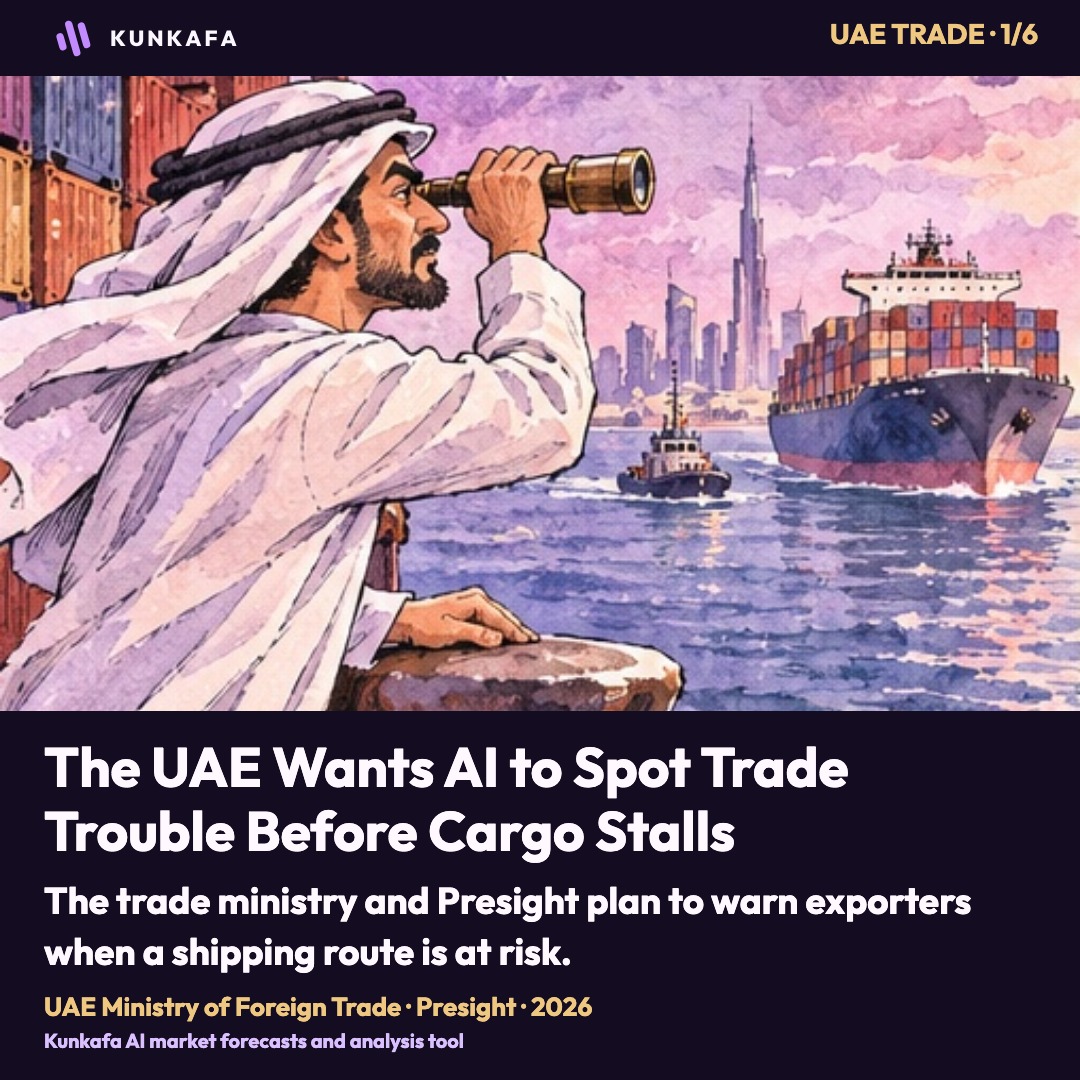
An exporter needs to know two things before sending a shipment: whether the route is clear and whether the goods qualify to enter the market at the other end. The UAE Ministry of Foreign Trade wants one AI platform to help answer both. Forsan UAE highlighted the project on November 24. The ministry announced its agreement to build it with Presight, part of Abu Dhabi’s G42, on January 19. [1] [5] In its first-quarter results, Presight identified the project as a multi-year development contract. [6]
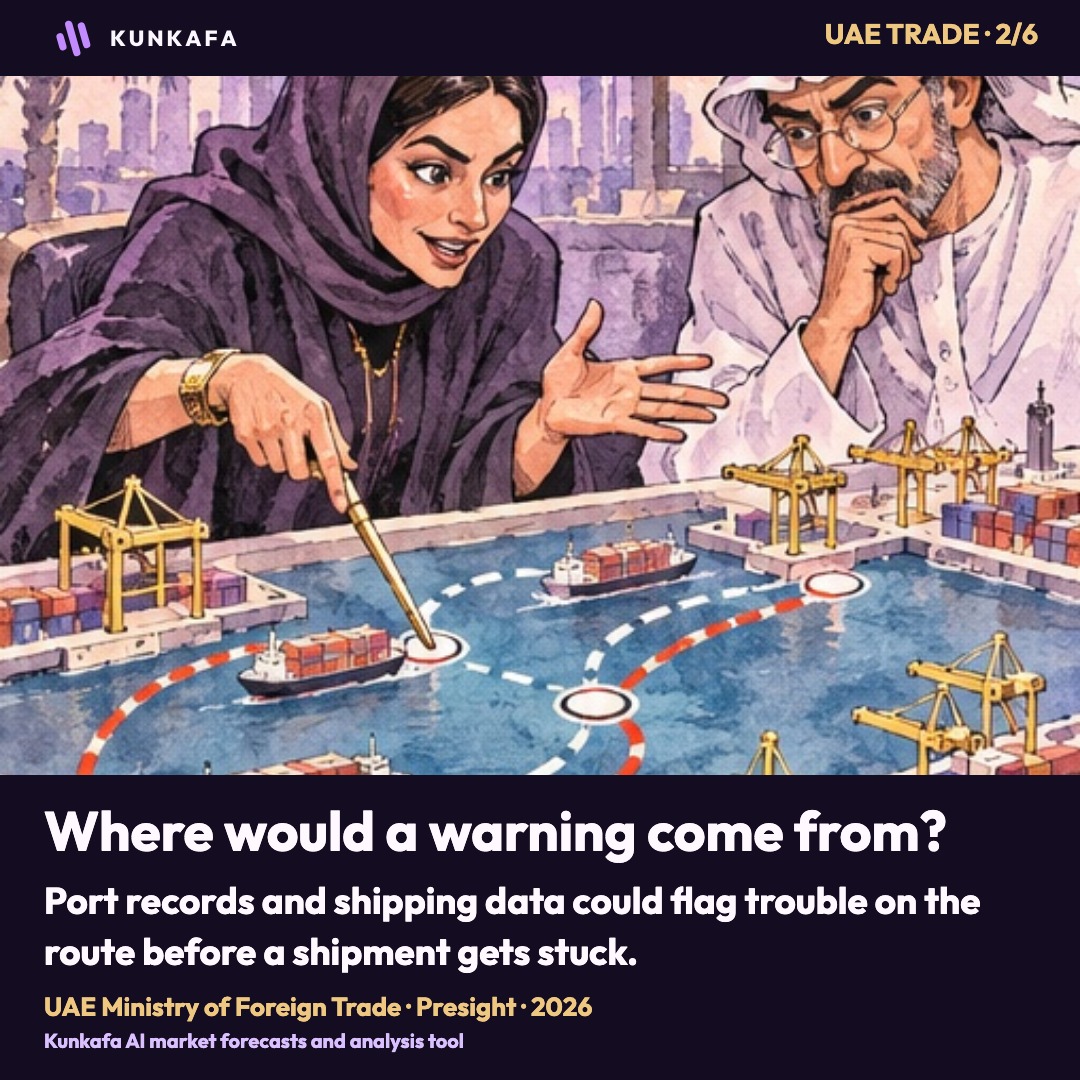
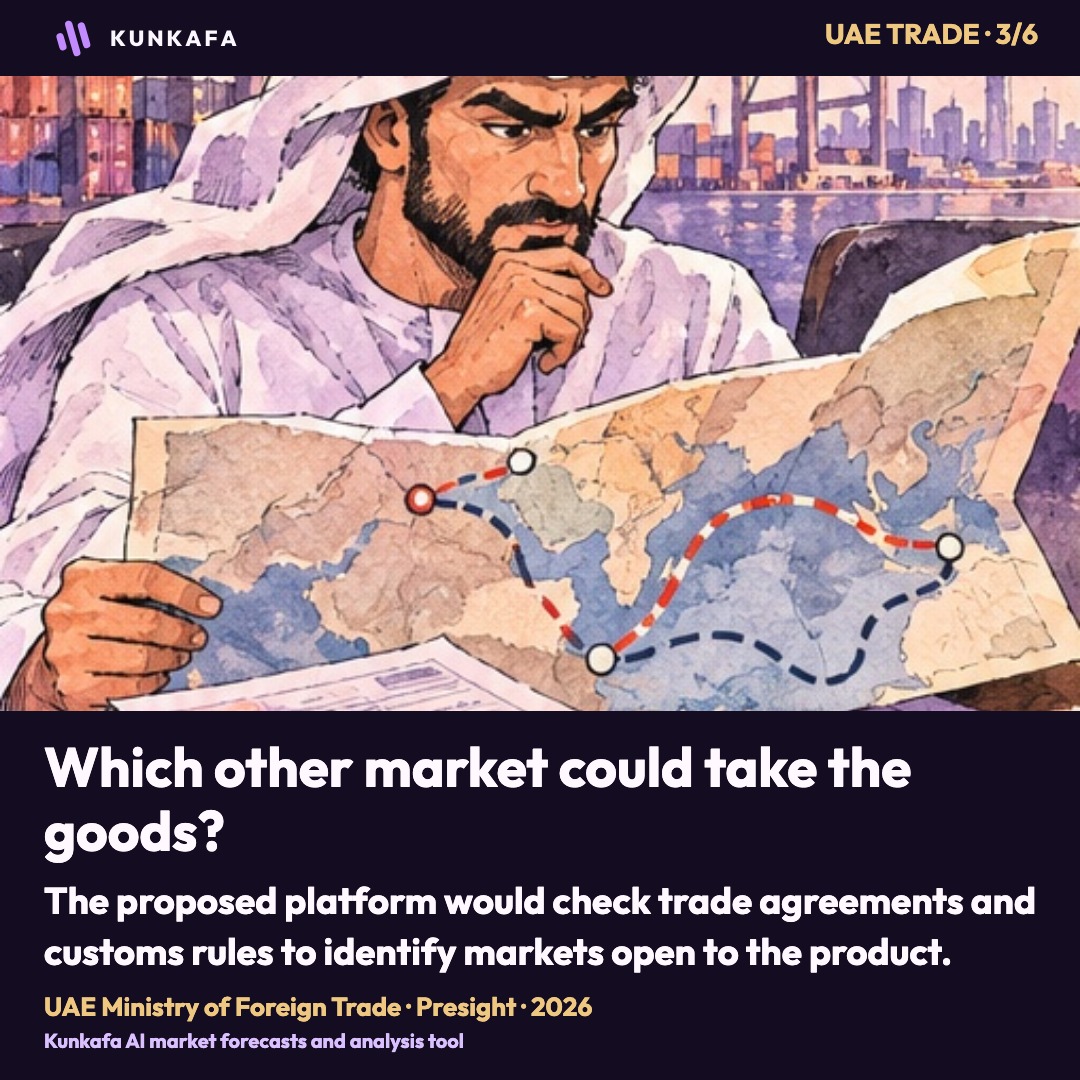
Presight told the Abu Dhabi Securities Exchange that the proposed system would analyse millions of data points in real time. Port and shipping records could flag a disruption. Customs records, trade agreements and regulations could show which alternative markets are open to a product. The ministry also intends to use the analysis in trade negotiations. [2]
The Ministry Of Foreign Trade has signed an agreement with Presight to build the Ministry of Foreign Trade AI Platform, a suite of AI-powered trade tools that will facilitate smarter, faster foreign trade and consolidate the UAE’s status as a global trade pioneer.#Presight pic.twitter.com/5ooK3PLCRO
The paperwork behind a shipment
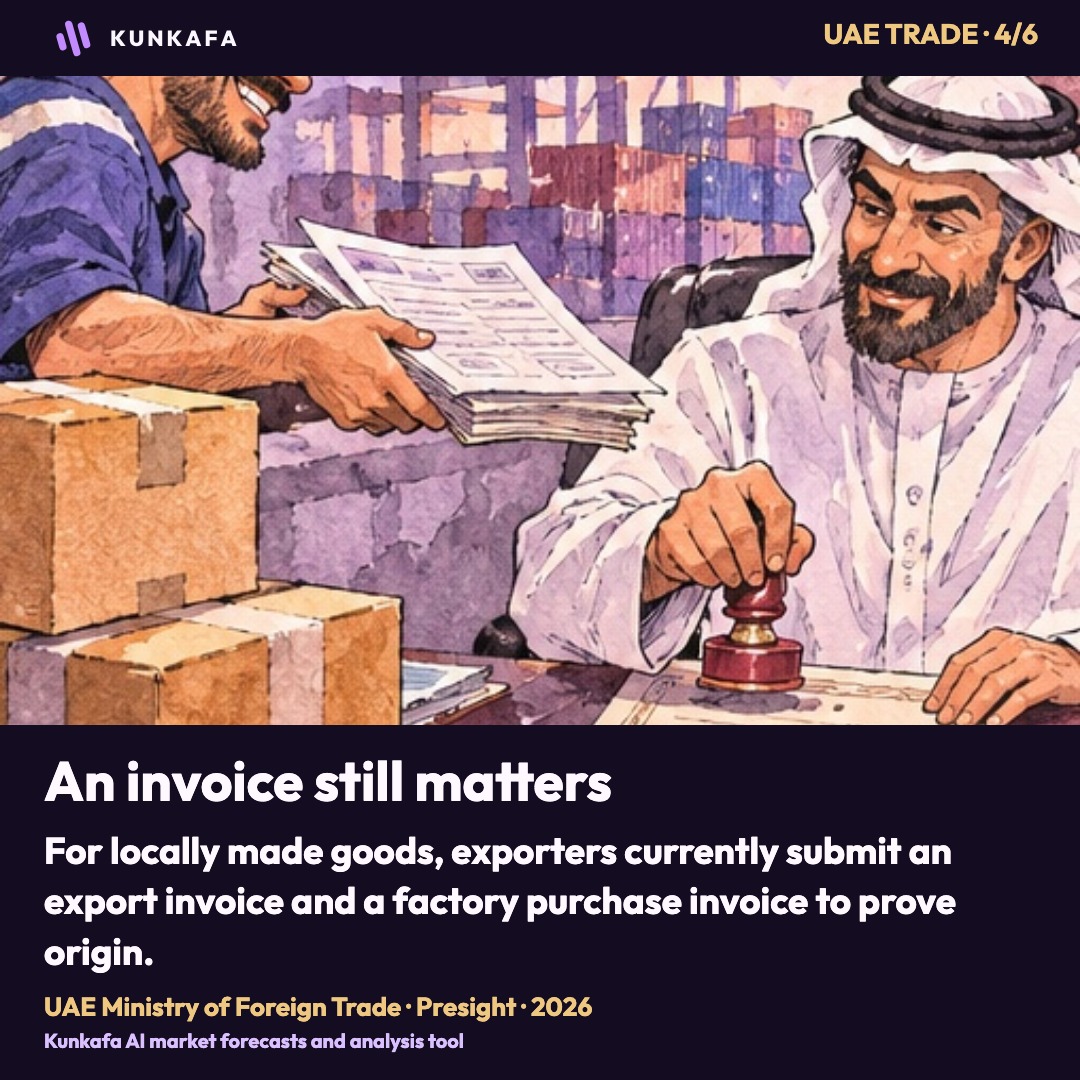
One of the proposed services is a smart certificate of origin, the document exporters use to establish where goods were made. The ministry’s existing online service gives a useful benchmark. A registered exporter applying for a certificate for locally manufactured goods must supply an export invoice and a purchase invoice from a qualified factory. The ministry lists an average turnaround of one working day. [1] [3]
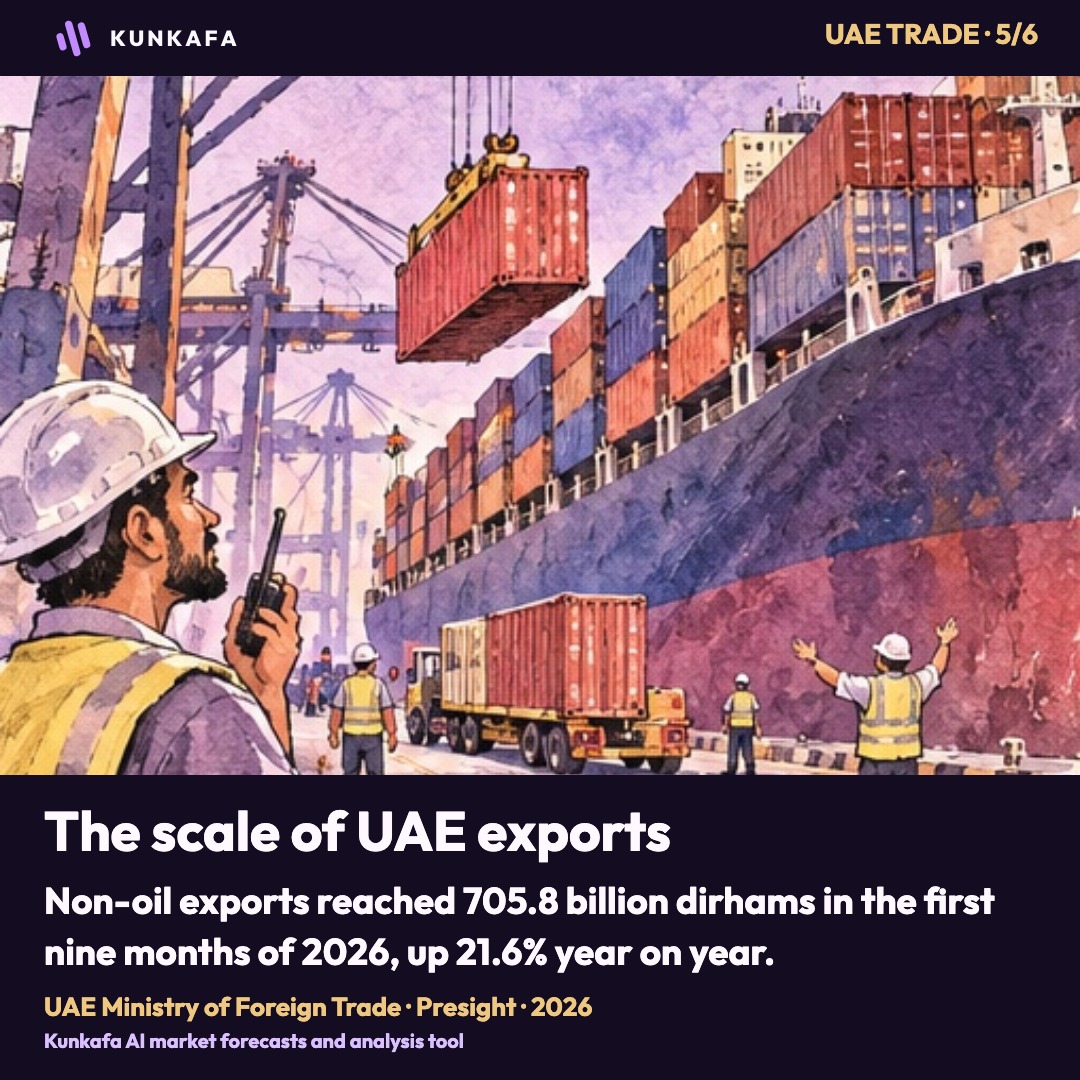
The scale of the opportunity is already visible. The UAE recorded AED 2.945 trillion in non-oil foreign trade in the first nine months of 2026, up 10.1% year on year. Non-oil exports alone rose 21.6% to AED 705.8 billion. For an exporter, the practical measures of success are smaller: how much earlier a warning arrives, and how much time it takes to clear the paperwork. The January agreement and November post give no public access date or measured time savings. [4] [1] [5]
Writing about the wider shipping industry, Flexport founder Ryan Petersen traced how a Gulf disruption could ripple through distant ports. Jeff Ashcroft saw automation moving into everyday operations. Victor Ugwu and Becky Boyd raised two questions for anyone using forecasts: how good are the underlying data, and who interprets them?
Perspectives on spotting risks in supply chains


Sources · Ministry of Foreign Trade, January 19 agreement · Presight’s ADX disclosure · Ministry certificate service · UAE trade figures, November 8 · Forsan UAE, November 24
Kunkafa forecasts
Brent oil
How far it could move, which way, by when, and how confident Kunkafa is.
Check the latest forecastsMore in Economy

Where Qatar’s Gas Wealth Goes: The Budget and QIA
Qatar expects 155 billion riyals of oil and gas revenue in its 2026 budget. That annual flow is a different measure from its sovereign fund’s accumulated assets.

England Offers Farms Up to £300,000 to Store Water
Three reservoirs gave one family enough water for another 126 acres. A new £15 million round opens on November 30, with a smaller option for growers short of land.

Bristol Line Gets Its First Passenger Trains in 62 Years
Bristol Brabazon brings hourly trains to Concorde’s former airfield. The trip to Temple Meads takes about 20 minutes, two years before a planned 20,000-capacity arena opens.