Markets · Explainer
Why Egypt’s EGX30 and EGX30 Capped Can Diverge
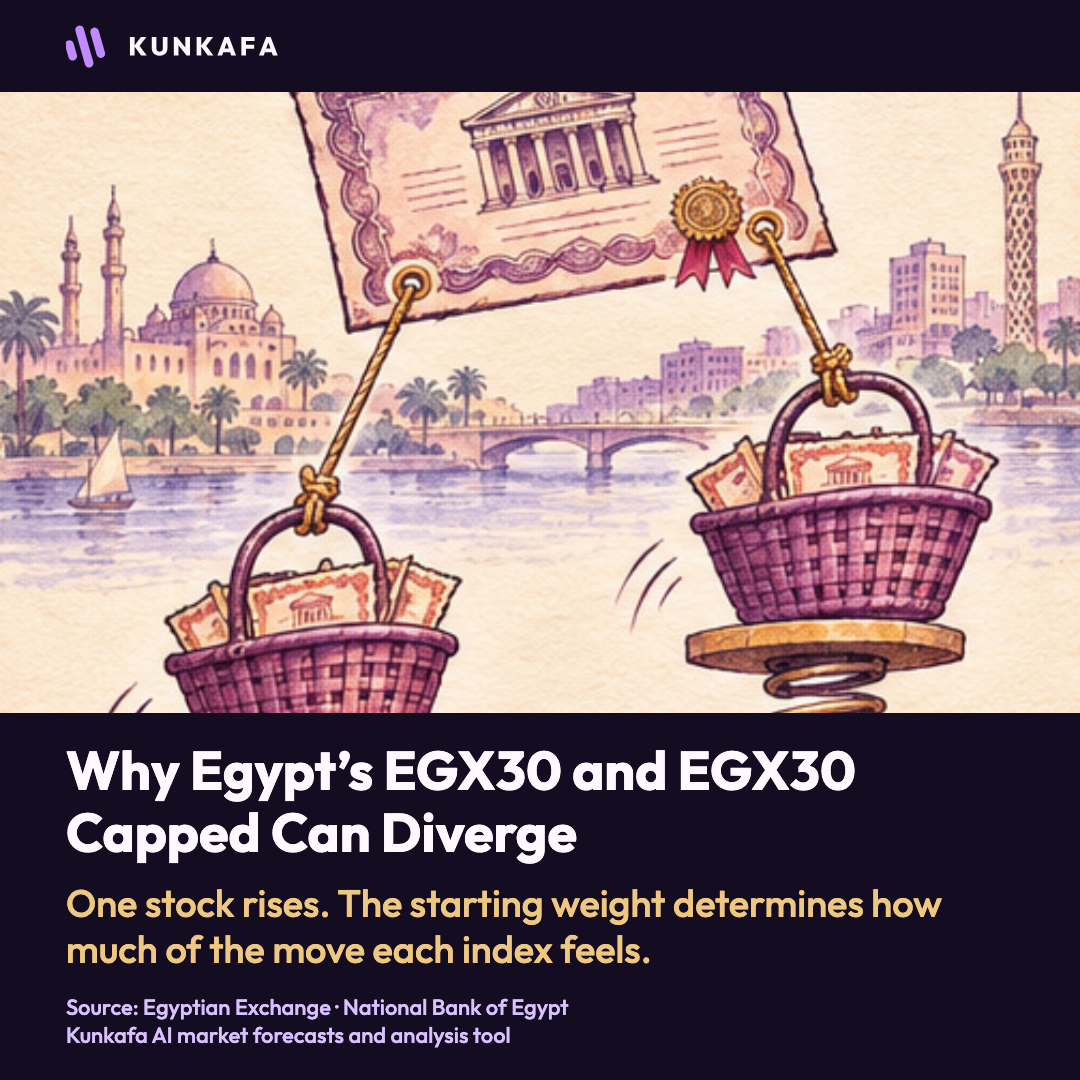
The same large share can pull two Cairo benchmarks by different amounts. Its starting weight determines how much of a price move reaches each index.

Kunkafa News · Published · 4 min read
 By Kareem FaridDiscuss with the author on X
Here is a visual story in summary
Key points
- The Egyptian Exchange weights the EGX30 using market value adjusted for publicly tradable shares.
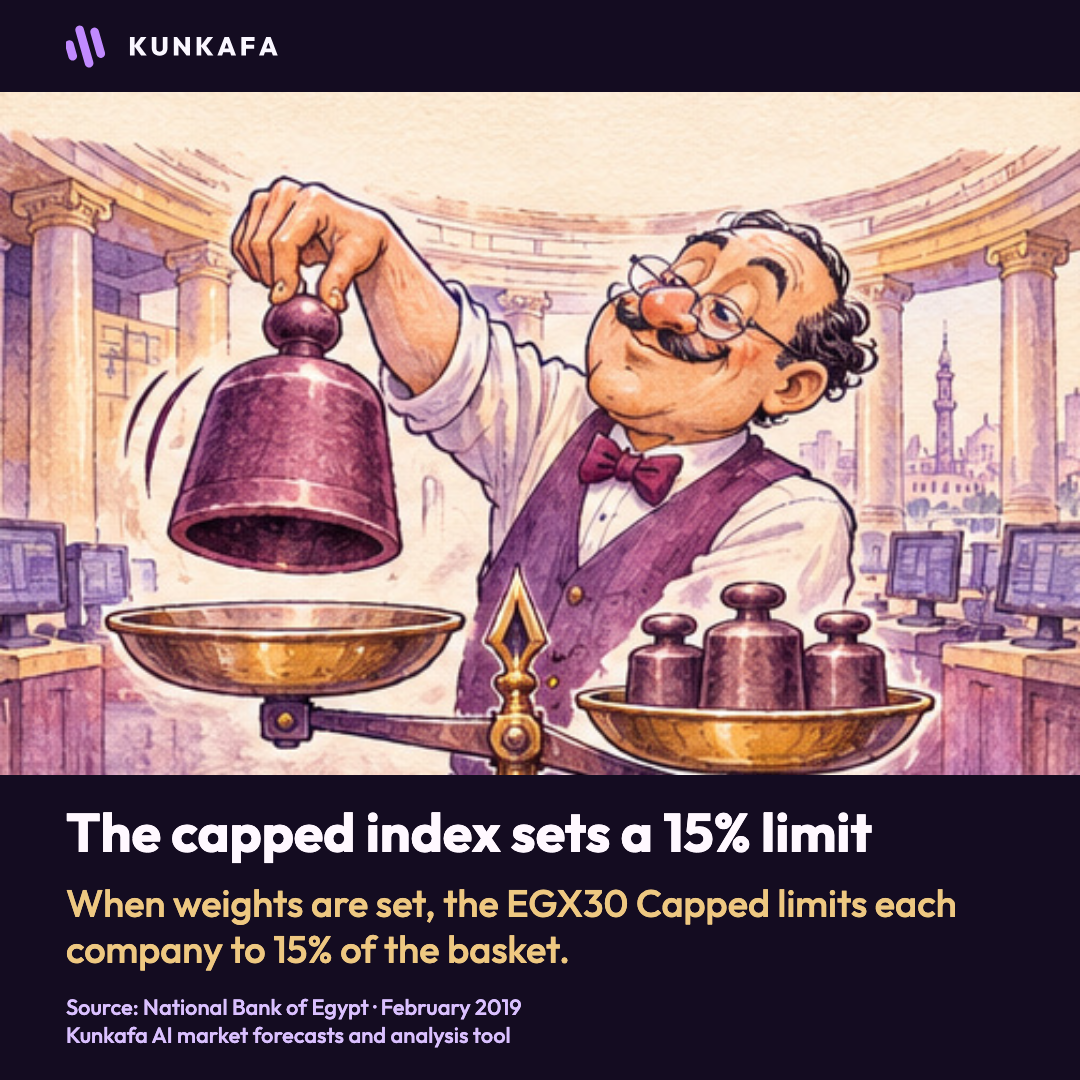
- The capped benchmark launched with a 15% maximum weight for a single constituent at reweighting.
A stock that rises 10% does not add 10% to Egypt’s EGX30. Its contribution depends on its weight at the start of the period. The Egyptian Exchange says its benchmark uses market capitalization adjusted for free float. The EGX30 Capped was launched with a 15% maximum weight for each company when weights are set, according to the National Bank of Egypt’s account of its February 2019 introduction [1] [2].
What does free float change?
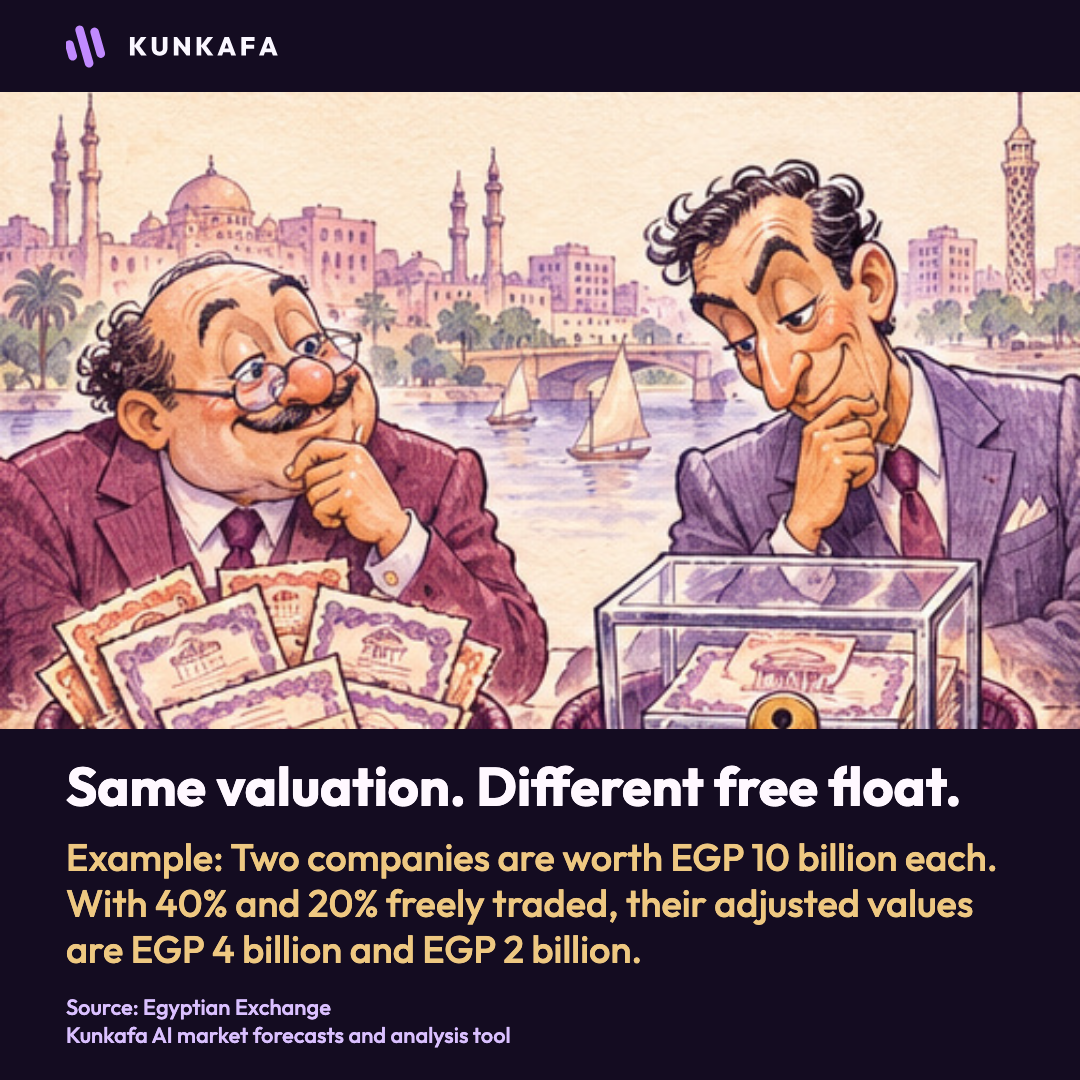
The exchange describes the calculation in three parts: listed shares multiplied by closing price, then by the proportion in free float. Imagine two companies each worth EGP 10 billion at the quoted share price. If 40% of the first company’s shares are freely traded and 20% of the second’s are, their adjusted values are EGP 4 billion and EGP 2 billion. The ratios are hypothetical. They explain how companies with the same headline valuation can enter a weighting calculation with different values [1].
What one rising stock contributes
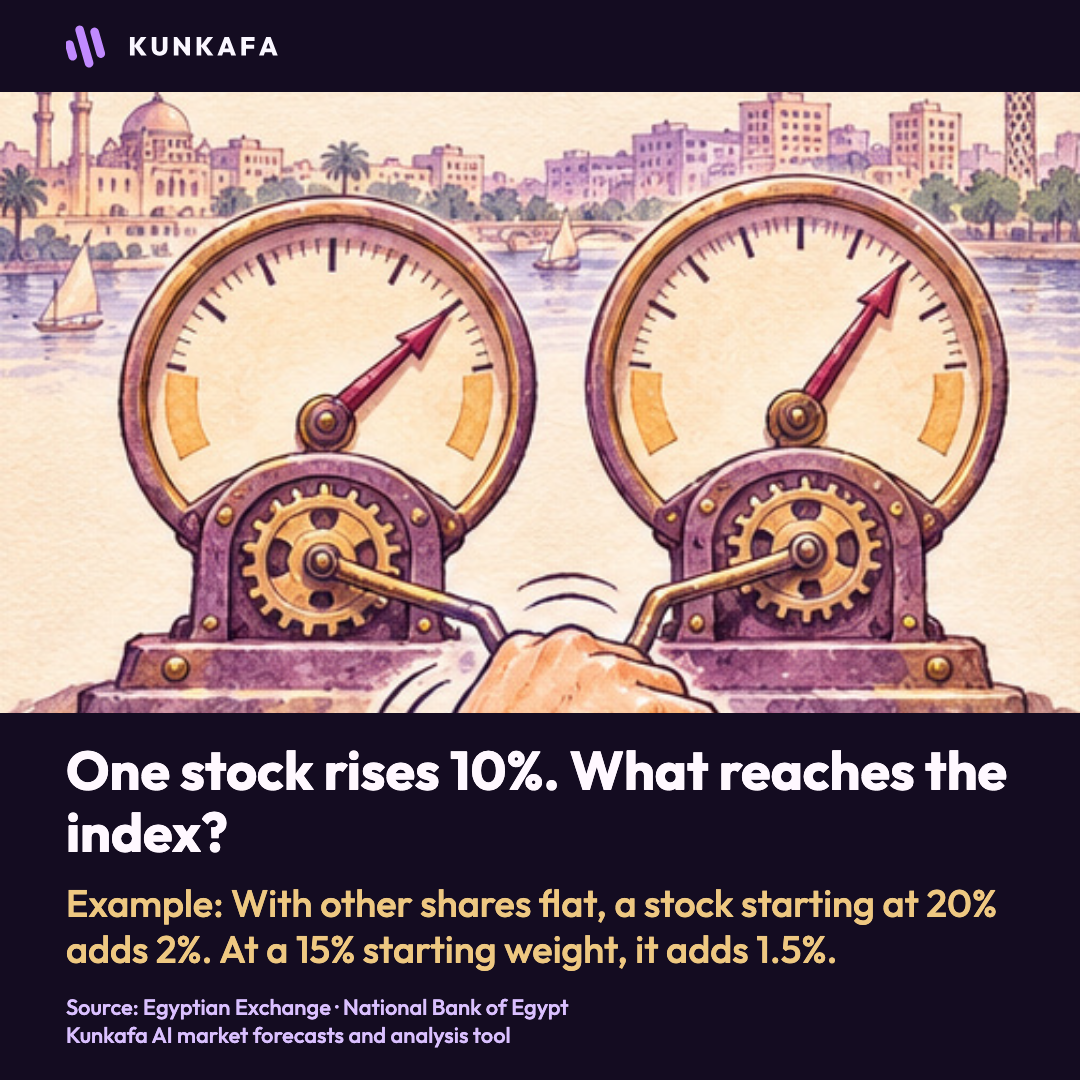
Suppose a stock starts a session at 20% in one illustrative basket and 15% in another. It rises 10% while every other share is unchanged. The first gains about 2% from that stock, the second 1.5%. The half-point gap comes entirely from the five percentage points of starting weight. These are illustrative weights, not a claim about the current weight or return of any Egyptian company [1] [2].
The Capsule
- Match the exact index name, currency and dates on both charts.
- Use a stock’s opening weight when estimating its contribution.
- Multiply the weight by the share-price change, then account for the other constituents.
- Check the latest constituents and weights before applying the example to a session.
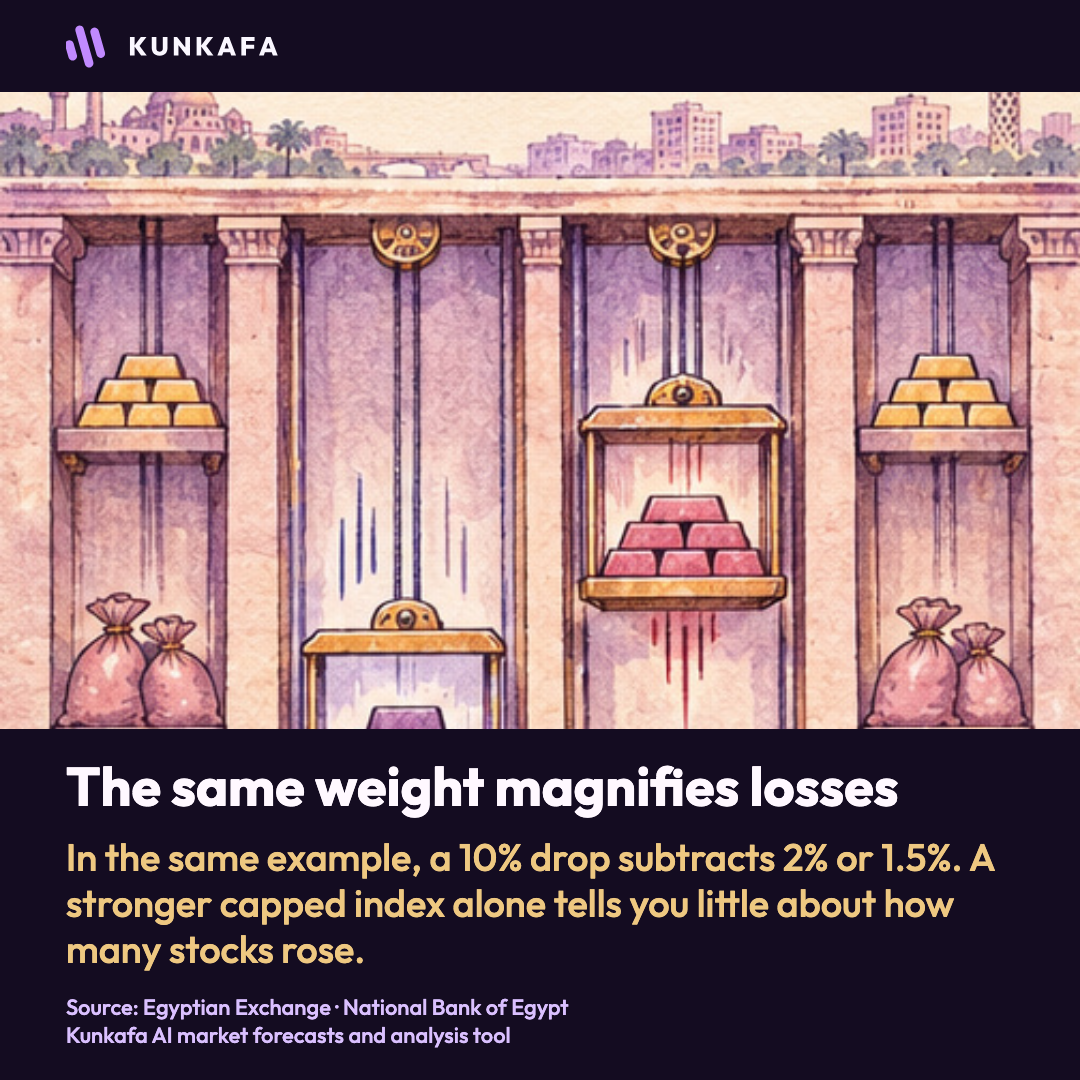
The reverse case is equally revealing. A 10% fall in the same stock subtracts roughly 2% and 1.5% respectively under the same assumptions. And if other constituents move at the same time, their individual contributions must be added. Seeing the capped series close higher does not, on its own, prove that more listed companies rose that day [1] [2].
Read the label before comparing levels
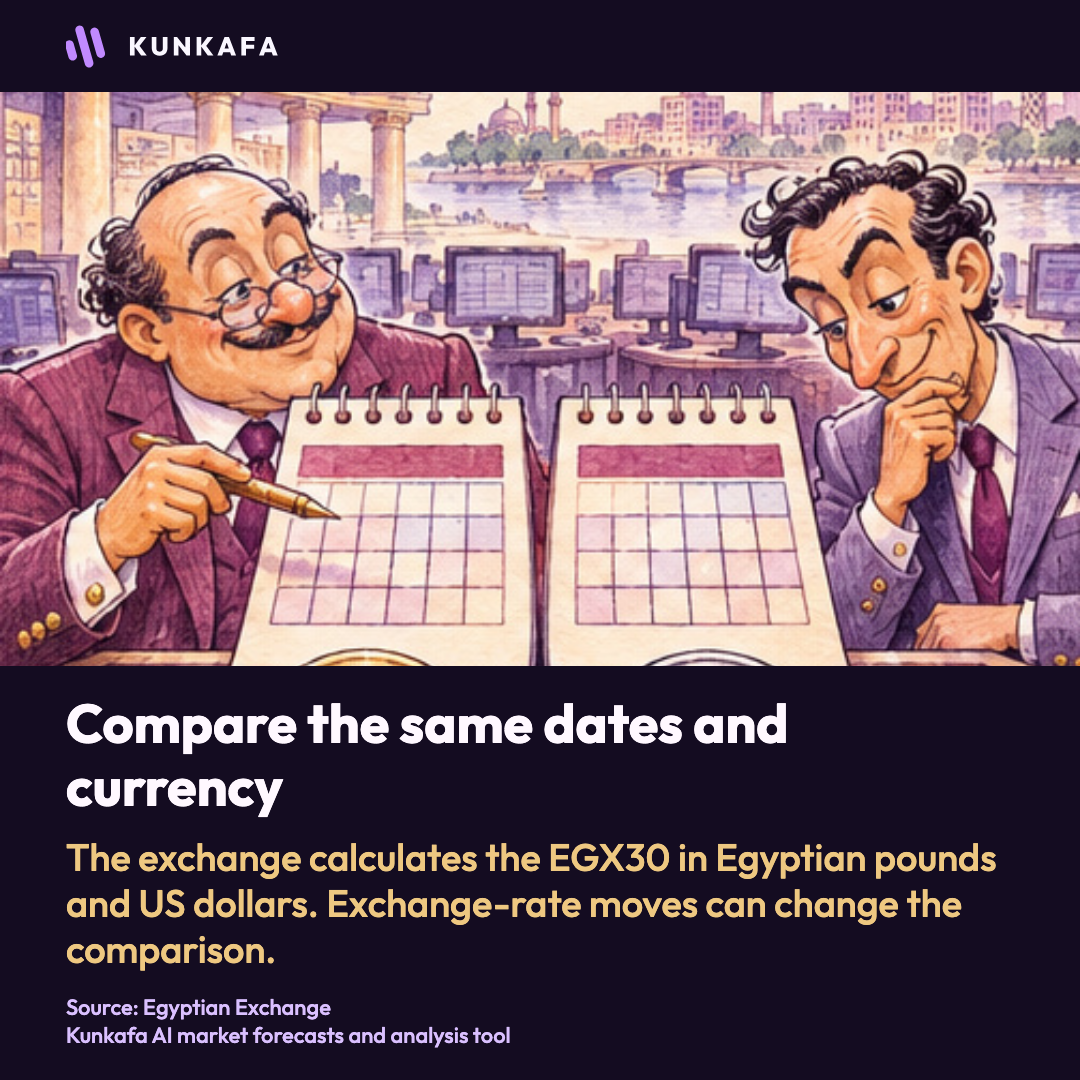
Compare percentage changes over identical dates and in the same currency. The exchange publishes an EGX30 series in Egyptian pounds and a US-dollar series, so currency alone can change the result. Also separate a company’s free-float percentage from its index weight: the former is a fraction of that company’s own shares; the latter is a fraction of the entire benchmark [1] [2].
Sources: [1] Egyptian Exchange, EGX30 overview · [2] National Bank of Egypt, EGX30 Capped launch, February 2019.
Kunkafa forecasts
S&P 500 Index
How far it could move, which way, by when, and how confident Kunkafa is.
Check the latest forecastsMore in Markets

Nasdaq jumps 2.31% on Black Friday as chips rally
Sandisk gained 15.96% and the Nasdaq Composite closed at 24,129.50, more than erasing Wednesday’s loss. The S&P 500 and Dow also reversed their morning pullbacks.

How to Compare Two MSCI World ETF Fees in France
Two French disclosures model the same €10,000 over one year. One shows €20 in product costs, the other €38. The five-year column needs a different reading.

Can a Covered Call Cost You a Stock Dividend?
A shareholder can lose an upcoming dividend if an American-style call is exercised early. The timing of exercise can matter more than the notification.