Commodities · Explainer
Why Dubai Launched Gold Futures in 2005
Gold merchants gained a way to protect the value of stock without selling their bars.

Kunkafa News · Published · 3 min read
 By Kareem FaridDiscuss with the author on X
Here is a visual story in summary
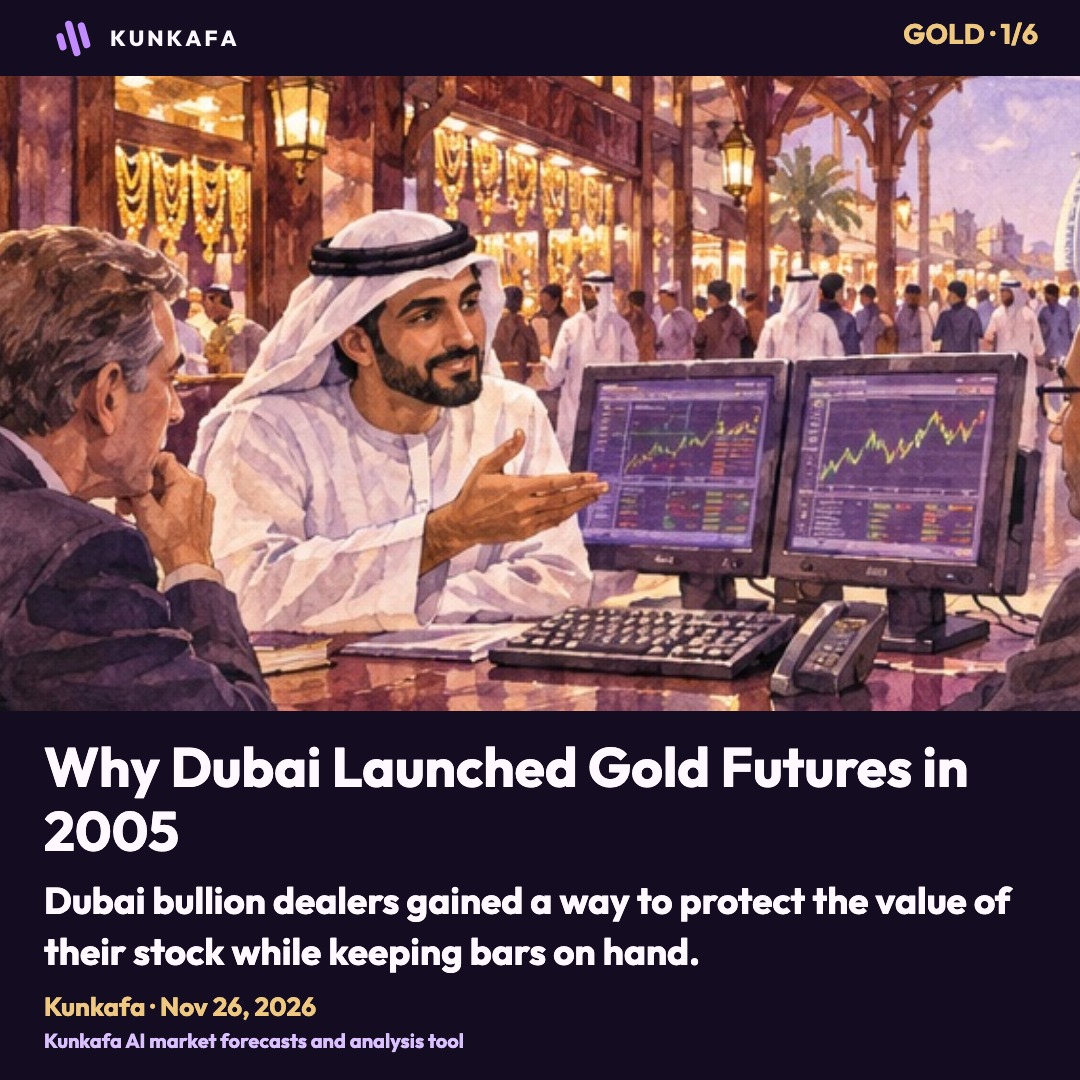
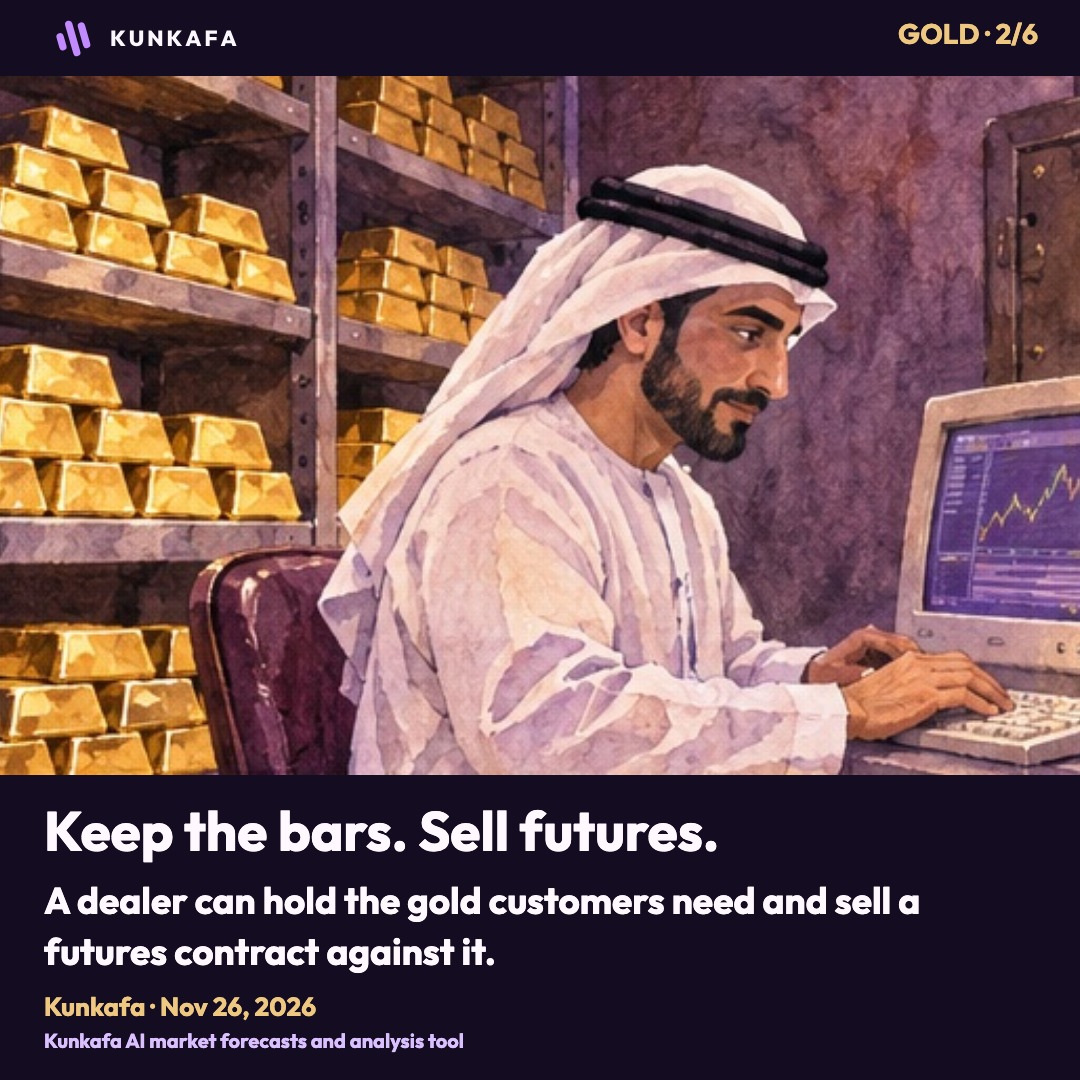
A Dubai bullion merchant once had to choose between keeping bars available for customers and selling them to escape a falling price. The city’s new exchange added a third possibility in 2005: keep the bars and sell gold futures against the inventory. [2] [3]
Key points
- A futures position changes exposure to price while the physical bars stay in storage.
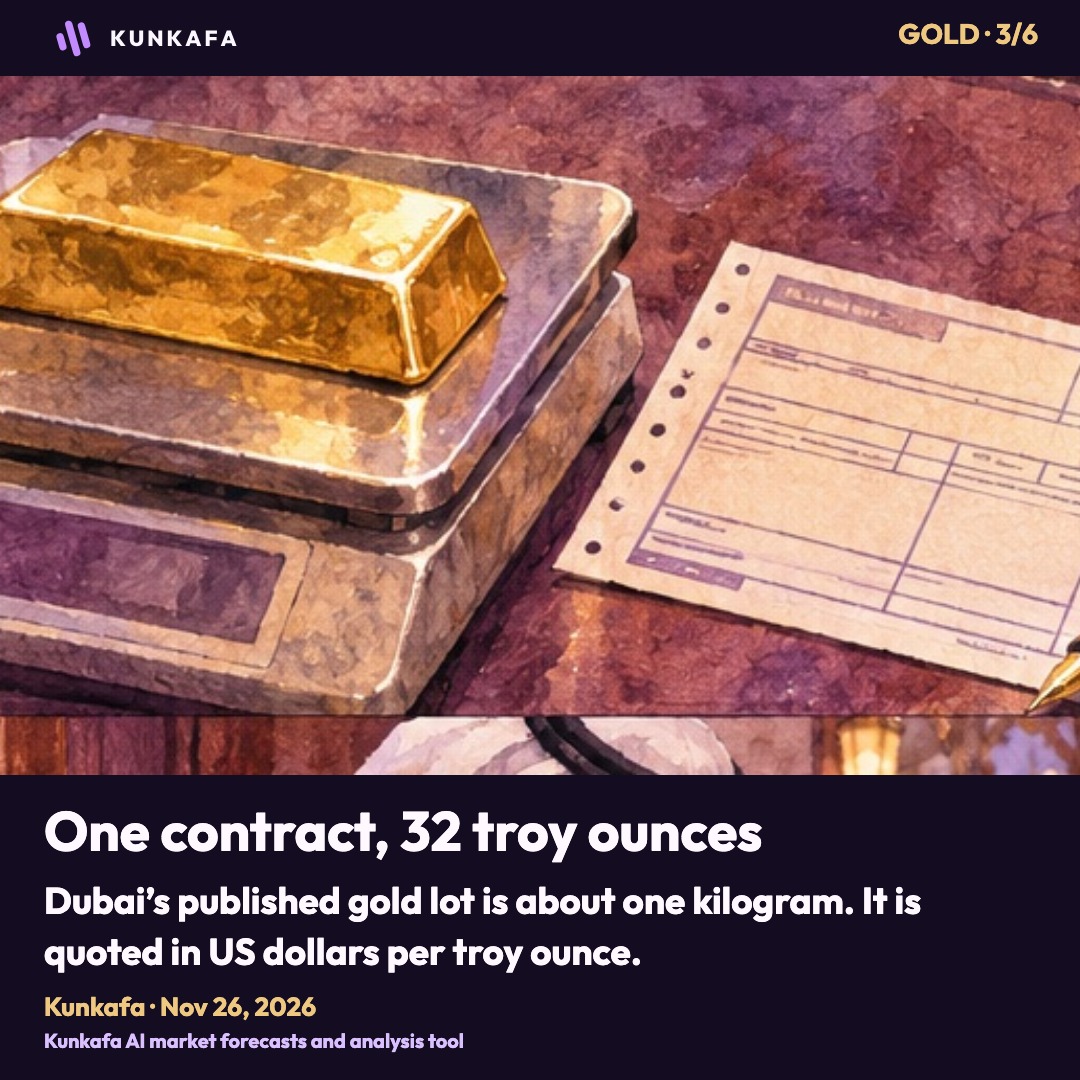
- The exchange’s published gold lot is 32 troy ounces, approximately one kilogram.
The UAE securities regulator dates the first exchange trade to 22 November 2005. The Dubai Gold & Commodities Exchange identifies gold futures as its first contract, an extension of the city’s existing trade in bullion. [1] [2] [3]
Two prices on one dealer’s books
The exchange quotes the contract in US dollars per troy ounce. A standard lot allows buyers and sellers to compare a defined quantity and delivery month, while physical bars can differ in weight, quality and local premium. [3]
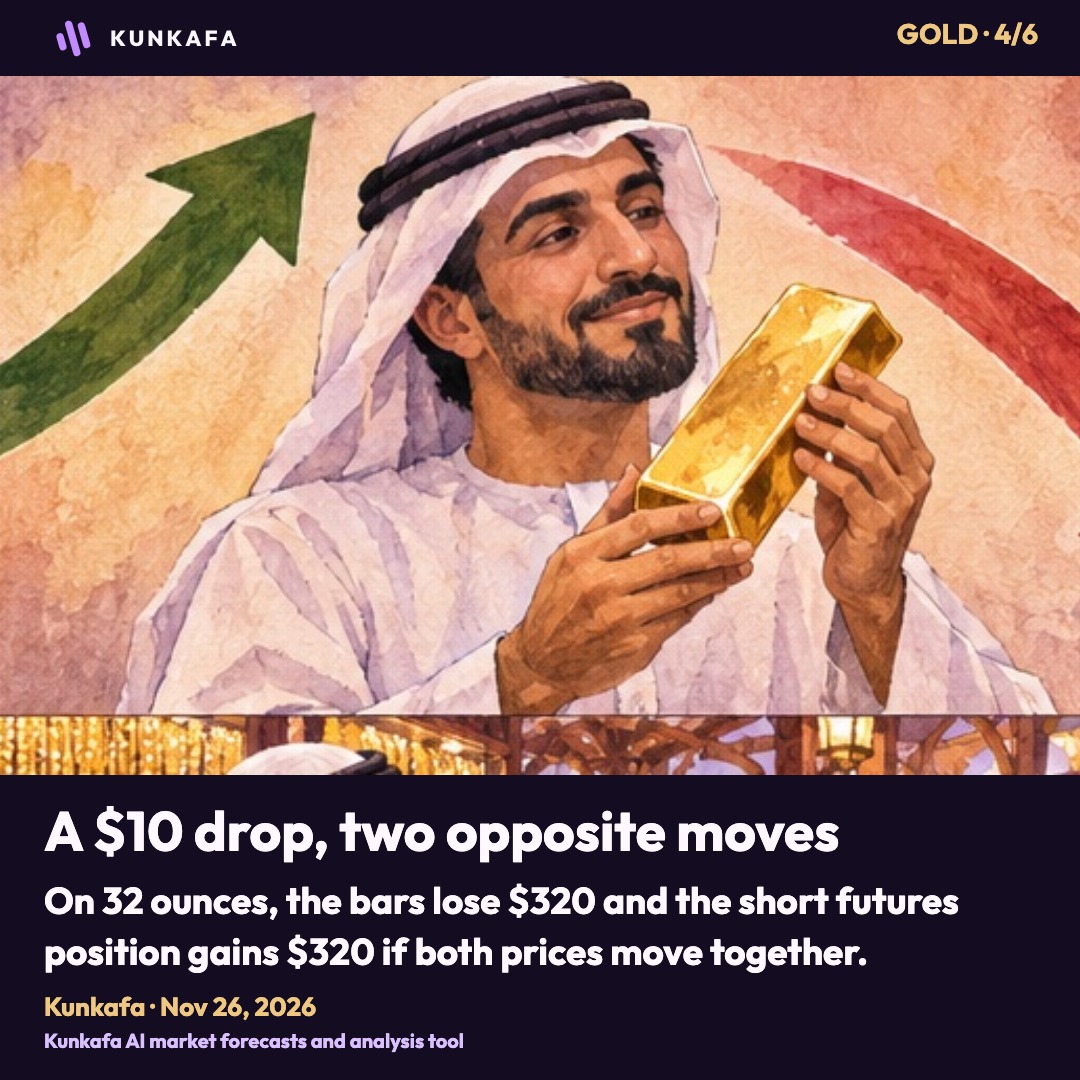
Using the published 32-ounce lot, suppose the dealer holds the matching weight and sells one futures contract. A $10-per-ounce decline means $320 less on the metal and a $320 gain on the short contract if both prices move together. [3]
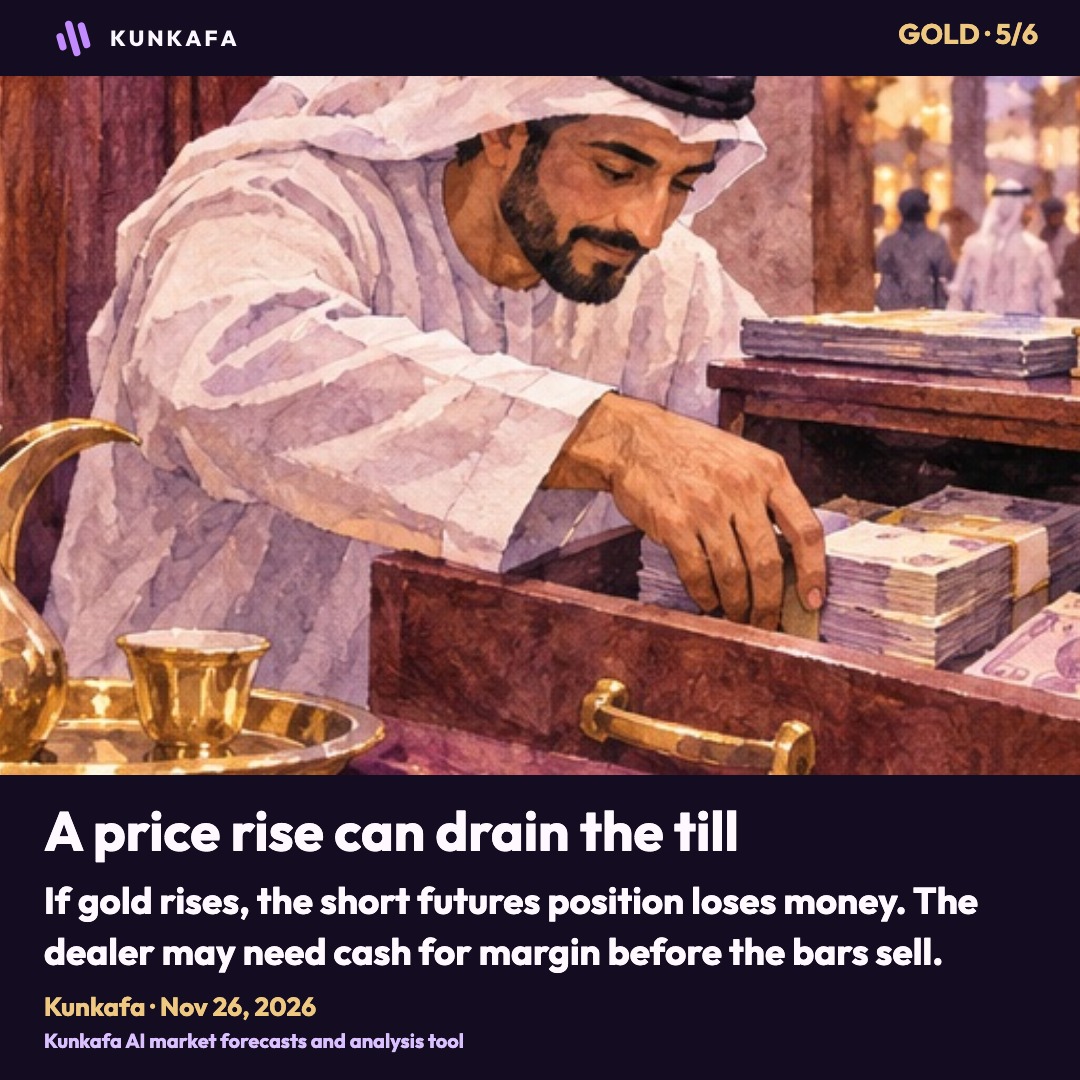
A $10 rise reverses those effects. The bars become more valuable, but the short contract loses money and can demand cash before the shop sells its inventory. [3] [4]
The Capsule
- 22 November 2005 was the first exchange trade.
- Match inventory weight to the contract’s troy ounces.
- Follow the local bullion premium as well as the futures quote.
- Allow for margin cash even when the physical hedge works.
A dated example of the cash demand
In April 2006, the exchange told members it was raising the initial gold margin from $480 to $650 per contract. That early circular records a funding requirement which could change even if the dealer kept exactly the same weight of gold. [4]
That was collateral against performance, separate from the bullion’s purchase cost. Today’s published contract size and that 2006 margin illustrate different points in the exchange’s history. [3] [4]
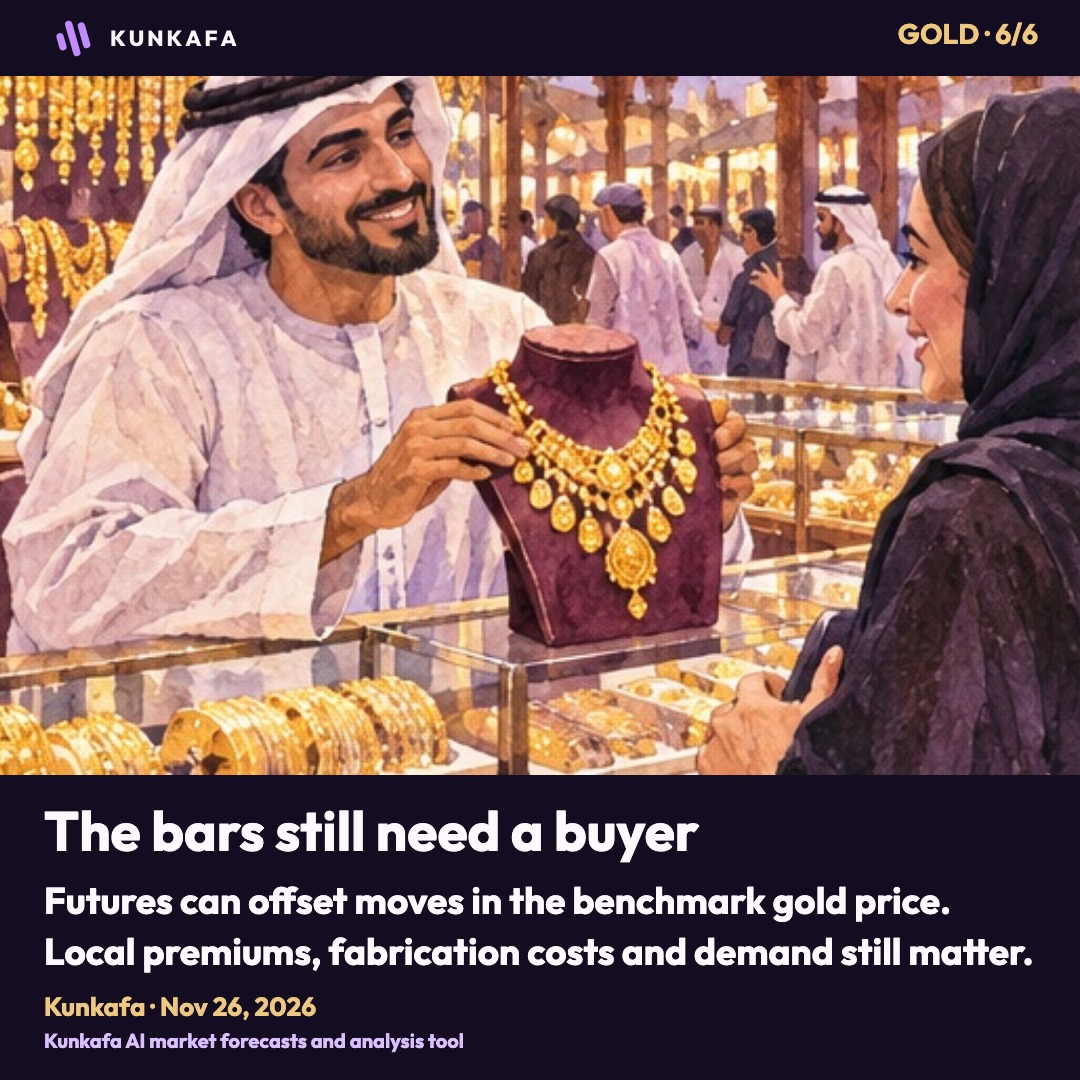
A jeweller selling a finished necklace still faces the local premium, fabrication costs and the customer’s timing. What Dubai added was a local market for transferring one specific risk: movement in the benchmark gold price. [2] [3]
Sources: [1] UAE Securities and Commodities Authority, history of DGCX · [2] DGCX, exchange history · [3] DGCX published gold contract terms · [4] DGCX member margin circular, April 2006
Kunkafa forecasts
Gold
How far it could move, which way, by when, and how confident Kunkafa is.
Check the latest forecastsMore in Commodities

Silver Breaks Below $40, Down Nearly 45% This Year
An ounce changed hands at $39.86 ahead of US inflation data. The Silver Institute still sees a sixth straight annual supply deficit.

Gold Gives Back Nearly Two-Thirds of Monday’s Rally
December futures surrendered $86 of Monday’s $136 gain. Spot gold traded 36% below its January record, a drawdown with only three earlier parallels on a month-end basis since 1971.

Kunkafa Analyzed Gold Since 1833: Is This Fall a Buying Opportunity? Kunkafa’s Forecasts Included
Gold is 36.8% below its January 2026 record. It has fallen this far three times before. A year later it was higher each time, but getting the money back took from under 4 years to more than 45. And this time central banks are buying.