Crypto · Explainer
Bitcoin Fell 27% in a Month. A US Bank ETF Fell Just 4.6%
Banking outages might once have made the case for Bitcoin. Arca’s Jeff Dorman asks what changed when investors began holding the coin in brokerage accounts.

Kunkafa News · Published · 6 min read
 By Kareem FaridDiscuss with the author on X
Here is a visual story in summary

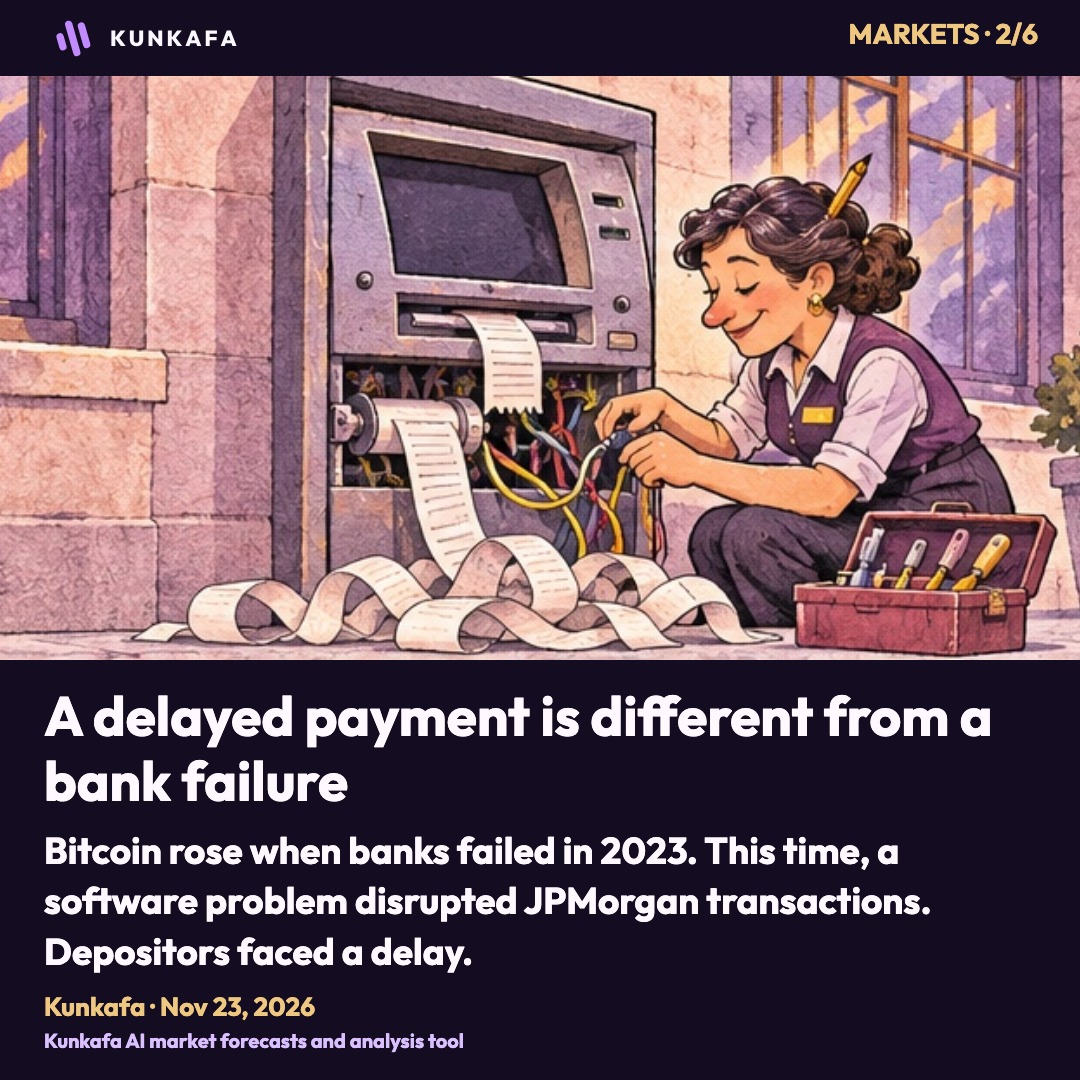



Bitcoin lets two people transfer money even when their bank cannot process a payment. Yet in a month when a software failure disrupted transactions at JPMorgan, Bitcoin fell 27.27% while a U.S. bank-stock fund lost 4.60%. In his November 23 letter, The World Is Losing Faith in Technology, Arca chief investment officer Jeff Dorman offers an explanation for that apparent contradiction. Investors who hold Bitcoin alongside stocks may sell both when they need cash. [1]
Dorman wrote the letter after a November 18 post in which he questioned how much time investors spend discussing Bitcoin. He says he owns it and regards its scarcity as a reason it can hold value over the long run. What he disputes is the idea that its price can tell investors how the whole blockchain industry is doing. [1] [2]
I honestly can’t believe how much time, energy and brain power is still wasted discussing bitcoin. I’m not saying you shouldn’t own it —- own it, don’t own it, doesn’t matter to me — just stop talking about it. bitcoin:native does nothing. It has no properties. It has no cash…
Arca / TradingView. Monthlong chart through November 22. Bitcoin traded through the weekend. ETF prices stop at the last stock-market session.
Who holds Bitcoin when a bank goes offline?
In Cyprus in 2013, depositors faced closed banks and limits on moving money. In March 2023, Silicon Valley Bank and Signature Bank failed. Bitcoin rose during those episodes, Dorman recalls. He also points to hopes for easier Federal Reserve policy in 2023. This November brought temporary interruptions: JPMorgan reported a software problem, and a separate network failure prompted the FAA to halt departures nationwide. Neither episode put bank deposits at risk in the way a bank failure can. [1] [3] [4]
Consider someone who holds Bitcoin through an exchange-traded fund. The network can keep processing transfers while that investor sells fund shares to raise cash or reduce risk across a portfolio. Dorman sees that as a consequence of wider institutional ownership. The chart shows how much each asset fell. It cannot identify who sold, whether they needed cash, or whether the outages influenced them. [1]
What a Bitcoin quote leaves out
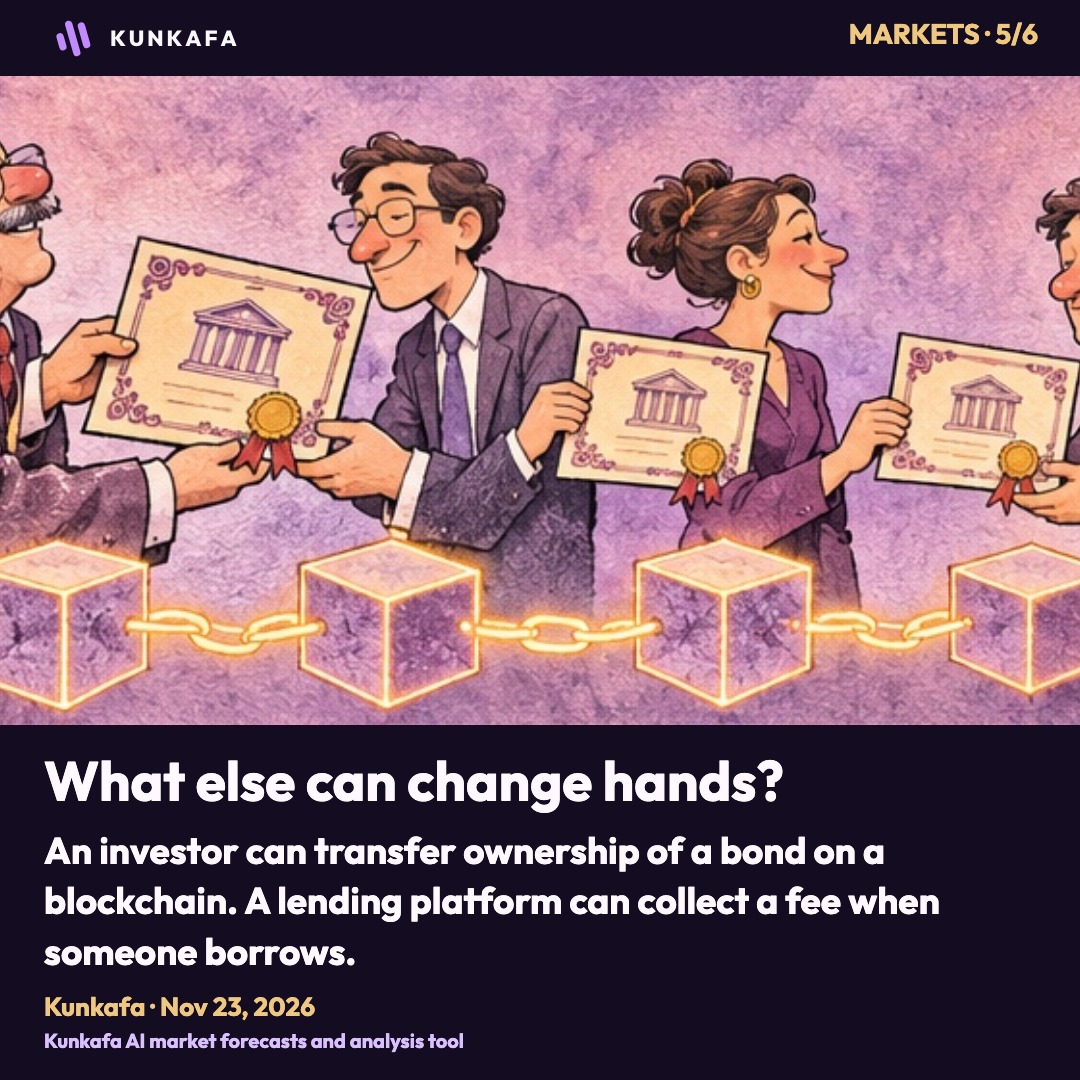
Arca points to four places to look. Stablecoins move money across borders. Tokenization lets a bond or fund share change hands on a blockchain. Decentralized exchanges and lenders can earn fees when people trade or borrow. The fourth, payments by autonomous AI software, is an opportunity Dorman envisions. Arca’s post introducing the letter sets out that distinction between Bitcoin’s market price and the uses of the technology. [1] [5]
Bitcoin remains important—but it no longer tells the whole blockchain story. This week’s That’s Our Two Satoshis looks at: • Bitcoin increasingly trading like a traditional financial asset • Centralized outages highlighting vulnerabilities Bitcoin was designed to address •… pic.twitter.com/1hLUg4MTvh
One example already appears in Circle’s accounts. On November 4, the USDC issuer said eligible Samsung Wallet users in the United States could send funds to bank accounts in more than 60 countries. The recipient gets local currency. Circle also reported $13.9 trillion in third-quarter USDC transfers, up 49% year on year. That broader figure includes transfers for purposes other than payments. [6]
In a direct reply, lawyer Carlo D’Angelo argued that banks offering custody and credit are giving people more reasons to discuss Bitcoin. Bitwise president Teddy Fusaro compared Monday’s rebound across markets. Earlier in November, Saifedean Ammous argued that Bitcoin needs wider ownership to work as money. Vitalik Buterin and Zach Rynes debated how much the growth of Ethereum can benefit holders of its coin.
Perspectives on what gives bitcoin and blockchain networks value


For investors following the latest Bitcoin reversal, those are two questions worth keeping apart. Price measures what the next buyer is willing to pay for a coin. A completed remittance measures whether somebody found a reason to use the network. Both can move sharply in opposite directions.
Sources: [1] Arca, November 23 · [2] Jeff Dorman, November 18 · [3] FDIC, March 12, 2023 · [4] FAA, November 15 · [5] Arca on X, November 23 · [6] Circle, third-quarter results, November 4
Kunkafa forecasts
Bitcoin
How far it could move, which way, by when, and how confident Kunkafa is.
Check the latest forecasts
More in Crypto

Crypto Rally Forces $363 Million in Short Positions to Close
Three days after $1.15 billion in bullish positions were forced closed, nine of every ten dollars liquidated in crypto came from bets on a fall.

UK to Bar In-House Market Making on Crypto Exchanges
From October 25, 2027, a UK exchange can match a bitcoin buyer and seller, but its own trading desk cannot earn the spread on its platform. Who gets to quote the price?

Bitcoin Hits $55,100 as Ethereum Loses Nearly 70% From Its Peak
Both bounced before sunrise in New York. Ethereum erased its overnight loss in an hour, but recovering its 2025 record would take more than a tripling in price.