Crypto · Explainer
UK to Bar In-House Market Making on Crypto Exchanges
From October 25, 2027, a UK exchange can match a bitcoin buyer and seller, but its own trading desk cannot earn the spread on its platform. Who gets to quote the price?

Kunkafa News · Published · 5 min read
 By Kareem FaridDiscuss with the author on X
Here is a visual story in summary



From October 25, 2027, a UK crypto exchange can match your order to buy bitcoin, but the company running its order book cannot sell you the coins from its own inventory on that venue. The Financial Conduct Authority set that rule in June. On November 18, the UK Treasury made a separate change that clarifies who can step in and quote prices instead. [1] [2]
Under the Treasury amendment, making a market on a qualifying platform is excluded from the regulated activity of dealing as principal. A trading firm can therefore quote prices there without needing that particular permission solely for its market making. The exchange operator still faces a separate FCA rule governing how it runs its own venue. [2] [1]
Who gets the spread?
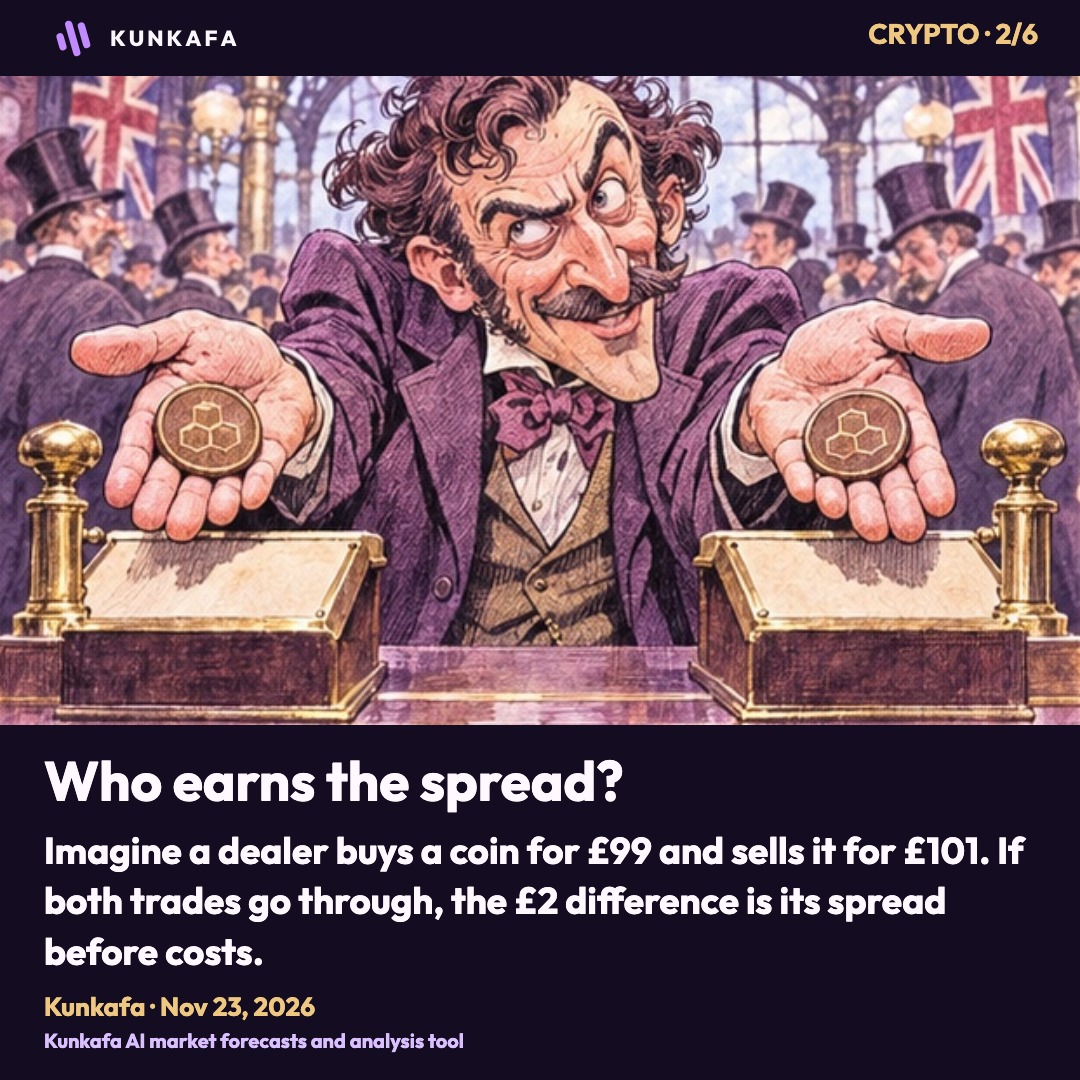
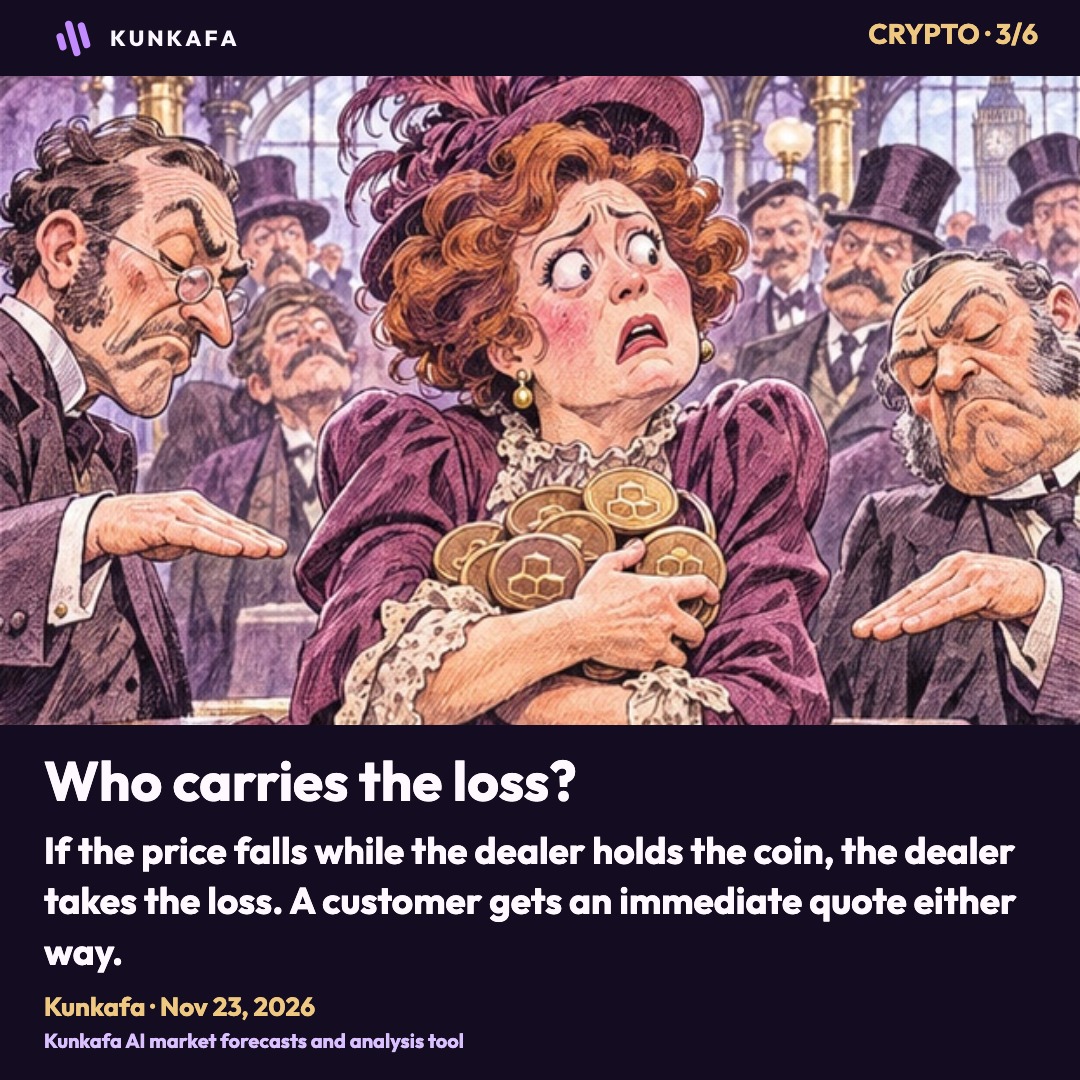
Imagine a dealer willing to buy a coin for £99 and sell it for £101. A customer can trade immediately. If both orders fill before the price moves, the dealer earns the £2 spread before costs. If it buys the coin and the market drops, the loss is the dealer’s. That is what a market maker contributes and what it stands to earn.
When the operator also makes that market, the firm that sets the trading rules has money riding on the prices its customers accept. The FCA rules require operators to identify and monitor the market makers on their venues and disclose the terms of incentives they offer them. For traders, the practical question is how many competing quotes remain available, especially when prices move quickly. [1]
The UK is taking a major step forward on cryptoasset regulation. Our final rules due to come into effect in October 2027 set clear standards for firms, strengthen consumer protection and support responsible innovation. Read more fca.org.uk/publications/p… #FCAGrowth… Show more


When the exchange can still take both sides
An operator with the right permission can still buy from one customer and sell to another simultaneously, under its fixed matching rules. Both sides must execute at the same price, with no market risk to the operator. Its income on the transaction is limited to a fee disclosed in advance. A separate dealing desk can also use the company’s capital away from its own venue, provided the firm has the appropriate permission, tells customers its role and manages conflicts. [1] [3]
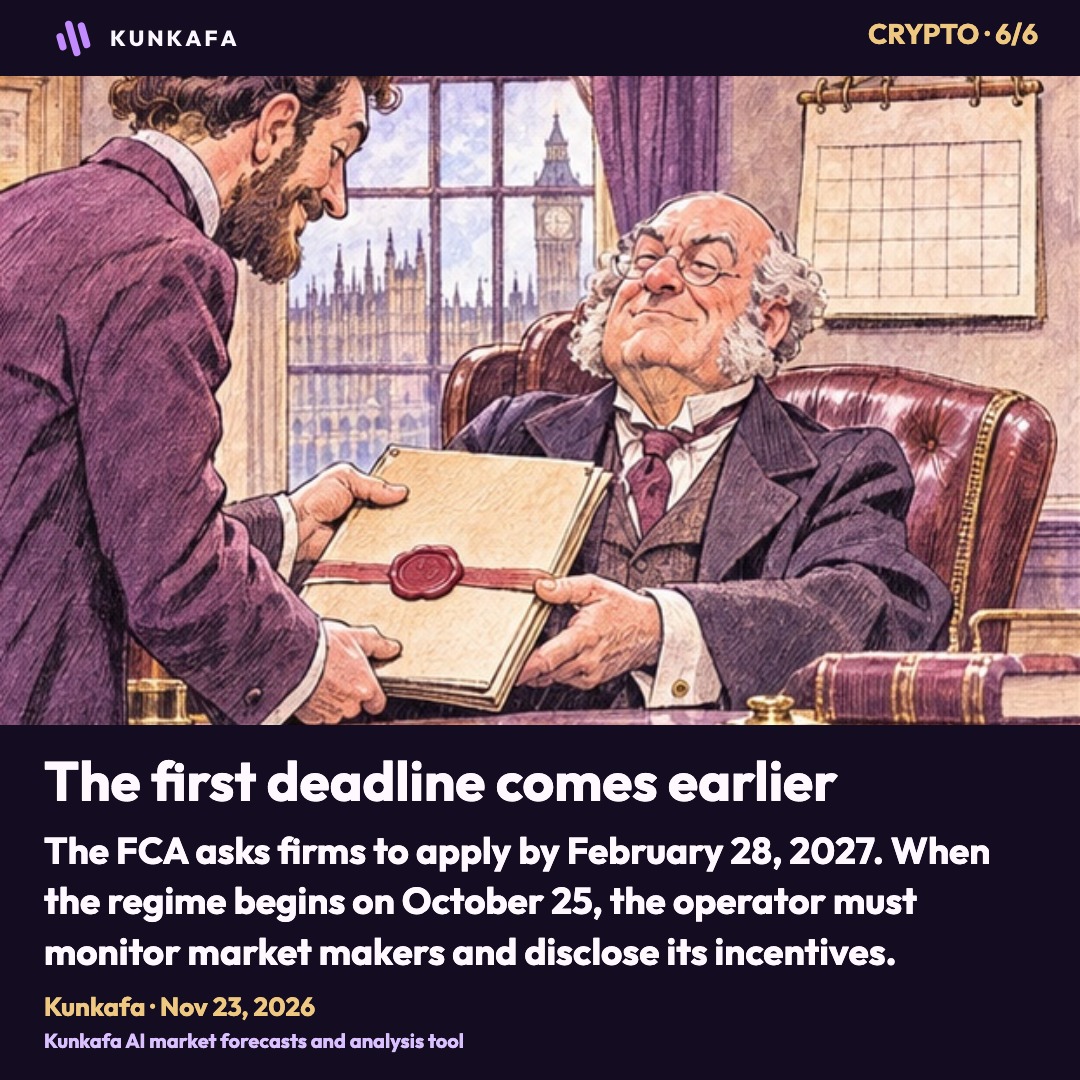
For UK firms planning to keep operating under the new regime, the next date comes well before the ban. The FCA opened its application window on September 30, 2026, and asks firms to apply by February 28, 2027. The new regime starts on October 25. [4]
MartyParty welcomed the separation of exchange and dealer, and software engineer Theo Kandiliotis saw scope for the rule to help the industry grow. An earlier exchange in January 2025 captures the underlying disagreement. Investor Kyle Samani argued that conventional markets favour market makers. Wintermute chief executive Evgeny Gaevoy answered that making it harder for dealers to post quotes can leave everyone with less liquidity.
Perspectives on crypto exchanges and market makers


Sources: [1] FCA, final platform rules, June 2026 · [2] UK Treasury, November 18, 2026 · [3] FCA Handbook, matched principal trading · [4] FCA, authorisation timetable, September 30, 2026
Kunkafa forecasts
Bitcoin
How far it could move, which way, by when, and how confident Kunkafa is.
Check the latest forecastsMore in Crypto

Bitcoin Hits $55,100 as Ethereum Loses Nearly 70% From Its Peak
Both bounced before sunrise in New York. Ethereum erased its overnight loss in an hour, but recovering its 2025 record would take more than a tripling in price.

64,000 Bitcoin Miners Reportedly Hijacked
About 13 EH/s was reportedly redirected to OCEAN with an attacker’s payout address. CoreX later said the attack was over; the entry point remains unresolved.

Bitcoin Miner Sells $1.1bn in Bitcoin as Miners Turn to AI
Miners are redirecting reserves and power toward AI. The effects on Bitcoin prices, remaining miners and network security depend on what actually leaves.