Tech · Explainer
How Apple Turned AirPods Pro Into OTC Hearing Aids
A US regulatory opening let Apple enter a medical-device market through software. The study behind its authorization compared two ways of fitting the same device.

Kunkafa News · Published · 4 min read
 By Kareem FaridDiscuss with the author on X
Here is a visual story in summary

Key points
- In 2024 the FDA authorized Apple’s software to provide an over-the-counter hearing aid on compatible earbuds for adults with perceived mild to moderate impairment.
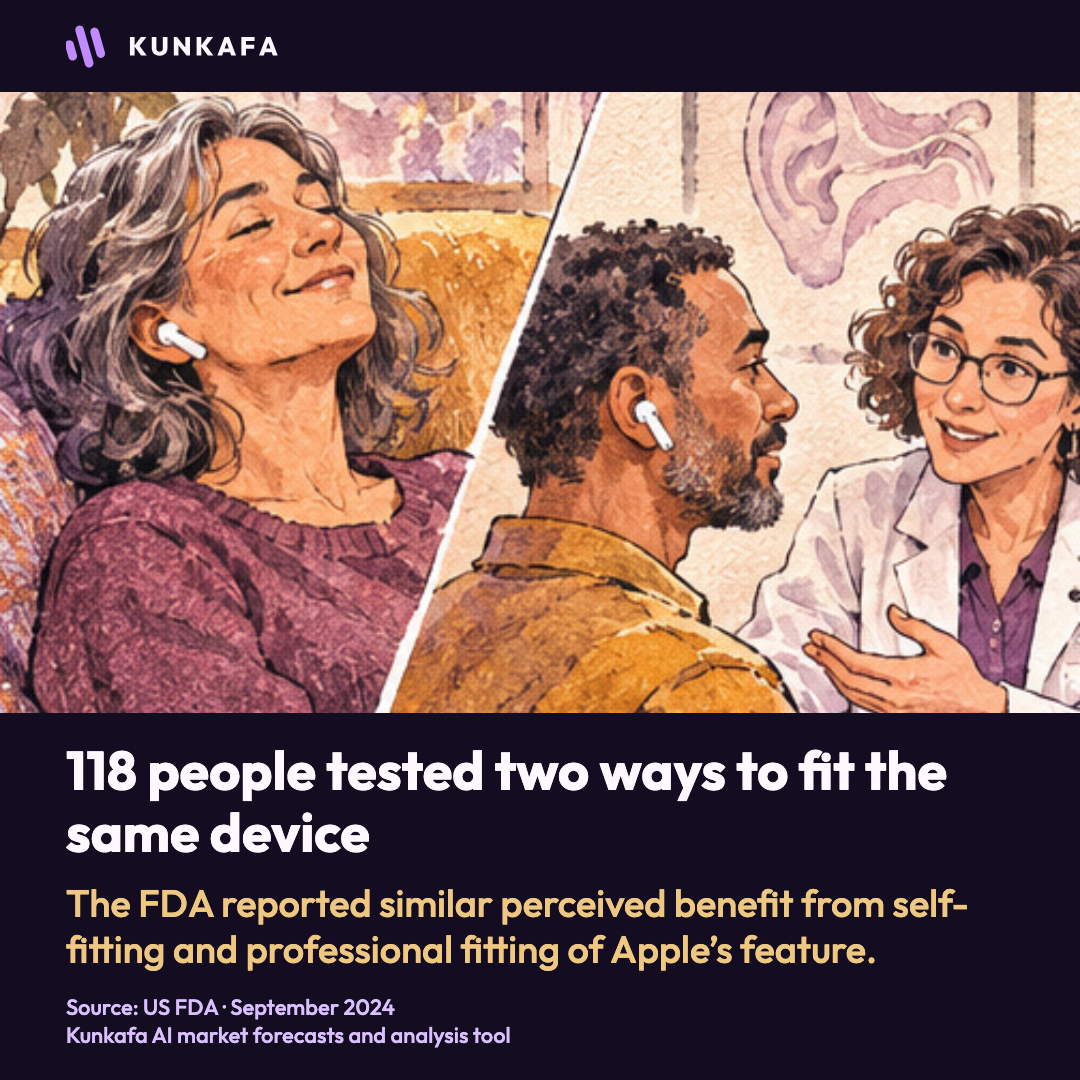
- The 118-person study compared users who fitted the device themselves with users fitted by a professional using the same device.
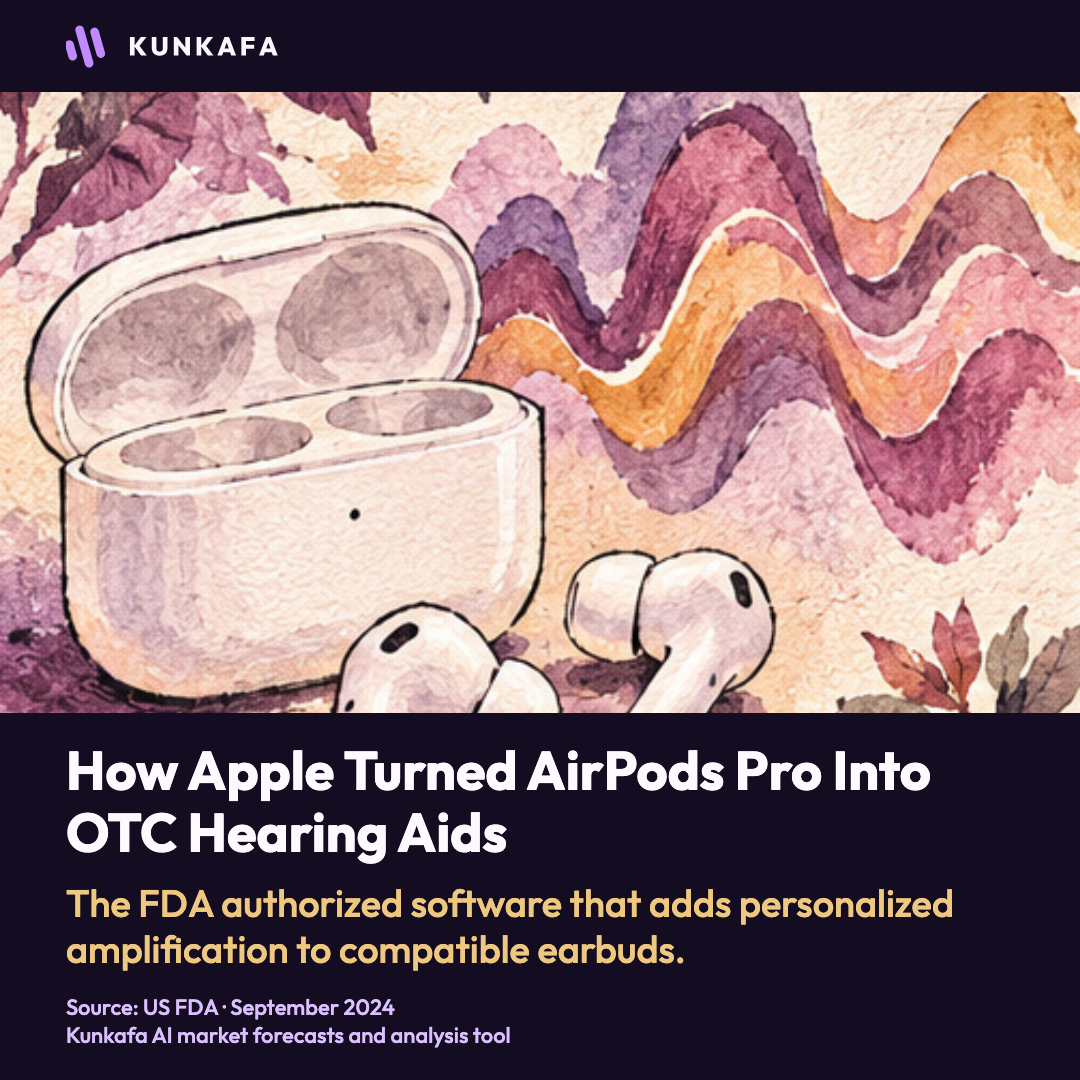
Apple entered the US hearing-aid market with software that could run on earbuds people already owned. In September 2024, the US Food and Drug Administration authorized Apple’s Hearing Aid Feature, the first over-the-counter hearing-aid software it had cleared for marketing. Once configured for the user, compatible AirPods Pro could amplify surrounding sound for an adult with perceived mild to moderate hearing impairment. [1]
How the rules changed the sales channel
The FDA’s October 2022 over-the-counter rules allowed eligible adults to buy hearing aids directly in stores or online without a prescription, a medical exam or a fitting appointment. Apple still needed authorization for its own medical software. Its product went through the agency’s De Novo review pathway for novel devices. An existing customer with compatible earbuds could then gain amplification without buying a second piece of ear-worn hardware. [1]
What the 118-person study compared
The agency describes a multi-site US study in which one group configured the device themselves, while a professional fitted the same device for the comparison group. Users reported similar perceived benefit. Tests of amplification inside the ear canal and speech understanding in noise also produced comparable results. That is evidence about the fitting method for this device in the studied population. It does not establish equal performance against every prescription hearing aid or for severe hearing loss. [1]
The Capsule
- Identify the authorized product: software running on compatible AirPods Pro.
- When reading the trial, compare self-fitting with professional fitting of the same device.
- Separate the audiogram that measures hearing from the feature that personalizes the sound.
- Assess adoption with usage or sales data, separately from evidence that the device works.
The test measures. The hearing aid amplifies.
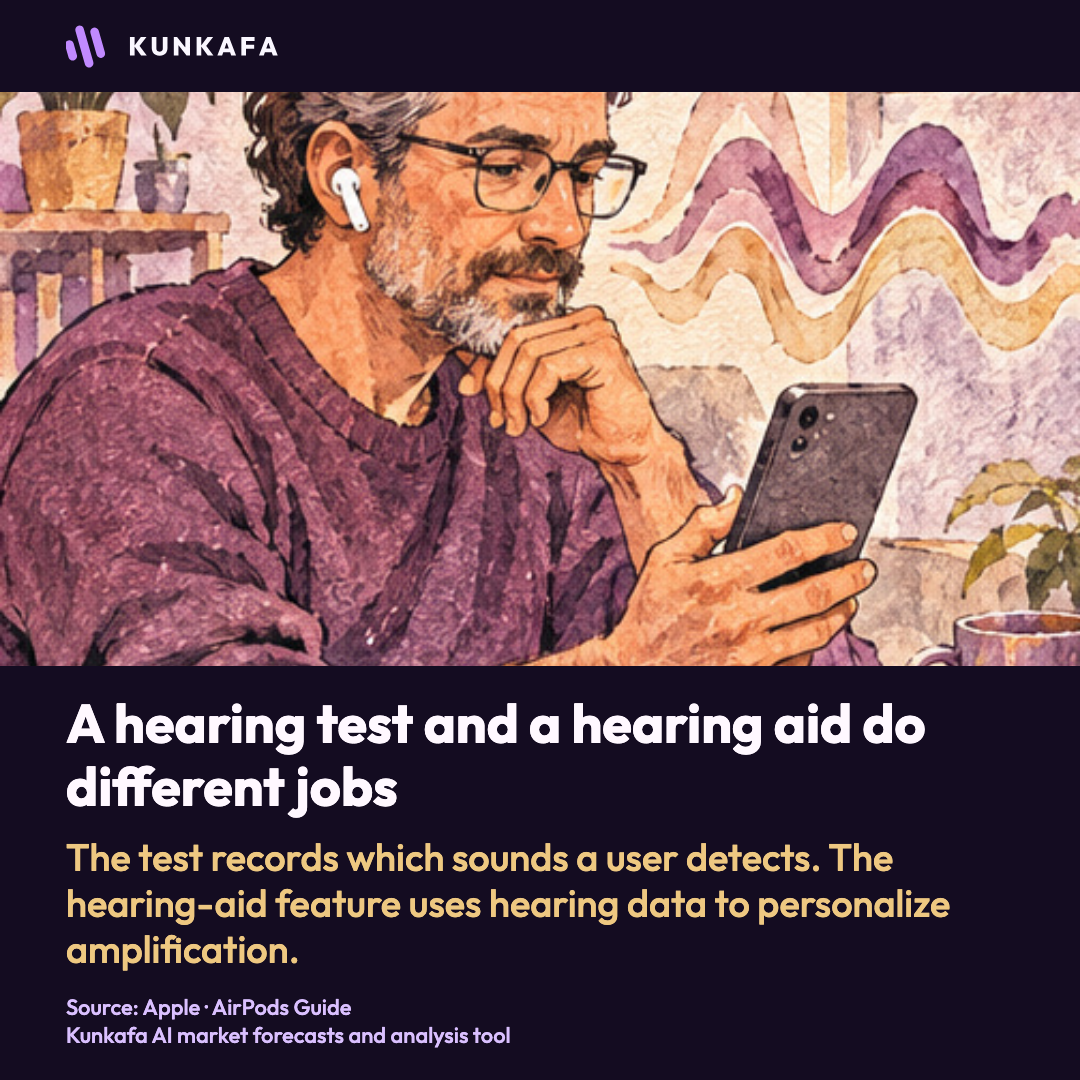
Apple’s Hearing Test produces an audiogram showing the sound levels a person detects at different frequencies. The Hearing Aid Feature uses hearing data to personalize amplification; users can adjust volume, tone and balance. For example, a person who already has an audiogram from a hearing professional can use those results to configure the feature on compatible AirPods. Owning earbuds that can run a test and using them as a fitted hearing aid are distinct uses. [1] [2]
Where Apple’s market reach stops
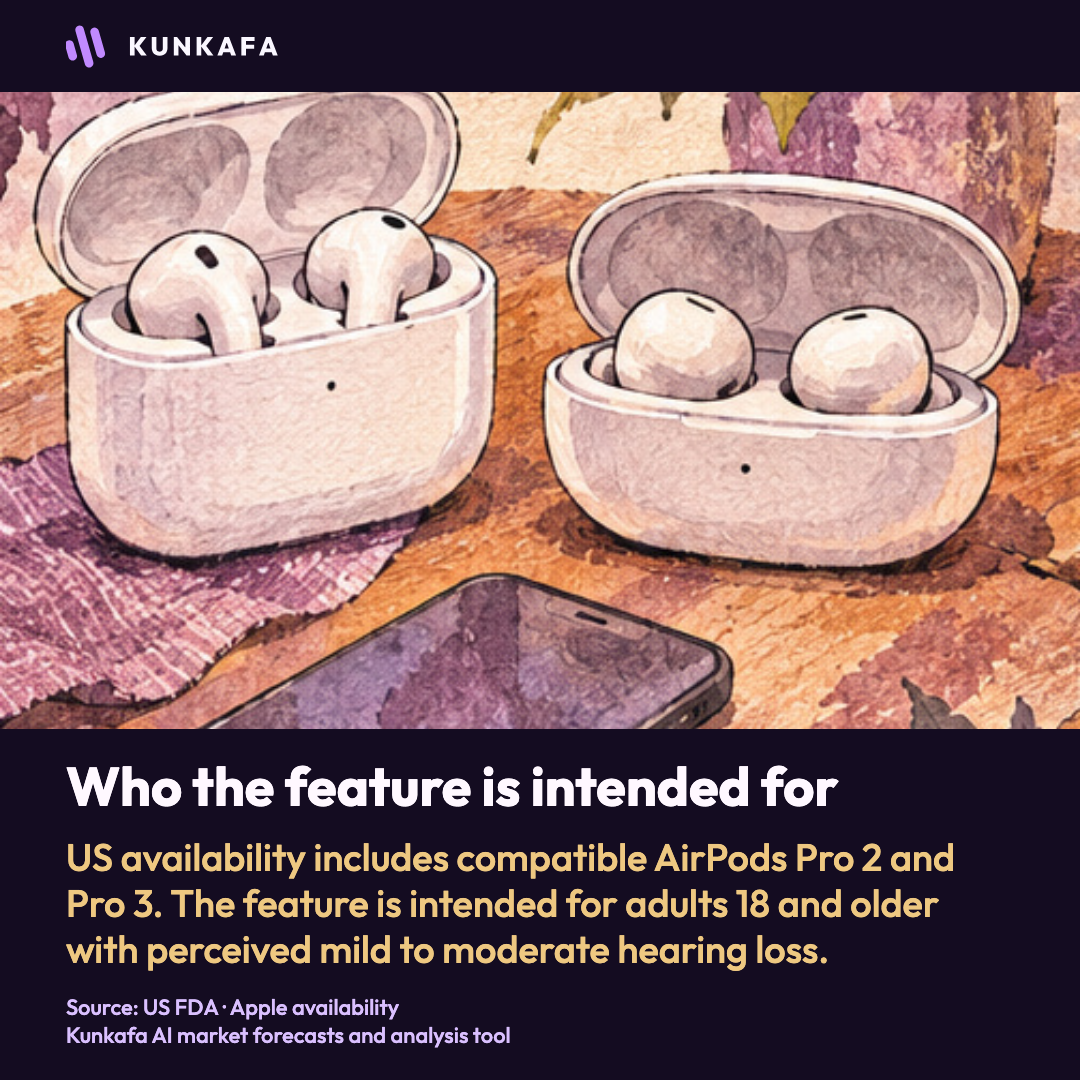
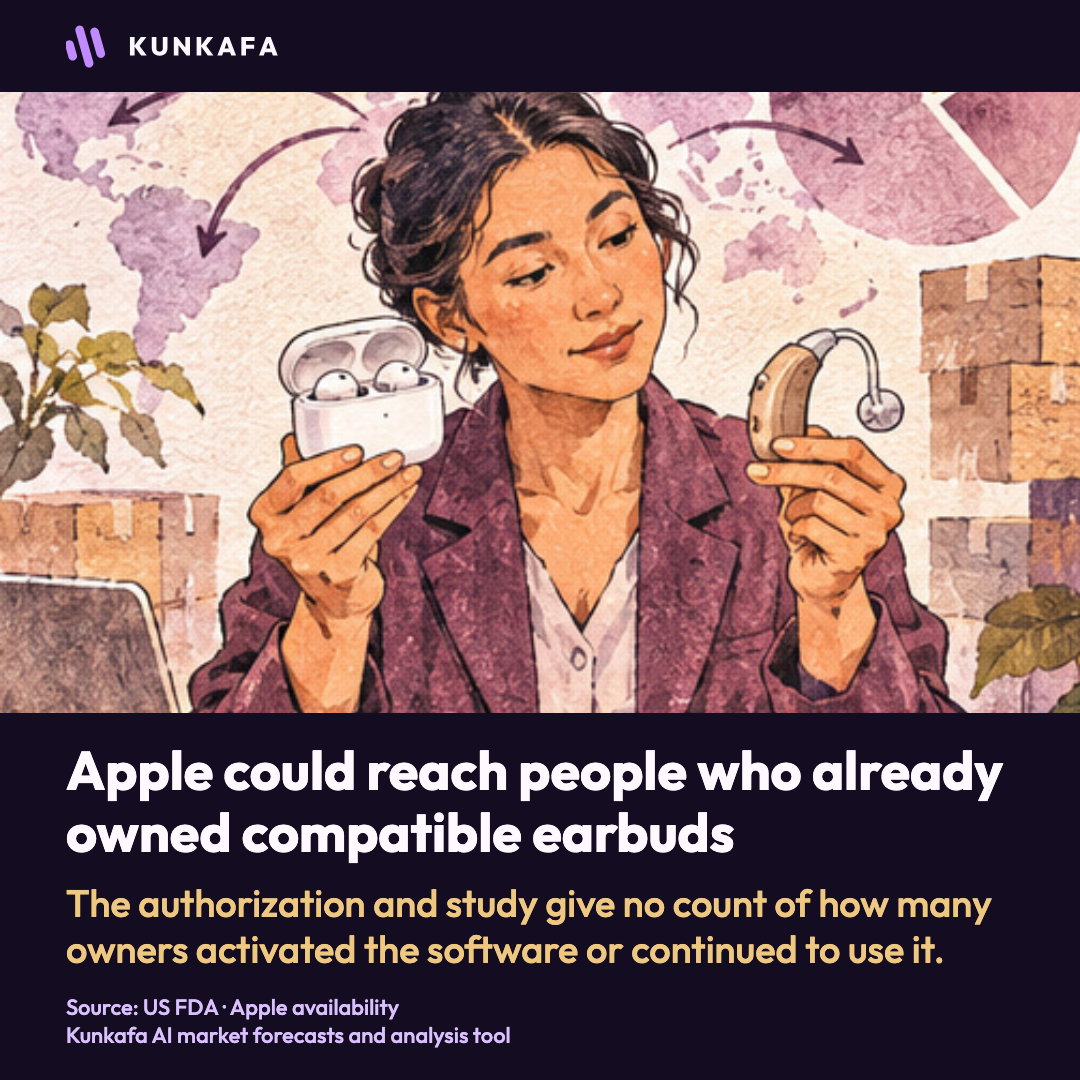
Apple’s US availability list names AirPods Pro 2 and Pro 3 on current firmware with a compatible Apple device. The intended audience is 18 and older with perceived mild to moderate hearing loss. Apple’s distribution advantage is the ability to offer another function on hardware already sold. The FDA’s authorization and the 118-person study do not count how many owners activated the feature, how often they use it, or how many purchases of separate hearing aids it displaced. [1] [3]
Sources: [1] US FDA, hearing-aid software authorization, September 12, 2024 · [2] Apple, AirPods Guide, accessed November 24, 2026 · [3] Apple, US hearing-health availability, accessed November 24, 2026
Kunkafa forecasts
Apple
How far it could move, which way, by when, and how confident Kunkafa is.
Check the latest forecastsMore in Tech

3 Best Free Satellite Maps for Flood Exposure in Europe
Valencia’s October 2024 flood puts the free Copernicus emergency map, Sentinel-1 radar and Sentinel-2 imagery to the same test.

Cairo students sweep ACM’s spatial computing podium
A phone that can tell which floor it is on took first place. The other two teams mapped routes for aircraft above cities and robots between rows of crops.

OpenAI and Anthropic Account for $1.4T in Compute Deals
The two companies accounted for 15 of the 23 contracts worth at least $10 billion each in a tally shared by Jessie Dong.