Politics · Explainer
Warner Leads Bipartisan Bill to Scrutinize AI Financing
Senators want to know who bears the risk when chipmakers, cloud providers and AI customers help finance one another’s expansion.

Kunkafa News · Published · 3 min read
 By Kareem FaridDiscuss with the author on X
Here is a visual story in summary
Key points
- A bipartisan group led by Senator Mark Warner wants a clearer picture of the financial ties behind the AI buildout, Politico reported.
- Fed staff warned in October that financing ties between AI companies could magnify losses if projects earn less than investors expect.
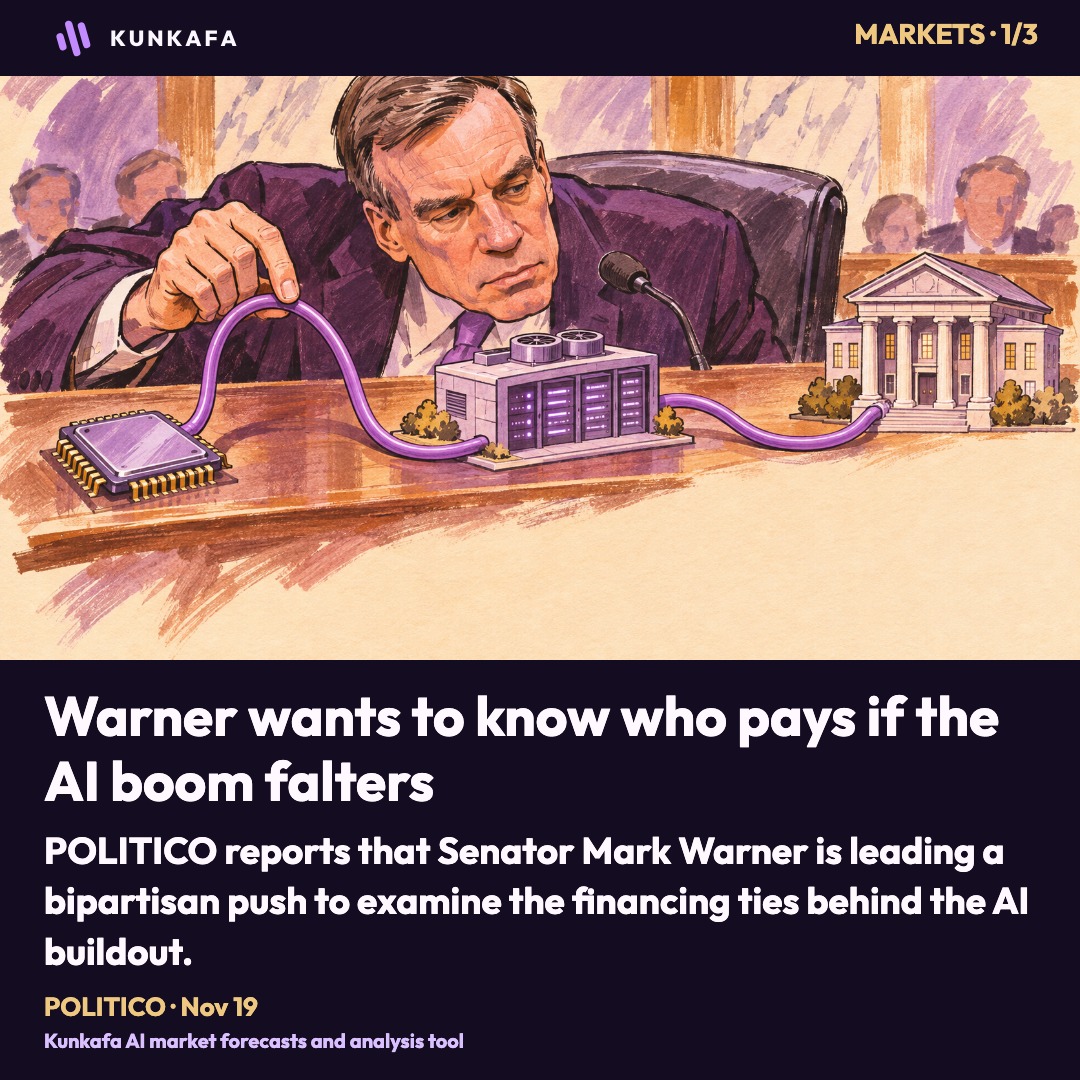
US Senator Mark Warner is leading a bipartisan push for legislation to examine who finances the AI boom and where the risks sit, Politico reported Thursday. Reporter Victoria Guida said the senators want more information about the network of deals around companies such as Nvidia. [1] [2]
'Systemic risk': Warner leads bipartisan bill to scrutinize AI financing politi.co/3VCTbKz

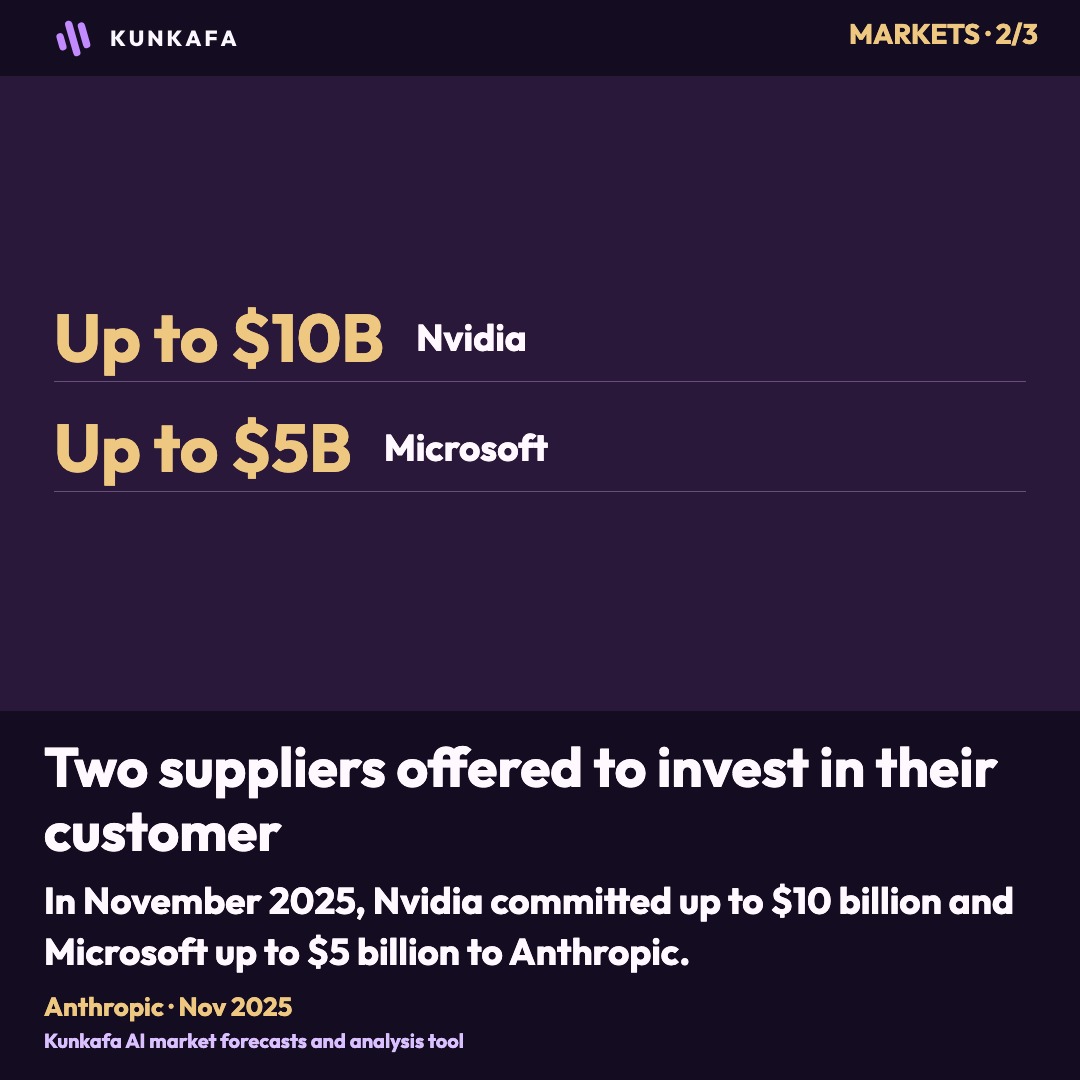
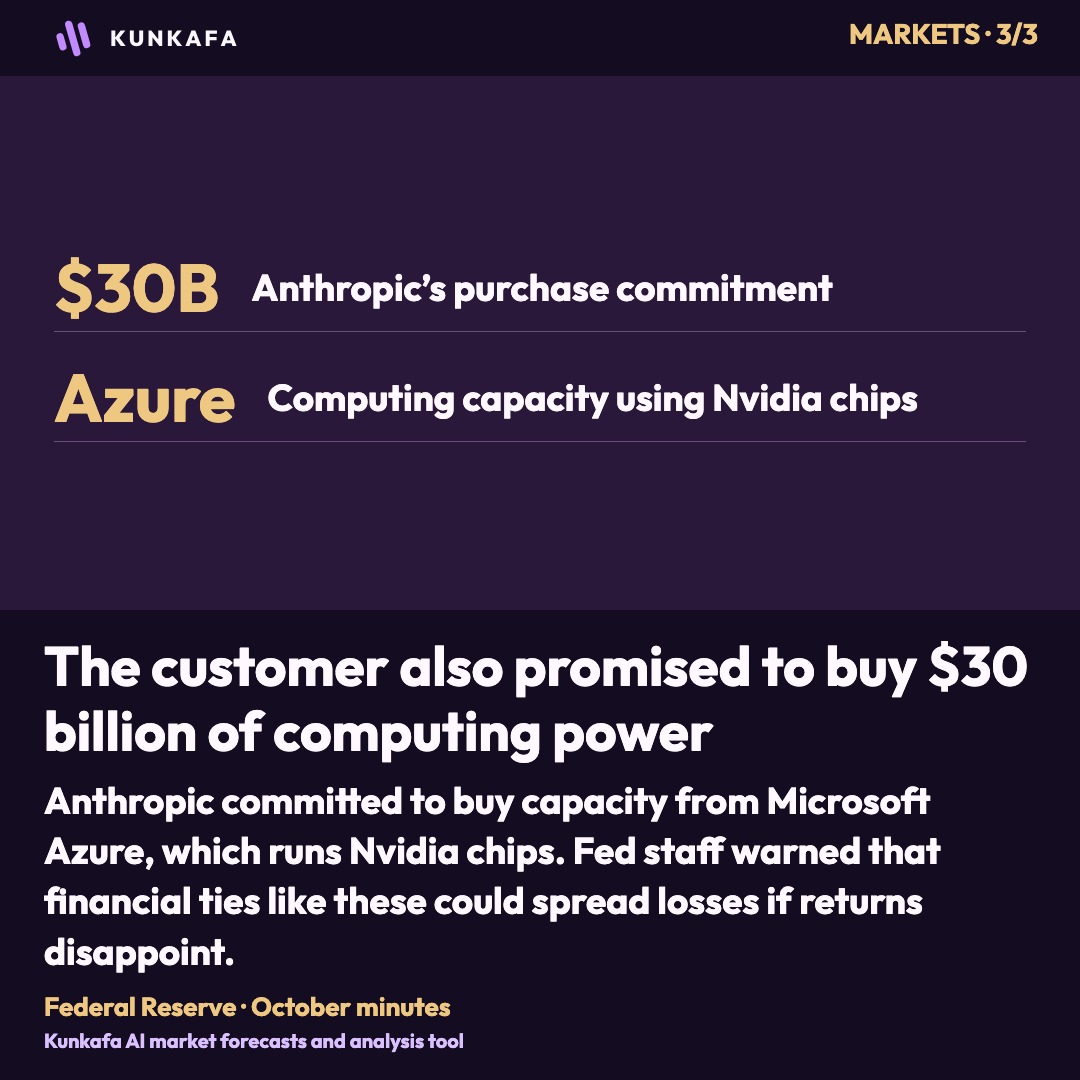
One deal shows how the same company can be both a supplier and a source of funding. In November 2025, Nvidia and Microsoft committed to invest up to $10 billion and $5 billion, respectively, in Anthropic. Under the same set of agreements, Anthropic committed to buy $30 billion of computing capacity from Microsoft’s Azure cloud, which uses Nvidia chips. [3]
The risk for a lender depends on who has promised to pay if a project falls short. A data center may rely on a tenant’s lease payments to service its debt. If that tenant needs fresh funding from the same suppliers counting on its orders, weaker demand can hit several balance sheets at once. The long duration of AI computing commitments makes the terms of those promises especially important.
Federal Reserve staff flagged a similar concern at the October 27–28 policy meeting. They warned that leases kept off balance sheets and financing arrangements linking AI companies could magnify losses if investment returns disappoint. The minutes also recorded a widening in credit spreads that was particularly pronounced for high-yield bonds funding data-center construction: investors were demanding more compensation to hold that debt. [4]
The issue had already reached Congress. In January, Senator Elizabeth Warren and colleagues asked the Financial Stability Oversight Council to investigate AI infrastructure debt, including private credit and off-balance-sheet funding. Warner’s bipartisan proposal brings the question back to the Senate as bond investors are already repricing some of that risk. [5] [1] [4]
Before Warner’s proposal surfaced, Bloomberg reporter Dina Bass described doubts about how much protection Nvidia was offering lenders. Investor Shay Boloor pointed to a different source of funding at CoreWeave: customers putting money down in advance to secure computing capacity.
Perspectives on who finances the AI buildout


Sources: [1] Politico, November 19 · [2] Victoria Guida, November 19 · [3] Anthropic, November 18, 2025 · [4] Federal Reserve, October 27–28 meeting minutes · [5] Senate Banking Committee Democrats, January 22 · [6] Dina Bass · [7] Shay Boloor
Kunkafa forecasts
Nasdaq 100
How far it could move, which way, by when, and how confident Kunkafa is.
Check the latest forecasts
More in Politics

UAE President Calls for Water Diplomacy Ahead of UN Talks
The UAE and Senegal are co-hosting the December 8–10 conference in Abu Dhabi. Its agenda includes how to finance water and sanitation services.

US Congress to Honor Egypt’s Anwar Sadat With Gold Medal
Sadat’s family has been invited to the US Capitol on November 18 for a ceremony recognizing the Egyptian president’s role in making peace.

Trump Opens Door to Huang as Bessent Urges Nvidia Shakeup
The U.S. president is open to bringing Nvidia’s founder back. His Treasury secretary wants an outsider. Their sharpest policy dispute concerns who controls access to American chips.