Economy · Explainer
US Sanctions Iran’s Currency and Gold Exchange Center
The US named 22 entities and eight people. A separate Treasury analysis flagged $14.7 billion in transactions potentially tied to Iranian shadow banking.

Kunkafa News · Published · 4 min read
 By Kareem FaridDiscuss with the author on X
Here is a visual story in summary
Key points
- The new US designations cover two Iranian exchange houses and businesses in Dubai, Türkiye and Hong Kong.
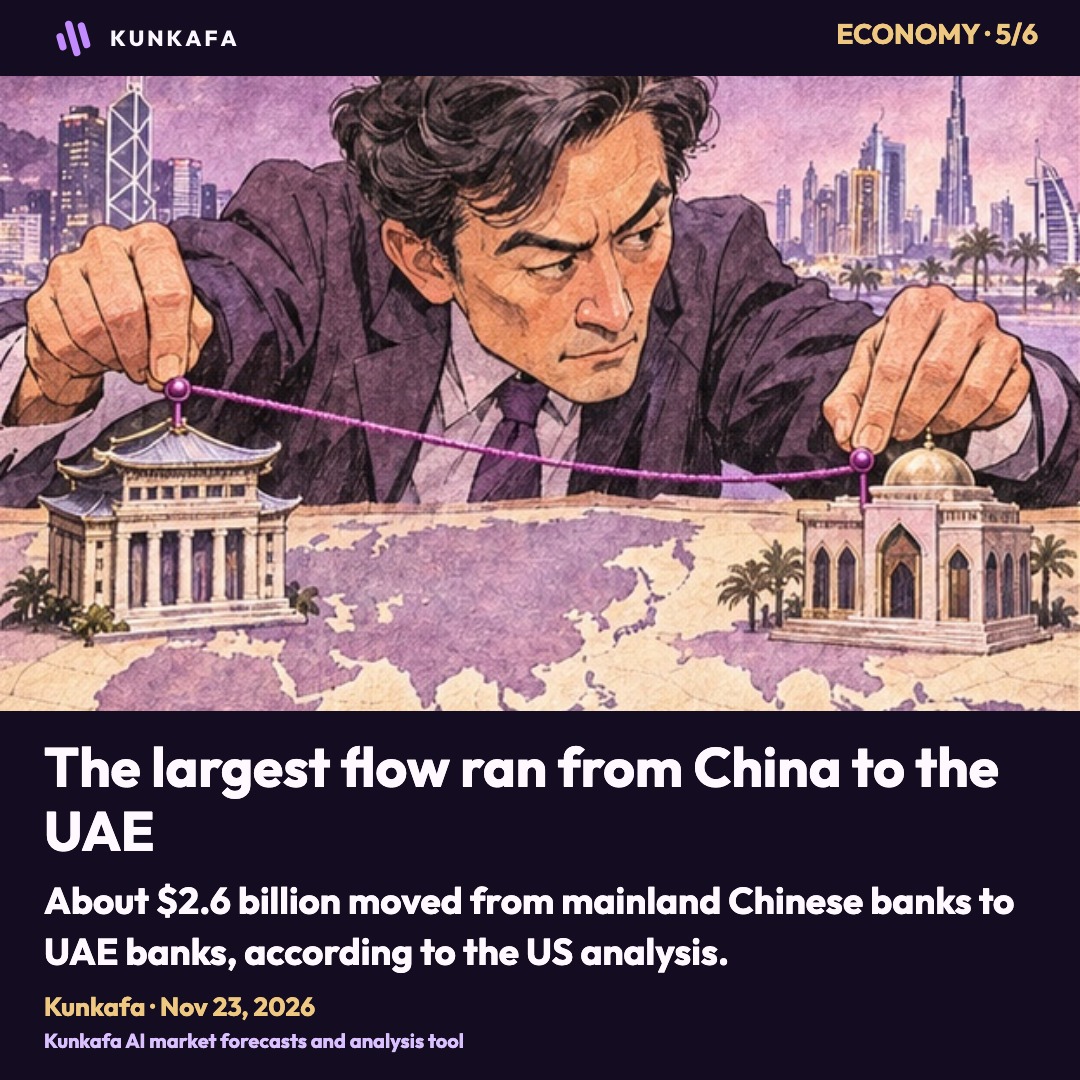
- The largest flow flagged in a separate FinCEN report was $2.6 billion from mainland Chinese banks to banks in the UAE.
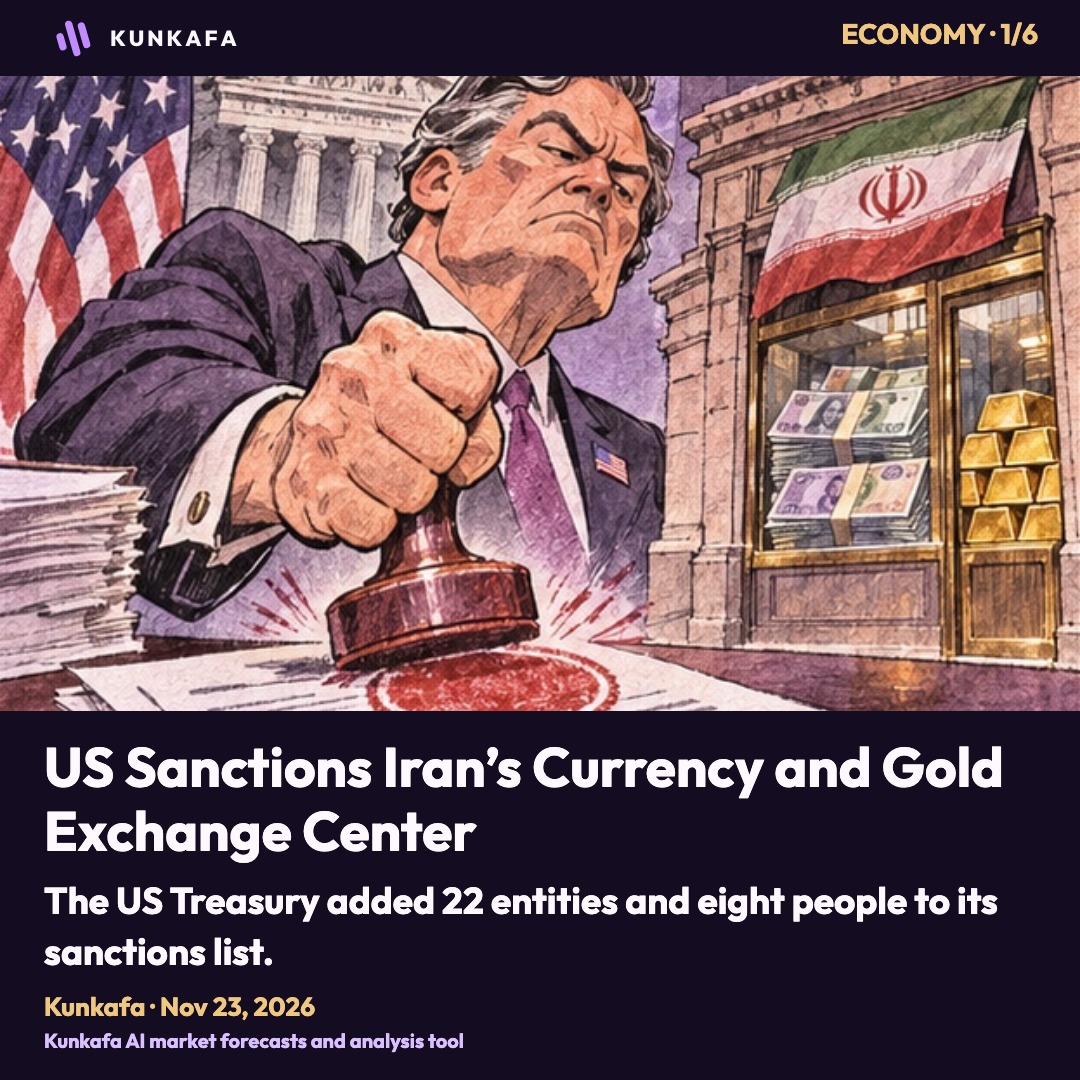
The United States sanctioned Iran’s Center for Exchange of Currency and Gold on November 23, along with Mellat Exchange and Mina Fashki and Partners Exchange. The Treasury Department’s Office of Foreign Assets Control added 22 entities and eight people to its sanctions list. [1]
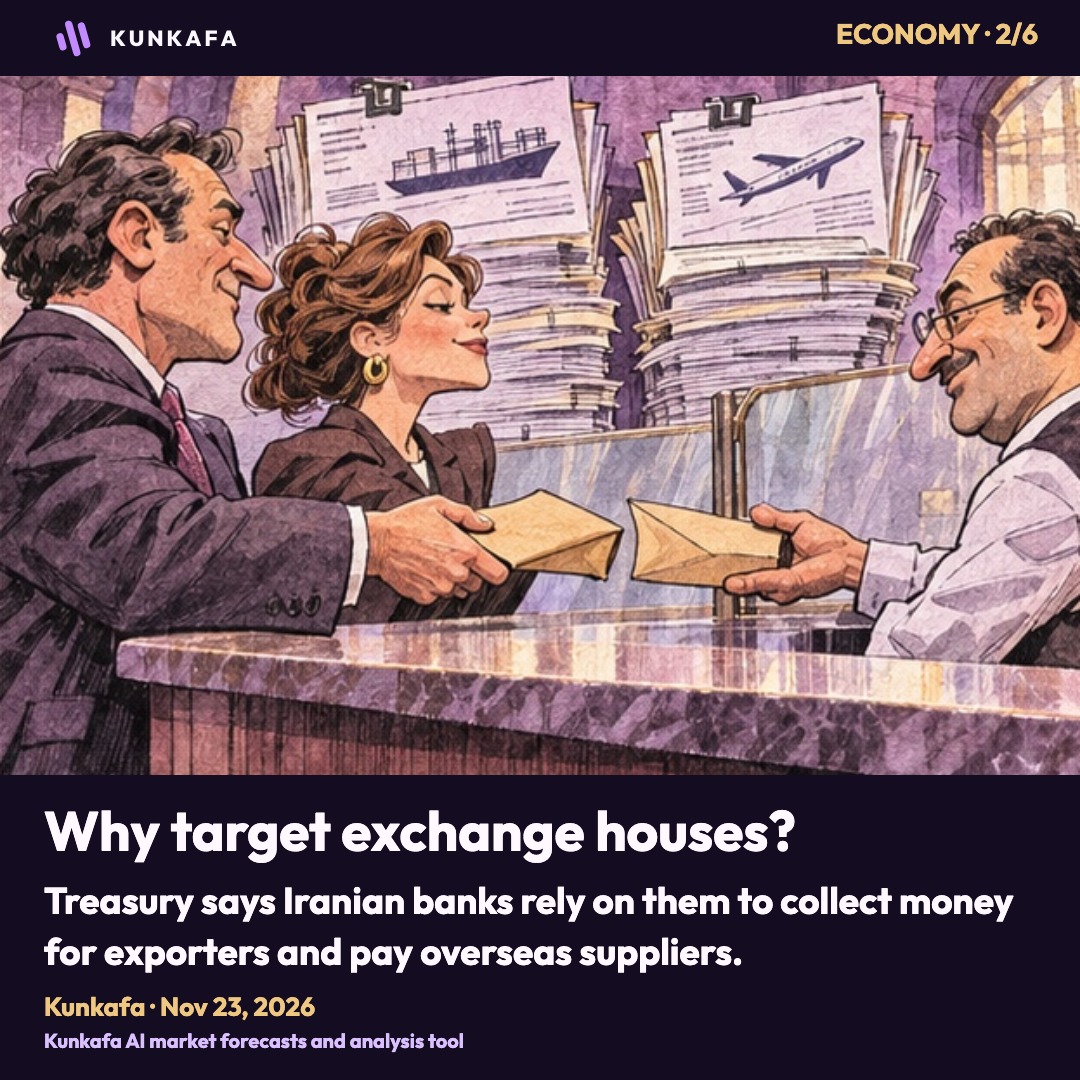
Treasury said Iranian banks use exchange houses and affiliated companies to collect and make payments abroad for exporters and importers. It said the intermediaries had increasingly failed to bring oil earnings back to Iran. [2] [3]
Today, as part of Operation Economic Outcast, Treasury sanctioned over two dozen Iranian exchange houses, front companies, and key personnel in a sweeping effort to disrupt Iran’s global shadow banking networks.
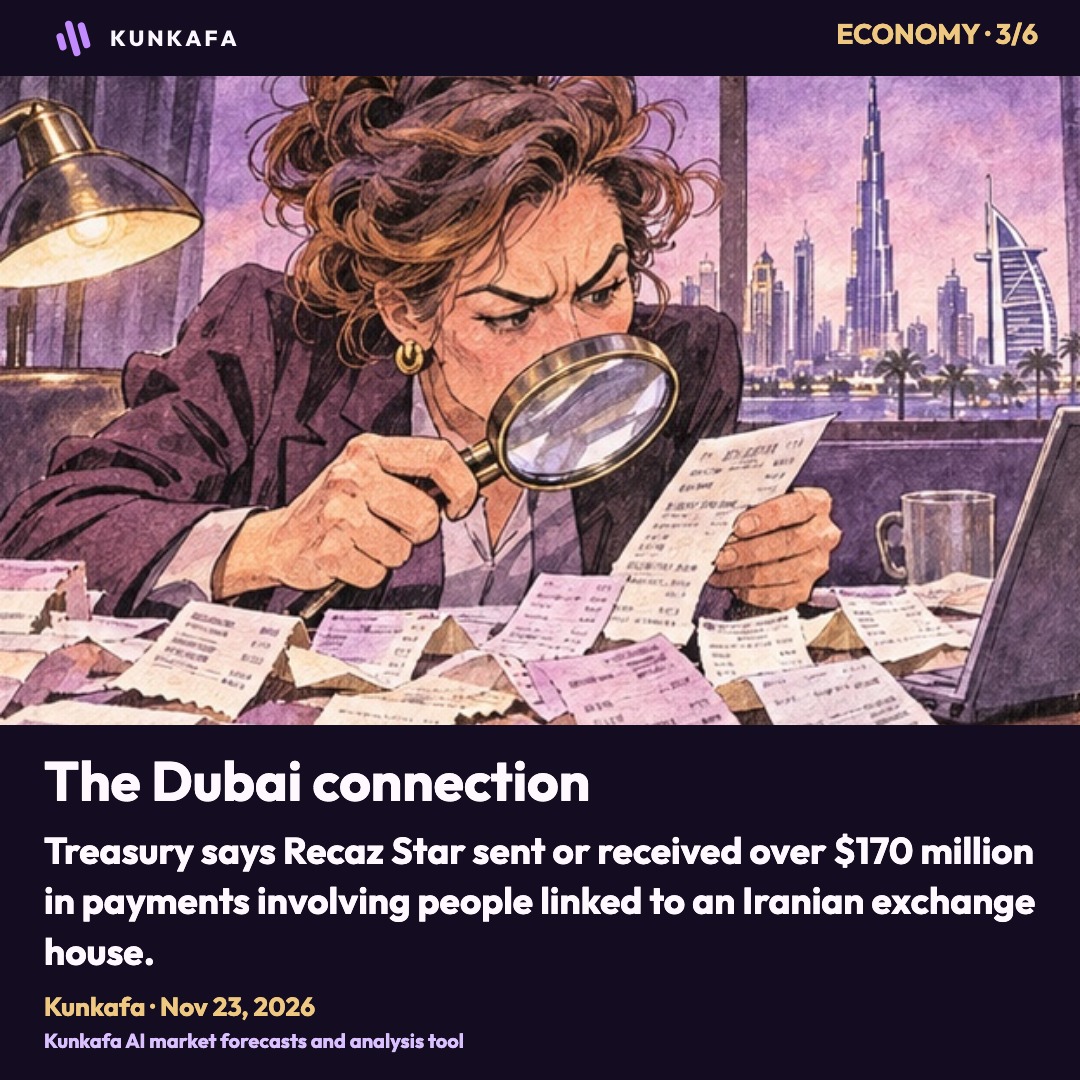
In Dubai, Treasury said, Recaz Star General Trading sent or received more than $170 million in payments involving people associated with an Iranian exchange house. Another Dubai company, OGA Global General Trading, handled millions of dollars in payments for the National Iranian Tanker Company, according to Treasury. [2]
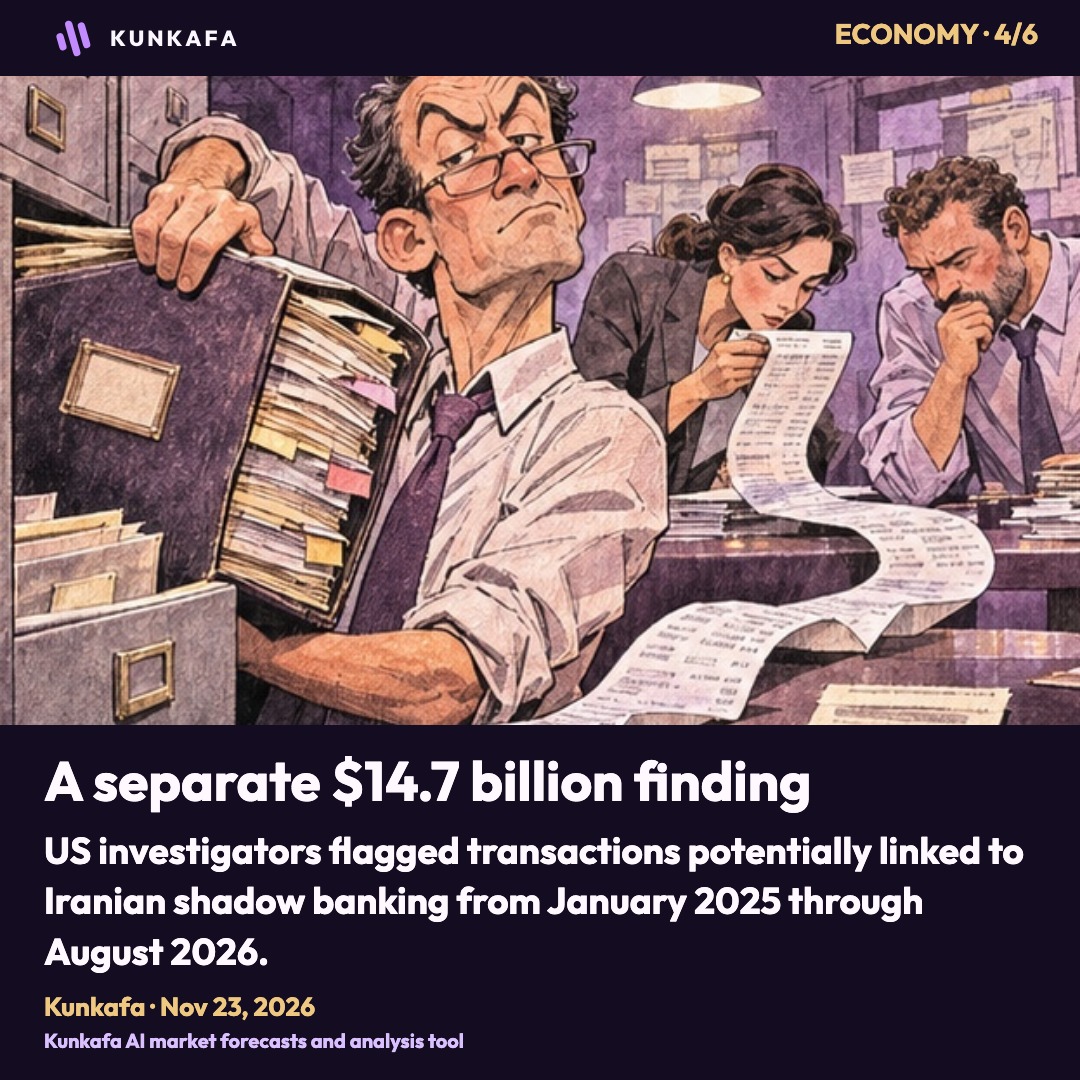
Separately, Treasury’s Financial Crimes Enforcement Network identified roughly $14.7 billion in activity potentially tied to Iranian shadow banking from January 2025 through August 2026. The largest flow flagged in the reports was about $2.6 billion from banks in mainland China to banks in the United Arab Emirates. [4]
Writer Jimmy Virk replied to Treasury on Monday that past sanctions had failed to change Tehran’s course. Three earlier posts explain why enforcement is contested. Columbia researcher Richard Nephew pointed to Iran’s continued access to imports. Former Treasury officials Kerri Bitsoff and Miad Maleki focused on the suppliers that replace sanctioned firms and the possibility of buying tankers out of Iran’s oil trade.
Perspectives on sanctions and Iran’s access to trade


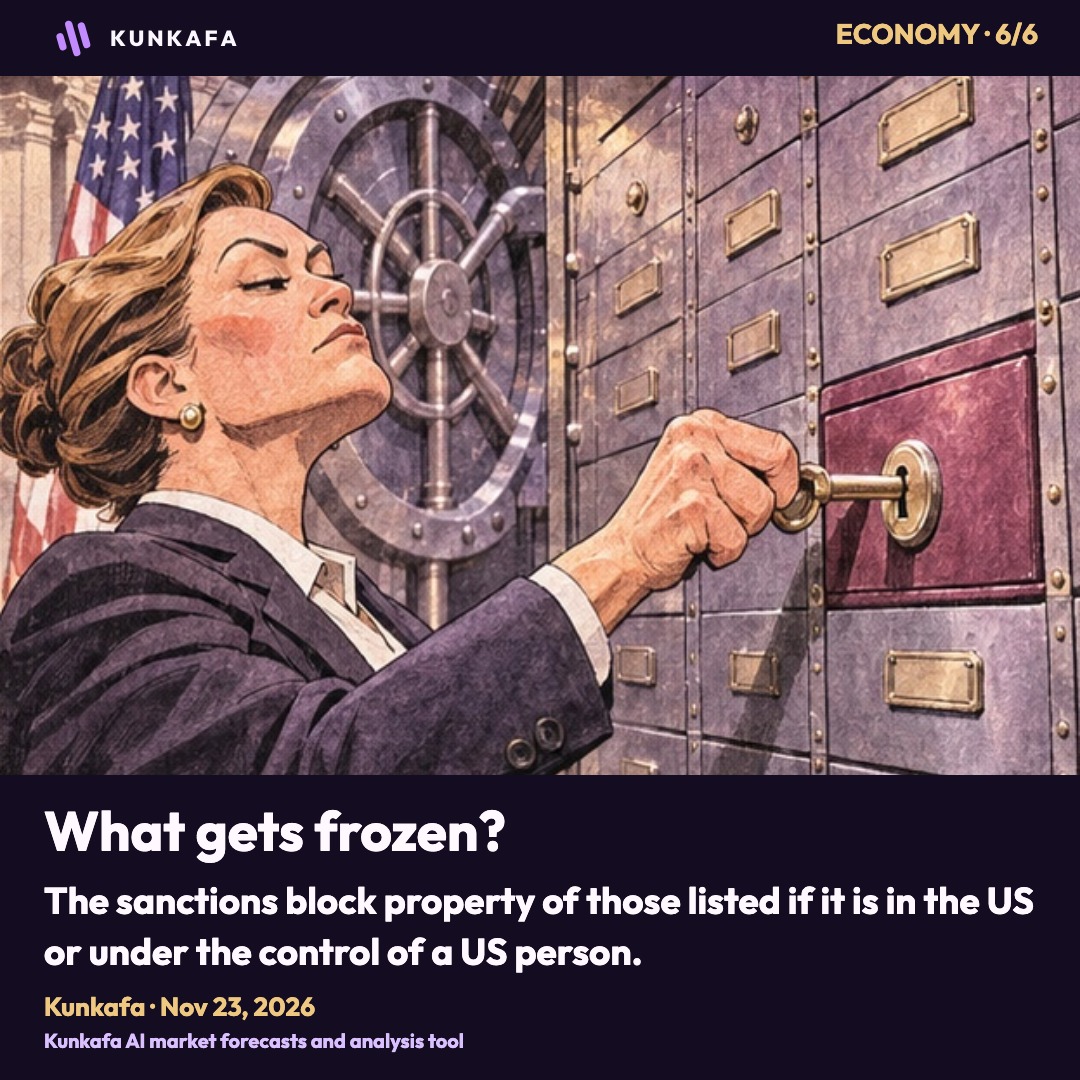
The sanctions freeze property of those listed when it is in the United States or under the control of a US person. Treasury said US transactions involving that property are generally prohibited unless licensed or exempt. [2]
Sources: [1] OFAC designations, November 23, 2026 · [2] US Treasury sanctions announcement, November 23, 2026 · [3] Treasury on X, November 23, 2026 · [4] FinCEN financial trend analysis, November 23, 2026
Kunkafa forecasts
Brent oil
How far it could move, which way, by when, and how confident Kunkafa is.
Check the latest forecastsMore in Economy

Fed’s Williams Signals Rates May Need to Rise Further
The Fed raised rates in September and paused in October. Williams sees inflation above target through 2027 and left the December move open.

Egypt Plans a Million Homes. Who’s Buying Property?
At Tatweer Misr, buyers in Egypt account for half of sales and Egyptians abroad for another 40%. A look at what families are buying in Cairo and on the coast.

Le Pen Tells Egyptian TV Why France Needs the Red Sea Open
In a Paris interview with Egyptian television, Marine Le Pen made the case for closer food trade with Cairo and said France should have more say over the tariffs it faces abroad.