Economy · Explainer
56% of UK Job Moves Led to Higher-Paying Employers
Changing companies still took most job movers to firms with higher average pay. Fewer workers made the leap, especially those under 25.

Kunkafa News · Published · 4 min read
 By Kareem FaridDiscuss with the author on X
Here is a visual story in summary
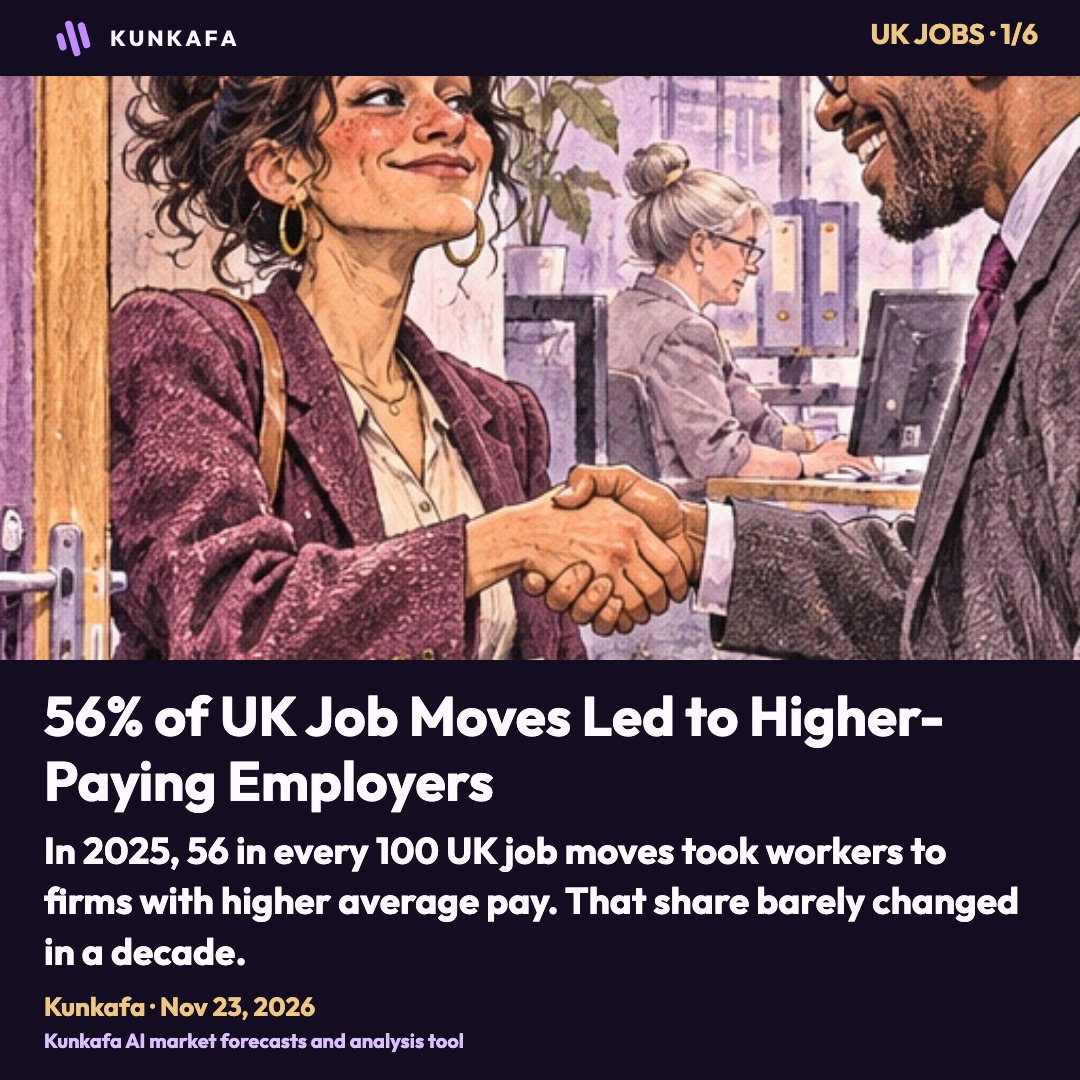

For workers looking for a better-paying employer, changing jobs in Britain still opened doors in 2025. In 56 of every 100 moves, the new employer paid more on average than the old one. That share has barely budged in a decade. What changed was how few workers made the move, according to new payroll research published on November 23 by the UK Office for National Statistics. [1]
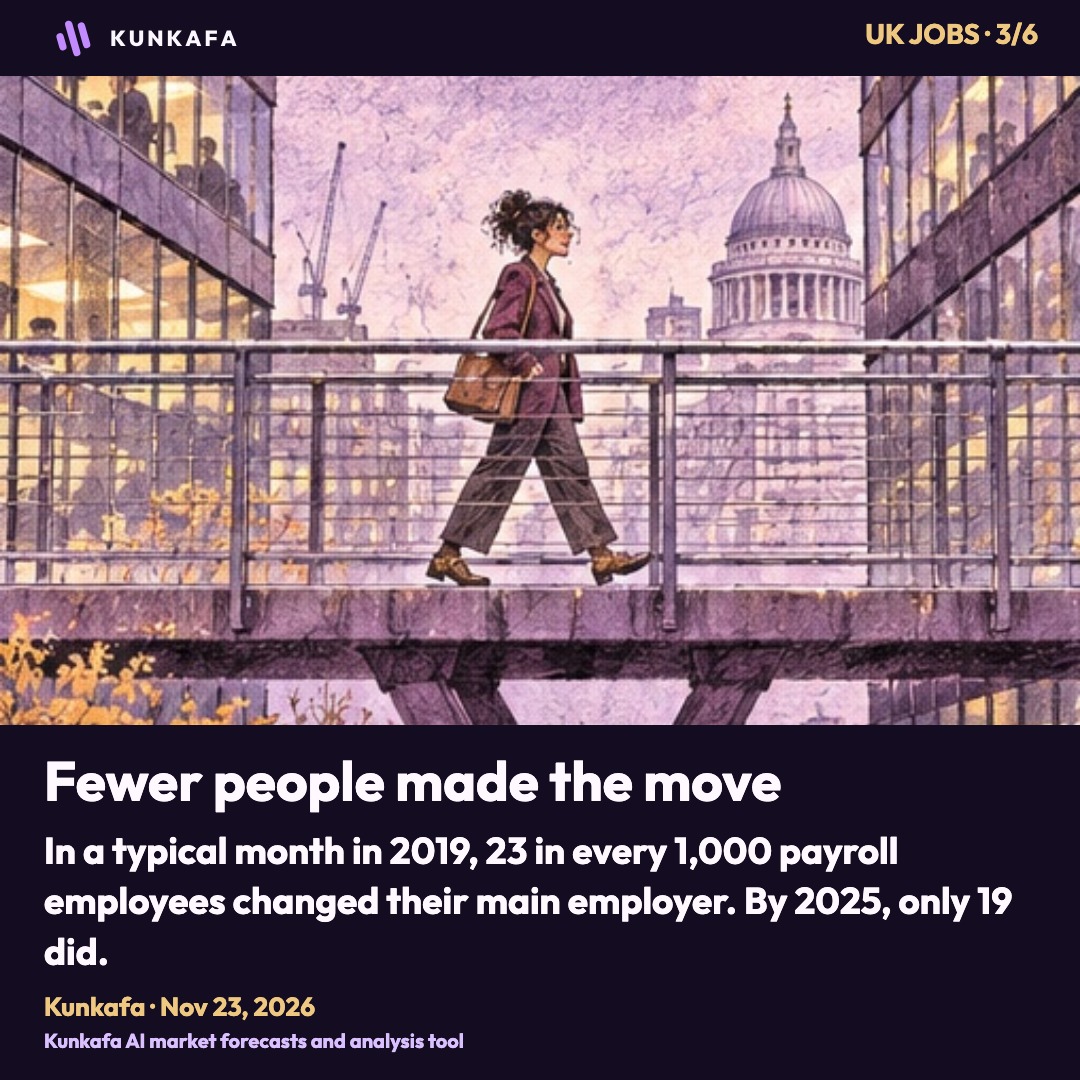
In 2019, about 23 of every 1,000 payroll employees changed their main employer in a typical month. By 2025, that number was 19. On paper the difference is four people. Across an economy, it means fewer chances to reach an employer with a bigger pay packet. [1]
Who missed out on the most moves?
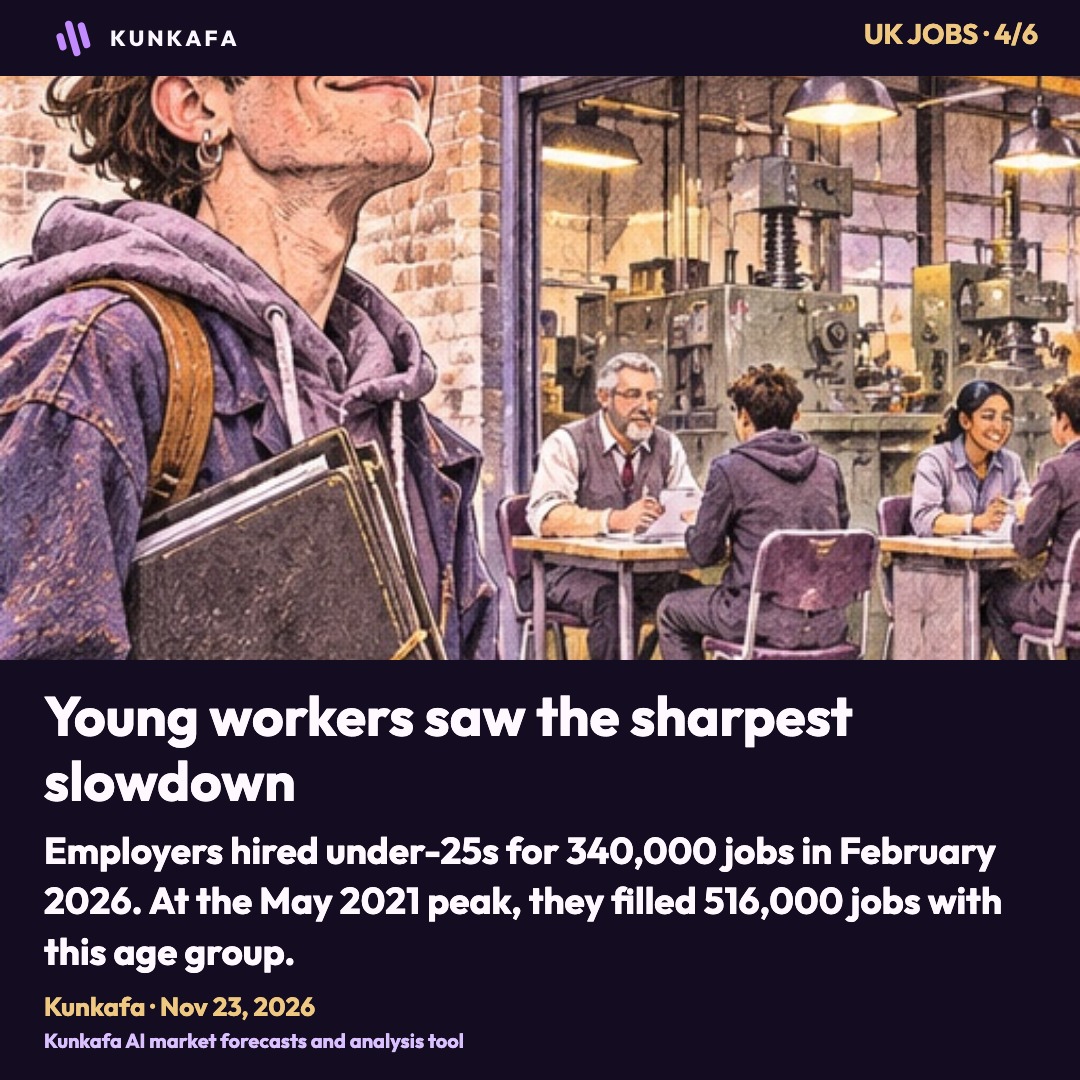
The steepest slowdown was among under-25s, the group that ordinarily changes employer most often. Between November 2021 and February 2026, their monthly rate of switching fell by 1.9 percentage points. Hiring figures tell the story another way. Employers filled 340,000 payroll jobs with under-25s in February, down from 516,000 at the May 2021 peak. That is 176,000 fewer hires in a month, a drop of about a third. [1]
Workers changed companies less often across every major industry after the post-pandemic rebound. The slowdown stood out in retail, wholesale and hospitality, as well as professional services, finance, technology and media. Moving between firms often matters most early in a career, when a shop assistant or junior engineer can test what another employer values their experience at. [1]
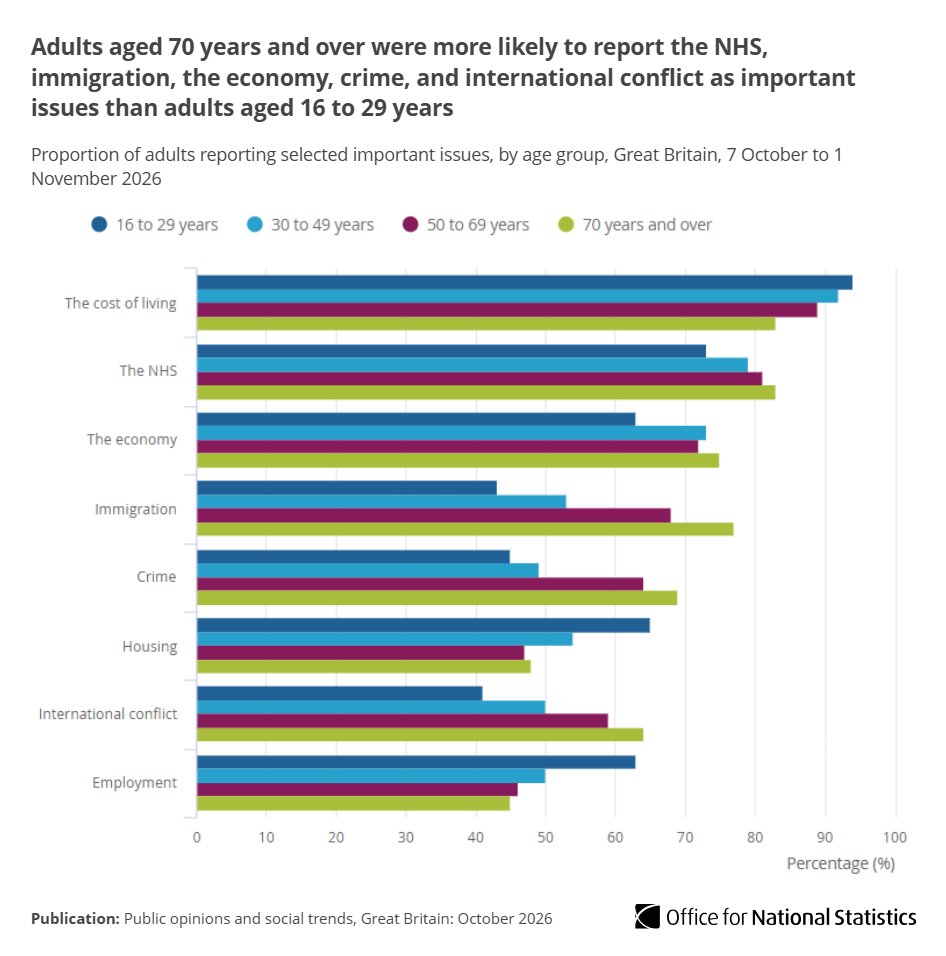
In a separate survey covering October 7 to November 1, 63% of adults aged 16 to 29 identified employment as an important issue facing the UK. The ONS published this breakdown on November 20.
Adults aged 16 to 29 were more likely than those 70+ to report cost of living (94%), housing (65%) and employment (63%) as important issues. Those aged 70+ were more likely to report the NHS (83%), immigration (77%), economy (75%), crime (69%) and international conflict (64%).

What does a higher-paying firm mean for one payslip?
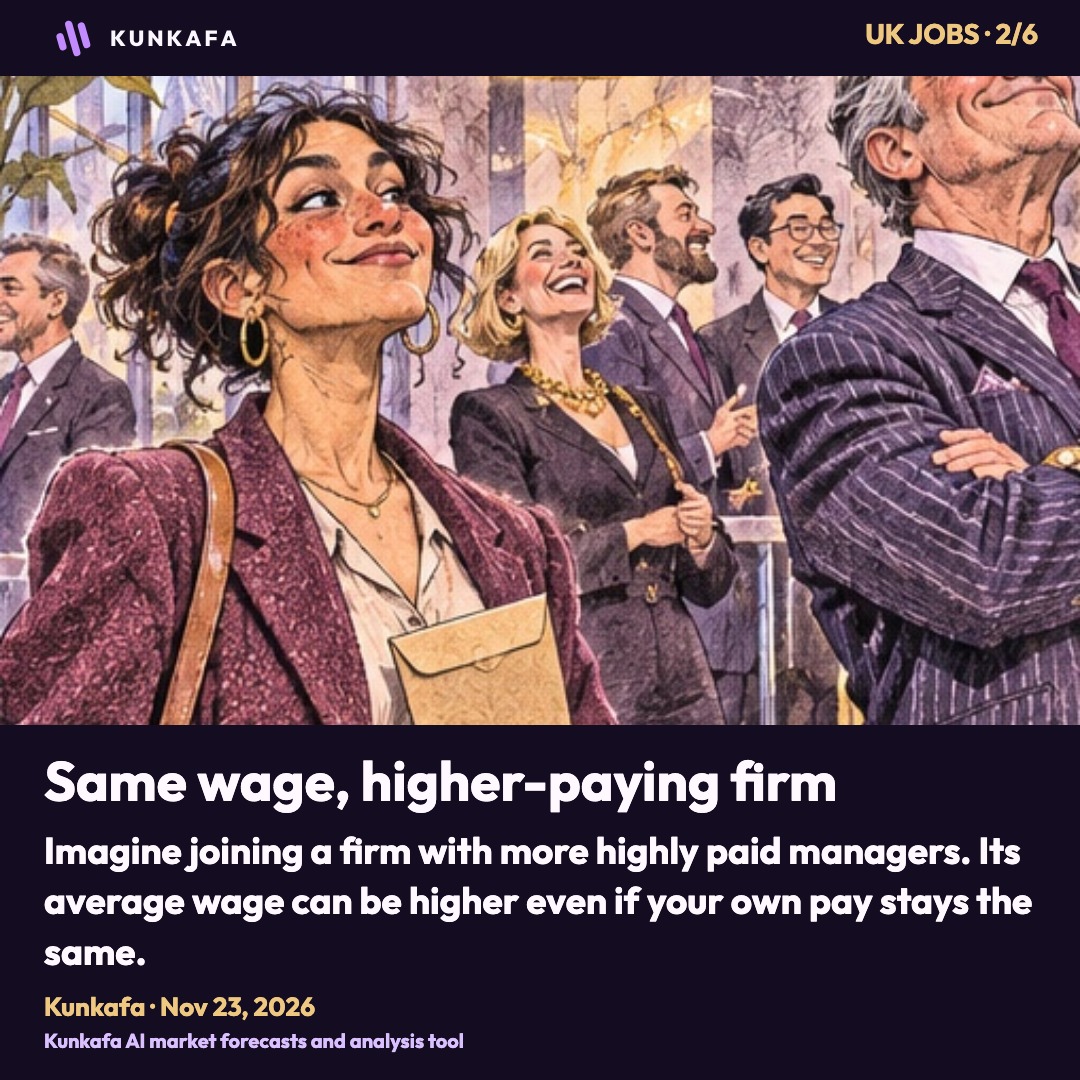
The ONS linked employer payroll records to its business register, then compared each worker’s old and new firms. Joining a company with more highly paid managers can count as a move up even if the recruit keeps the same wage. A worker can also negotiate a raise at a company with lower average pay. Individual earnings before and after a move are the subject of future ONS research. [1]
Workers in technology and other fields have described how moving or interviewing affected their negotiating power. These earlier posts reflect personal experience across labour markets.
Perspectives on changing jobs for better pay


Sources: [1] Office for National Statistics, UK linked employer–employee data, November 23, 2026.
Kunkafa forecasts
British pound - Dollar
How far it could move, which way, by when, and how confident Kunkafa is.
Check the latest forecastsMore in Economy

Egypt Plans a Million Homes. Who’s Buying Property?
At Tatweer Misr, buyers in Egypt account for half of sales and Egyptians abroad for another 40%. A look at what families are buying in Cairo and on the coast.

Le Pen Tells Egyptian TV Why France Needs the Red Sea Open
In a Paris interview with Egyptian television, Marine Le Pen made the case for closer food trade with Cairo and said France should have more say over the tariffs it faces abroad.

Egypt Sets Aside 6,000 m² for a Year-Round Craft Market
A 14-year agreement gives Egypt’s small artisans a chance to find repeat customers at the Agricultural Museum in Dokki.