Economy · Explainer
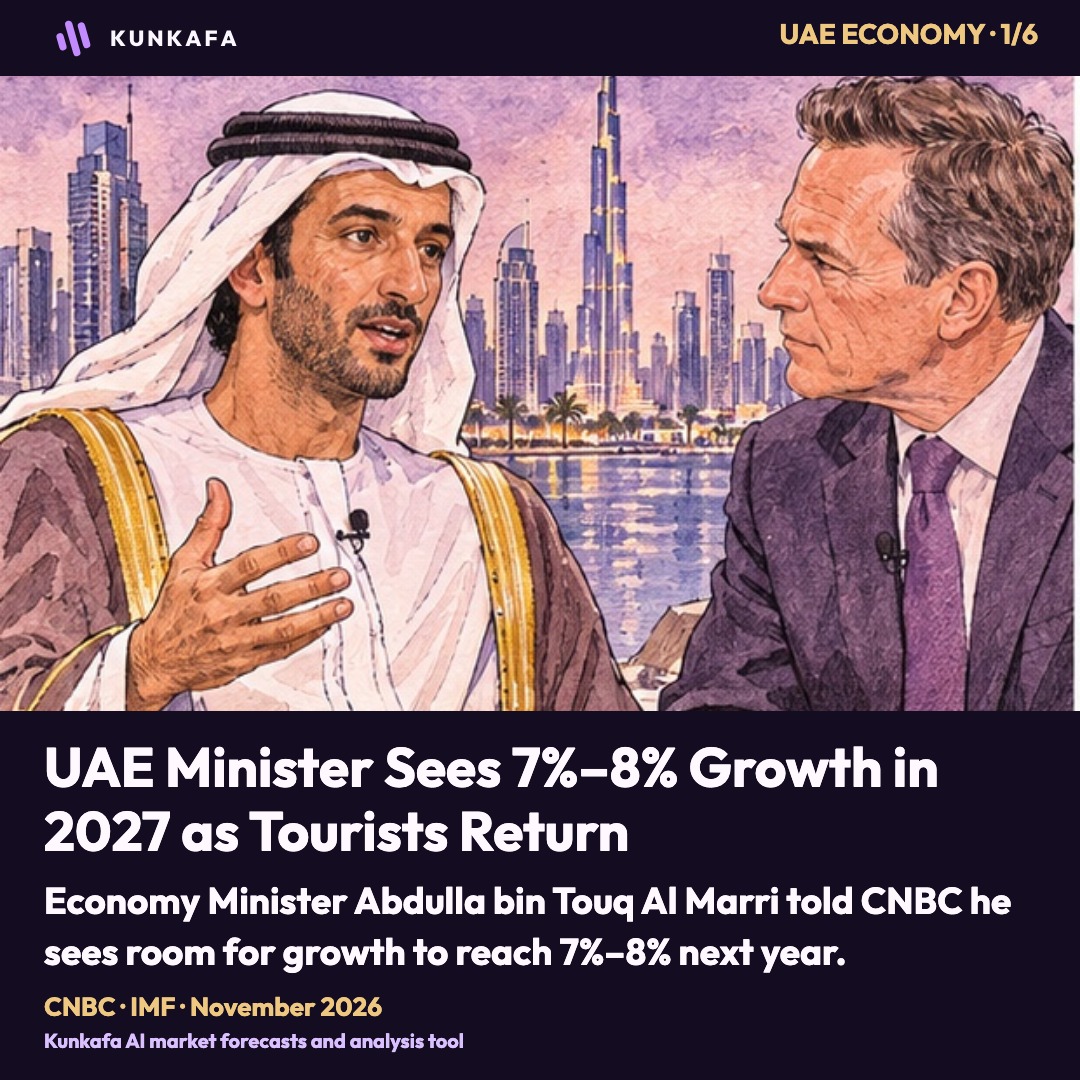
UAE Minister Sees 7%–8% Growth in 2027 as Tourists Return
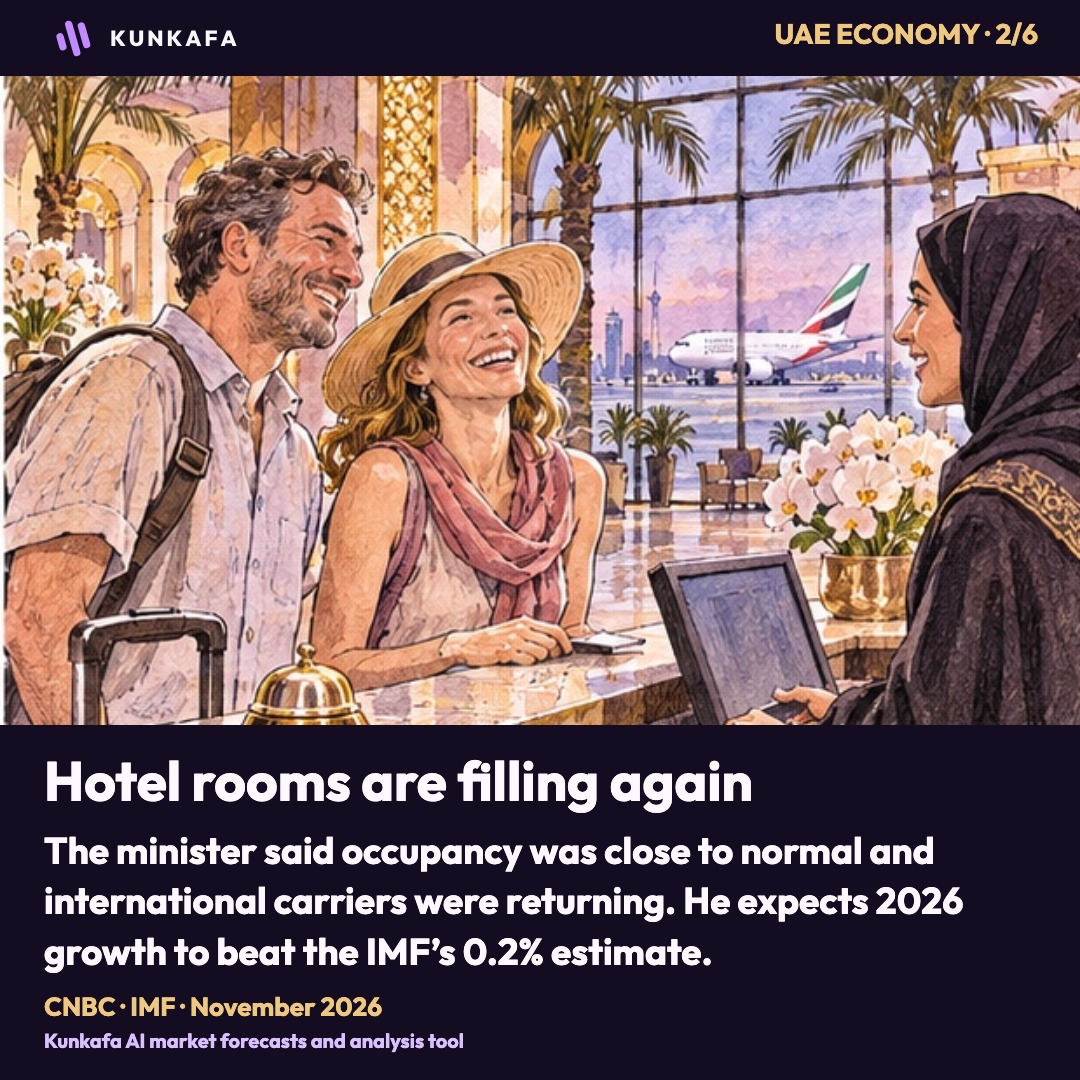
Hotel rooms are filling again. Abdulla bin Touq Al Marri expects growth to beat the IMF’s 0.2% estimate this year and sees factories playing a bigger role in the recovery.

Kunkafa News · Published · 4 min read
 By Kareem FaridDiscuss with the author on X
Here is a visual story in summary
Key points
- Abdulla bin Touq Al Marri expects 2026 growth to exceed the IMF’s 0.2% estimate.
- The IMF projects a 7.3% rebound in 2027 if regional disruptions lift.
UAE Economy and Tourism Minister Abdulla bin Touq Al Marri expects the economy to beat the IMF’s 0.2% growth estimate for 2026. In an interview with CNBC’s Dan Murphy published November 25, he said he was optimistic growth could reach 7% to 8% in 2027. [1]
His first piece of evidence comes from hotel rooms. Occupancy is close to normal again, he said, and international carriers including British Airways and Air France have resumed services. He gave no revised figure for this year. [1]
EXCLUSIVE: ‘Ready for any storm’: #UAE @Economyae Minister optimistic as @IMFNews lifts forecast - @CNBC https://t.co/PW1rfo3TuJ
What would carry growth from 0.2% to 7.3%?
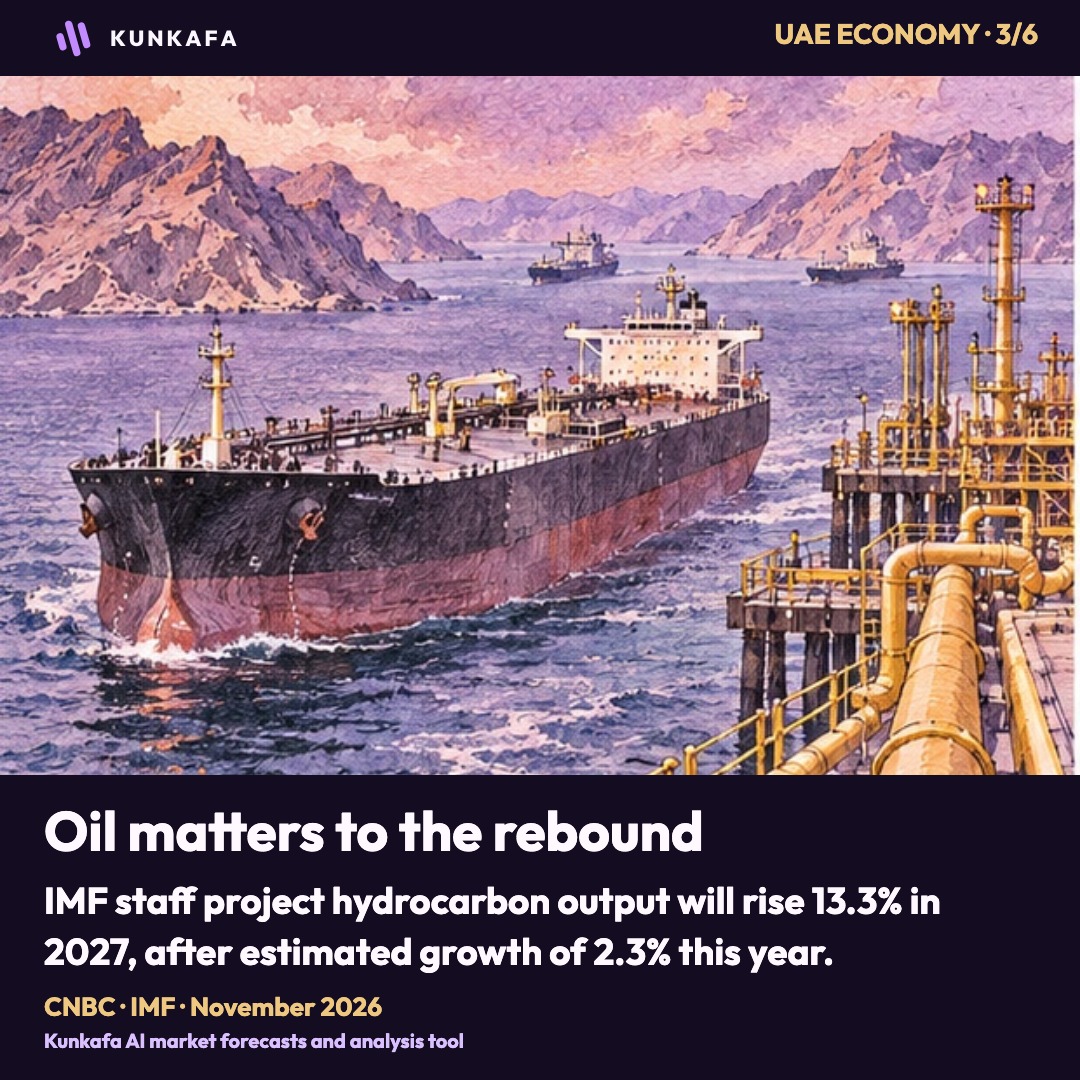
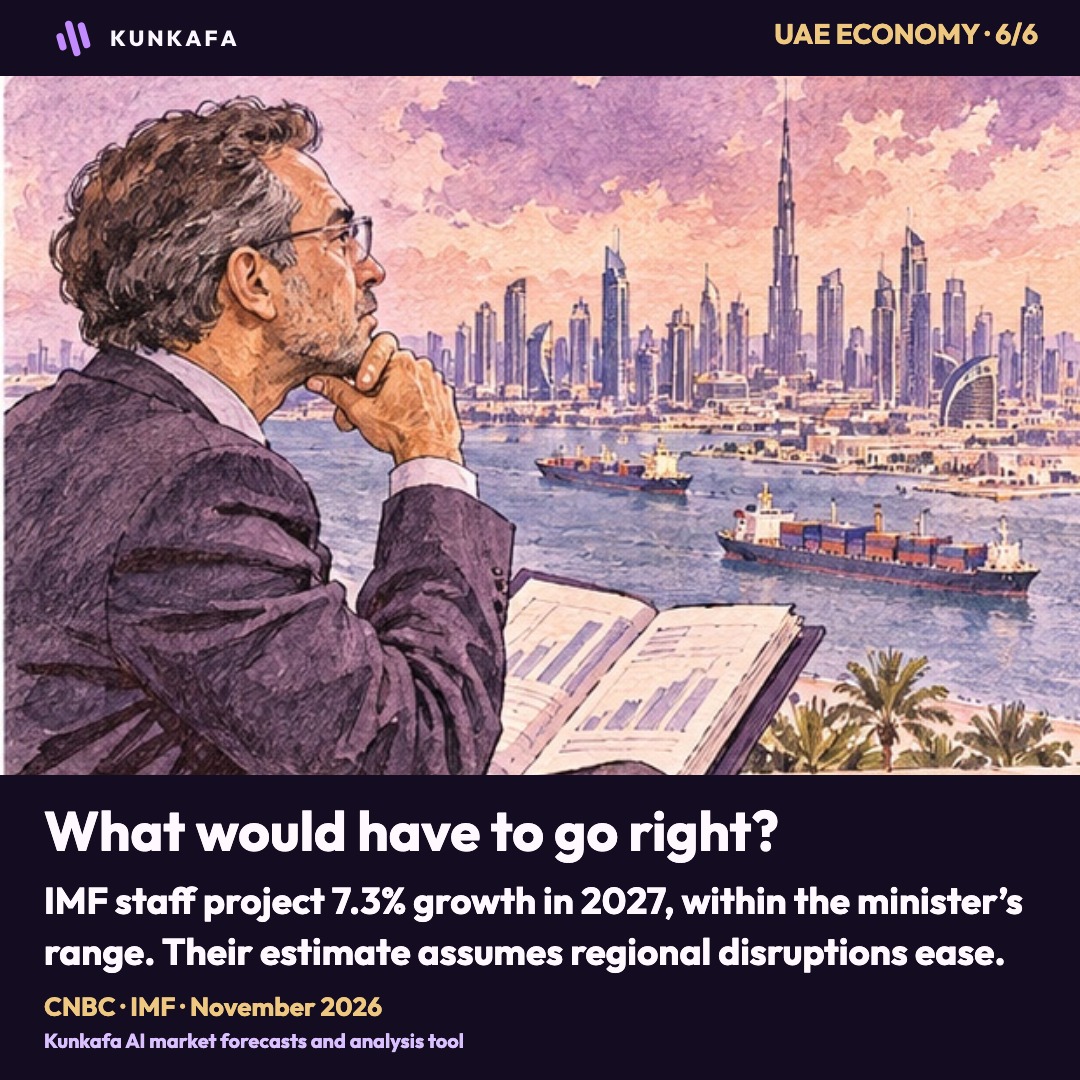
Oil is central to the arithmetic. In its November mission statement, IMF staff projected a 13.3% increase in hydrocarbon output next year, up from 2.3% this year. For the rest of the economy, they projected a swing from a 0.5% contraction to 5.4% growth. Both projections assume regional disruptions ease. [2] [3]
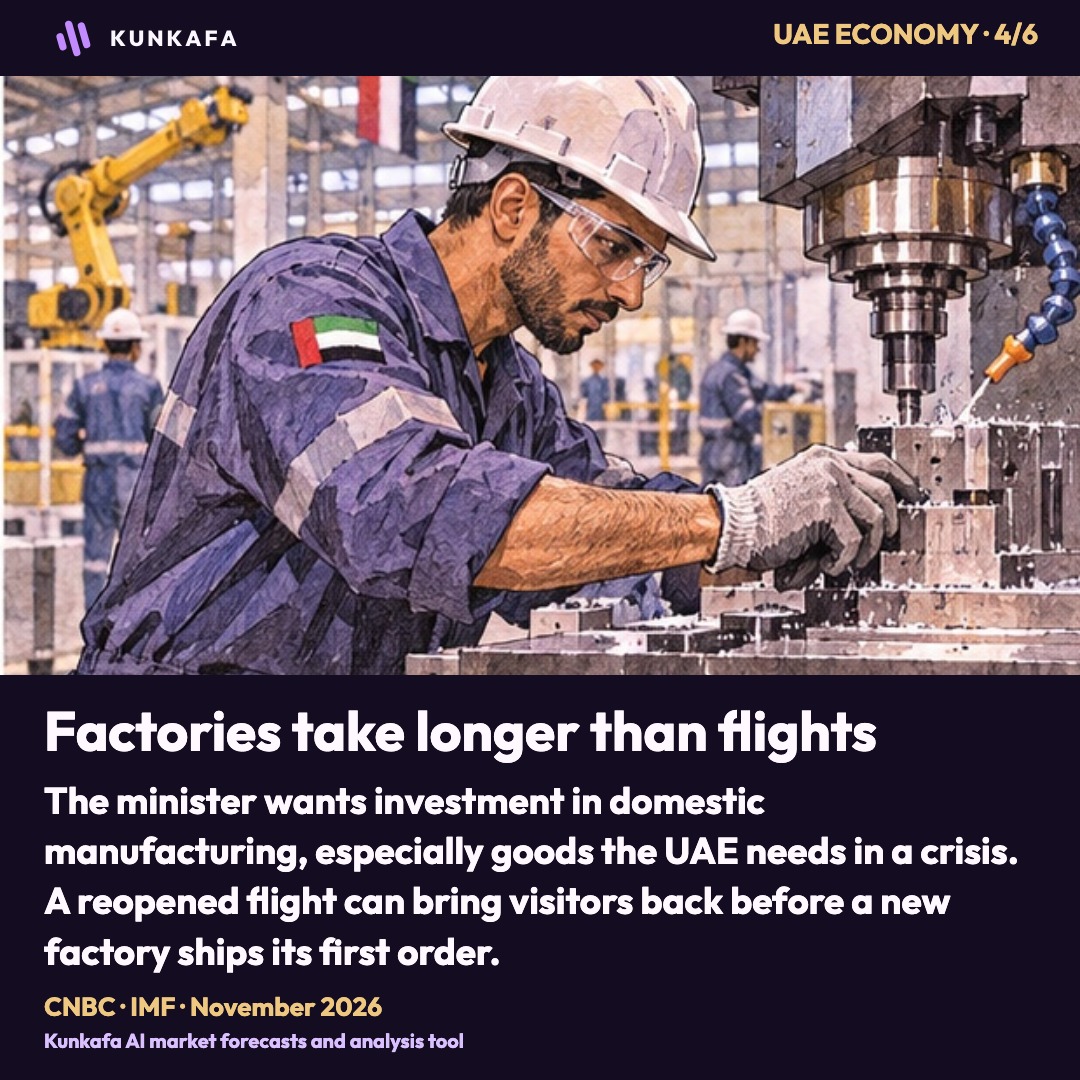
Factories are where the minister sees a lasting change. He said the UAE intends to direct investment toward domestic manufacturing and goods it needs in a crisis. A new factory takes time to produce its first shipment. Reopening an air route can bring visitors back much sooner. [1]
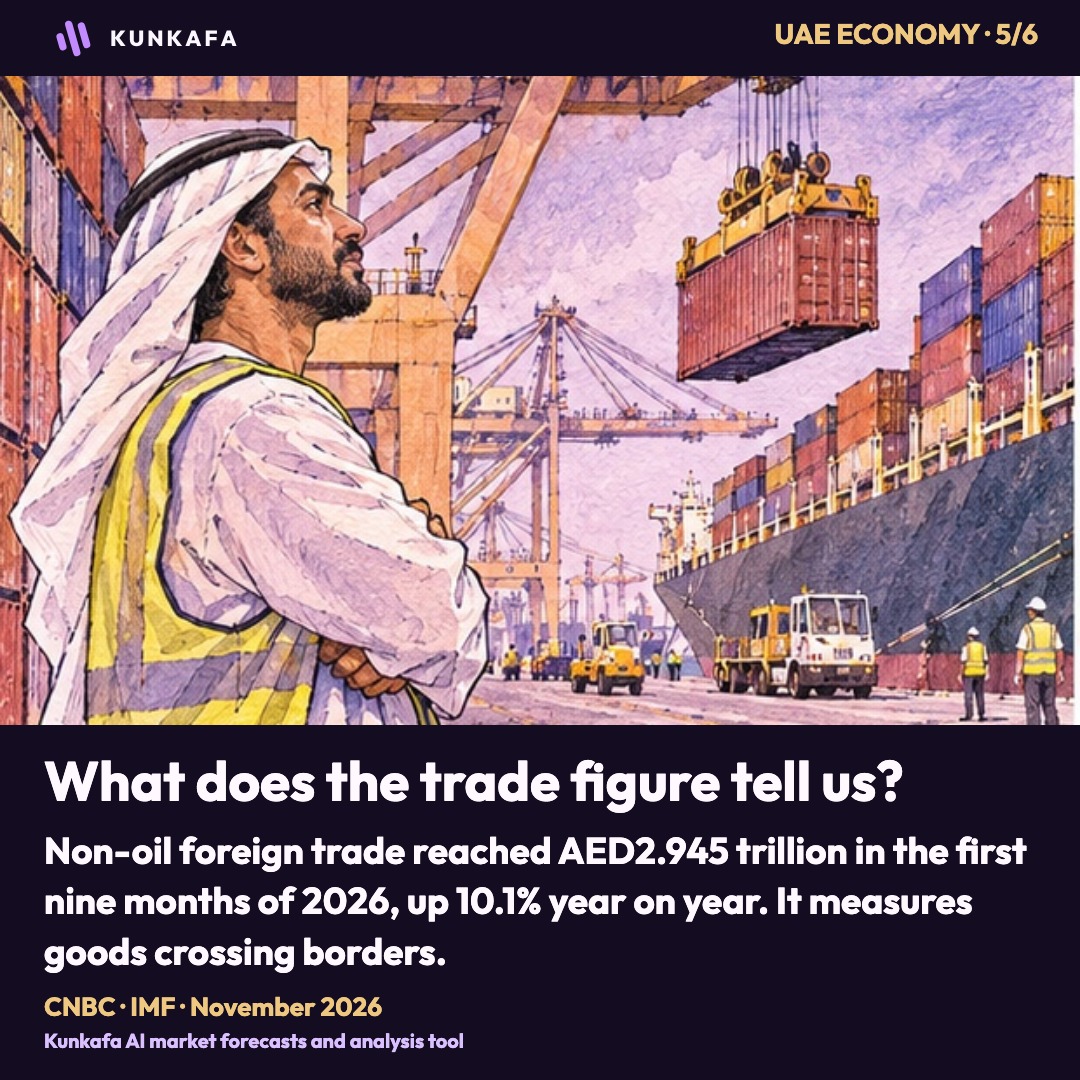
Trade gives a sense of the scale. UAE non-oil foreign trade reached AED2.945 trillion in the first nine months of 2026, up 10.1% year on year. That measures the value of goods crossing borders. The GDP figures measure production inside the country after adjusting for prices. [4]
A month before its November mission, the IMF had expected the economy to shrink 3.9% this year. The revision to 0.2% growth was a 4.1-percentage-point swing. For 2027, the minister and IMF staff are much closer together. Their outlooks hinge on how long the recovery in oil flows, aviation and trade lasts. [1] [2] [3] [5]
Economist Nasser Saidi points to the Gulf’s financial reserves and the cost of rebuilding. Commentator Nadim Koteich asks what it costs to insure and move oil through Hormuz. On November 11, energy analyst John Kemp observed that global crude tanker charter rates had fallen despite the continuing danger.
For one London-to-Sydney traveller, the choice was whether to connect in an hour or book a Dubai hotel during a 15-hour stopover. That is how a transit passenger can become an overnight guest.
Perspectives on the UAE’s recovery


Sources. [1] CNBC interview · November 25 · [2] Central Bank of the UAE · November 18 · [3] IMF mission statement, reproduced by Mirage News · November 18 · [4] Government of Dubai Protocol Department · November 8 · [5] Kunkafa’s earlier coverage of the IMF revision
Kunkafa forecasts
Brent oil
How far it could move, which way, by when, and how confident Kunkafa is.
Check the latest forecasts
More in Economy

Oil Drove 93% of Saudi Arabia’s September Export Rebound
A SAR26 billion jump in oil exports lifted September’s trade surplus. Re-exports rose too, while exports of Saudi-made non-oil goods slipped.

UK Adds 270,000 Solar Systems as Cardiff Stadium Goes Solar
The UK has set a record for small solar installations. On a bigger scale, the Welsh rugby stadium’s roof can generate enough electricity for 50 matchdays a year.

King Salman Orders Up to Three Months of Saudi Wage Support
Eligible workers can keep their jobs and receive SANED compensation. Coverage before July 1 is one condition. A ministerial committee sets the payout rate and start date.