Markets · Explainer
The Morning Switzerland Abandoned Its Franc Floor
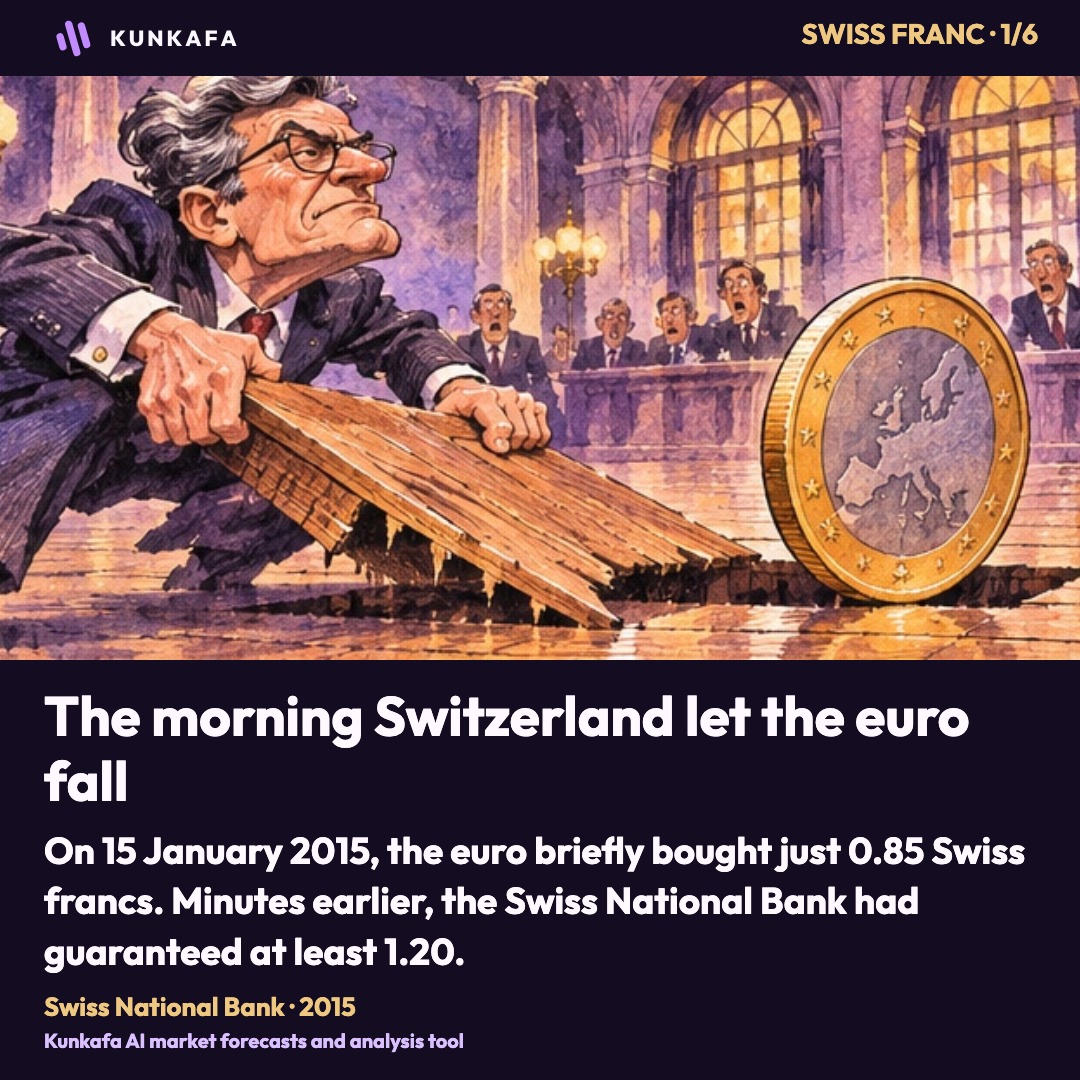
On January 15, 2015 the euro fell from its protected level of 1.20 francs to 0.85 before recovering toward parity. Each price tells a different part of the day.

Kunkafa News · Published · 4 min read
 By Kareem FaridDiscuss with the author on X
Here is a visual story in summary
Key points
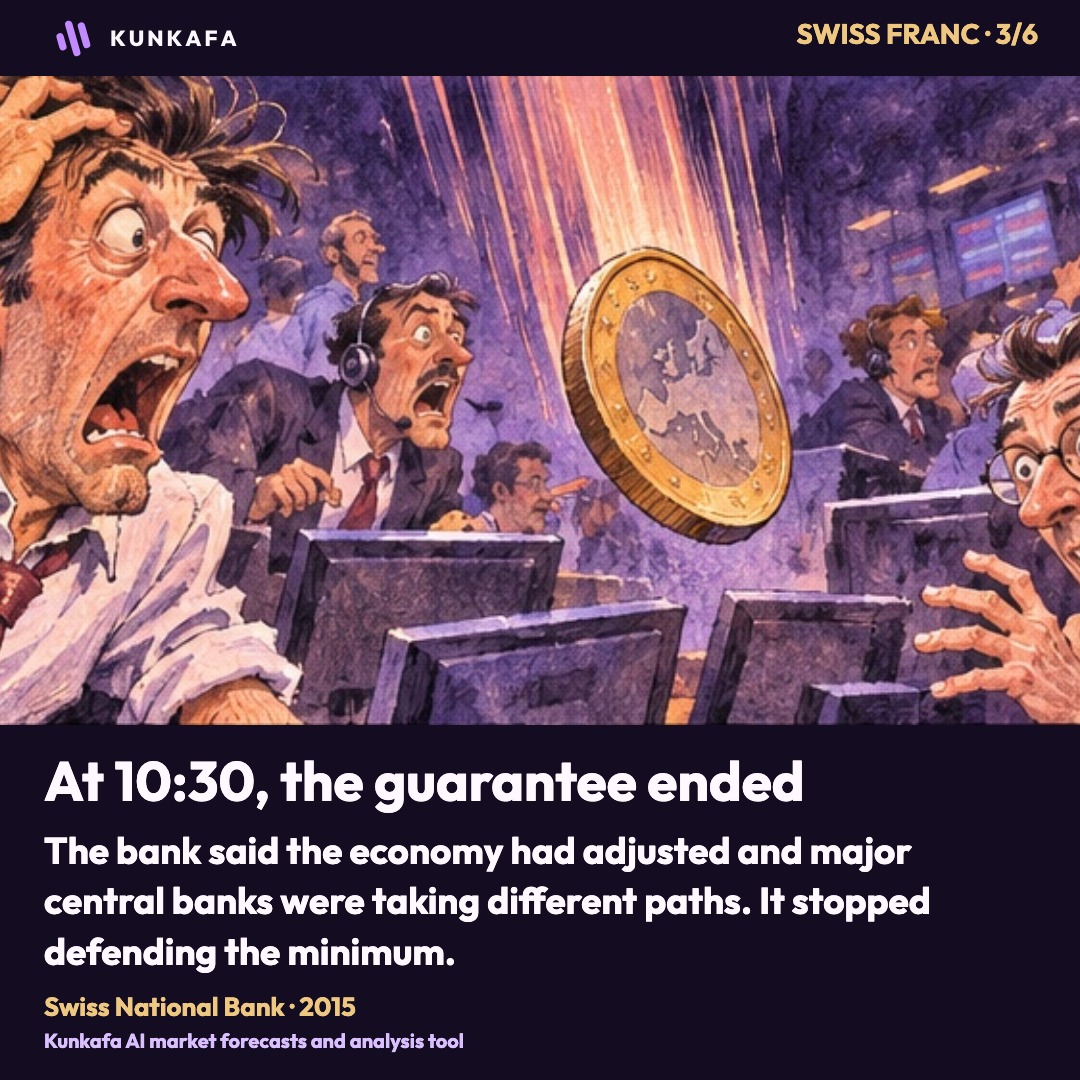
- At 10:30 a.m. Swiss time the SNB ended its policy of keeping the euro worth at least 1.20 francs.
- The SNB records a brief interbank low of 0.85 francs per euro and trading near parity that afternoon.
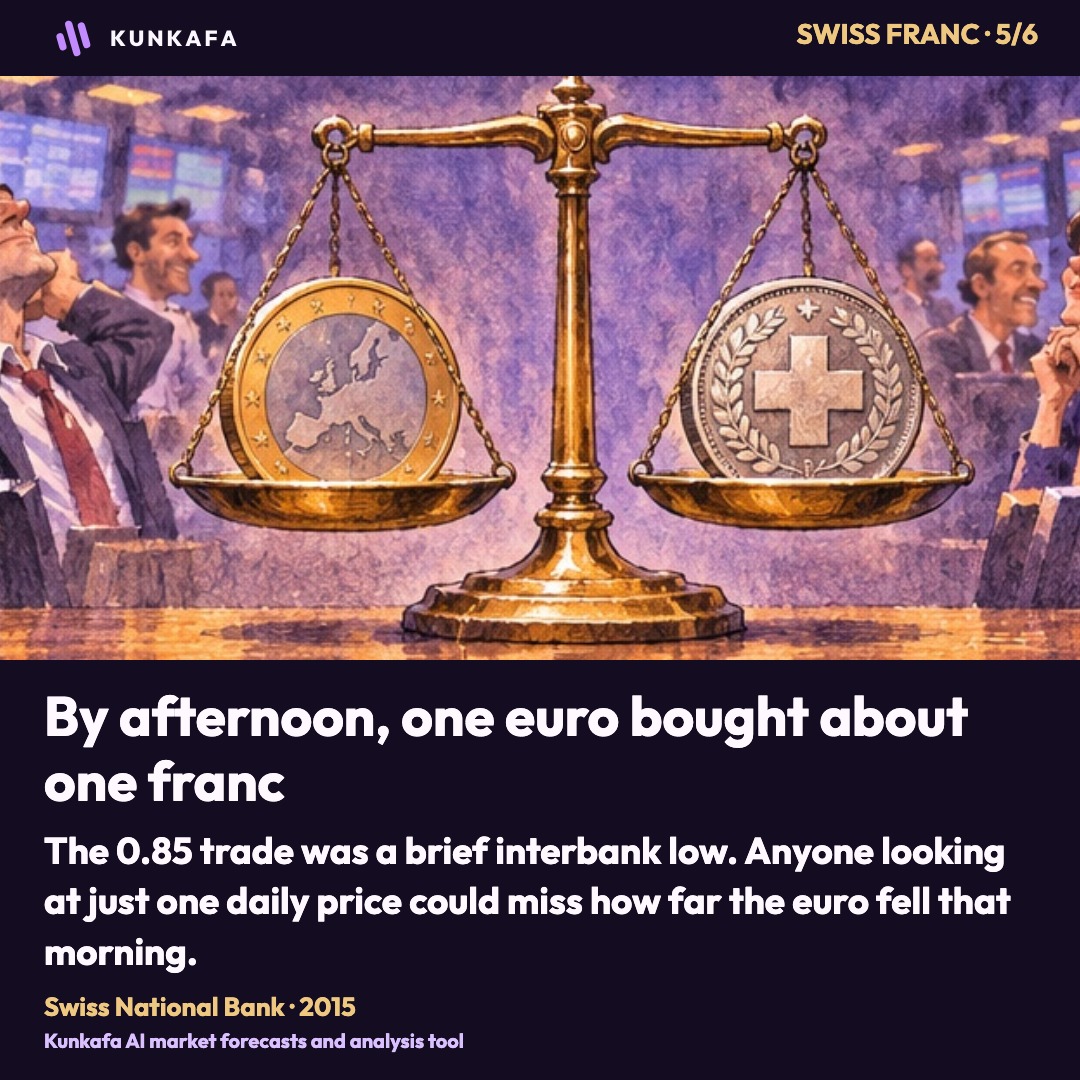
At 10:30 a.m. in Switzerland on January 15, 2015, the Swiss National Bank withdrew the commitment that had kept a euro worth at least 1.20 francs since September 2011. In the minutes that followed, the euro changed hands for as little as 0.85 francs on the interbank market, according to the SNB. By the afternoon, it was trading close to one franc. A chart built from daily observations compresses those three very different prices into a single day. [1] [2] [3]
What the 1.20 floor protected
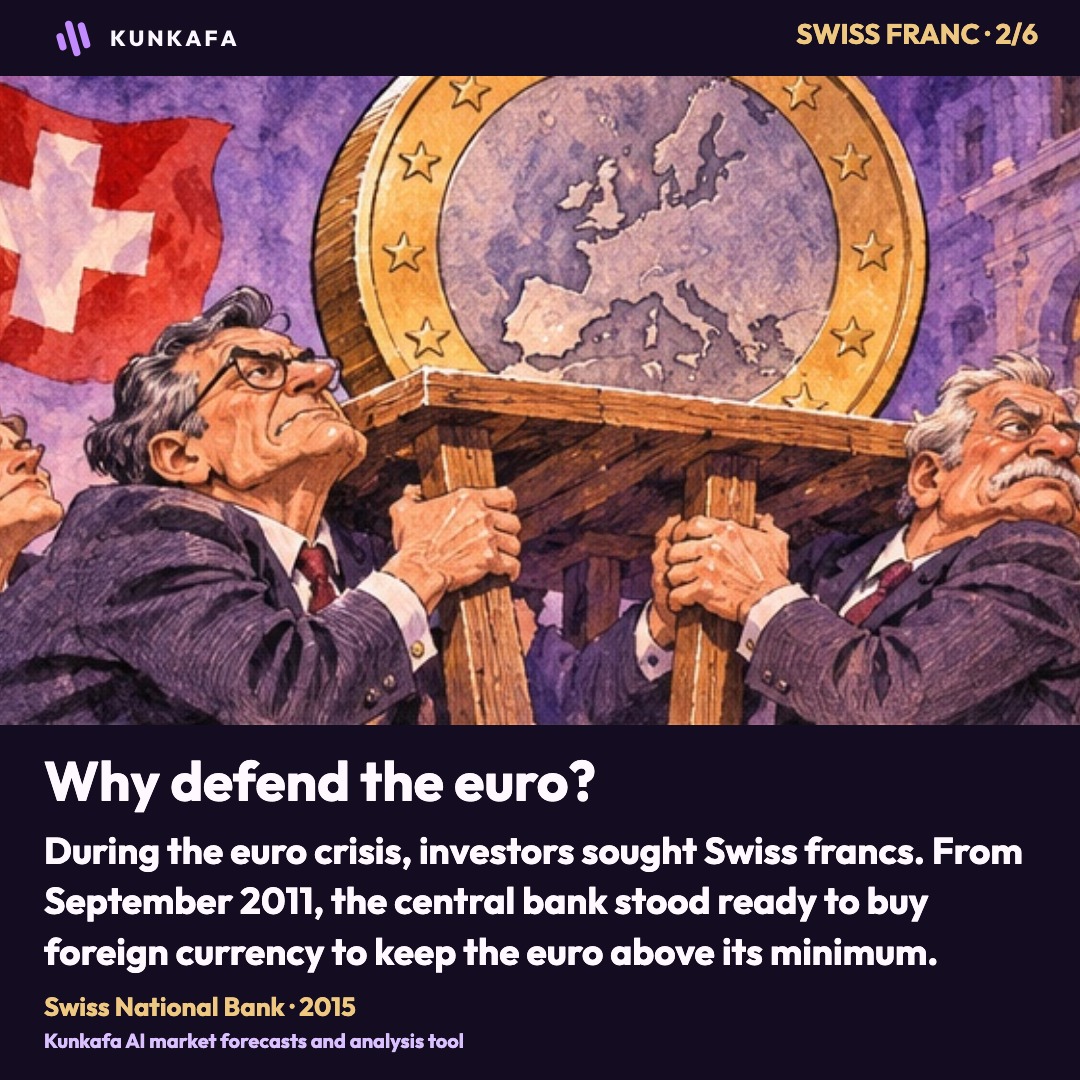
The rate was quoted in francs per euro. A lower number meant the franc was stronger. During the euro-area crisis, the SNB judged its currency exceptionally overvalued and adopted an explicit minimum for the euro. Sustaining that minimum meant standing ready to buy foreign currency with newly supplied francs as demand for the Swiss currency rose. By January 2015 the central bank said the economy had adjusted and monetary policies in the major currency areas had diverged. [1] [2]
The euro had weakened against the dollar, taking the franc down against the dollar as well while the floor held. The SNB concluded that maintaining the euro minimum had ceased to be justified. It also cut the rate on eligible sight-deposit balances above an exemption threshold by half a percentage point to minus 0.75%. The bank said that move was intended to temper the tightening of monetary conditions that a stronger franc could bring. [1]
The Capsule
- Read EUR/CHF as francs for one euro. A lower quote means a stronger franc.
- Label 1.20 as the former policy floor and 0.85 as a short-lived interbank low.
- Use the conversion time and actual execution rate when valuing a cash flow.
- Separate the deposit-rate cut from the withdrawal of the currency floor.
A floor, an intraday low and a cash receipt
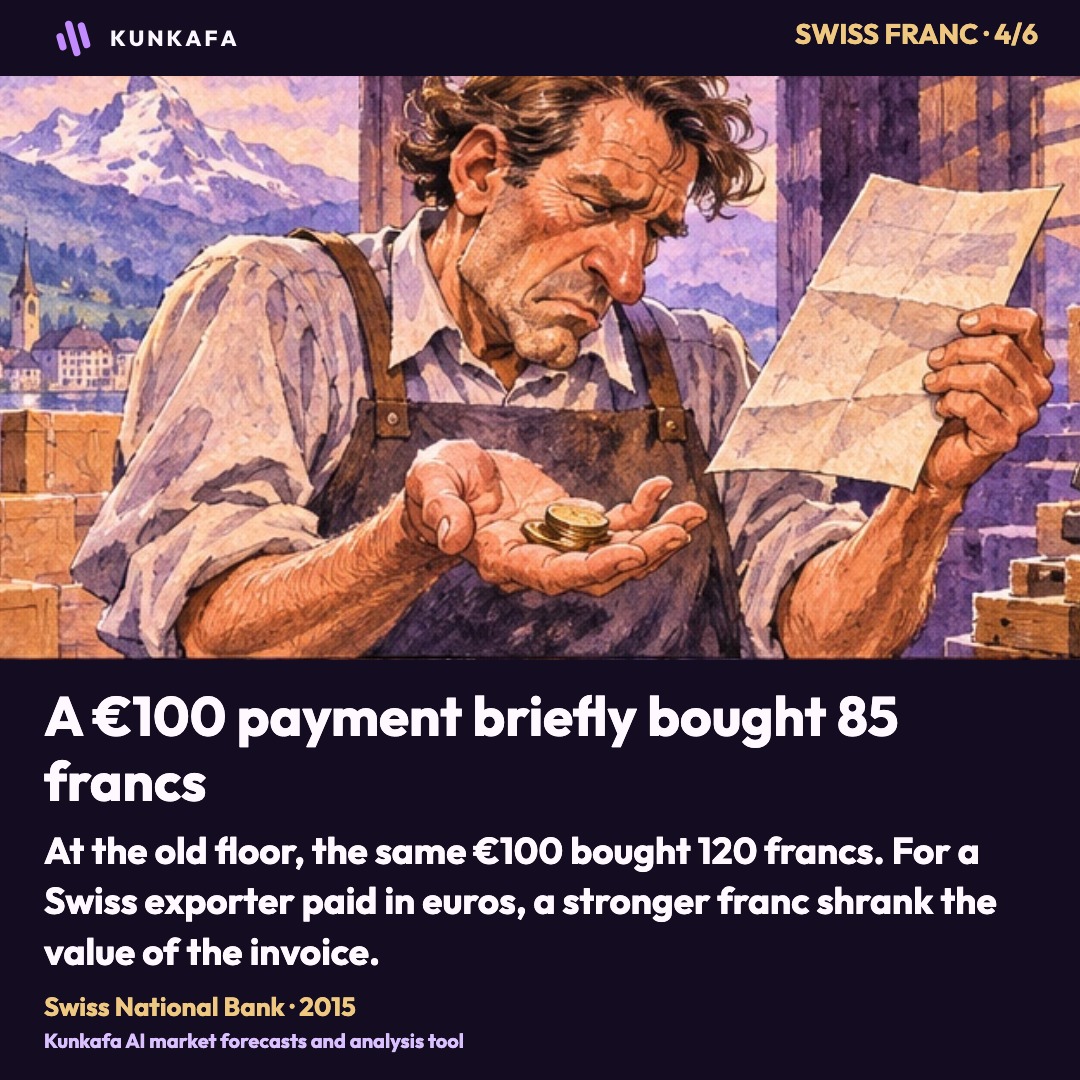
A Swiss exporter owed €100,000 would have translated it into CHF120,000 at the former floor. At parity the same receivable translated into CHF100,000. At the brief 0.85 print its indicative value was CHF85,000. This arithmetic assumes an unhedged receipt and ignores spreads. It illustrates why the timing of a conversion mattered. A recorded interbank trade says little about the rate a small company could actually obtain at that moment. [2] [3]
A Bank of England study later examined transaction records and the uneven prices that appeared as market participants tried to trade immediately after the announcement. The SNB’s year-end account offers another time horizon. From mid-August through December the euro traded in a range of 1.08 to 1.10 francs. The episode’s most dramatic minute, the same afternoon and the end of the year describe three distinct exposures for anyone holding a euro receivable. [3] [4]
Sources: [1] Swiss National Bank, January 15 release · [2] SNB, first-quarter bulletin · [3] Bank of England, transaction study · [4] SNB, 2015 annual report
Kunkafa forecasts
Euro - Dollar
How far it could move, which way, by when, and how confident Kunkafa is.
Check the latest forecastsMore in Markets

3 Best Free Sources for Researching Egyptian Stocks
CIB’s annual profit and cash dividend reveal where each source earns its place.

How to Read the Price of UAE Retail Treasury Sukuk
The first direct retail issue sold at par with a 4.30% annual profit rate. A later buyer needs the market price, accrued profit and fees to calculate the cash due.

SoftBank Sinks 24% Since Our Warning on Its AI Debt
A 14.8% fall in Tokyo puts Masayoshi Son’s debt-funded AI bet back in focus. A $3.73 billion equipment loss shows how much a change of plan can cost.