Markets · Market move
Saudi Arabia Sees $1 Trillion in Infrastructure. How Much Is Funded?
Tadawul holds near 9,900 as investors weigh the project pipeline and S&P’s first long-term rating for the kingdom’s sovereign wealth fund.

Kunkafa News · Published · 4 min read
 By Kareem FaridDiscuss with the author on X
Here is a visual story in summary
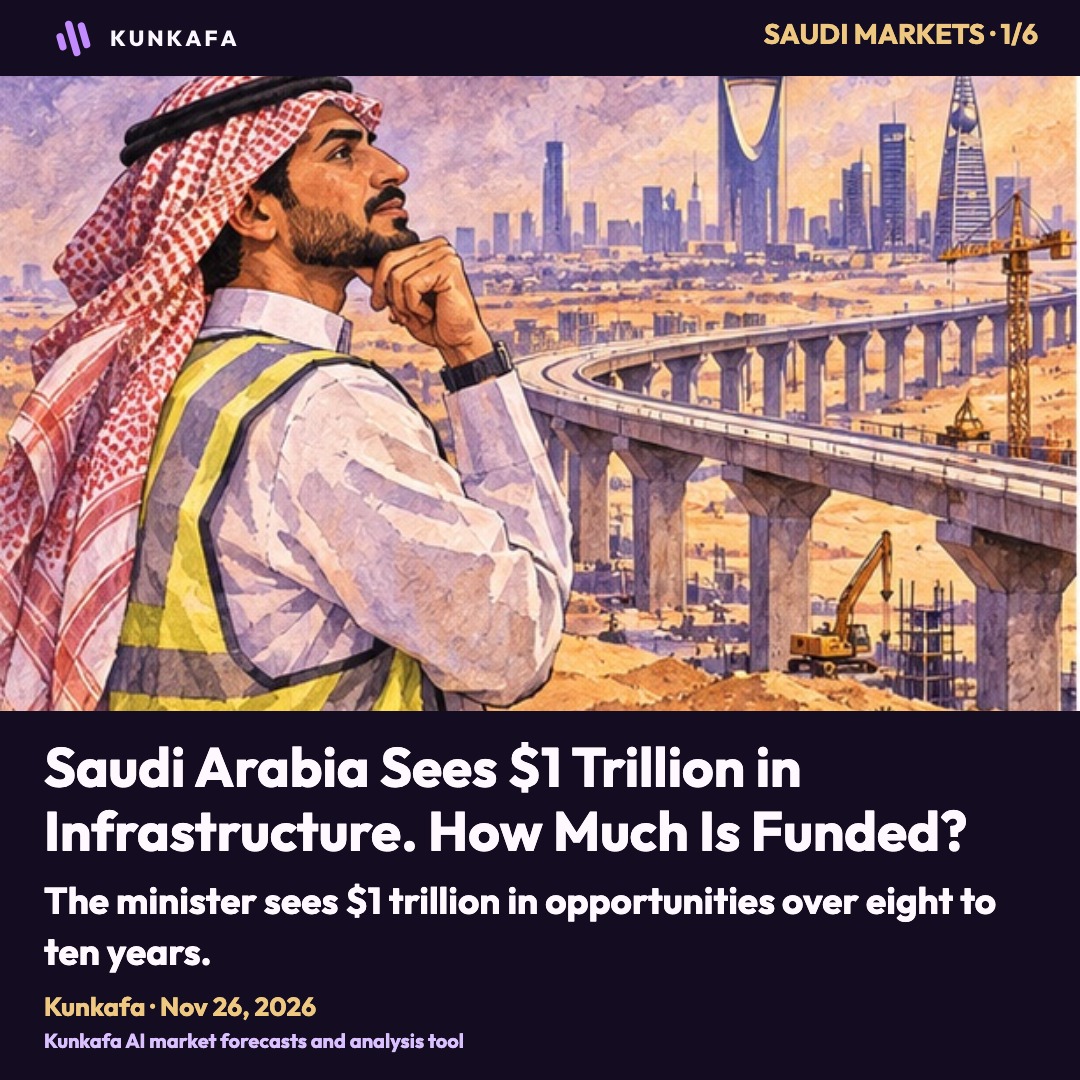
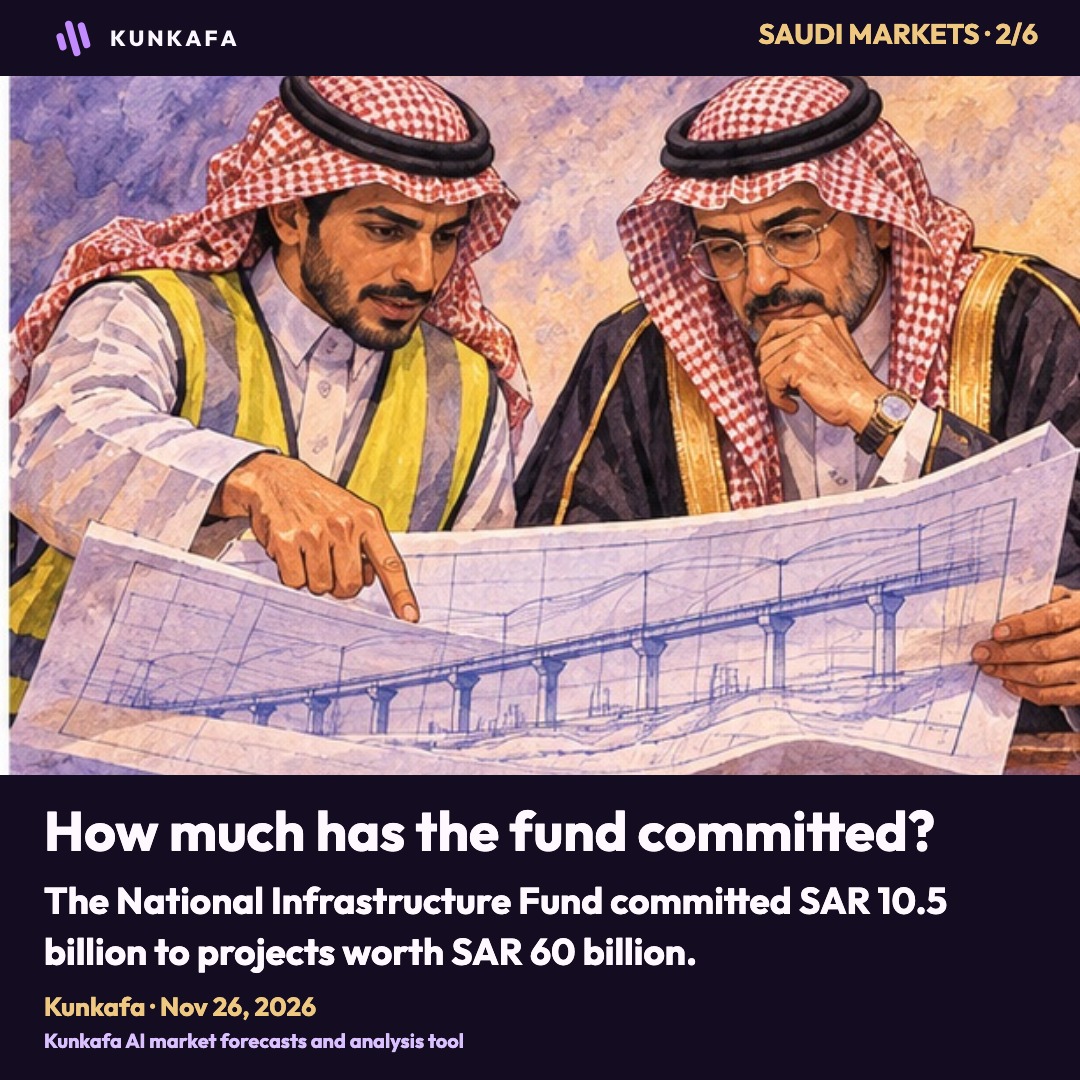
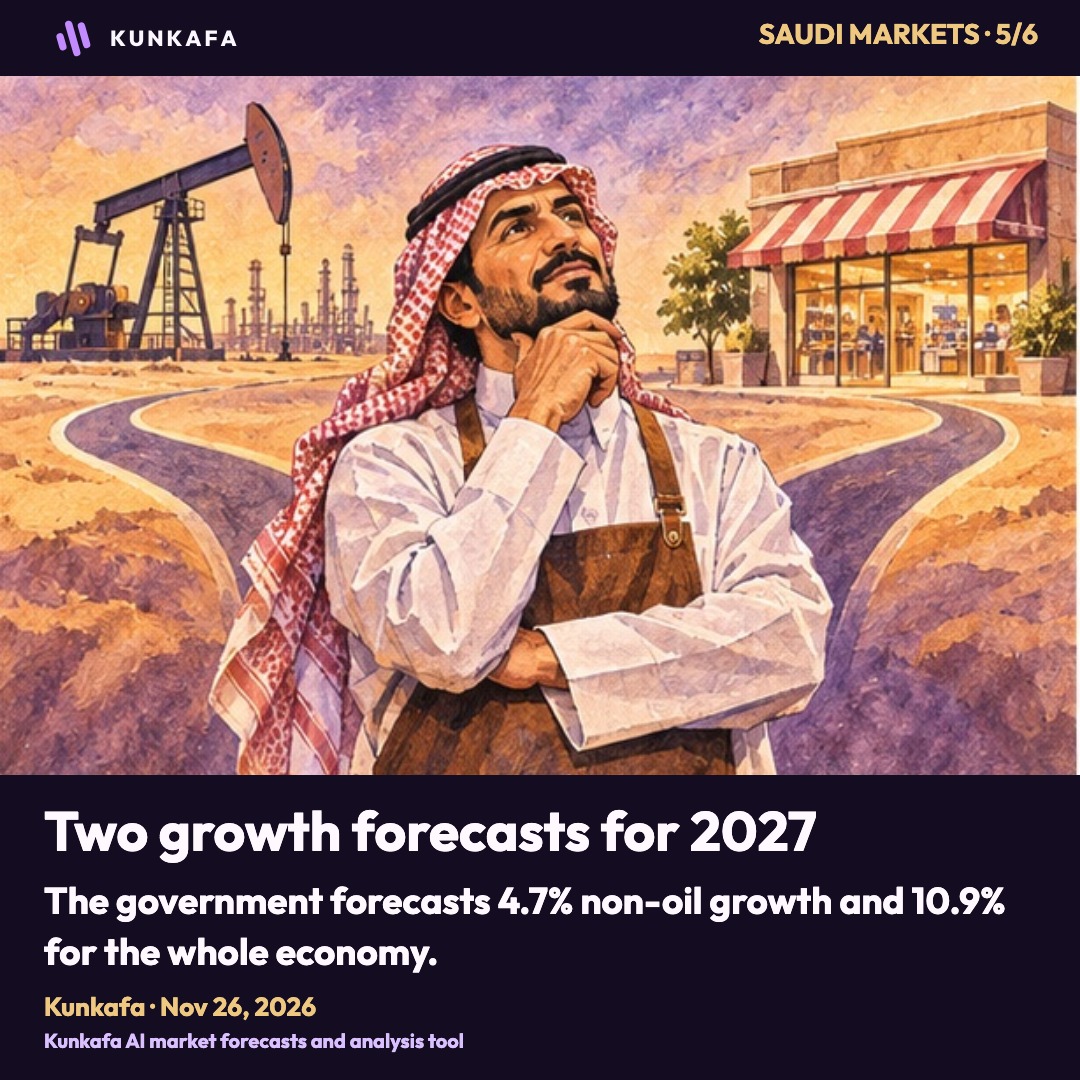
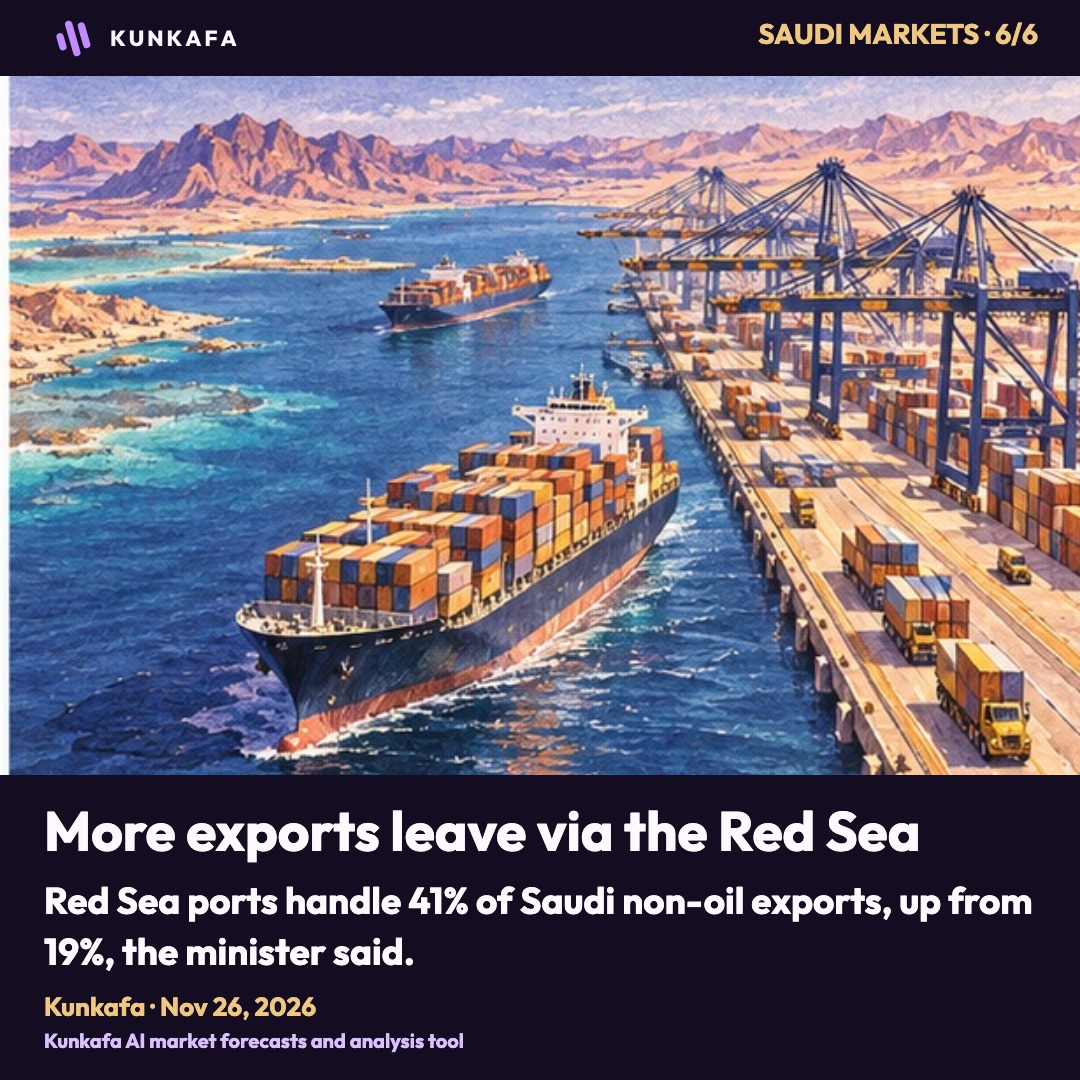
Saudi Arabia sees $1 trillion of infrastructure opportunities over the next eight to ten years. Investors already have a smaller, more tangible figure to work with. Its National Infrastructure Fund has committed SAR10.5 billion to projects worth SAR60 billion, Economy and Planning Minister Faisal Alibrahim said at Wednesday’s budget forum. Saudi Press Agency
Saudi shares trade on either side of Wednesday’s close
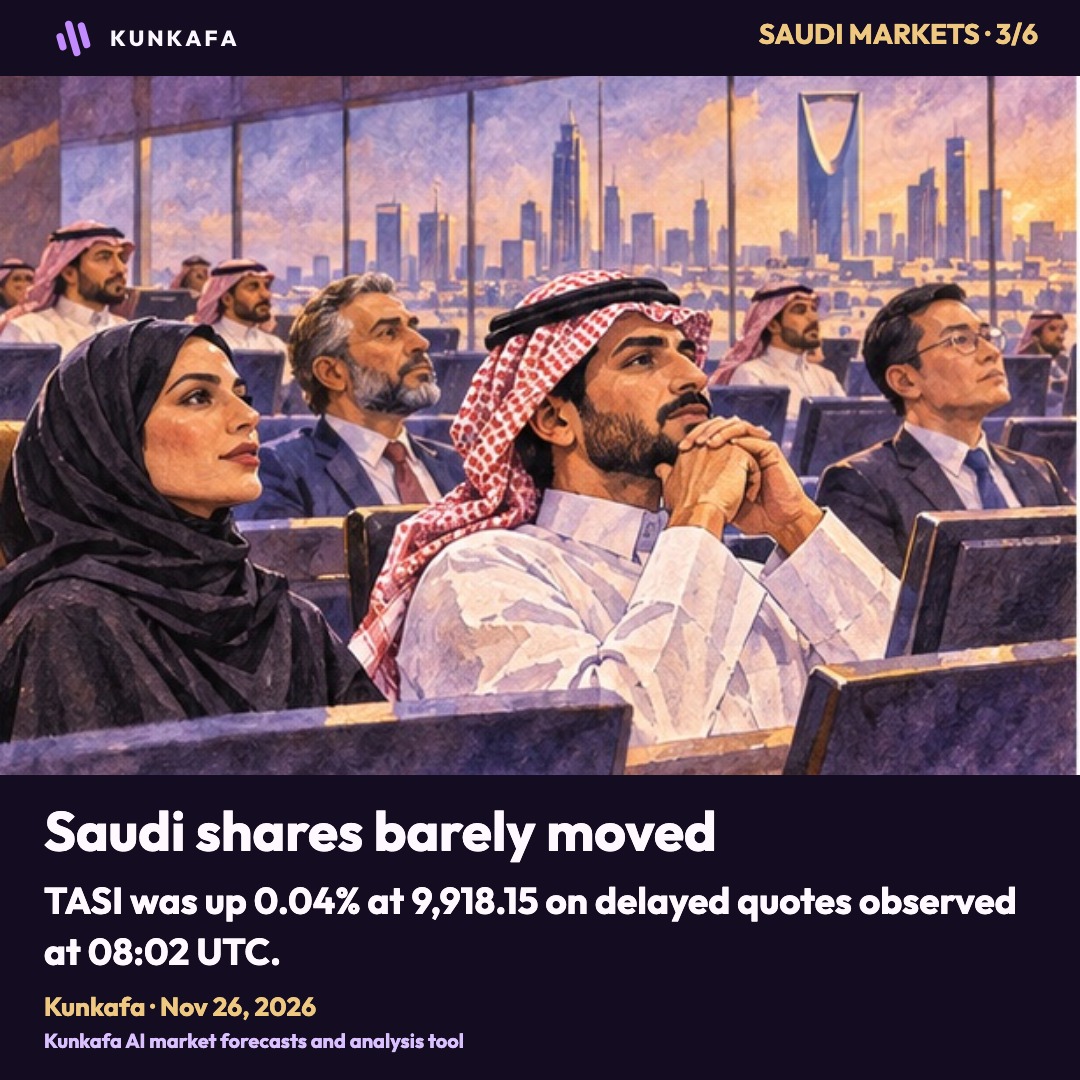
The Tadawul All Share Index stood at 9,918.15, up 0.04%, on a 15-minute-delayed feed observed at 08:02 UTC on Thursday, November 26. It opened at 9,923.55 and traded between 9,903.61 and 9,936.50. [↗]
Wednesday’s close was 9,913.98, a drop of 63.08 points, or 0.63%. About 151 million shares worth SAR2.5 billion changed hands. The smaller Nomu market went the other way, adding 10.64 points to 21,335.64. [↗]
PIF gets its first long-term S&P rating
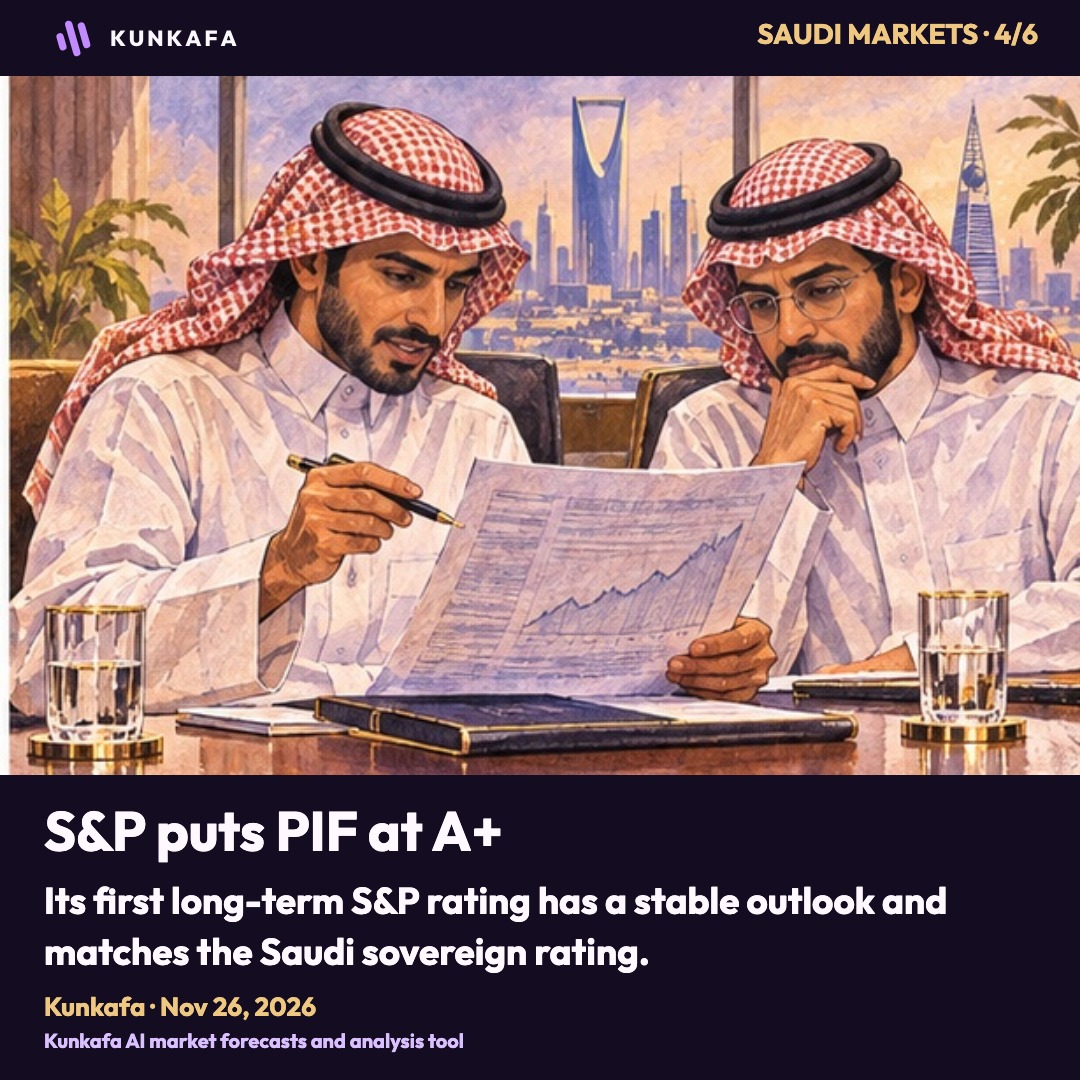
The Public Investment Fund said S&P Global Ratings assigned it an A+ long-term issuer rating in local and foreign currency, with a stable outlook. That puts the fund on the same rung as the Saudi sovereign and gives bond investors a third major agency’s assessment alongside Moody’s and Fitch. [↗]
PIF said S&P highlighted its access to several funding sources, moderate leverage and its shift towards realising value from existing investments. For a lender, the question is how much cash those holdings can generate as the fund finances its next commitments. [↗]
PIF today announced that S&P Global Ratings has assigned it inaugural A+ long-term foreign and local currency issuer credit ratings, with a stable outlook. PIF’s existing A-1 short-term rating remains unchanged. Learn more: https://t.co/pNK8XPJcvo pic.twitter.com/wifP29EUDz
Two different growth rates behind the budget
Alibrahim said non-oil activity grew 1.8% in the first nine months of 2026. The government forecasts 4.7% non-oil growth in 2027, against 10.9% for the whole economy. That gap matters to a contractor or retailer using the headline GDP forecast to judge demand for its own business. [↗]
Oil production had recovered to 10.6 million barrels a day, Alibrahim said. He also pointed to a shift on the non-oil side of the ledger. Red Sea ports now handle about 41% of Saudi non-oil exports, up from 19%, offering exporters another route to customers. [↗]
Earlier perspectives frame the funding question. In May, one observer questioned the productivity of higher spending. November posts consider the strength of Saudi banks, risks to oil flows and the value of a stable environment for investment.
Perspectives on financing Saudi growth


Kunkafa forecasts
Brent oil
How far it could move, which way, by when, and how confident Kunkafa is.
Check the latest forecastsMore in Markets

Dubai Islamic Rises 3.14% as Investors Buy Both Sides of Bank Deal
Dubai shares advance 0.56% as Abu Dhabi slips. A new business bank launches and Ras Al Khaimah secures financing for a major water treatment plant.

Do Saudi REITs Pay Out 90% of Their Rent?
Saudi rules set a floor against annual net profit. Derayah REIT’s accounts show how rent, financing costs and cash distributions can tell very different stories.

How to Read Parkin’s Dubai IPO Allocation and Refund
Dubai’s parking operator increased its retail allocation by almost 15 million shares. Even then, the individual allotment and refund depended on the share count in each allocation notice.