Tech · Explainer
OpenRouter Finds Jevons Paradox Weakening for AI Tokens
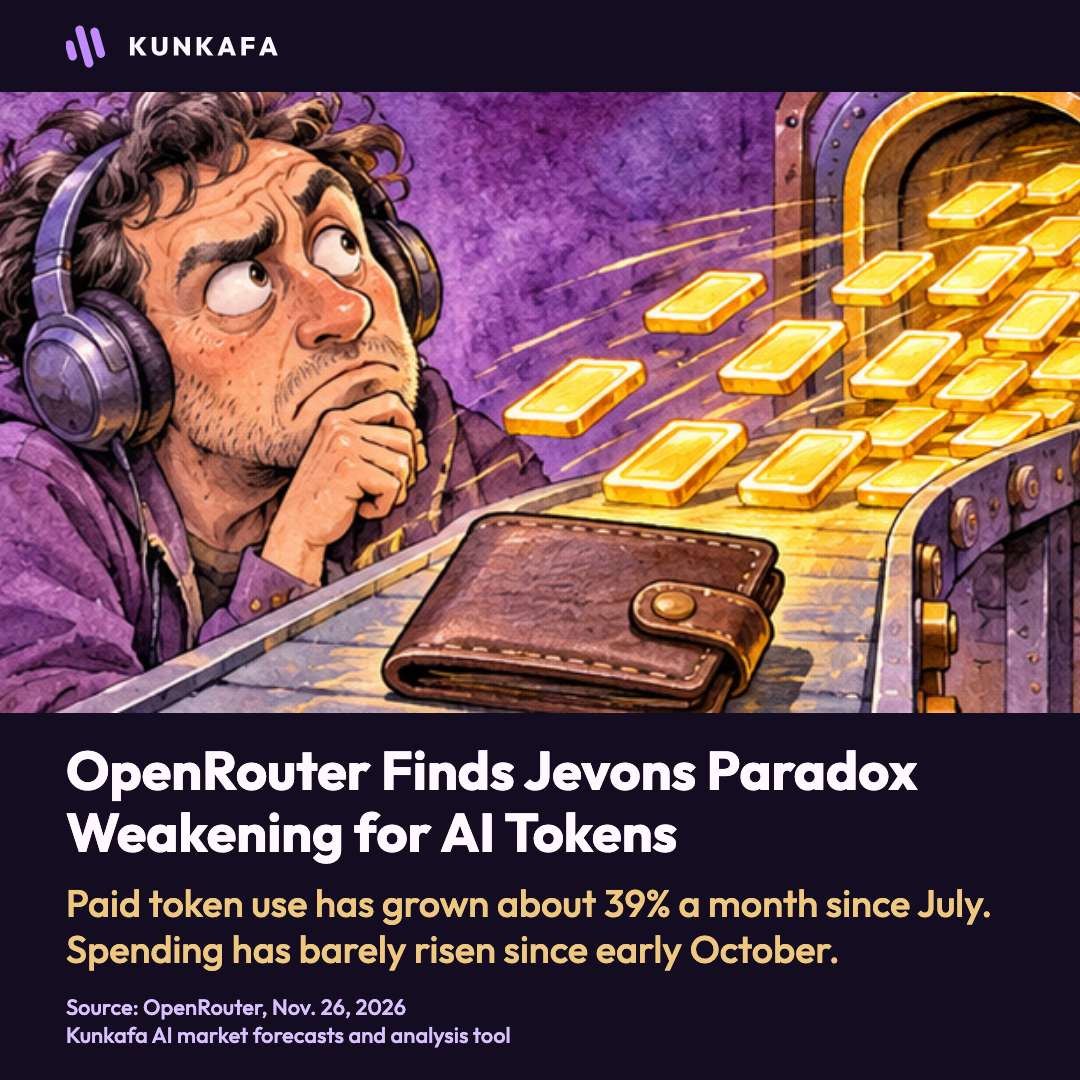
Paid token usage has grown about 39% a month since July, while spending on OpenRouter has barely risen since early October.

Kunkafa News · Published · 5 min read
 By Kareem FaridDiscuss with the author on X
Here is a visual story in summary

Key points
- Paid token use reached 44 times its January level, while spending rose to 7.6 times its starting level.
- The average price per token fell 83% on OpenRouter.
Customers on OpenRouter have barely increased their spending on AI models since early October, even as they keep buying more tokens. The platform reported on November 26 that paid token use had been growing about 39% a month since July. [1]
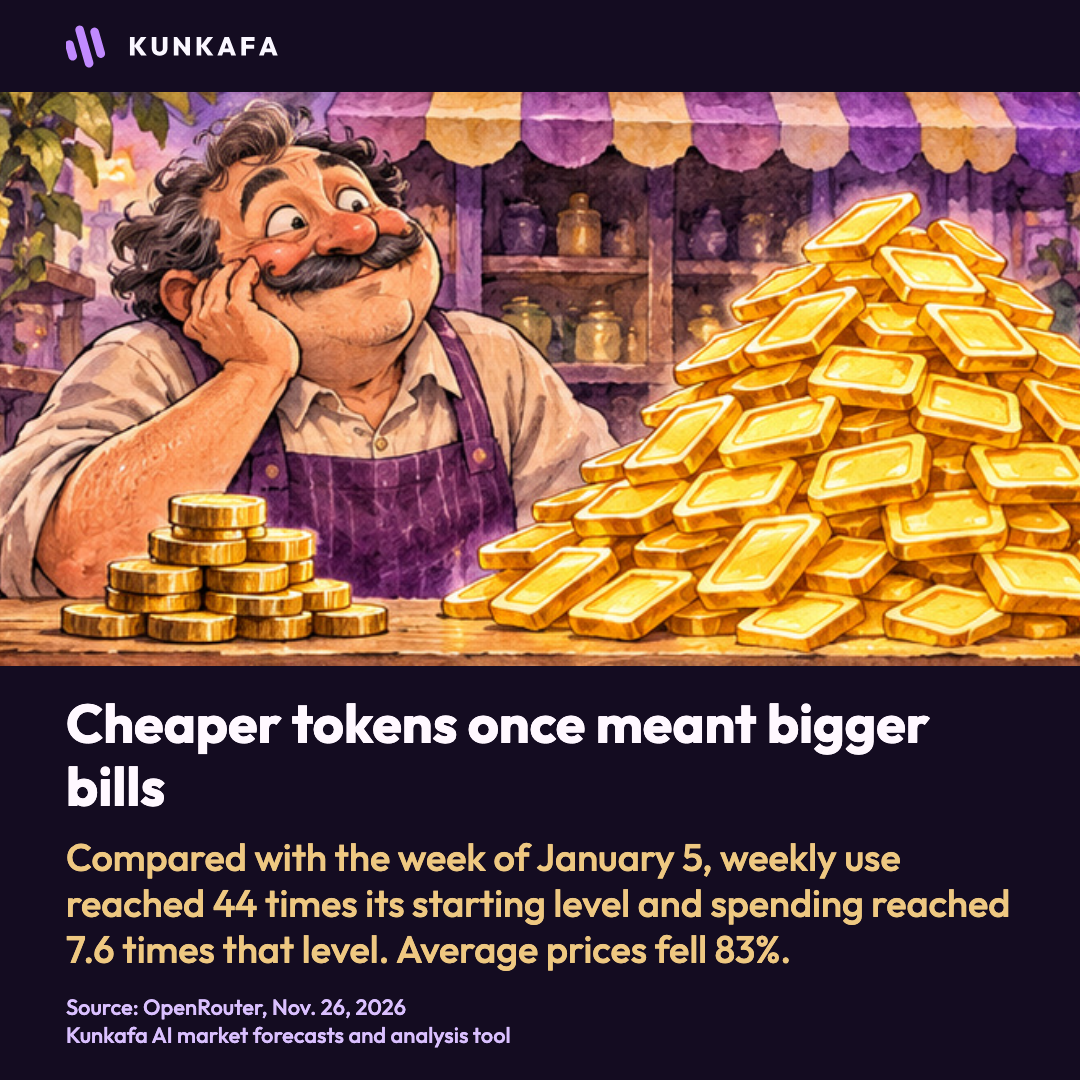
For much of 2026, lower prices went hand in hand with higher bills. Compared with the week of January 5, weekly token use reached 44 times its starting level and spending reached 7.6 times that level, as the average price per token fell 83%, according to OpenRouter. [1]
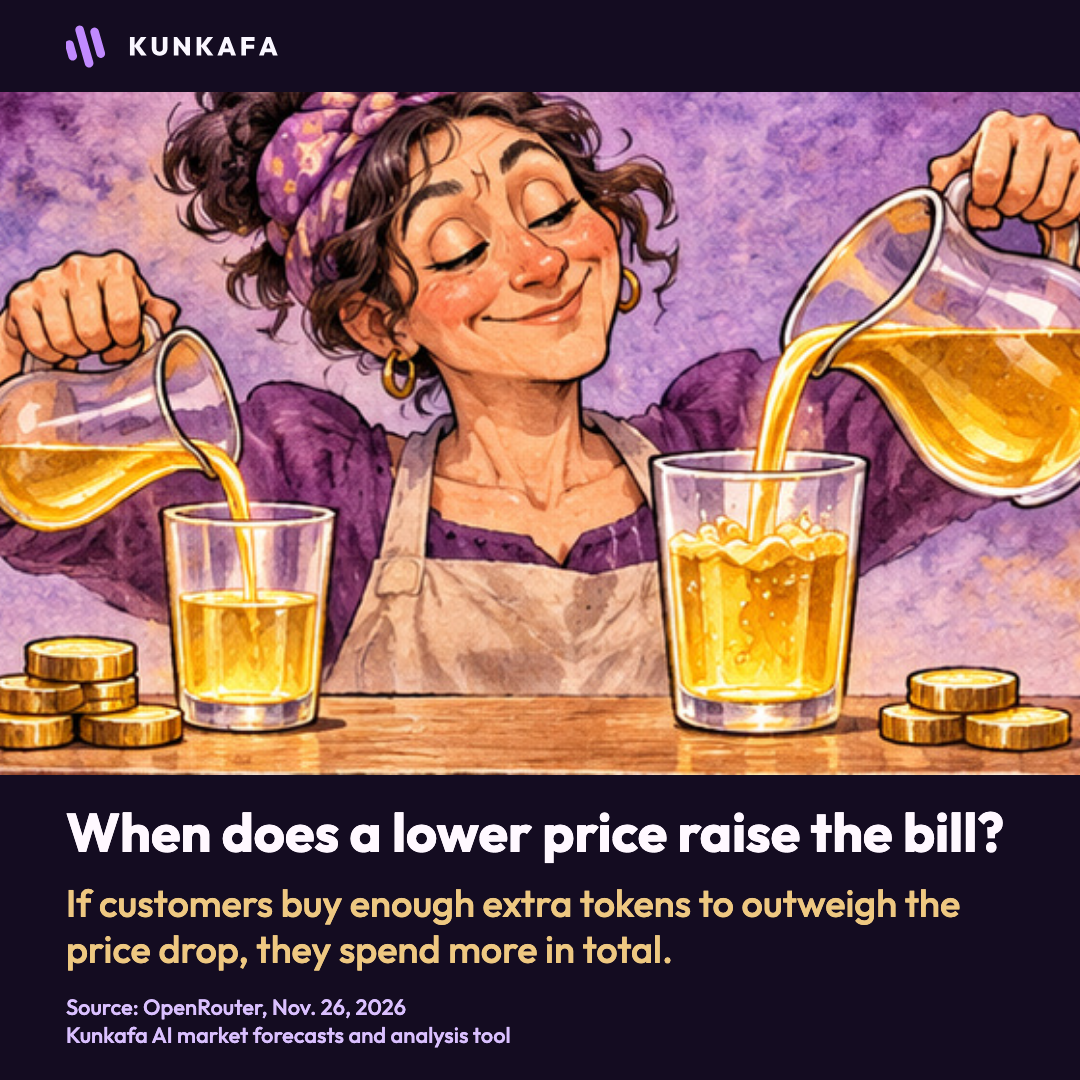
OpenRouter calls that pattern the Jevons paradox. Its test asks whether customers buy enough additional tokens when prices fall to push their total spending higher. [2]
Is Jevons Paradox holding? We looked into OpenRouter data on token usage, token prices, and overall spending across 2026 for an answer. We found that yes, Jevons paradox has held so far. But it has been weaker in recent months than it was at the start of the year. pic.twitter.com/qdhGLZ3eJw
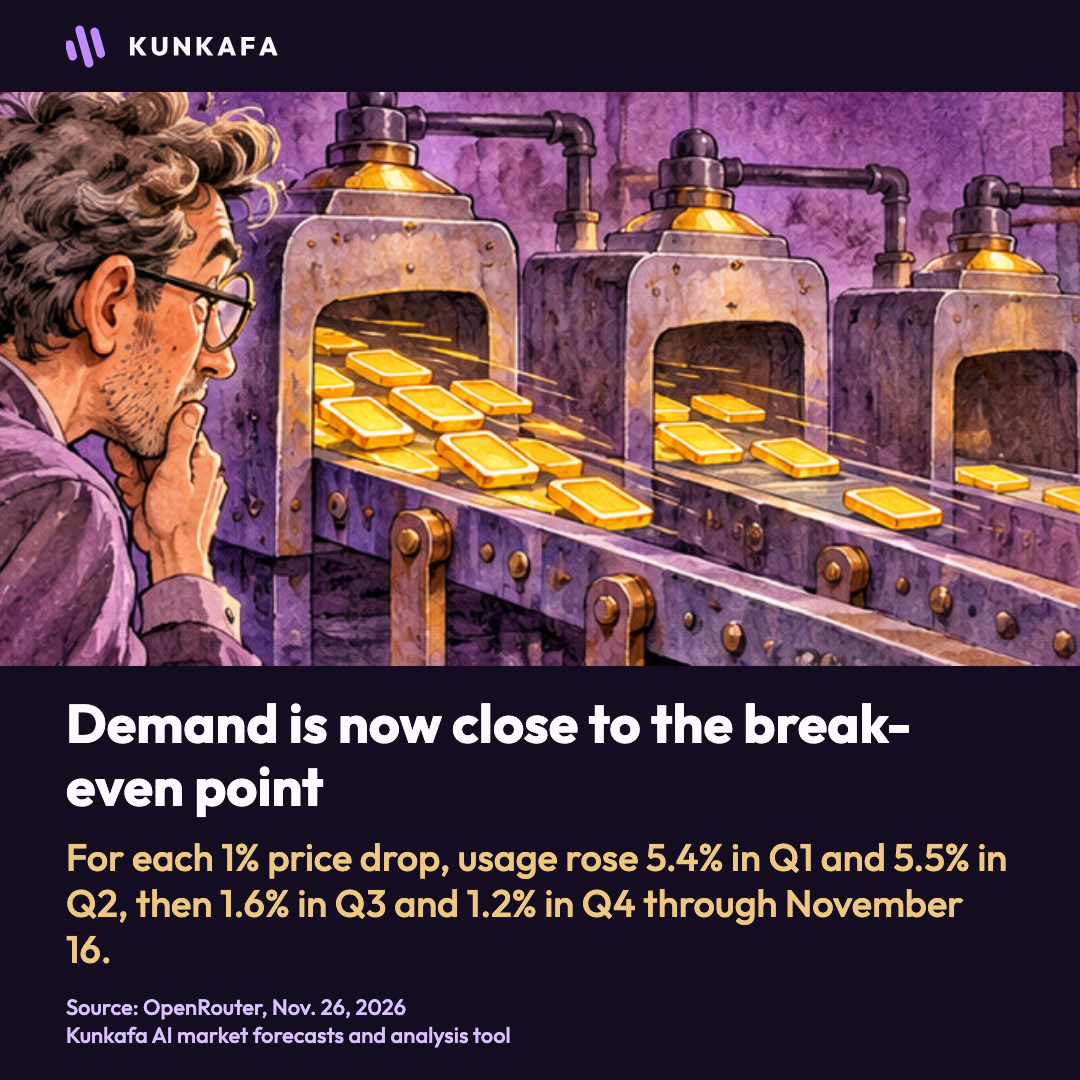
In the first quarter, each 1% decline in the average price corresponded to about 5.4% more tokens. OpenRouter put that figure at 5.5% in the second quarter, 1.6% in the third and 1.2% in the fourth through November 16, close to the 1% increase that would leave the bill flat. [1]

OpenRouter measured elasticity by comparing the four weeks before each quarter began with the last four weeks of available data for that quarter. [1]
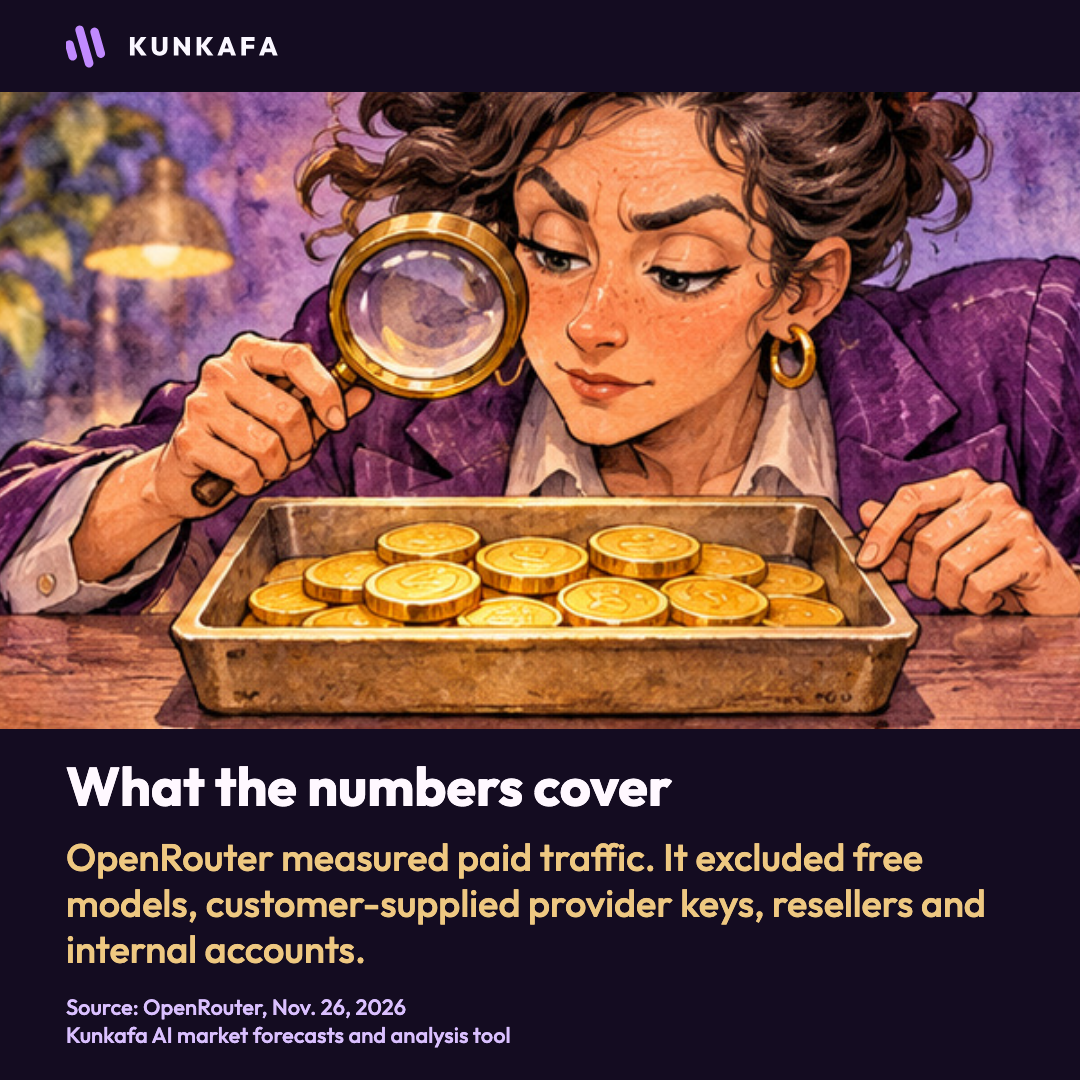
The sample covers paid traffic on OpenRouter. It excludes free models, customers using their own provider keys, resellers and internal accounts. [1]
The platform said large enterprises appeared more inclined to keep the savings than fast-growing companies built around AI. [1]
Perspectives on what cheaper AI tokens buy


In his November 26 response, Eugene Ng asked whether the slowdown would last long enough for the relationship between cheaper tokens and rising spending to break. [3]
Token bills also tell managers little about the quality of the work. On April 6, Linear’s Cristina Cordova likened ranking engineers by token spending to rewarding a marketer for buying an expensive advertising blimp that only flies over his house. [4]
Box CEO Aaron Levie made the case for stronger demand on August 13. He pointed to new DeepSeek and Grok releases that offered more capability at lower prices, making more work affordable. [5]
In January 2025, Microsoft CEO Satya Nadella argued that making AI cheaper and more accessible would encourage people to use much more of it. His prediction concerned usage, which has continued to climb at OpenRouter. [6]
OpenRouter has seen two earlier pauses. Its elasticity measure fell to about one in December 2024 and November 2025, then rose after the next round of model releases on both occasions. [1]
Sources: [1] OpenRouter, November 26, 2026 · [2] OpenRouter on X · [3] Eugene Ng · [4] Cristina Cordova · [5] Aaron Levie · [6] Satya Nadella
Kunkafa forecasts
Nasdaq 100
How far it could move, which way, by when, and how confident Kunkafa is.
Check the latest forecastsMore in Tech

Google Cloud lets GLM 5.2 train eight open models
Developers can use answers from Z.ai’s GLM 5.2 to train smaller Qwen and Gemma models on tasks of their choice.

US searches for PS5 Black Friday deals jump 200%
Google Trends counted at least 100,000 searches in the PS5 deals group in 24 hours. Nintendo Switch 2 and Apple each drew at least 50,000.

Thales in Exclusive Talks to Buy 51.6% of Lumibird
The proposed terms value Lumibird’s photonics business at about €440 million. Its medical lasers would go to a separate buyer.