Economy · Explainer
Milei Promised a Boom. Exports Rose 39%. Investment Fell 14%
Argentina sells far more abroad than before Javier Milei took office. At home, nearly one in three people in its urban poverty survey still lives below the line.

Kunkafa News · Published · 8 min read
 By Kareem FaridDiscuss with the author on X
Here is a visual story in summary
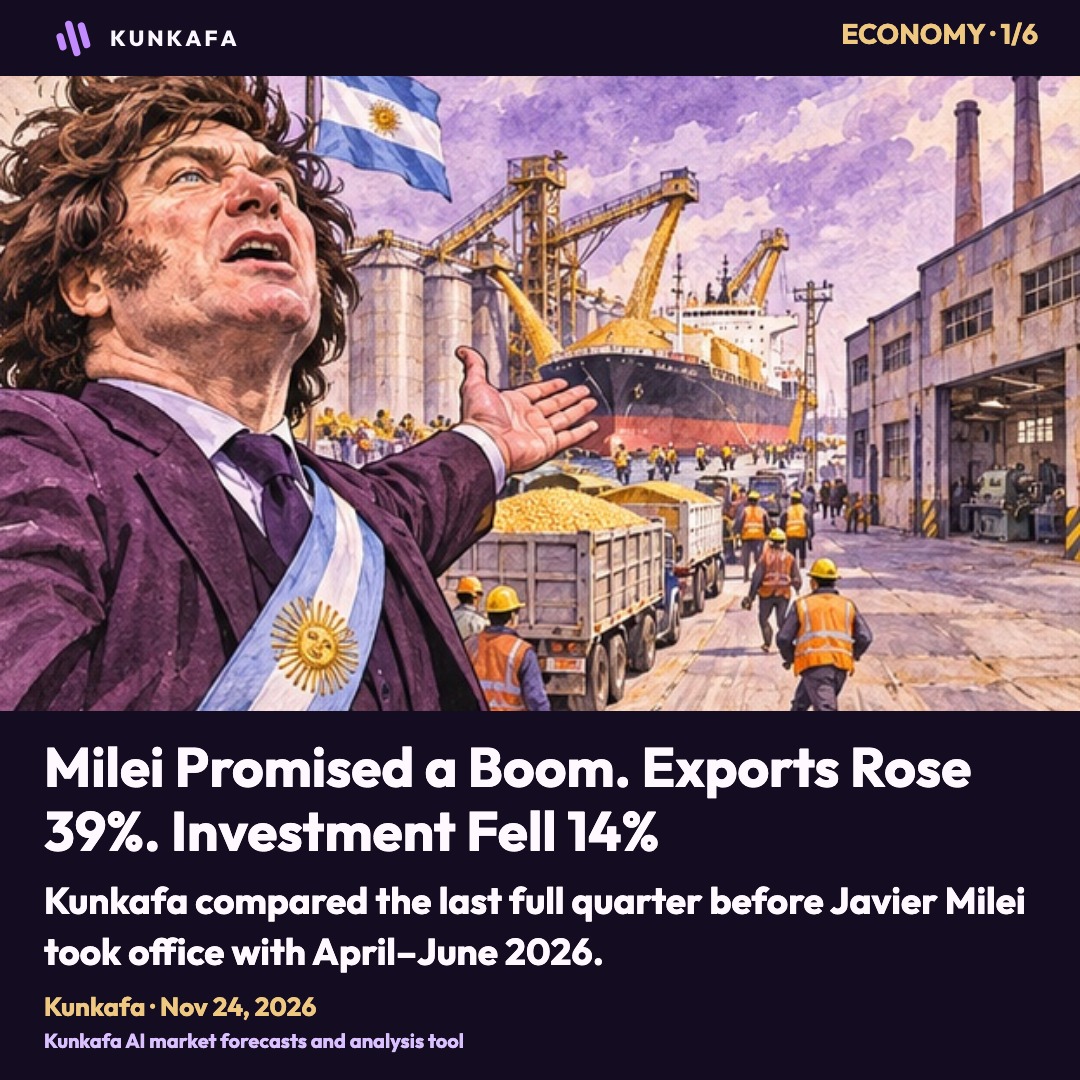
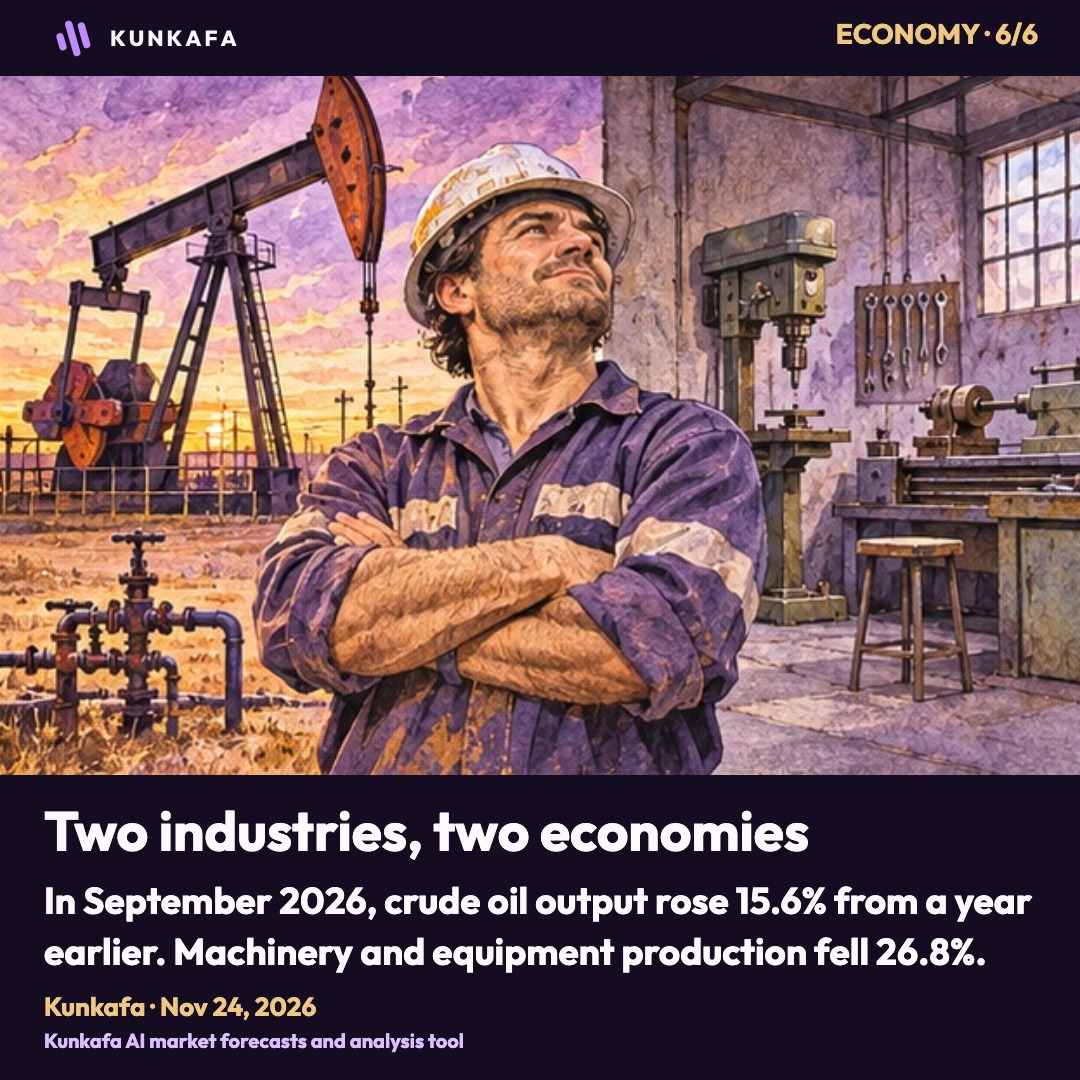
In April 2025 Javier Milei told an audience in Buenos Aires that Argentina had finished the work of stabilizing its economy. Now came the growth. By September 2026 the country’s oil producers were pumping 15.6% more crude than a year earlier. Its factories were turning out 26.8% less machinery and equipment. Which of them was living through Milei’s boom? [1] [2] [3]
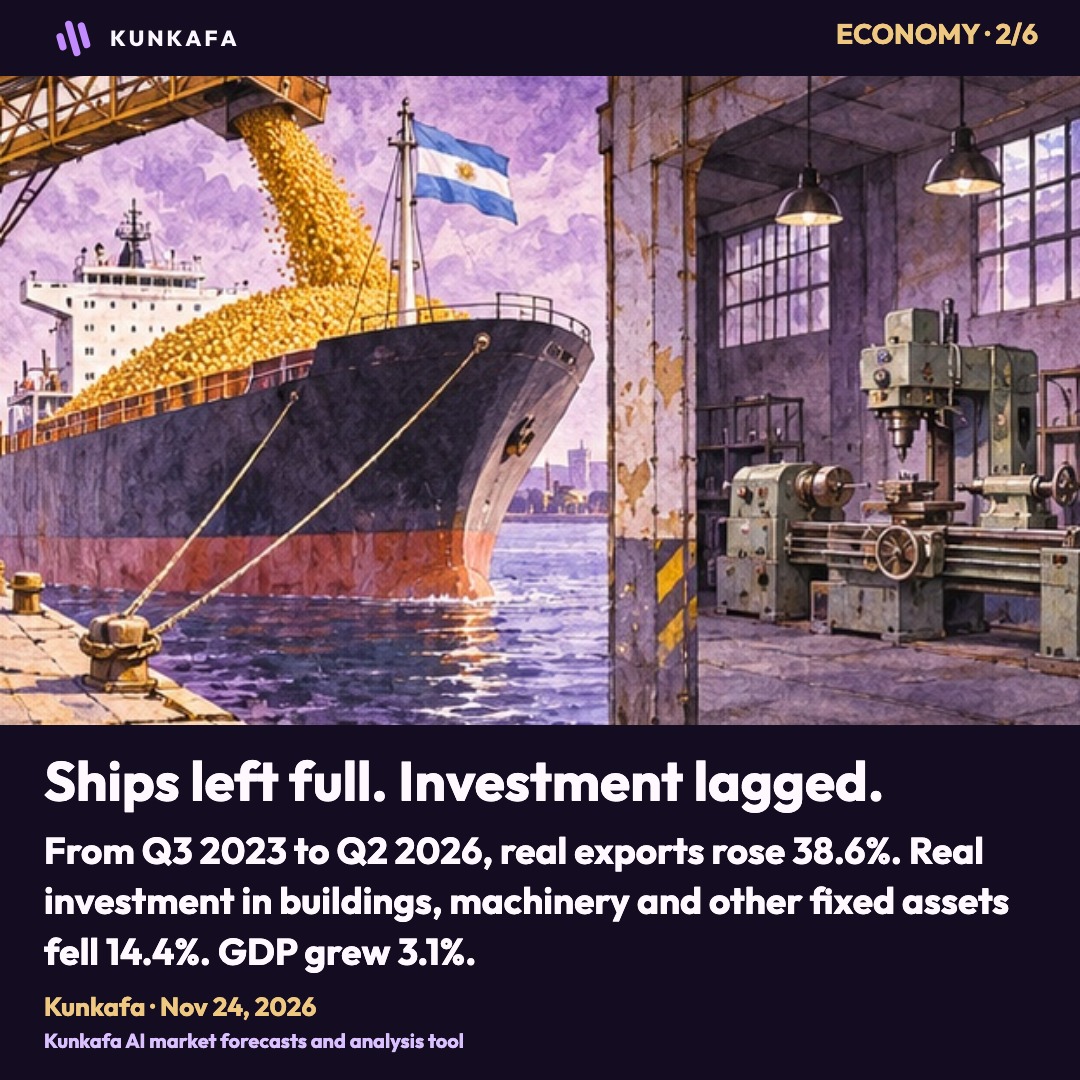
Kunkafa compared Argentina’s national accounts for the last full quarter before Milei took office, July–September 2023, with April–June 2026, the latest quarter available. Real exports of goods and services rose 38.6%. Real fixed investment fell 14.4%. The entire economy grew 3.1% over those eleven quarters. Argentina earns more abroad today. Building the next factory, and making life easier for the family that might work there, has proved harder. [4] [5]
What survived the rebound
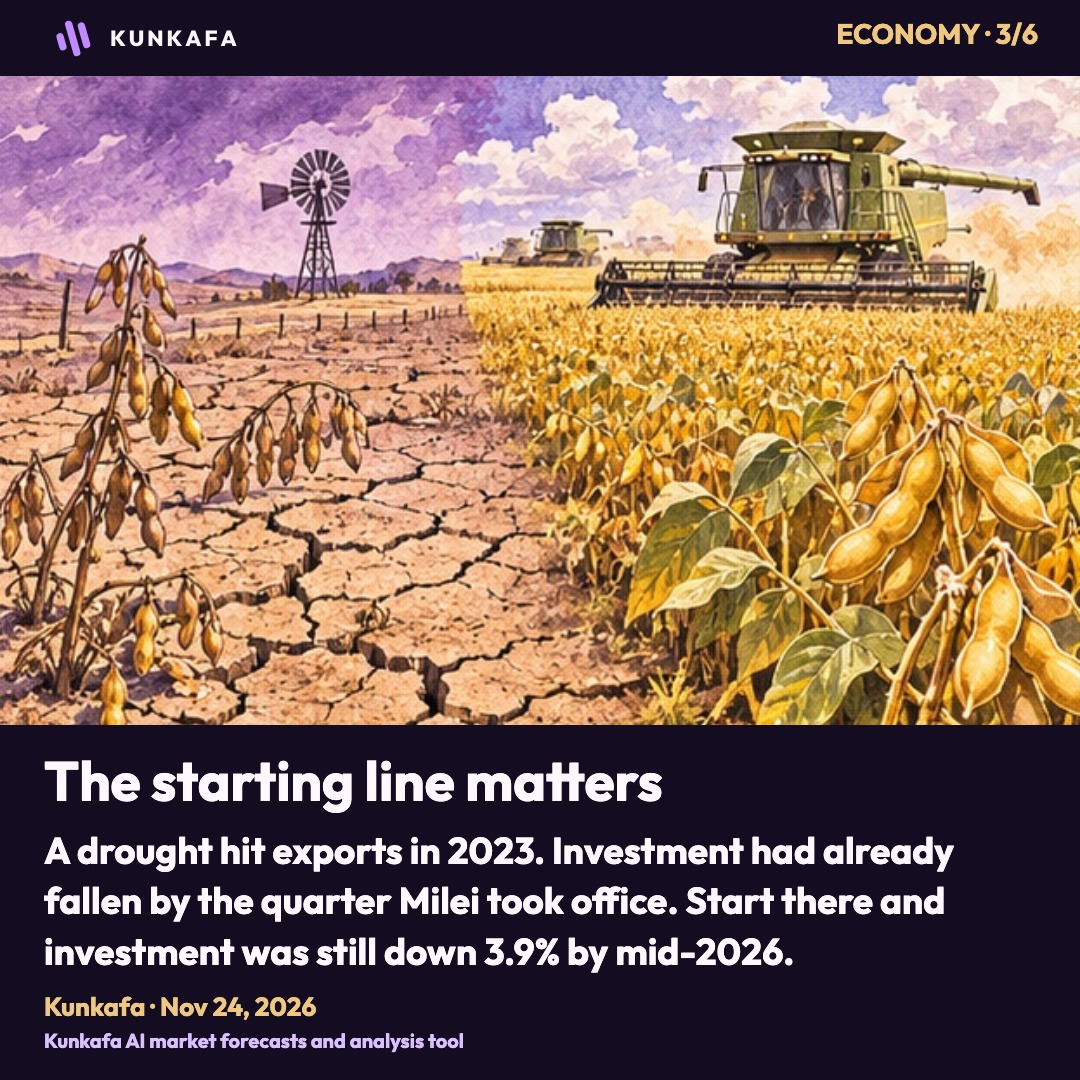
Real GDP shrank 1.4% in 2024 and rebounded 4.5% in 2025. Both numbers matter. A bounce from a recession can look spectacular even while investment is struggling to regain its old level. The export comparison also starts in a drought year. The IMF estimates the drought cost Argentina about $20 billion in agricultural foreign-exchange earnings in 2023. Better harvests account for part of the recovery that followed. [6] [7]
The date matters. By the fourth quarter of 2023, when Milei took office, investment had already dropped sharply. Using that quarter instead, the investment shortfall by mid-2026 narrows to 3.9% and the gain in GDP rises to 5.8%. The same verdict survives either baseline: sales abroad grew much faster than domestic demand, and fixed investment remained below both starting points. [4]
By the second quarter of 2026, GDP was 2.0% higher than a year earlier but 0.6% lower than in the preceding quarter, seasonally adjusted. Private consumption fell 2.4% on the quarter. Fixed investment dropped for a fifth straight quarter and was 11.1% below a year earlier. Had firms across the economy been rushing to expand, that is where their new buildings and equipment would have begun to show up. [5]
What 100 pesos would buy
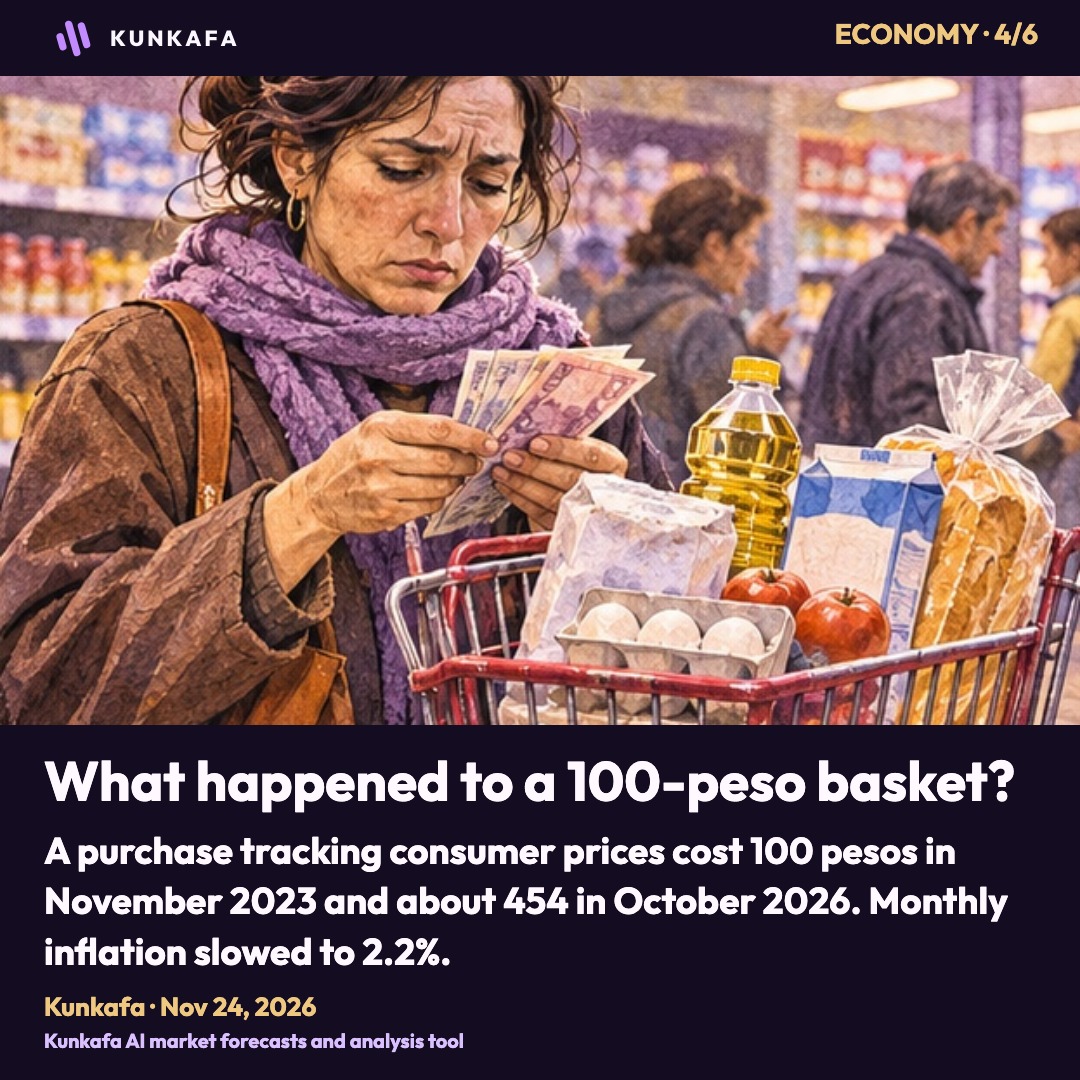
One way to see what changed at the till is to follow a purchase that tracked the national price index. Something that cost 100 pesos in November 2023, the last full month before Milei took office, would cost roughly 454 pesos in October 2026. That is what a successful disinflation can feel like after a price shock. Monthly inflation fell from 12.8% that November, and 25.5% in the handover month of December, to 2.2% this October. Prices were still 33.1% higher than a year earlier. September’s average wage index gained 34.3% over a year against 33.4% inflation, a real gain of about 0.7%. [8] [9] [10] [11] [12]
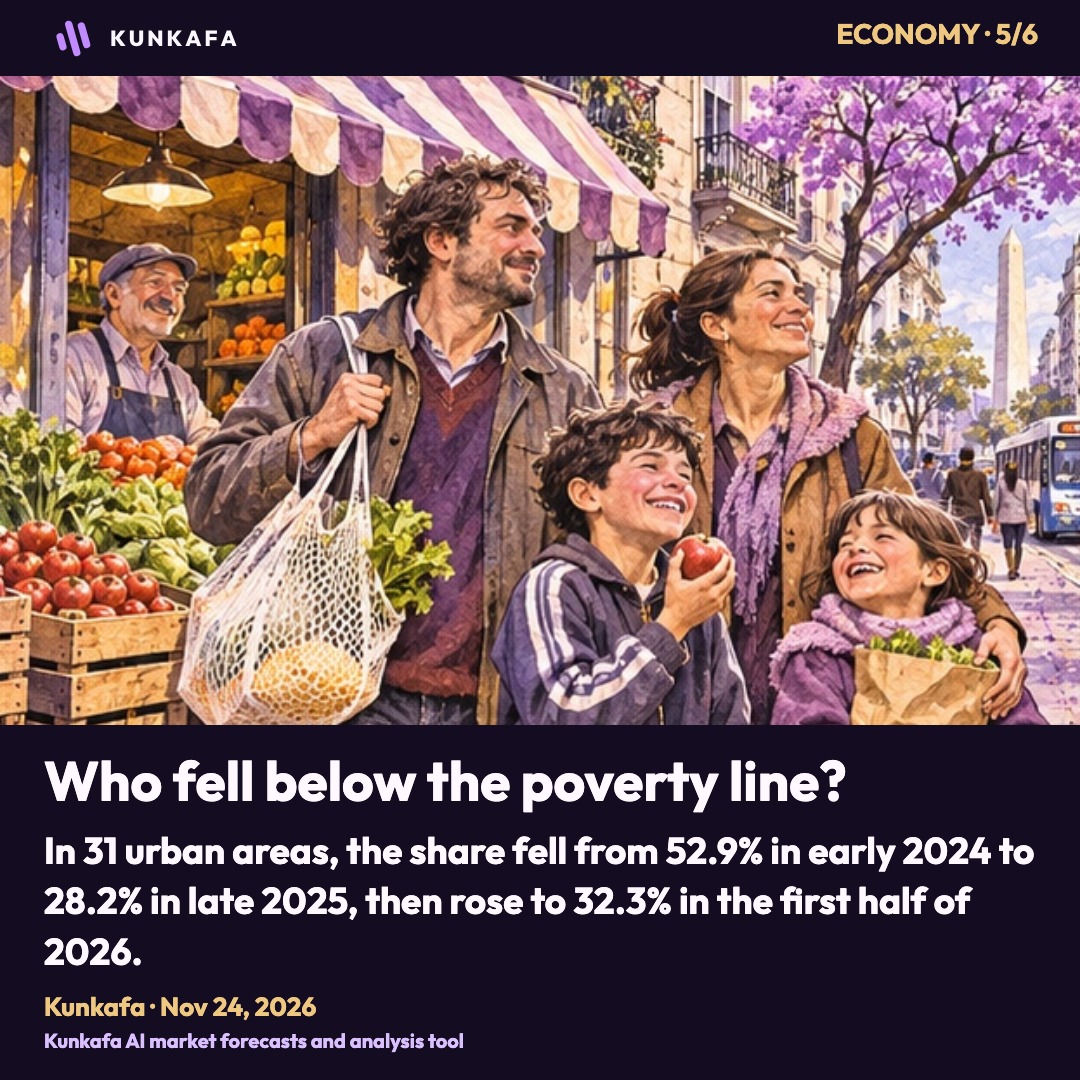
In the 31 urban areas surveyed by INDEC, poverty reached 52.9% in the first half of 2024, then fell to 28.2% in the second half of 2025, below the 41.7% recorded in the half-year of the handover. In the first half of 2026 the rate rose again to 32.3%. INDEC points to the gap between household income per person, up 11.5% in six months, and the basic basket used for the poverty line, up 19.6%. For children aged 14 and younger, the share living below that line reached 44.5%. The agency found no statistically significant change in overall poverty versus the same half of 2025. [13] [14]
One number helps explain why a better export season can pass many families by. In the second quarter, 45% of employed people in the survey worked informally, up from 43.2% a year earlier. Unemployment reached 7.9%, against 7.6% in the same quarter of 2025. Someone already working can remain below the poverty line when earnings lag the cost of the household basket. [15] [13]
#DatoINDEC Encuesta Permanente de Hogares (EPH) en 31 aglomerados urbanos: la pobreza alcanzó al 24,4% de los hogares y al 32,3% de las personas en el 1° semestre de 2026; y la indigencia, al 5,6% y al 7,5%, respectivamente https://t.co/AYeQnndT2Q pic.twitter.com/Si7QOO6j9A
A budget surplus and a bigger debt bill
Milei’s most durable change so far is visible in the Treasury’s cash accounts. The national public sector recorded its first annual surplus after interest since 2010 in 2024, at 0.3% of GDP. Over January–October 2026 it took in about 1.4% of GDP more than it spent before interest. After paying interest, it still had a surplus of about 0.4% of GDP. That reduces the need to finance day-to-day government spending. [16] [17]
Yet the Finance Secretariat put gross central-government debt at $489.6 billion at the end of October, up from $455.1 billion in December 2025. Its ledger explains how. Net financing, exchanges and repayments reduced the stock by $10.5 billion over those ten months. Valuation and opening-balance adjustments added $45.2 billion before smaller entries. The Treasury reports the whole stock in dollars. Half the debt being serviced normally was payable in local currency, so a move in the exchange rate changes its reported dollar value. A cash surplus measures this year’s receipts and payments. A creditor still needs the currency promised on yesterday’s bond. [18] The IMF’s broader general-government series puts gross debt at 80.1% of GDP in 2025 and projects 69.3% in 2026. That projection measures the burden relative to the size of the economy. [IMF debt series]
The peso still sets the terms
On December 7, 2023, the last trading day before Milei took office, the wholesale dollar cost 364.41 pesos. On December 13, after the devaluation, it cost 799.98. On November 20, 2026 it cost 1,575.96. A peso bought about 77% fewer US dollars than on the eve of his presidency. Those are official wholesale rates under different exchange regimes. The old rate came with restrictions on access to dollars. Argentina lifted restrictions on individuals and moved to a trading band in April 2025. Its economy still runs on pesos. [19] [20] [21] [22]
Gross central-bank reserves rose from $21.21 billion on December 7, 2023 to $49.55 billion on November 18, 2026. Argentina also secured a $20 billion IMF programme in 2025. Gross reserves include borrowed resources, so that increase cannot all be read as dollars earned or freely available to pay bondholders. At its May review, the IMF recorded that Argentina had missed the end-2025 target for accumulating net reserves. The distinction matters most when a debt payment falls due. [23] [20] [24]
What the export boom can buy
From January through October Argentina sold $87.33 billion of goods abroad and imported $62.76 billion, leaving a $24.57 billion merchandise surplus. October alone produced $3.39 billion. But of the $2.10 billion year-on-year rise in October exports, INDEC attributes $1.59 billion to prices and $509 million to volumes. Roughly three quarters of that month’s extra export dollars came from better prices. Those dollars help meet foreign-currency bills. They say less about how many new workers a manufacturer needs. [25] [26]
The next evidence comes in two stages. August’s monthly activity index rose 0.1% from July but stood 1.7% below August 2025. September’s estimate is due November 24 at 19:00 UTC, and INDEC schedules third-quarter GDP for December 16. Economists surveyed by the central bank in late October expected only 0.7% growth for 2026. That is their forecast. The test of Milei’s promise is whether investment starts rising again and wages buy more of the family basket. Argentina has shown it can earn export dollars and balance its books. The unresolved question is how much of that success reaches the factory floor and the checkout. [27] [28] [29] [30]
Farai Mazhindu credits Milei with confronting the causes of the crisis. Fiorella Isabel questions what disinflation delivered for workers. Brad Setser focuses on the tension between a stronger peso and dollar debt, while Jimena Zúñiga points to the scale of a proposed Patagonian gas investment.
Perspectives on who gained from Milei’s reforms


Kunkafa forecasts
Brent oil
How far it could move, which way, by when, and how confident Kunkafa is.
Check the latest forecastsMore in Economy

Dubai Founders HQ’s Member Companies Top Dh6bn in Value
In its first year the hub attracted more than 800 startups and 2,000 members, Sheikh Hamdan said. One of the hub’s first accelerators brought 23 startups face to face with five potential customers and produced three signed agreements.

New Year’s Eve Rooms Hit $749 in Manhattan, $82 in Jeddah
Across 13 cities, the biggest price jumps tell only half the story. A Paris hotel panel has fewer reservations than a year ago, while in El Gouna the price of a night can come with a five-night commitment.

UN Study Finds 13-Fold GDP Per Capita Gap by Knowledge Rank
In Dubai, UNDP researcher Hany Torky explained the divide between countries at opposite ends of the Global Knowledge Index. Jamal bin Huwaireb put the focus on researchers.