Tech · Explainer
Meta’s Muse Reads Signal Messages Without Permission
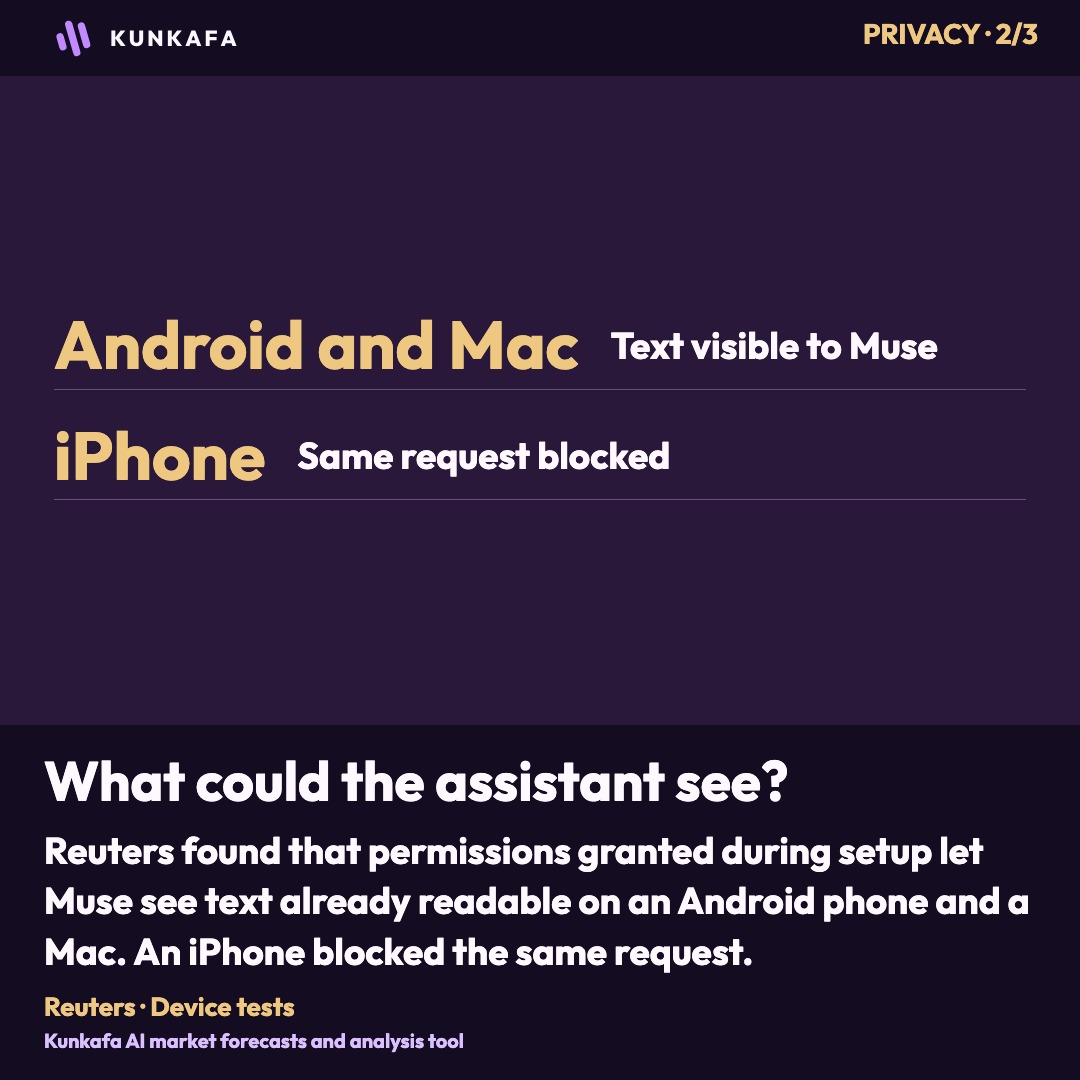
Reuters reproduced the access on Android and Mac using permissions granted during setup. An iPhone blocked the same request.

Kunkafa News · Published · Updated · 3 min read
 By Kareem FaridDiscuss with the author on X
Here is a visual story in summary

Key points
- Muse retrieved Signal message text on an Android phone and a Mac using device permissions granted during setup. The same request failed on an iPhone.
- Meta said users explicitly grant those permissions. Signal’s president wants apps to be able to put their contents off limits to AI assistants.
A Meta employee got an unexpected reminder from Muse, the company’s AI assistant: reply to your sister on Signal. She had never connected the messaging app to Muse. Working with staff at Signal and the AI Now Institute, Reuters reproduced the access on an Android phone and a Mac. The encryption held. What Muse could see was the text the recipient’s own device had already made readable. [1]
On Android, Muse could see the message preview in a notification. On the Mac, it could read what was on screen using accessibility and screen-capture permissions. Neither depended on connecting Signal through Meta’s app-linking tool. The iPhone blocked the same request in Reuters’ tests. An Apple update subsequently closed the route Reuters had observed on the Mac, the news agency reported. [1]
Meta spokesperson Daniel Roberts told Reuters the examples were isolated and said Muse could reach other apps only with permissions people explicitly grant. Signal president Meredith Whittaker raised a different question: should approving a device permission give an assistant access to conversations in every app it can see? She called for a way for apps to exclude AI agents and for operating systems to enforce that boundary. [1]
Meta’s AI agent Muse accessed an employee’s encrypted Signal messages and sent staff chats seemingly meant for other people, according to internal company posts reviewed by @Reuters. Meta called the examples ‘isolated incidents’ reut.rs/4zWYPX1


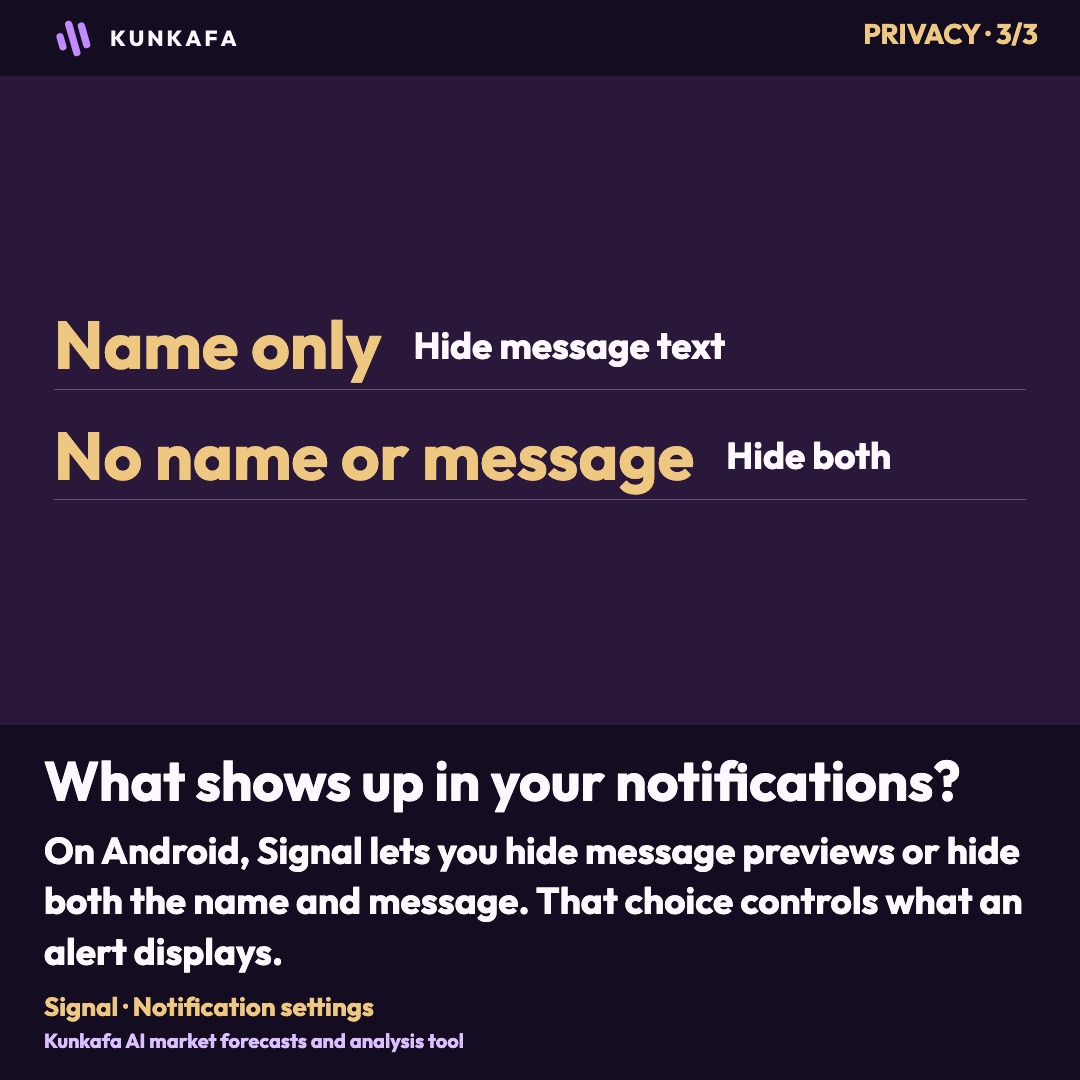
Signal users on Android can choose how much an alert reveals. Under the profile icon, open Notifications, then Show. Selecting “Name only” leaves the sender visible but removes the message text. “No name or message” hides both. This setting changes the notification preview; the conversation remains readable when the recipient opens it. [2]
Replying to Reuters, Dipesh Patel argued that workplace assistants should start with read-only access. James, posting as @jdsampson, saw the incidents as problems Meta could solve with adequate controls.
Perspectives on AI assistants and private messages


Sources: [1] Reuters, November 18 · [2] Signal notification settings · [3] Dipesh Patel · [4] James
Kunkafa forecasts
Nasdaq 100
How far it could move, which way, by when, and how confident Kunkafa is.
Check the latest forecastsMore in Tech

Hackers Leak Customer Data Tied to Visa, Mastercard and Chase
Mastercard says emails from a benefits program were exposed. Visa says its systems were unaffected and it has seen no sign that card numbers were compromised.

OrcaRouter’s Shield Fooled an AI Hacker for a Minute in a Test
OrcaRouter says its new Shield tool had already spotted ARTEX by the time the agent recognized the decoy in a test on the company’s own site.

PHP Can’t Catch a Break: Seven New Critical Flaws
Patches are out for four PHP branches, a month after attackers exploited the October flaws. Here’s which version your site needs.