Filings and reports · Explainer
HP Shipped 29% Fewer PCs. Its PC Revenue Rose 14%
Business PCs drove sales while memory costs squeezed margins. Tariff refunds helped HP beat earnings estimates, and the shares rose after hours.

Kunkafa News · Published · 4 min read
 By Kareem FaridDiscuss with the author on X
Here is a visual story in summary
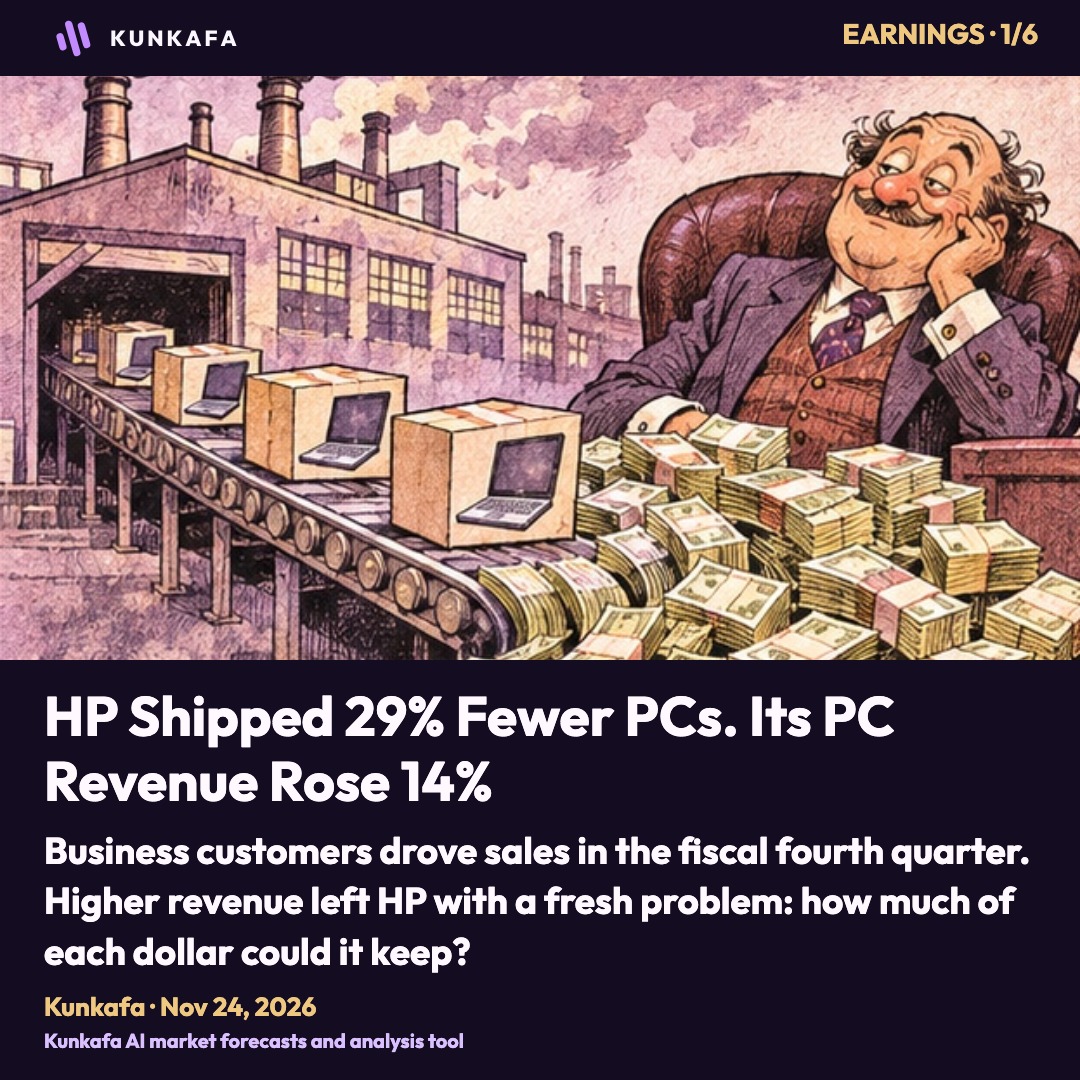

HP shipped 29% fewer personal computers in its fiscal fourth quarter and still collected 14% more revenue from its PC division. Business customers accounted for the growth. Revenue from commercial PCs jumped 23%, while consumer PC sales fell 7% in dollar terms. [1]
HP shares jumped as high as $32.79 in early after-hours trading on November 24, up 17.4% from the $27.94 close. Most of that gain evaporated in minutes. At 21:32 UTC the shares traded at $28.99, up 3.8%. [3] [4]
The PC and printer maker reported $16.0 billion in total revenue and adjusted earnings of 83 cents a share. Analysts expected $15.42 billion and 75 cents, according to Wells Fargo Advisors’ earnings calendar. [1] [2]
What did HP earn on those PCs?
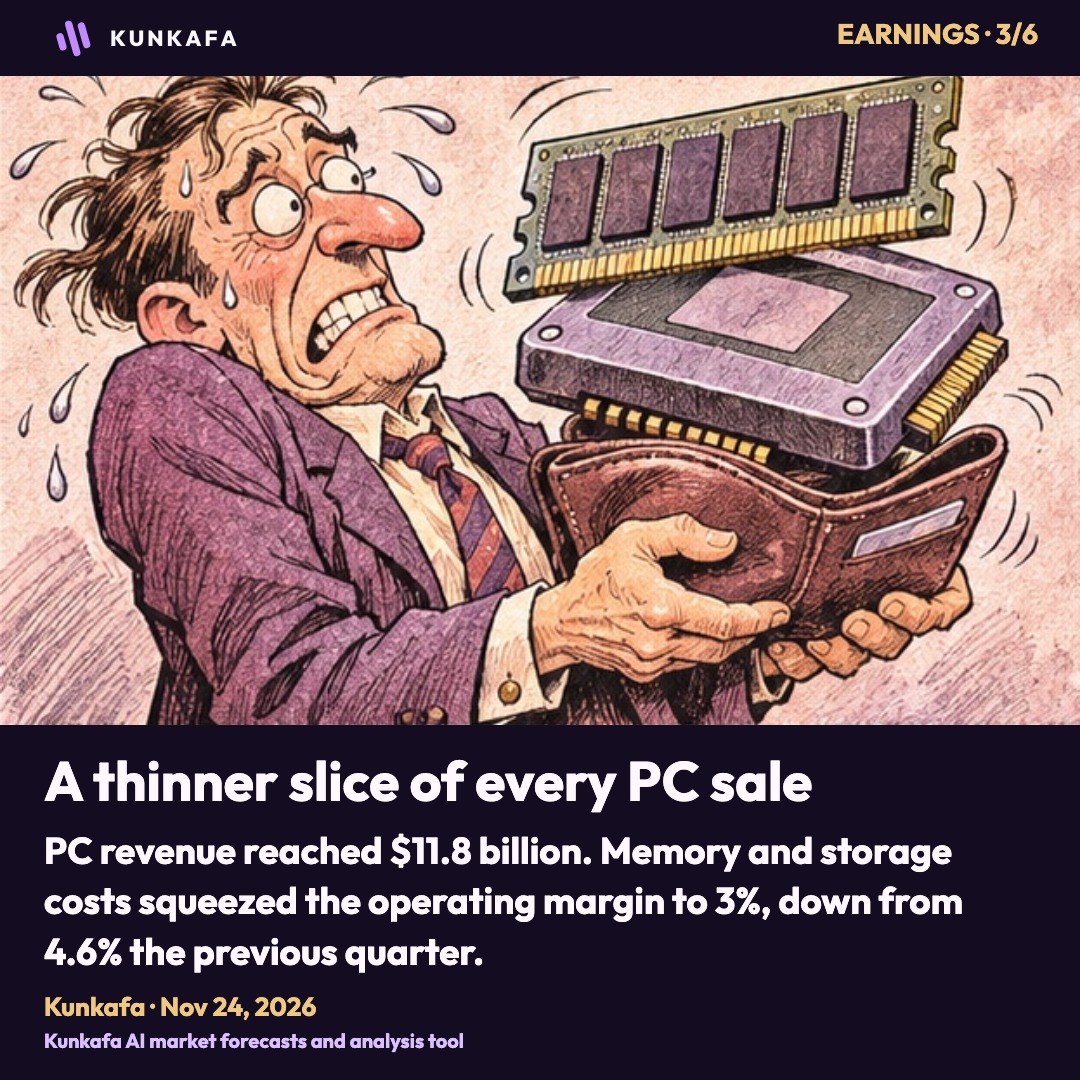
Nearly six in ten PCs HP shipped were AI PCs, according to interim CEO Bruce Broussard. The PC division generated $11.8 billion in revenue, yet its operating margin was just 3%, down from 4.6% in the previous quarter. Broussard singled out the cost of memory and storage. [1] [5]
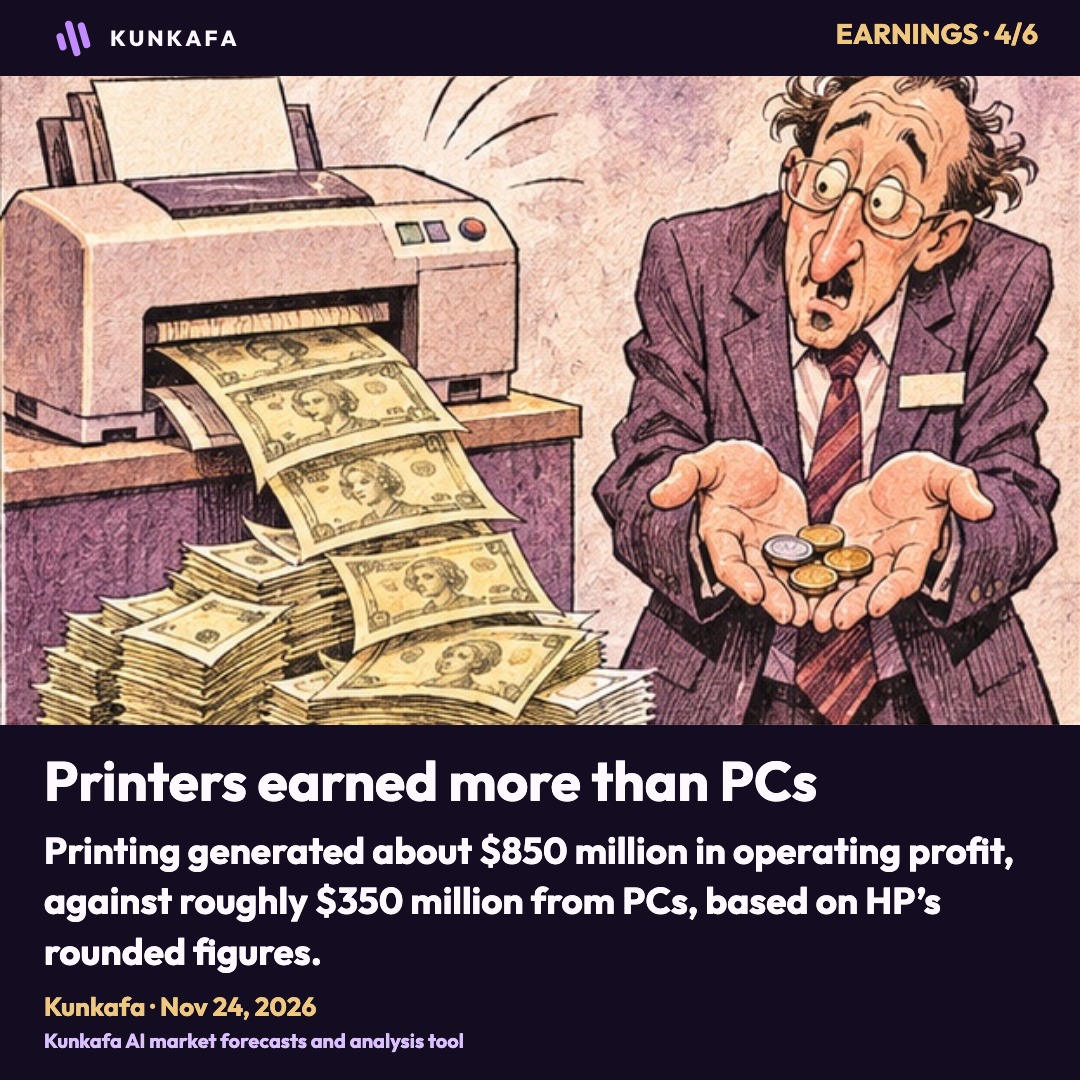
Printing illustrates the difference a margin makes. At a 19.7% operating margin on $4.3 billion of revenue, the division earned about $850 million from operations. That compares with roughly $350 million from PCs, calculated from HP’s rounded segment figures. [1]
The tariff refund was worth more than the earnings beat
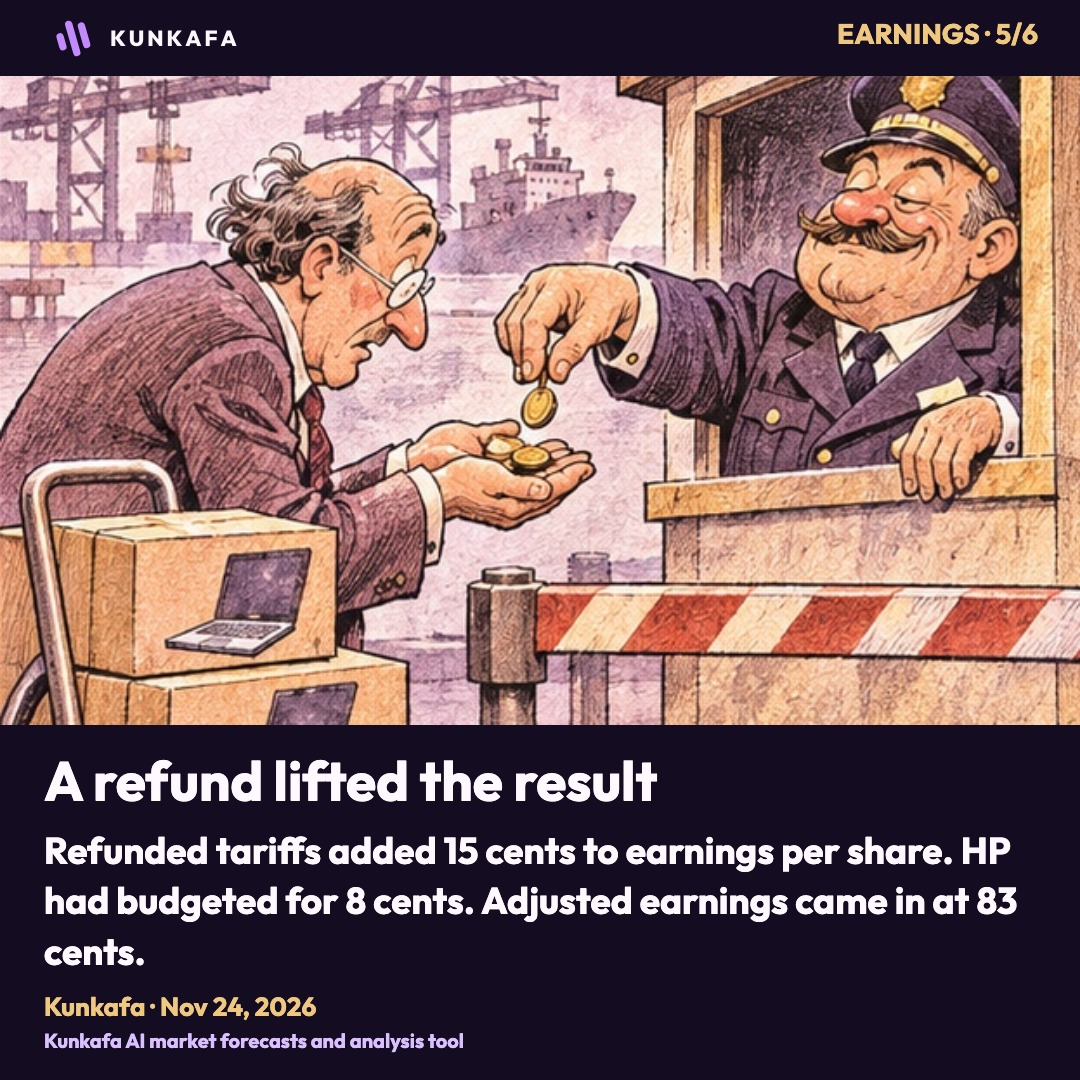
Adjusted earnings fell from 93 cents a share a year earlier even as revenue rose 9.3%. Tariff refunds added 15 cents to quarterly EPS. HP had budgeted for eight cents. That extra seven cents exceeded the four cents by which adjusted earnings beat the top of HP’s own guidance. Reported earnings held at 84 cents a share. [1]
A change in accounting matters for next year
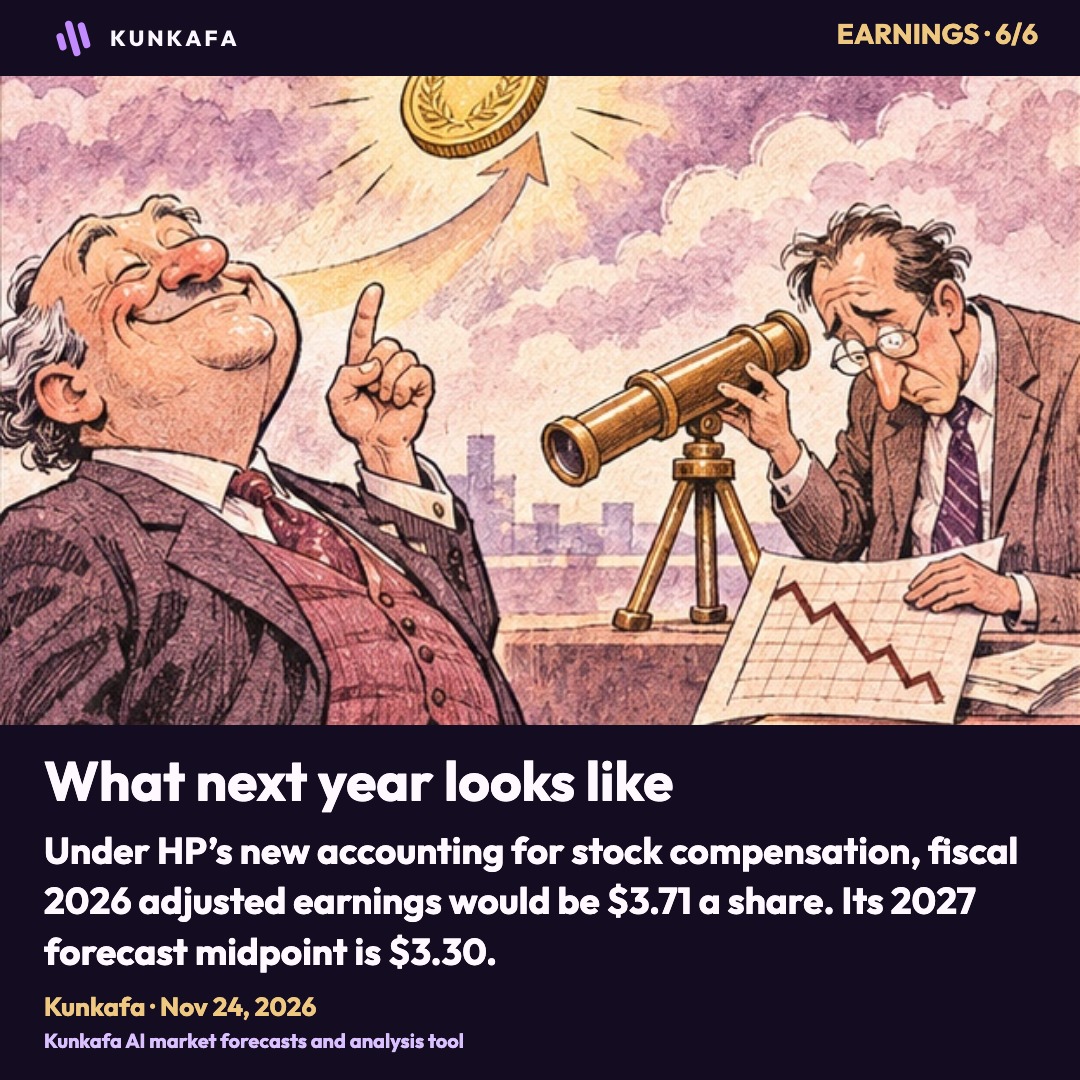
HP expects adjusted EPS of $3.15–$3.45 for fiscal 2027 and 66–76 cents for the first quarter. It is changing the calculation to exclude share-based compensation. Applying that rule to 2026 would add 38 cents to its reported $3.33 of adjusted EPS, bringing it to $3.71. The new guidance midpoint of $3.30 implies an 11% decline on that comparable basis. [1]
The cash outlook also points lower. HP expects $2.9 billion to $3.1 billion of free cash flow in 2027 after $3.3 billion in 2026. Its board nevertheless raised the quarterly dividend from 30 cents to 31 cents a share. [1]
Two readings of the quarter surfaced on X. Max Winnor watches unit growth and pointed to the 29% decline. The investor behind GJCapital Research focused on the mix of sales. Most growth came from the PC division, where HP keeps less of each dollar.
People buying memory described a different calculation earlier in November. One sold used RAM for ₹19,000 after paying ₹8,100 for it in 2023. Another upgraded to 32 gigabytes and said the price ruled out 64. A third had waited months for a price drop.
Perspectives on HP’s quarter and the cost of upgrading a PC


Sources · [1] HP earnings release · [2] Wells Fargo Advisors earnings calendar · [3] Nasdaq after-hours trades · [4] HPQ regular-session close · [5] HP third-quarter results
Kunkafa forecasts
S&P 500 Index
How far it could move, which way, by when, and how confident Kunkafa is.
Check the latest forecastsMore in Filings and reports

Dell’s $132B AI Backlog Tops Last Year’s Total Sales
Dell booked $60.2 billion of new AI orders in one quarter. Its infrastructure business now generates 91% of the operating profit across its two divisions.

How to Check Whether Apple’s Buybacks Shrink Its Share Count
Apple bought back 296.7 million shares in fiscal 2026. Its outstanding count fell by 241 million.

We Read 177 Filings. SpaceX and Intel Drew the Most Buyers
Among 33 widely held stocks, SpaceX and Intel led additions as both fell. Apple led trims while rising 15%.