Markets · Explainer
Goldman’s Panic Gauge Hits 9.8 Out of 10. Where’s the Bottom?
Hedge funds have pulled back. Other investors still hold enough stock to feed another selloff, even if Wall Street bounces on Monday.

Kunkafa News · Published · 4 min read
 By Kareem FaridDiscuss with the author on X
Here is a visual story in summary
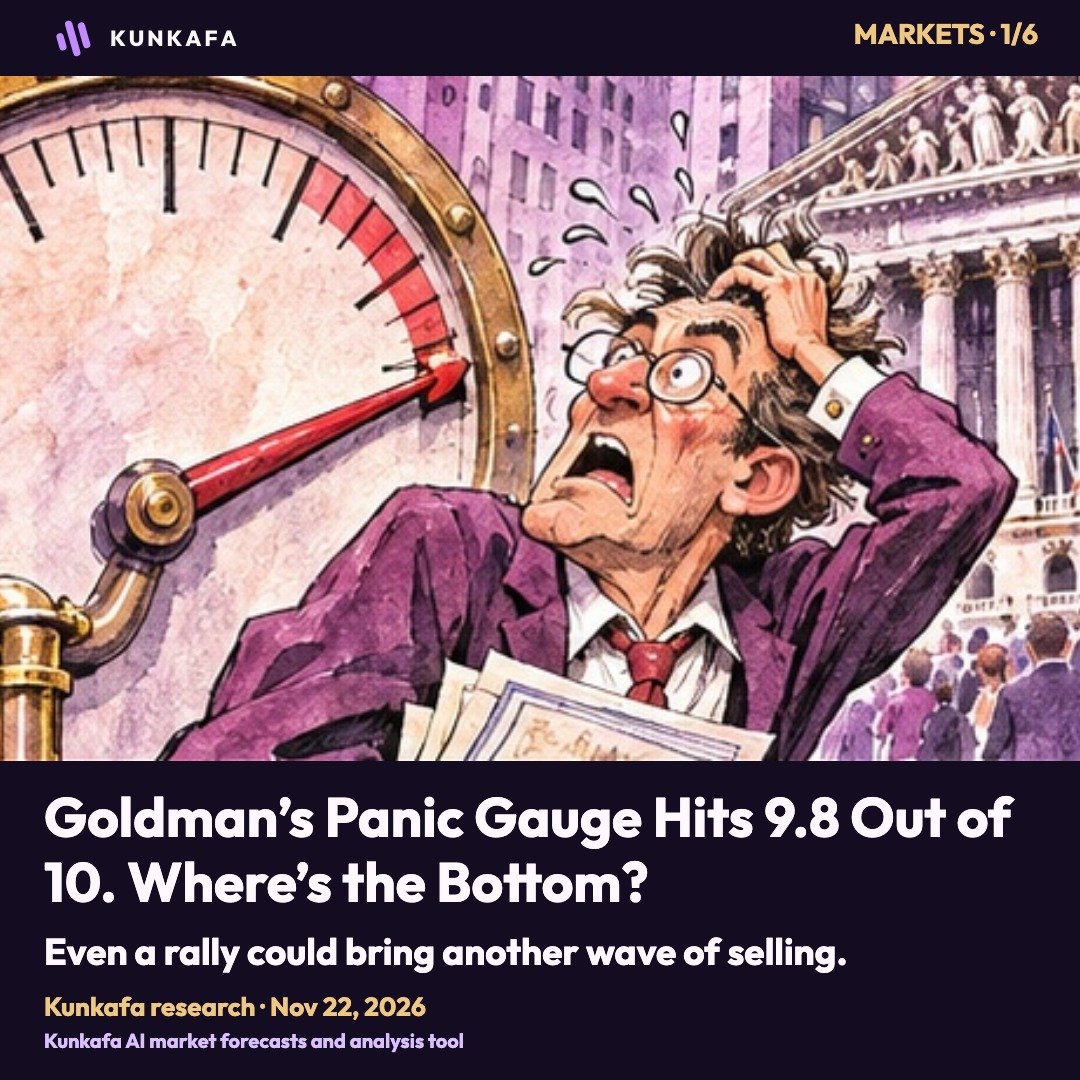
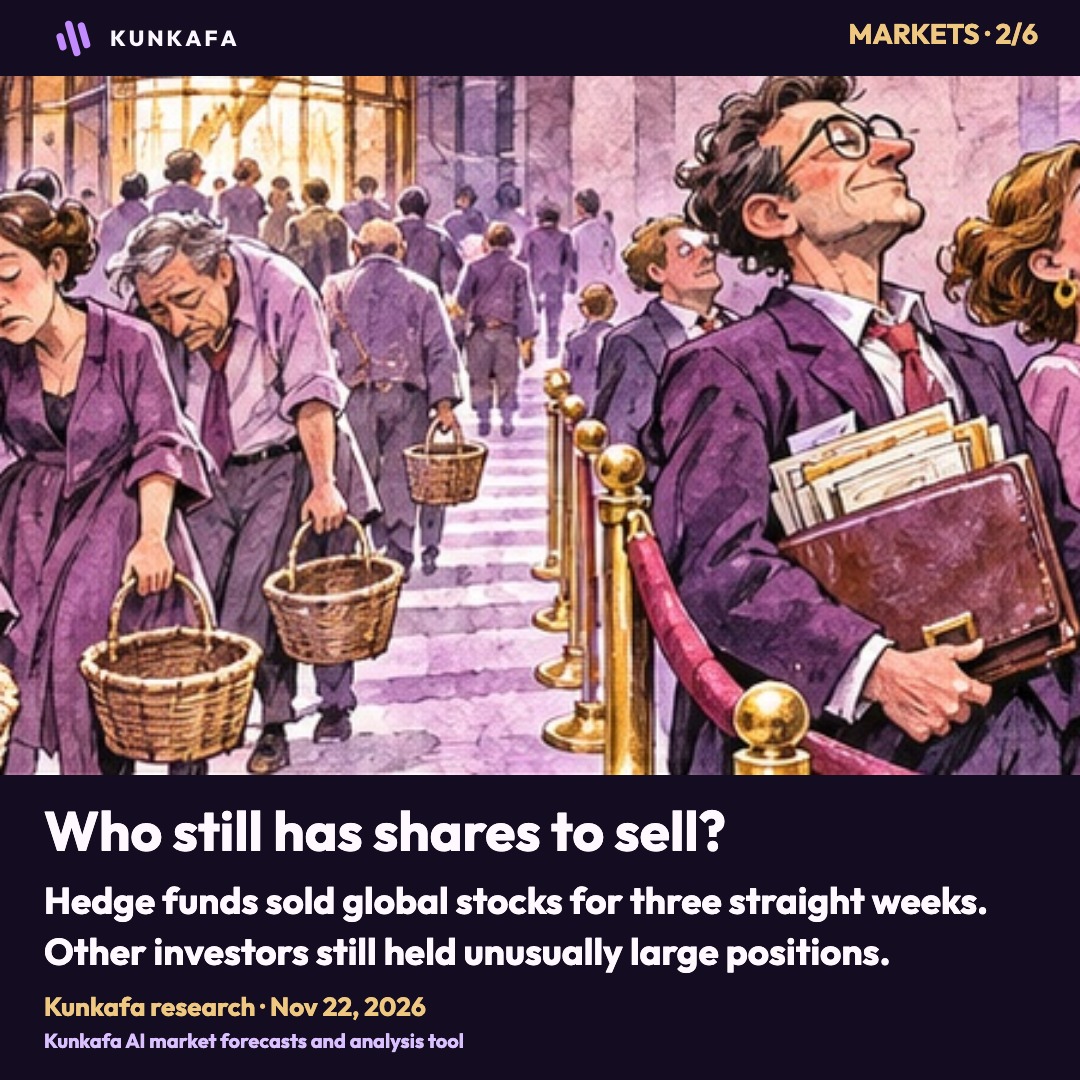
Goldman Sachs traders saw two different markets on Friday. In one, hedge funds had sold global equities for three weeks running and the bank’s volatility panic gauge had reached 9.8 out of 10. In the other, investors still held unusually large stock positions. In a Sunday note to clients reported by Bloomberg, the desk saw room for a short-term rebound and a reason it could fizzle: plenty of investors still had shares to sell. [1]
Who could still be selling on an up day?
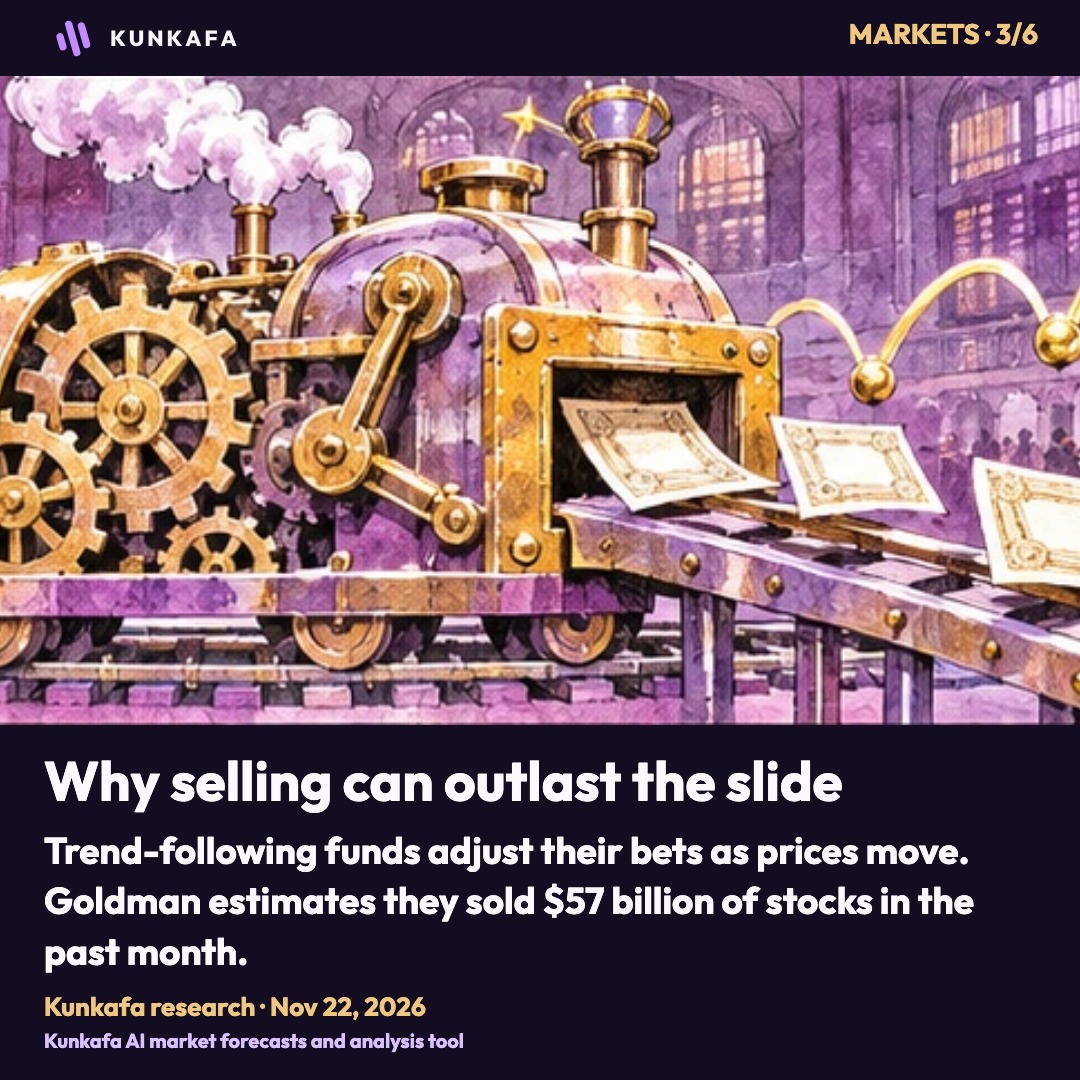
Funds that follow price trends can still be cutting positions when prices start to recover. Goldman estimated on Friday that these traders had sold $57 billion of equities over the preceding month. In US stocks, their bets on declines exceeded their bets on gains by $19 billion. The first number measures what they sold over time. The second measures how they were positioned at the end. [2]
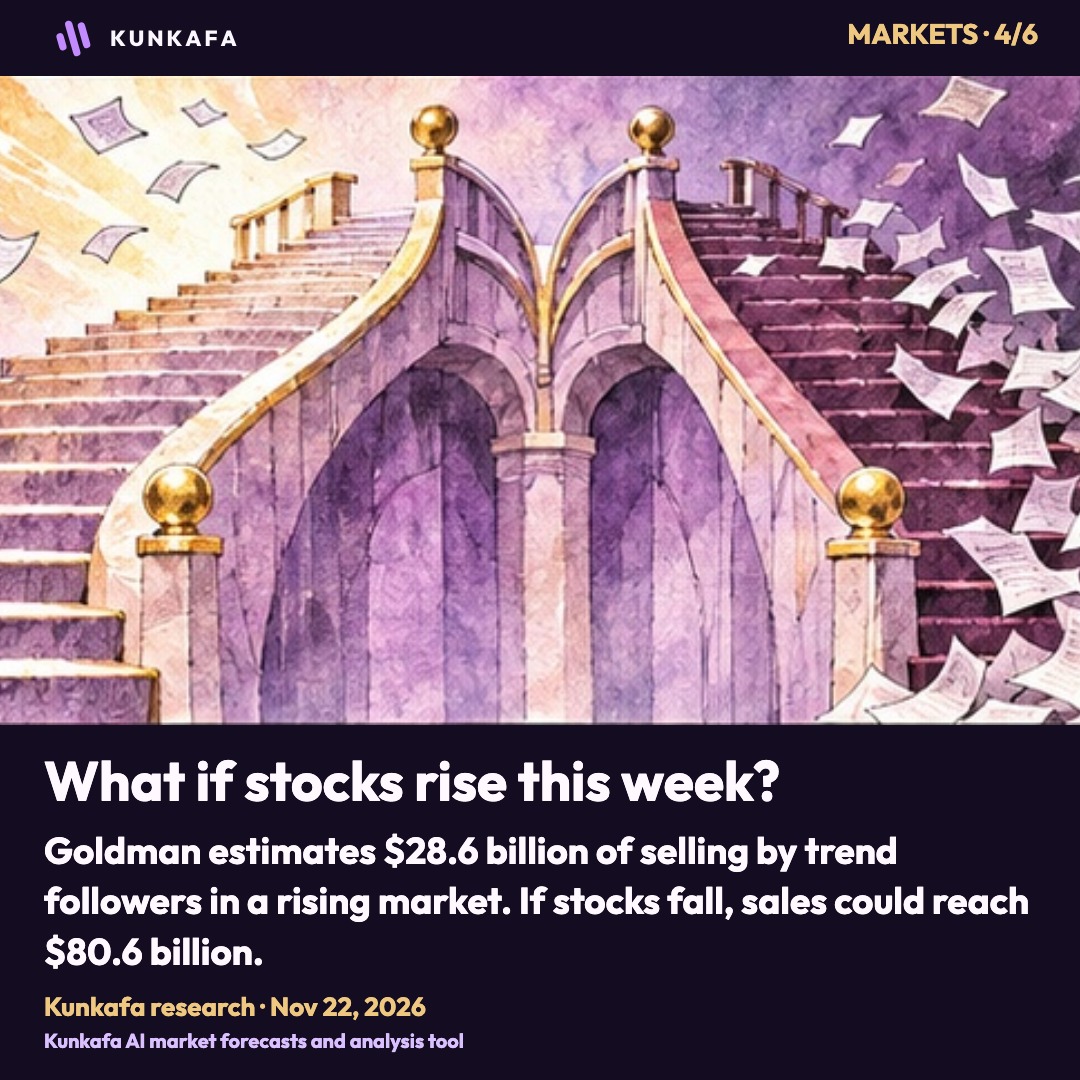
In all three of Goldman’s scenarios for the coming week, trend followers remained sellers. Even a rising market could draw $28.6 billion of sales. If prices fell further, the desk estimated sales of up to $80.6 billion. These are conditional estimates of trading flows. They give no target for where the S&P 500 might close. [2]
Goldman Sachs trading desk estimates reported by Bloomberg on November 20, 2026. Positive values show sales.
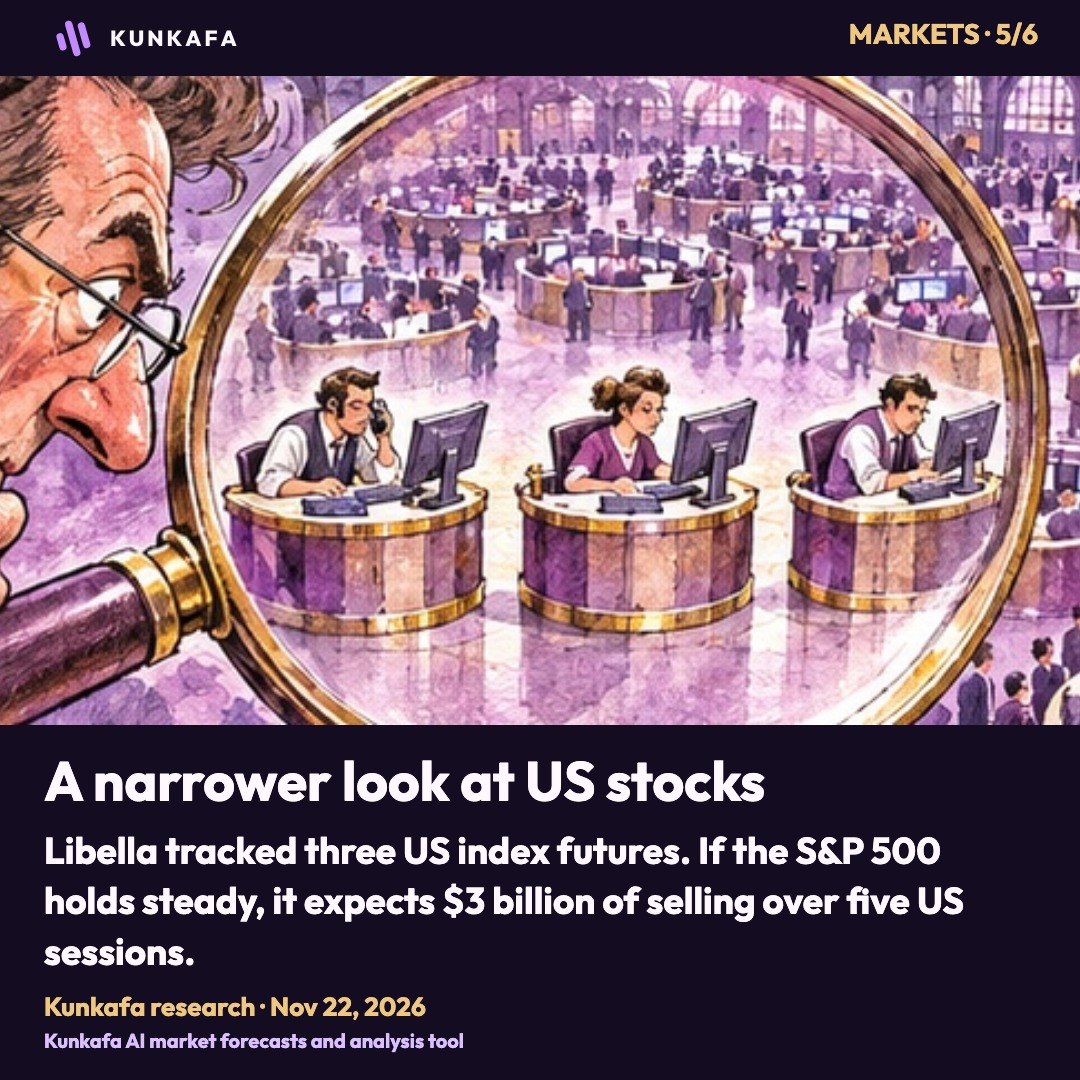
Libella reached a more encouraging conclusion for US shares. Its Sunday report tracked three US index futures and estimated just $3 billion of trend-driven selling over the next five US sessions if the S&P 500 went sideways. Its narrower scope matters. The case for a bounce is strongest if the funds that had to sell have already done most of it. [3]
Charlie Bilello questioned the rush to sell as valuations fell. Thomas Thornton argued that extreme pessimism alone gives investors little guidance on when to buy.
Perspectives on whether stocks have bottomed


What a put seller is betting on
The Walter Bloomberg account on X summarized the desk’s preference for selling puts over buying shares immediately. A seller collects a premium for agreeing to buy shares at a preset price if assigned. On a $100 strike with a $5 premium, the effective purchase price is $95. If the shares finish at $70 at expiry, the seller is down $25 a share. The premium offers only a small cushion against a deeper fall. [4] [5]
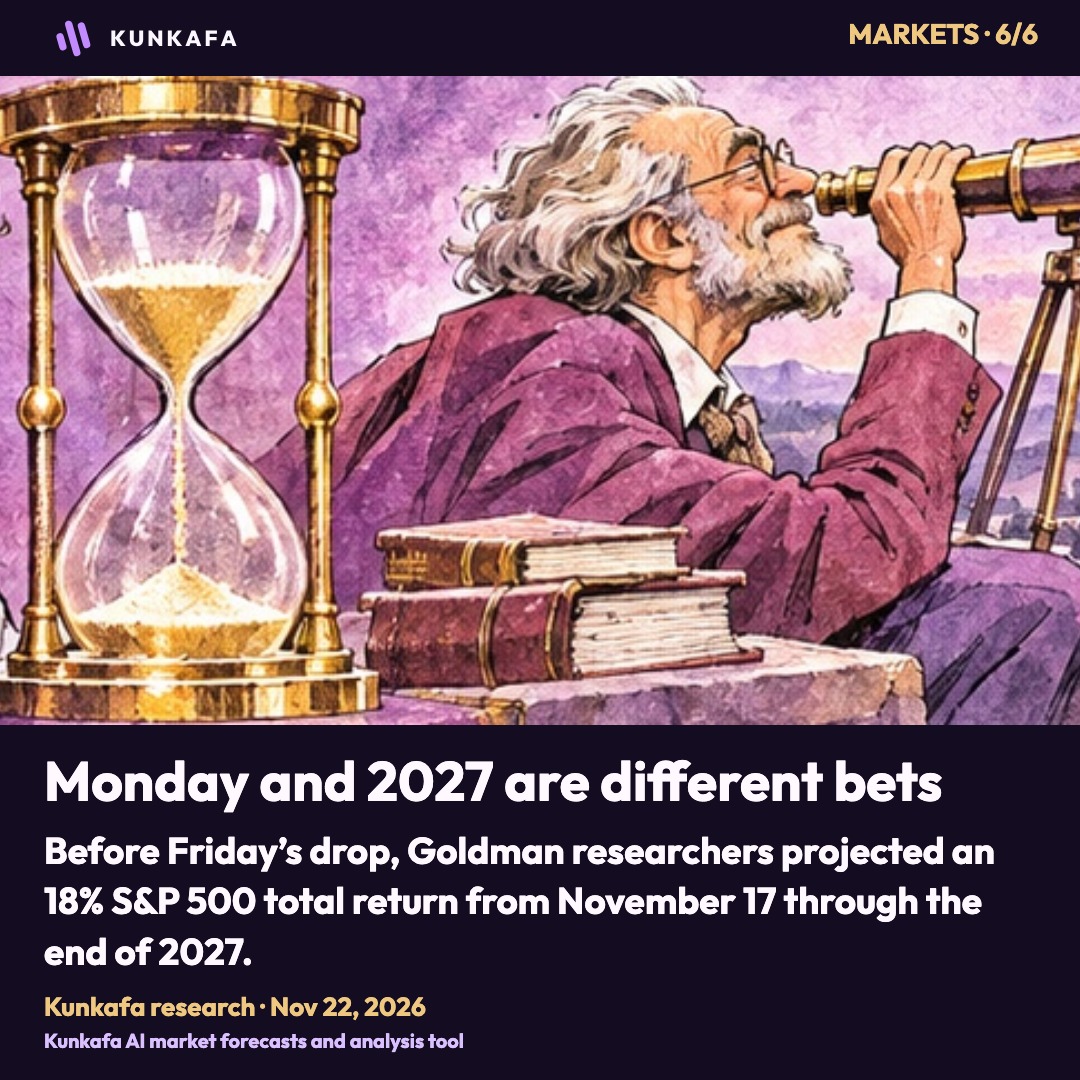
Goldman’s own equity researchers are looking further out. In their November 19 outlook, they projected an 18% S&P 500 total return from November 17 through the end of 2027, driven by earnings growth. That forecast predates Friday’s drop. The trading desk’s immediate question is how many sellers a new buyer might meet on Monday. [6]
Monday’s business surveys, Dell earnings and Wednesday’s inflation report are the next tests in Thanksgiving week’s market outlook.
Sources · [1] Bloomberg, November 22 · [2] Bloomberg, November 20 · [3] Libella, November 22 · [4] Walter Bloomberg on X, November 22 · [5] Options Industry Council · [6] Goldman Sachs Research, November 19
Kunkafa forecasts
S&P 500 Index
How far it could move, which way, by when, and how confident Kunkafa is.
Check the latest forecastsRelated articles
 MarketsS&P 500 Falls 8.6% in a Week. A Bounce or a Falling Knife?The S&P 500 lost 8.6% in a week. What past selloffs say about Monday, and how Dell earnings and October inflation could shape Thanksgiving trading.
 MarketsThe World Watches a Year’s Gains Slip Through Its FingersKunkafa ranks the Nasdaq 100 and S&P 500 selloff against decades of price data and measures returns one, five and 21 trading sessions after similar losses.
More in Markets

SPY Drew $10.6B in Three Days. Then $12.9B Left in Two.
Investors bought as the S&P 500 fund fell early in the week. By Friday, withdrawals had erased those inflows and SPY had lost 8.56% for the week.

US Bond Yields Split as Traders Bet on a December Fed Hike
The two-year Treasury yield rose six times as much as the ten-year. With a quarter-point rise heavily priced, Wall Street’s bigger risk may be what the Fed says about the one after it.

Abu Dhabi’s New Robot Fund Backs 8 Makers and 33 Suppliers
Subscriptions are open at AED2.04 per unit before charges. The largest share of the benchmark goes to the companies making the gears and motors inside a robot.