In Focus · Brief
French Scientists Found a Cell’s Skeleton Behaves Like Wool
French researchers found that compressing branched actin creates extra contact points, helping explain how a cell’s flexible skeleton can push back.

Kunkafa News · Published · 2 min read
 By Kareem FaridDiscuss with the author on X
Here is a visual story in summary
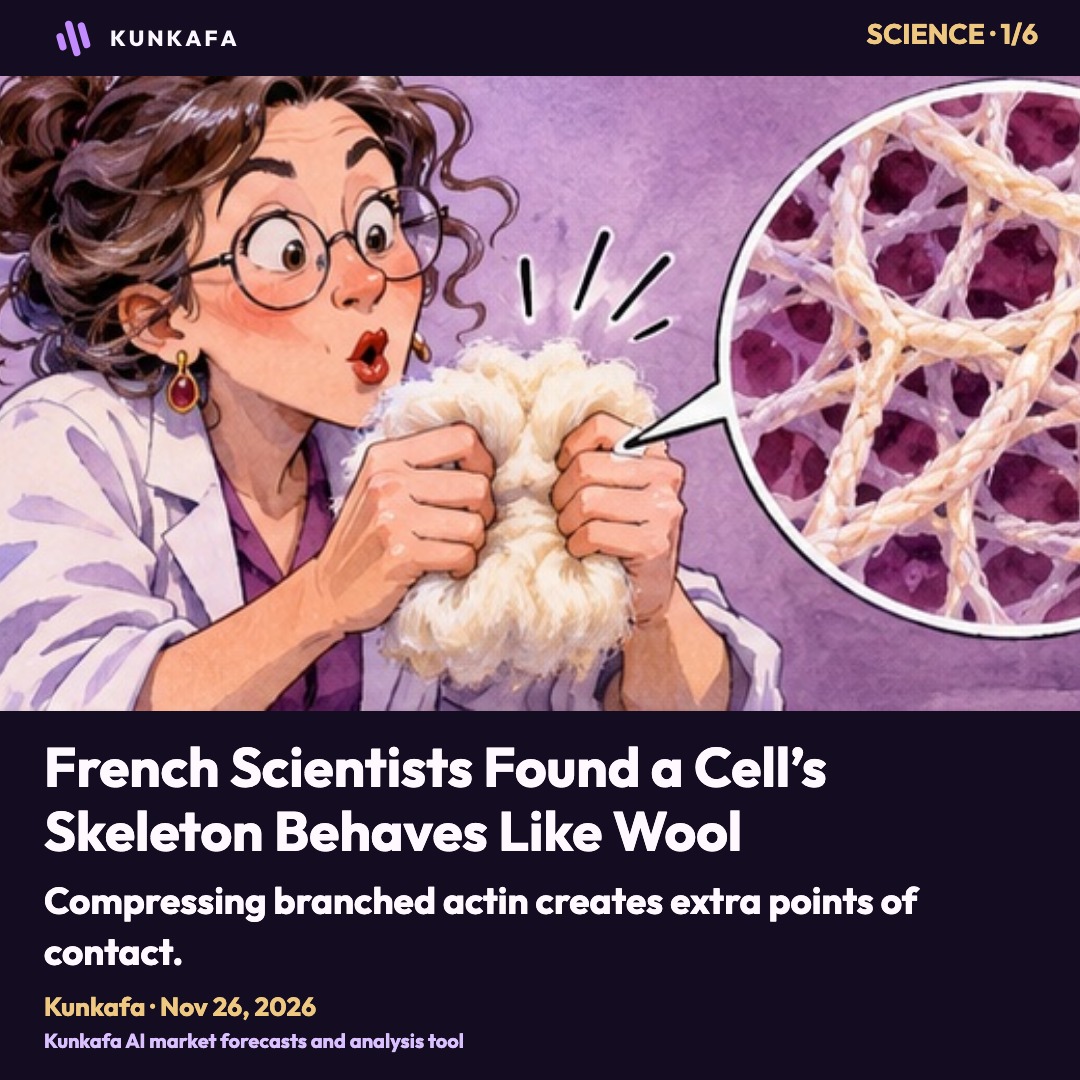
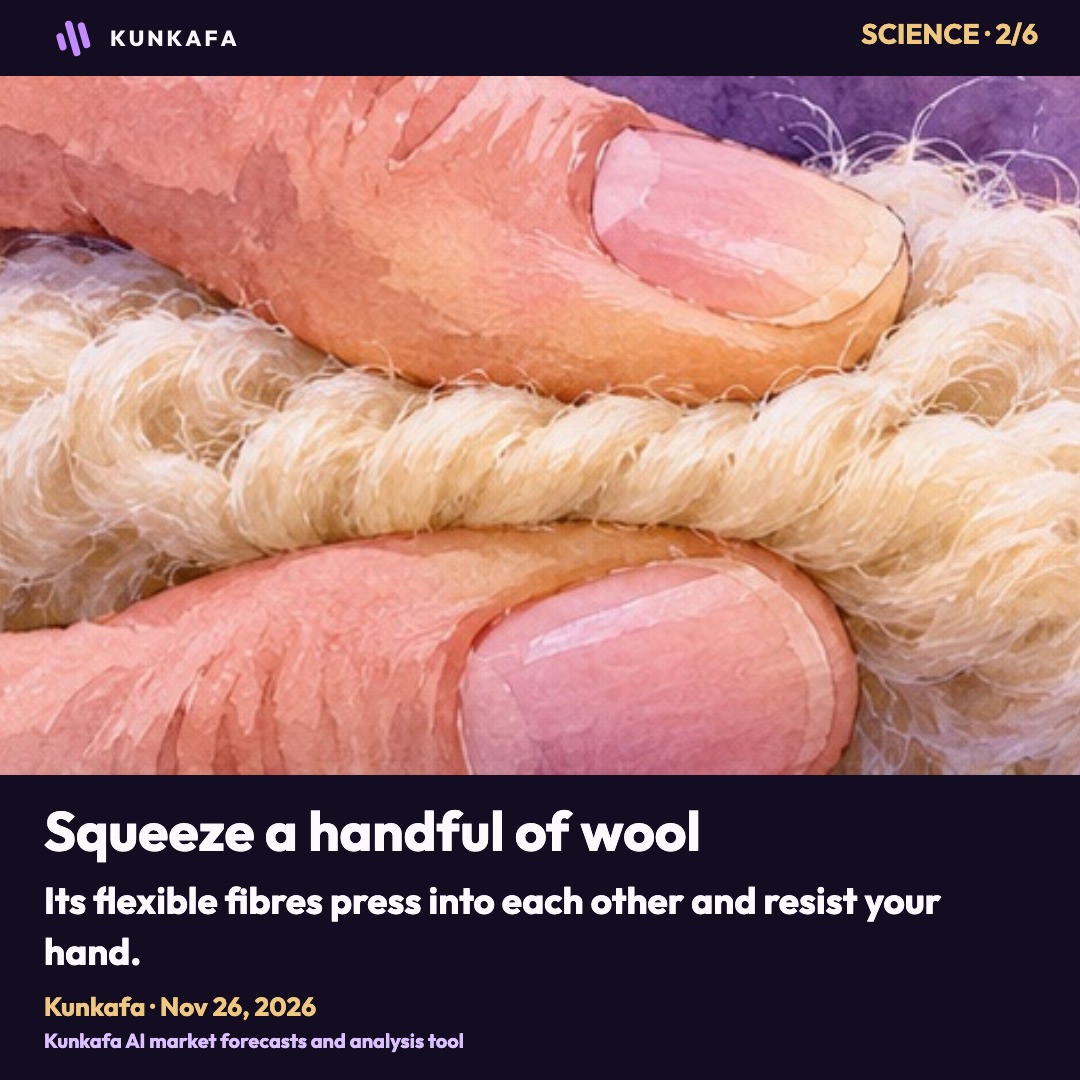
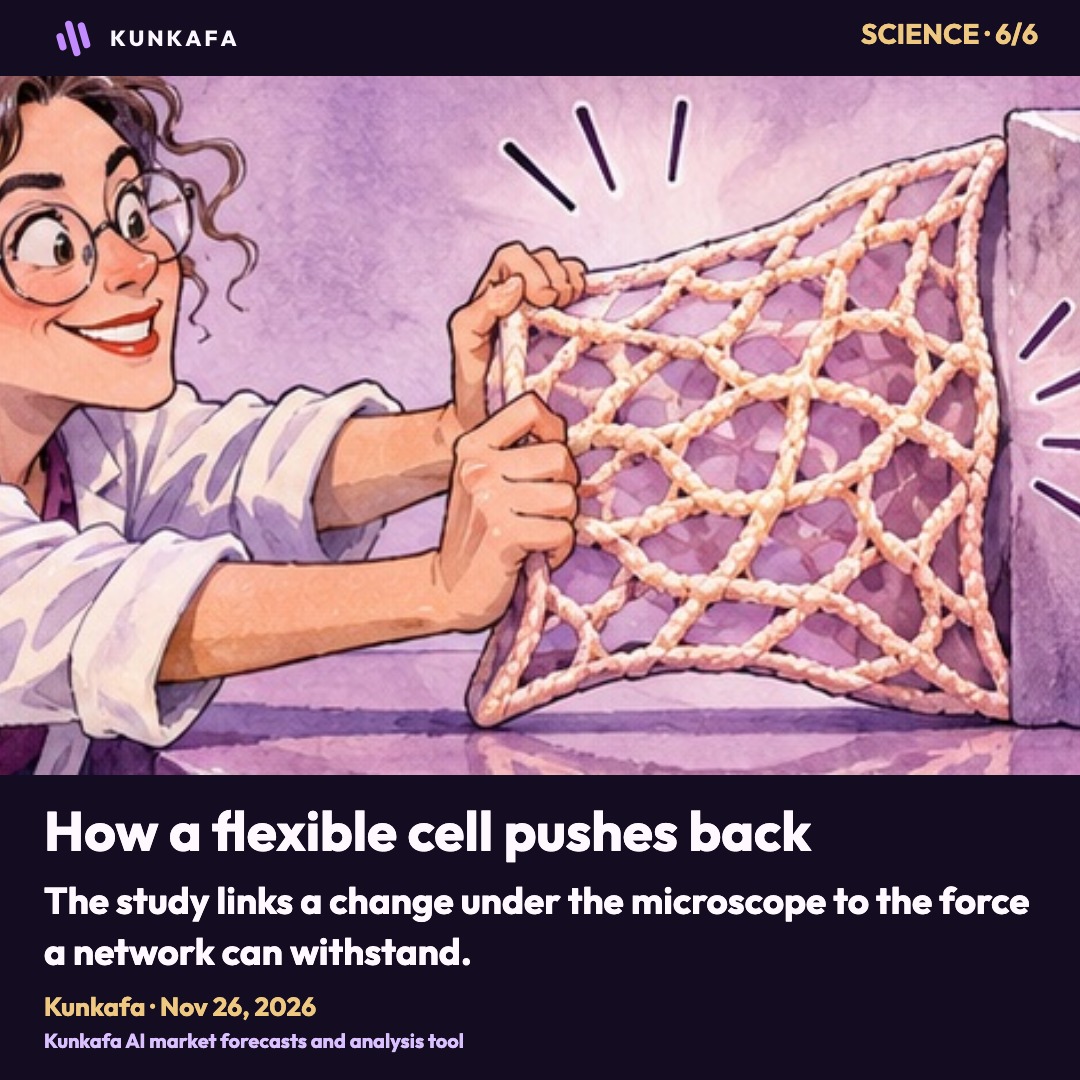
Squeeze a handful of wool and its fibres press into one another. French researchers have shown that parts of a cell’s internal skeleton stiffen in much the same way. Their study appeared in Nature on November 18, according to the CNRS. [1]
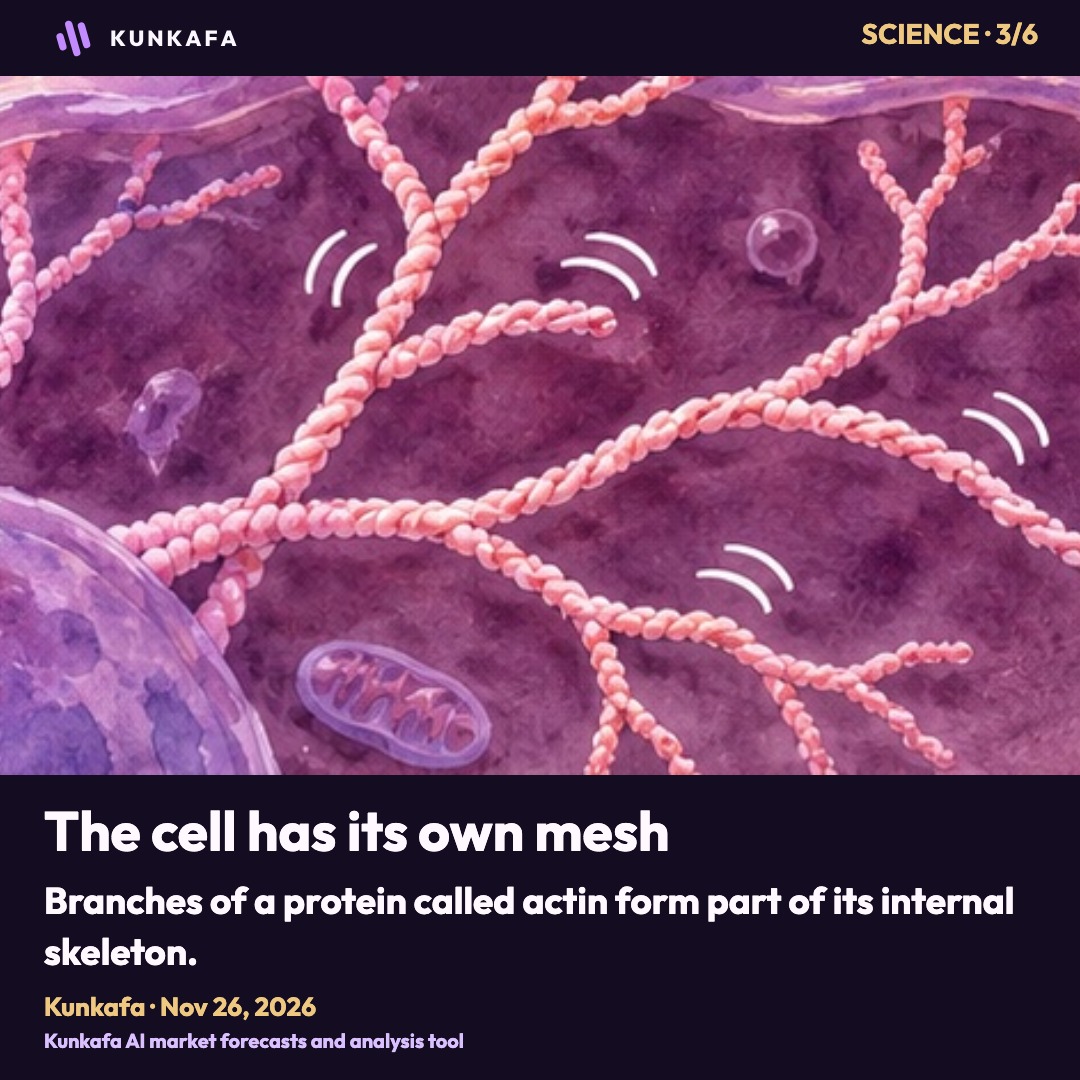
The comparison concerns branched networks of a protein called actin. Cells use these changing networks to push against obstacles. A mesh that can move and grow must somehow become strong enough to push back. [1]
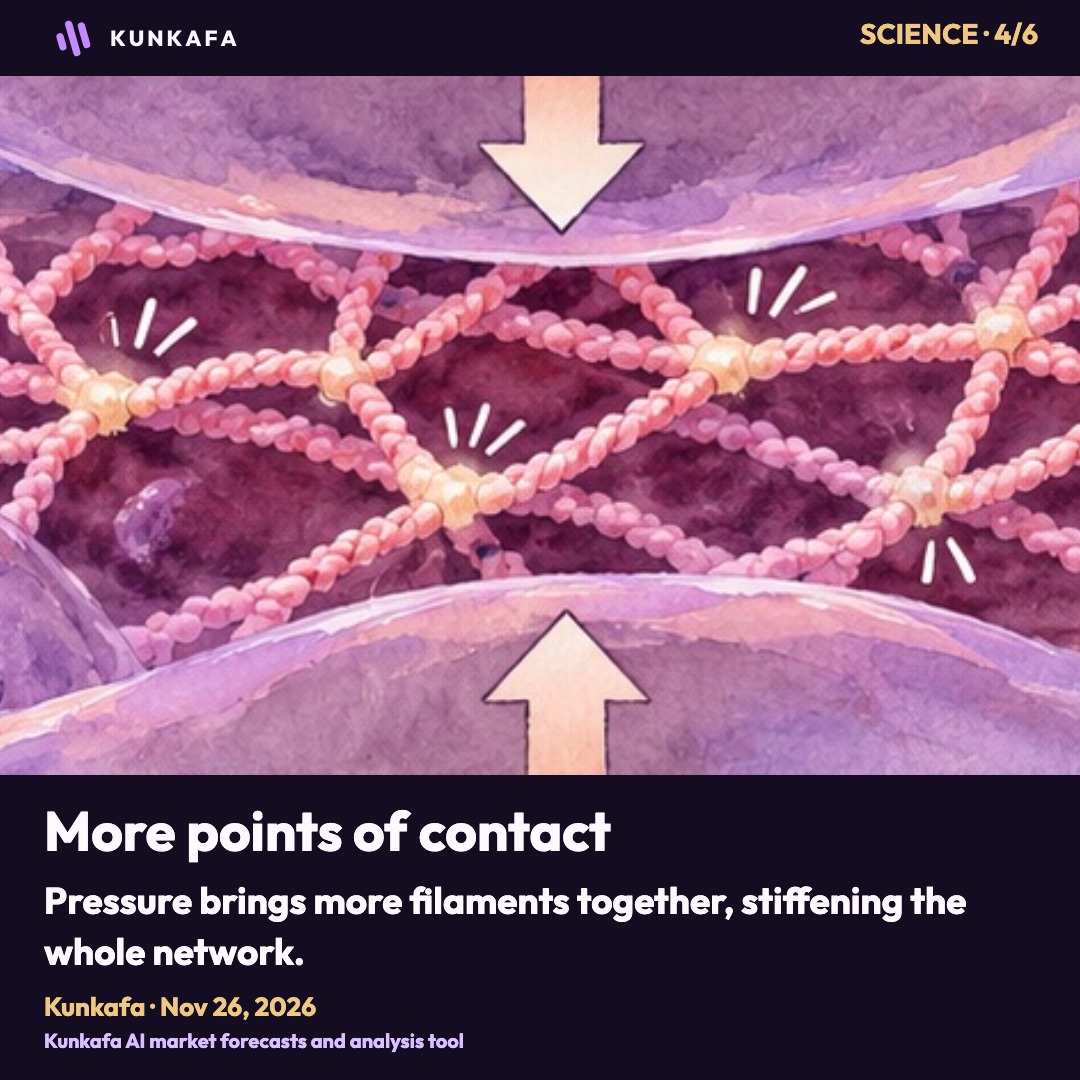
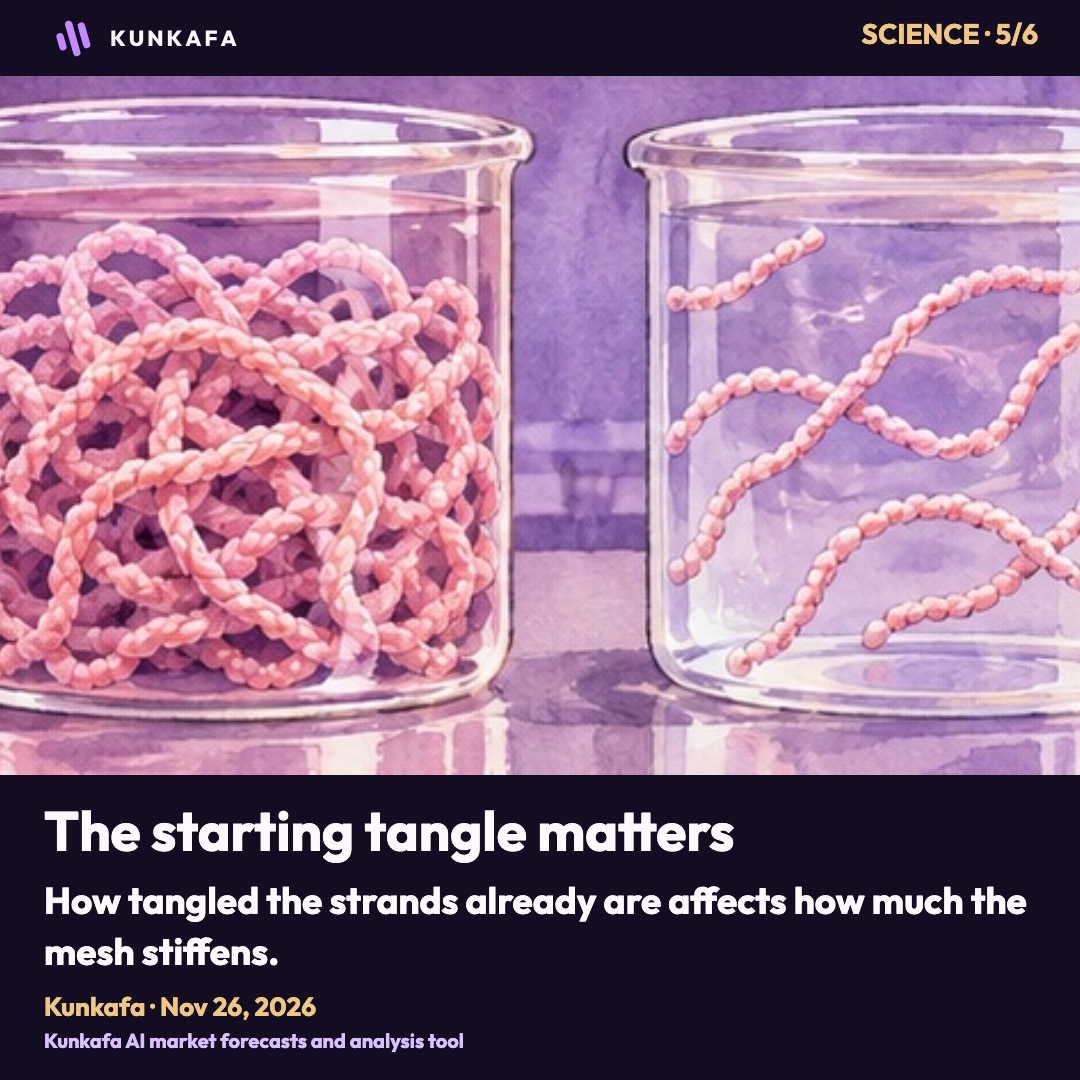
Mehdi Bouzid and colleagues found that squeezing the mesh creates more points of contact between filaments. Those contacts reinforce the whole structure. How tangled the filaments already are also makes a difference. [1]
The team drew together physicists working in the Paris area and Grenoble. Their result gives biologists a way to connect a change visible under the microscope with a property felt by hand: how much force a tangled material can withstand. [1]
Kunkafa forecasts
Euro - Dollar
How far it could move, which way, by when, and how confident Kunkafa is.
Check the latest forecastsMore in In Focus

Goldman Sachs Puts AI’s Break-Even Bill at $350 Billion a Year
Six companies are pouring money into computing power. Covering the cost of that investment is only the first hurdle.

Tom Laperche Cuts Six Hours Off the Route du Rhum Record
The French skipper sailed alone from Brittany to Guadeloupe. The man who had taken him sailing at eight came in second.

Sharjah’s Kalimat Brings 10 Children’s Stories to Braille
Peter Pan and Maryam and the Stars are among the Arabic titles from six publishers that blind children can now read for themselves.