Tech
French Team Grows Skin That Stays Alive After Freezing
A team near Dijon hopes surgeons could one day reach for a stored graft when a patient arrives with severe burns. The first human trial is planned for 2030.

Kunkafa News · Published · 4 min read
 By Kareem FaridDiscuss with the author on X
Here is a visual story in summary
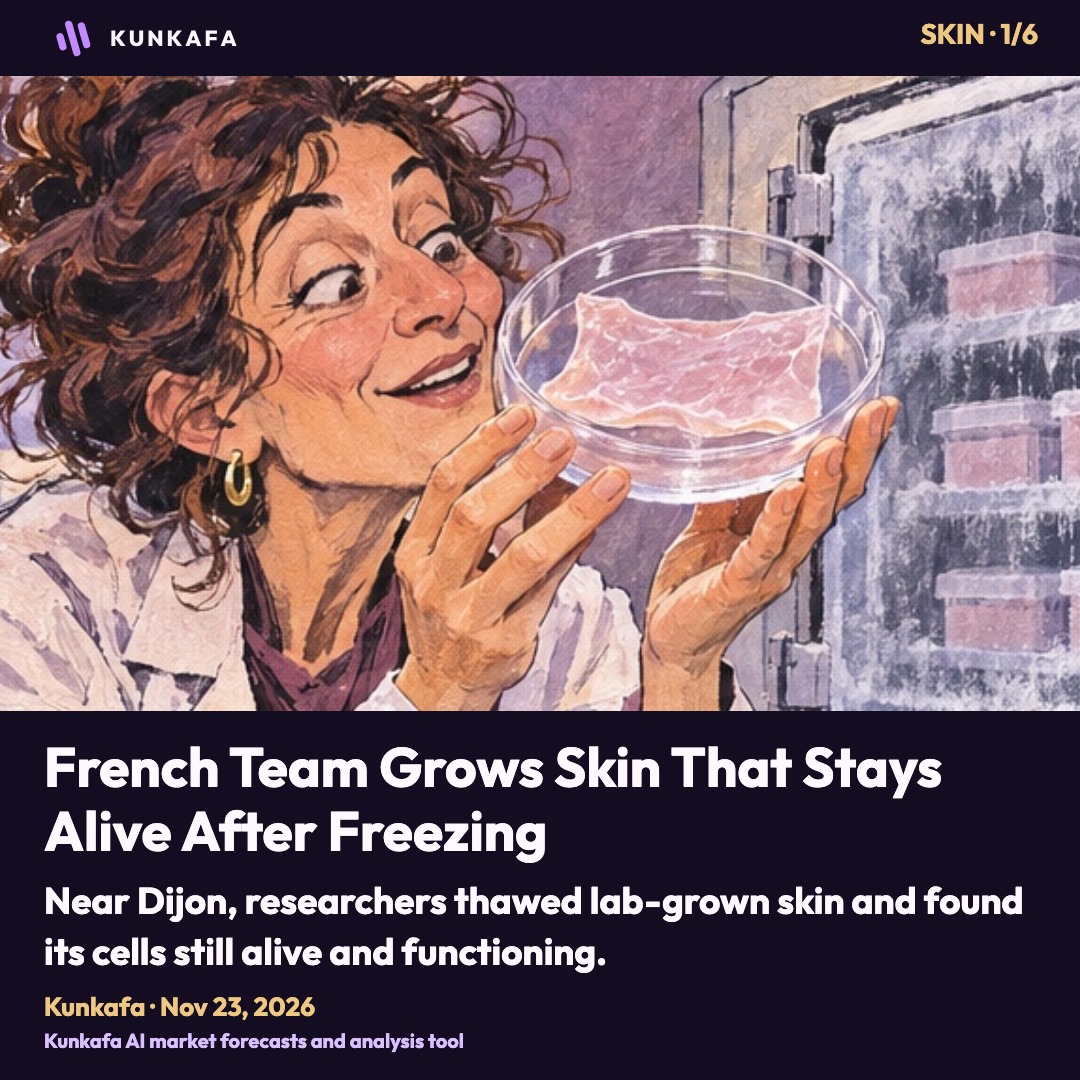

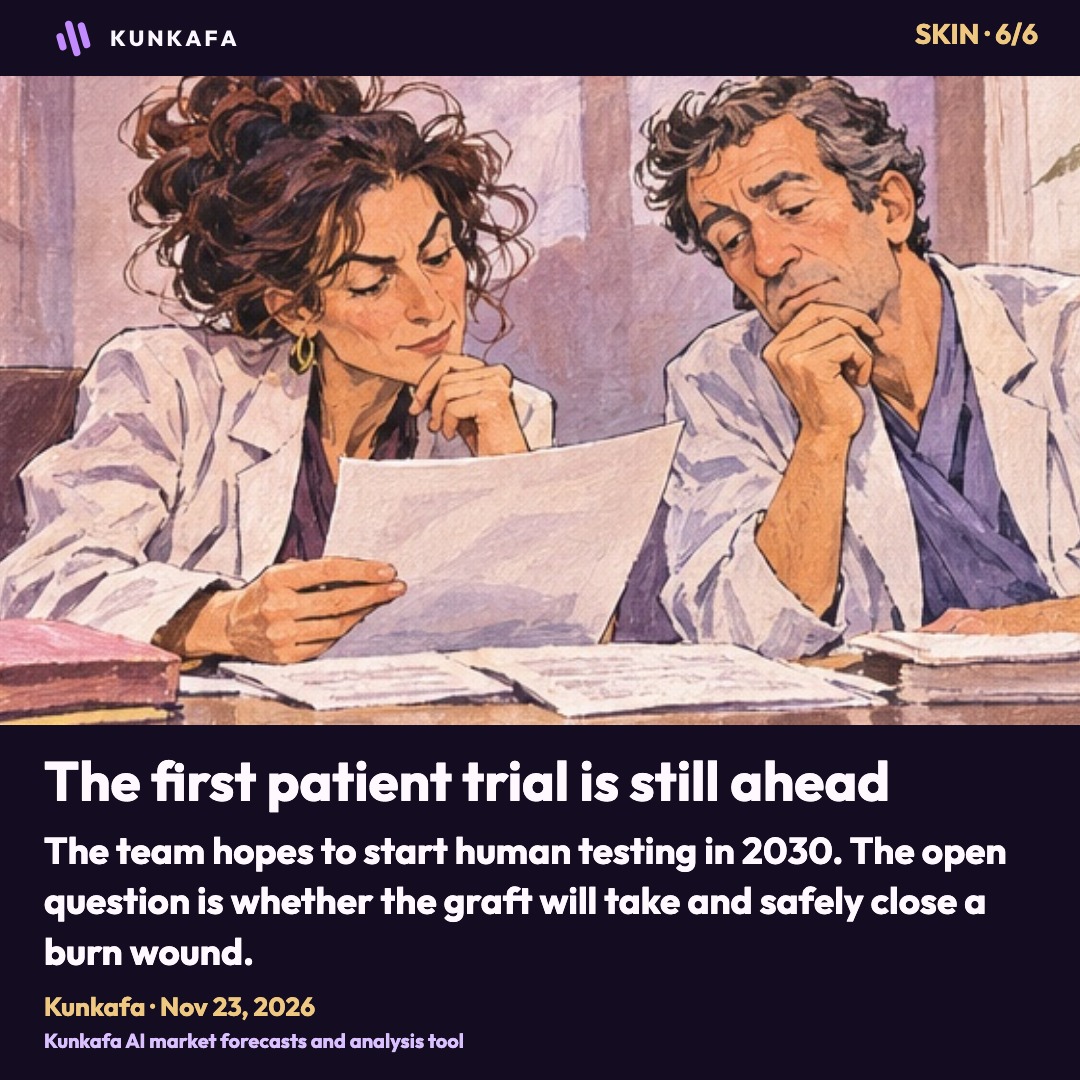
In a laboratory outside Dijon, a French team grew skin, froze it, then thawed it. The cells were still alive and functioning. For a surgeon caring for someone with extensive burns, the promise is simple. One day a hospital might have skin ready when the patient arrives. The team led by French wound-care company Urgo announced the laboratory result on November 20 and hopes to test the graft in its first patients in 2030. [1] [2]
When there is too little healthy skin to spare
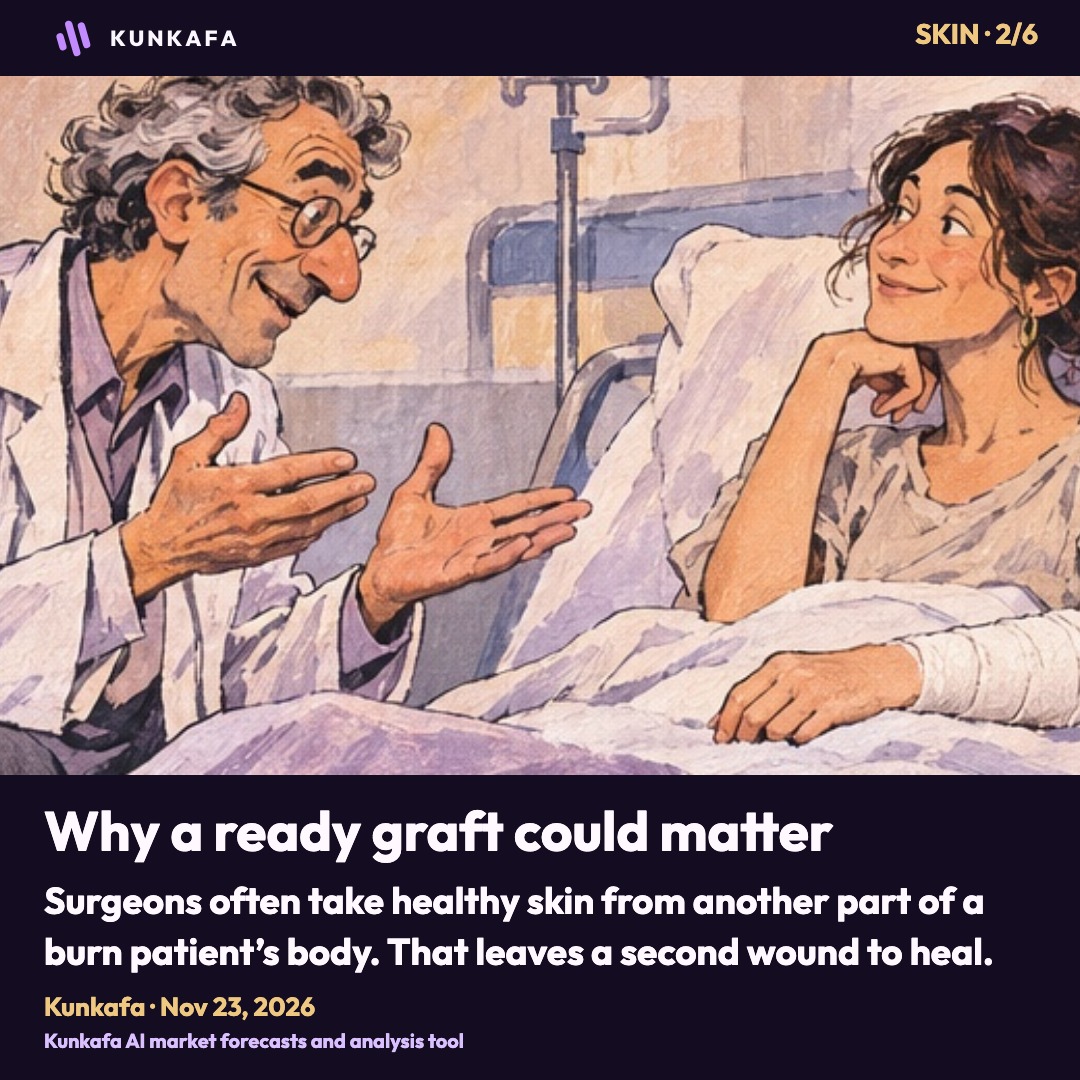
Surgeons can cover a deep burn with healthy skin taken from elsewhere on the patient’s body. That gives the patient another wound to heal. In the most extensive burns, too little healthy skin remains to cover the injuries in one operation. The patient can face repeated trips to theatre while parts of the wound still need cover. [2]
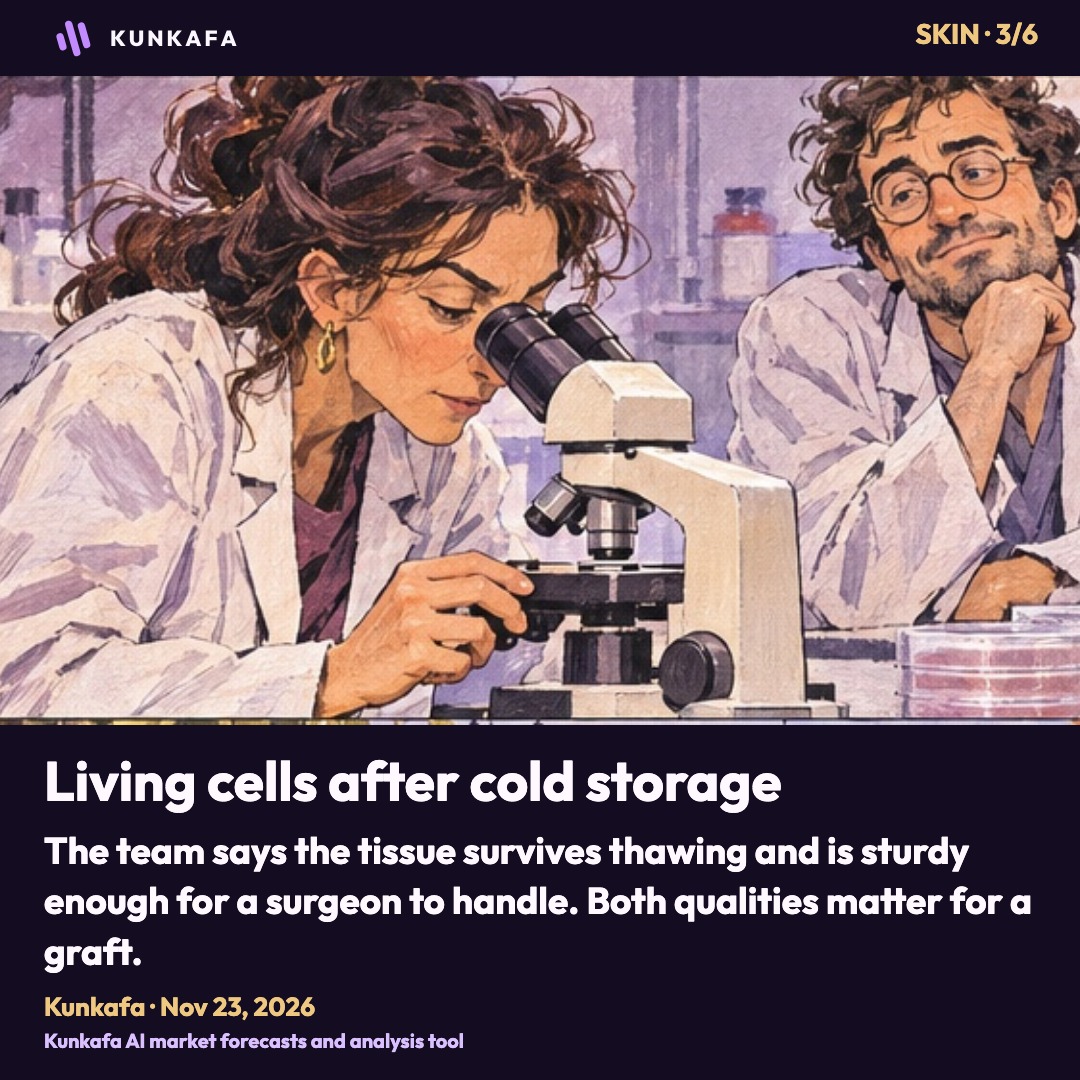
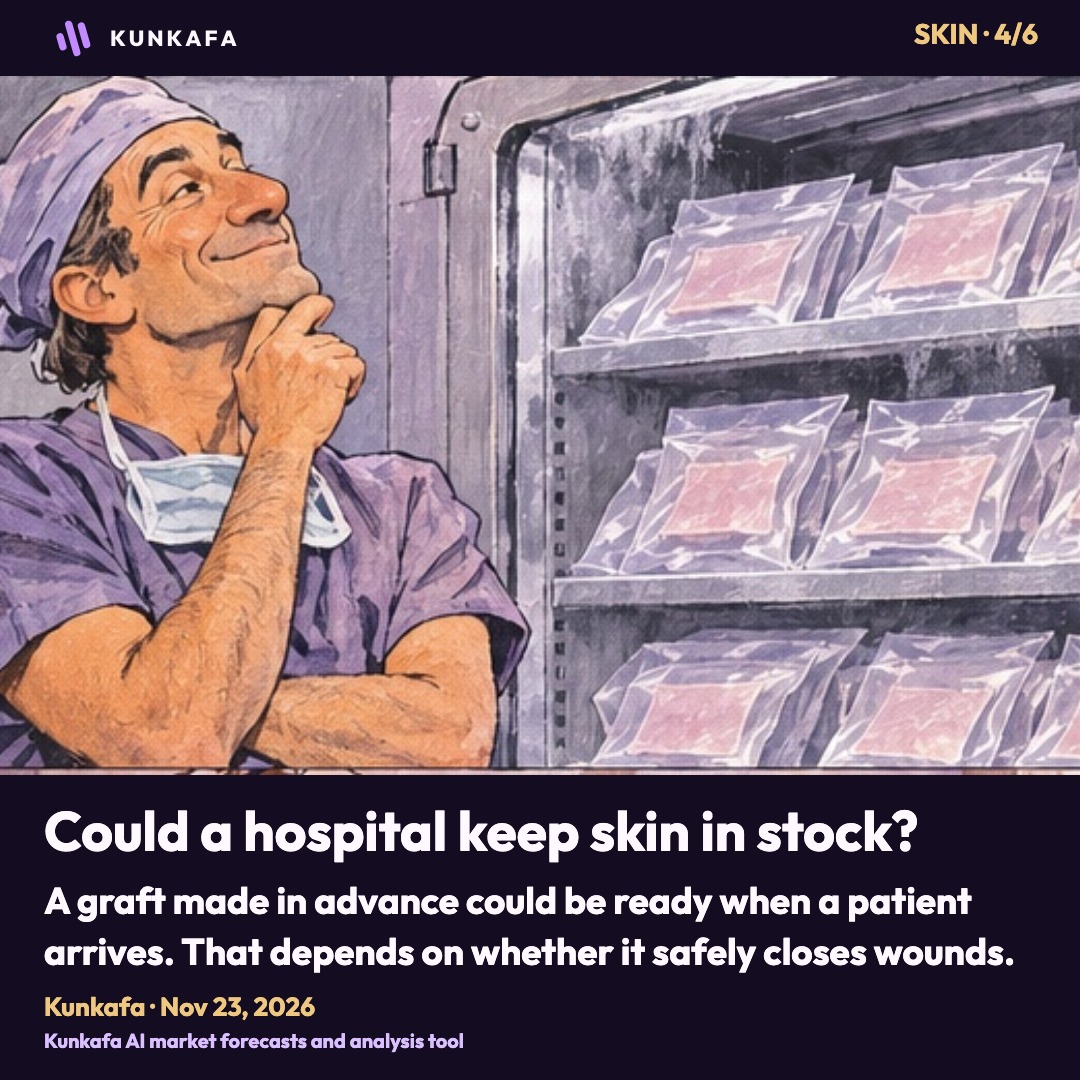
The researchers say their tissue can withstand handling by a surgeon and retain living cells after thawing. What sets that combination apart is timing. A hospital could receive a supply made in advance. If it can safely close wounds in patients, the graft could spare some people the pain of harvesting their own skin. [2]
#Communiqué 🗞️1re mondiale : la création en laboratoire, d’une peau artificielle vivante, cryopréservée et conçue pour être prête à greffer sur le patient. Une avancée 100% française ... 👉 cnrs.fr/fr/presse/prem… #France2030 h

Five years of work in Burgundy
The project, called GENESIS, began in 2021 with €22.8 million in French state support. Its dedicated laboratory opened the following year in Chenôve, outside Dijon, with €250,000 from the region. Urgo brought together the French blood service, the I-Stem research laboratory, France’s national research centre CNRS, Lyon 1 University and Dassault Systèmes. [2] [3] [4]
The consortium describes its combination of a pharmaceutical-grade cell bank, tissue that surgeons can handle and storage by freezing as a world first. The next test is whether the graft takes and closes a human wound safely. The partners put possible commercial production around 2040. For now, what the researchers in Burgundy have shown is that a living graft can come out of cold storage with its cells still working. [2]
What a skin graft asks of a patient
Earlier posts offer a view from the ward and the home. A husband describes his wife’s recovery from burns. Two people recall their own skin grafts, while science enthusiast Owen Lewis wonders what a separate line of research into hair follicles could eventually mean for people who need grafts.
Perspectives on burn recovery and skin grafts


Sources: [1] CNRS announcement, November 20 · [2] Joint research statement · [3] Bourgogne-Franche-Comté · [4] Lyon 1 University
Kunkafa forecasts
Euro - Dollar
How far it could move, which way, by when, and how confident Kunkafa is.
Check the latest forecastsMore in Tech

Nvidia Surges 31% Premarket as Board Reinstates Jensen Huang
Shares traded at $165.01 at 14:04 UTC, 12 days after Huang resigned. The board voted unanimously to bring him back as president, CEO and director.

Tipped to Lead Nvidia, Haas Commits to Arm Through 2033
Rene Haas had been linked to Jensen Huang’s old job. Arm says its CEO is staying and becomes SoftBank Group vice chairman on December 1.

Gigabit Broadband Reaches 58,000 More Rural UK Addresses
Rural areas took nine in ten publicly funded broadband upgrades in the quarter. Across the UK, 14,400 addresses jumped from below 30 Mbps to gigabit coverage.