Economy · Explainer
France Slips Into Recession Even as Households Spend More
Exports and investment fell as the economy shrank 0.2% in the third quarter. French households recovered some purchasing power, and the clearest sign of investor caution was in government bonds.

Kunkafa News · Published · 4 min read
 By Kareem FaridDiscuss with the author on X
Here is a visual story in summary
Key points
- French output fell for three successive quarters. The spring decline was small enough to round to 0.0%.
- Household spending rose 0.3% in the summer. Exports fell 1.6% and investment fell 0.9%.
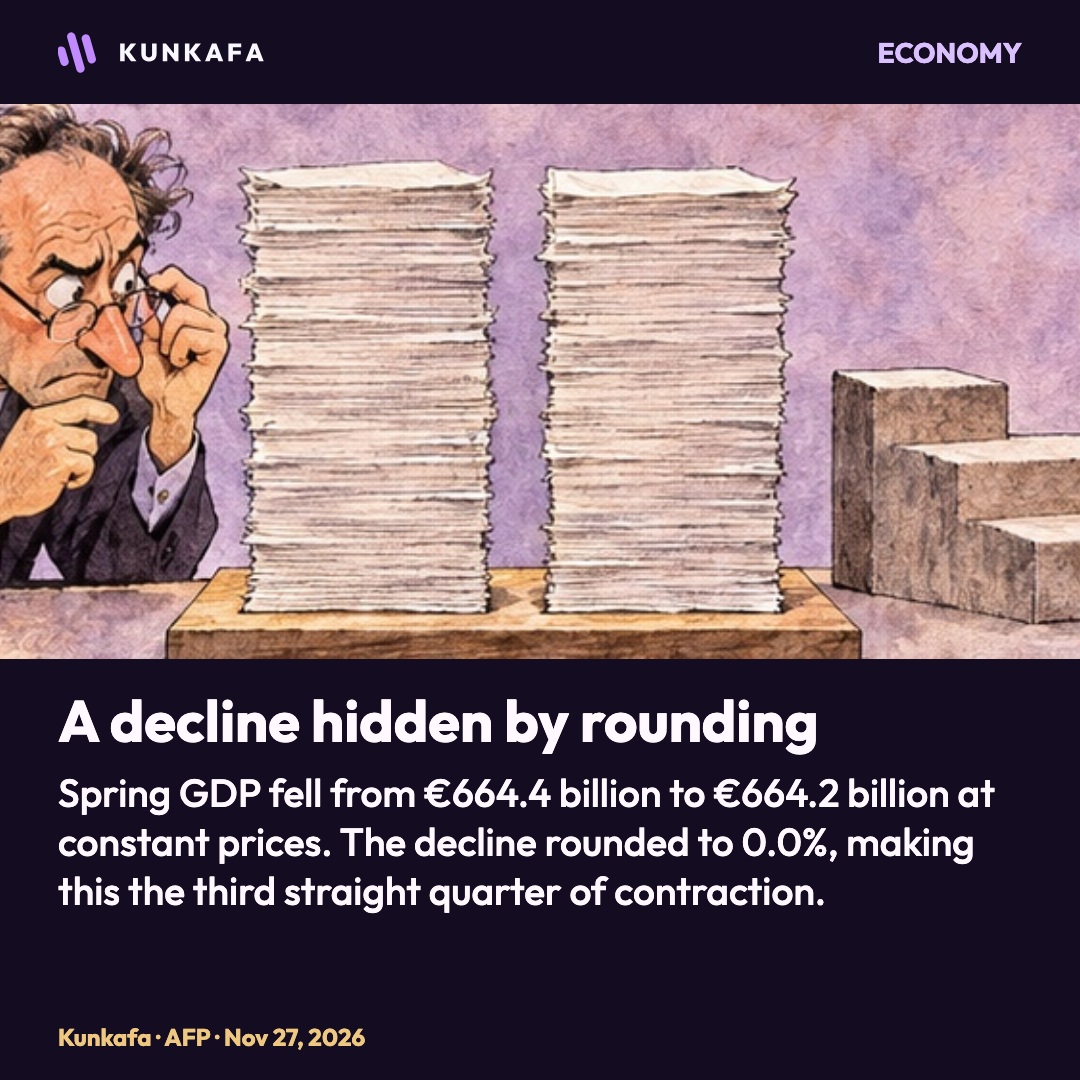
France is in a technical recession. Its economy shrank 0.2% in the three months to September, twice the decline initially reported. At Friday’s briefing, Marie Leclair, head of national accounts at INSEE, confirmed that output had also slipped in the spring. That fall rounds to 0.0% in the published table. [1] [2]
The output figures show why the revision matters. At constant prices, France produced €665.7 billion in the final quarter of 2025, €664.4 billion in the first quarter of 2026, €664.2 billion in the second and €662.6 billion in the third. That is three successive declines, one more than the usual two-quarter test for a technical recession. [2]
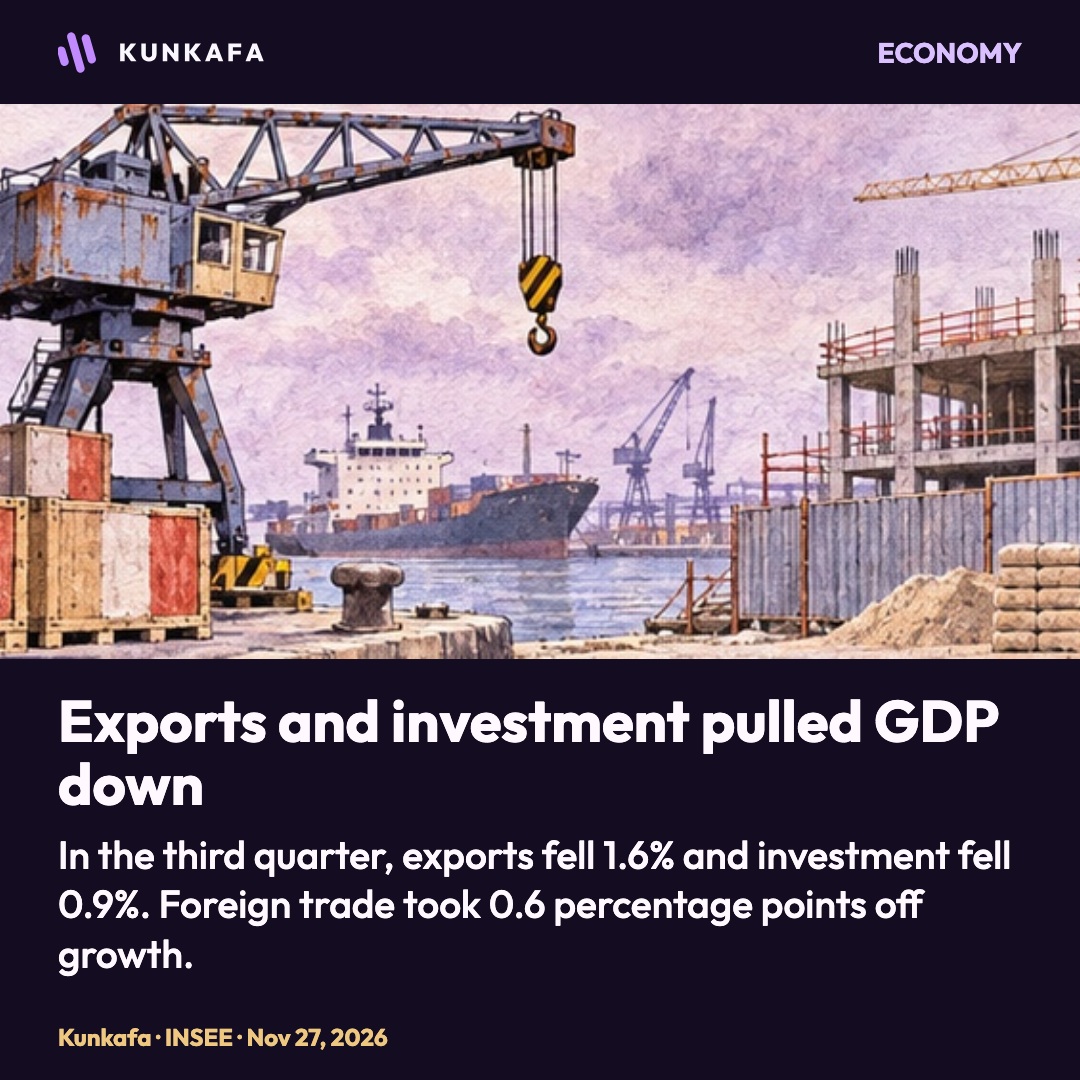
Exports fell 1.6% over the summer after rising 2.9% in the spring. Imports edged up, so foreign trade subtracted 0.6 percentage points from quarterly growth. Investment fell a further 0.9%, with less spending on construction and manufactured goods, INSEE said. [1]
What changed for French households?
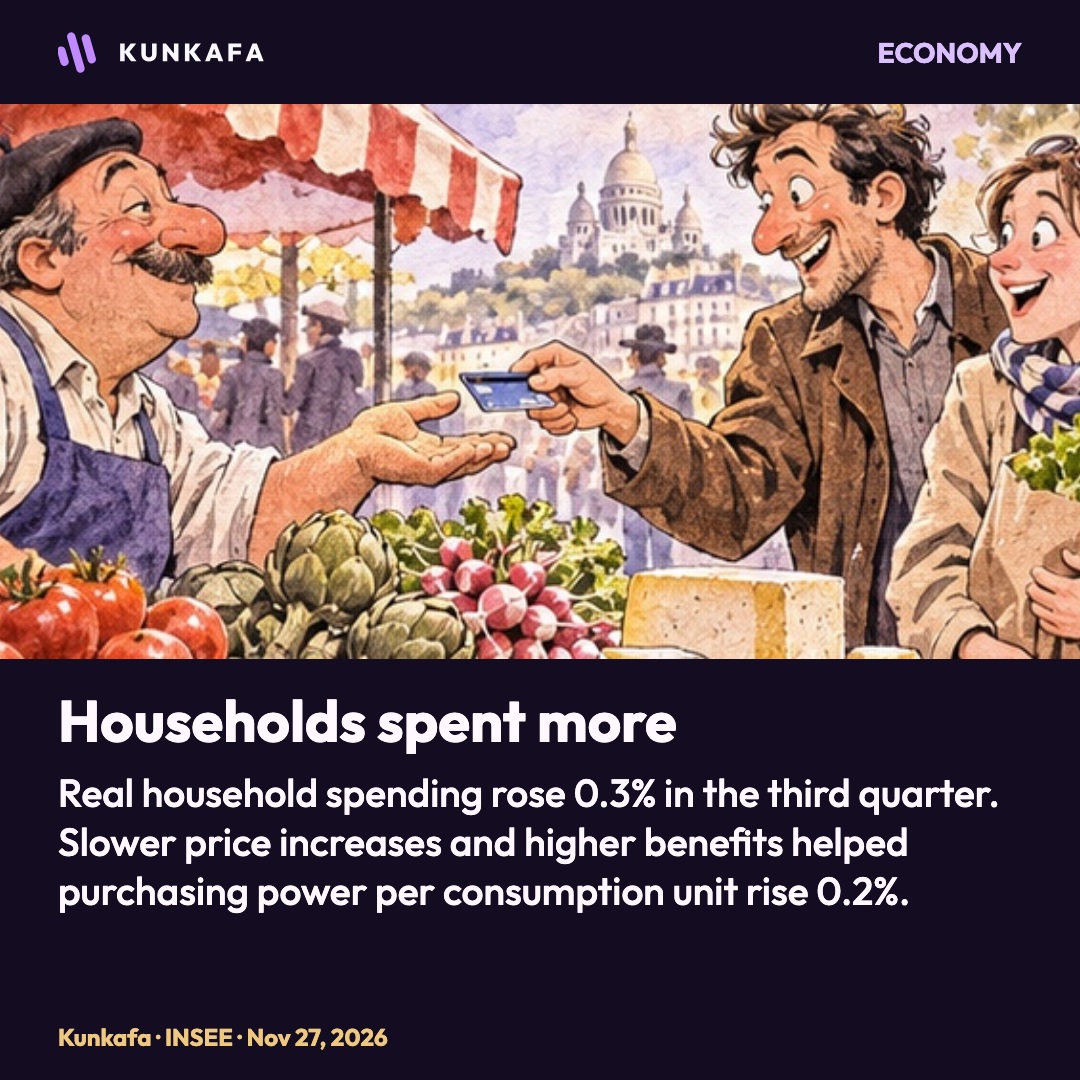
Households spent 0.3% more in real terms than in the previous quarter. Slower price rises and higher benefits, including a boost to the in-work benefit for lower-paid workers, helped purchasing power adjusted for household size rise 0.2%. That recovered only part of the spring’s 0.5% loss. [1]
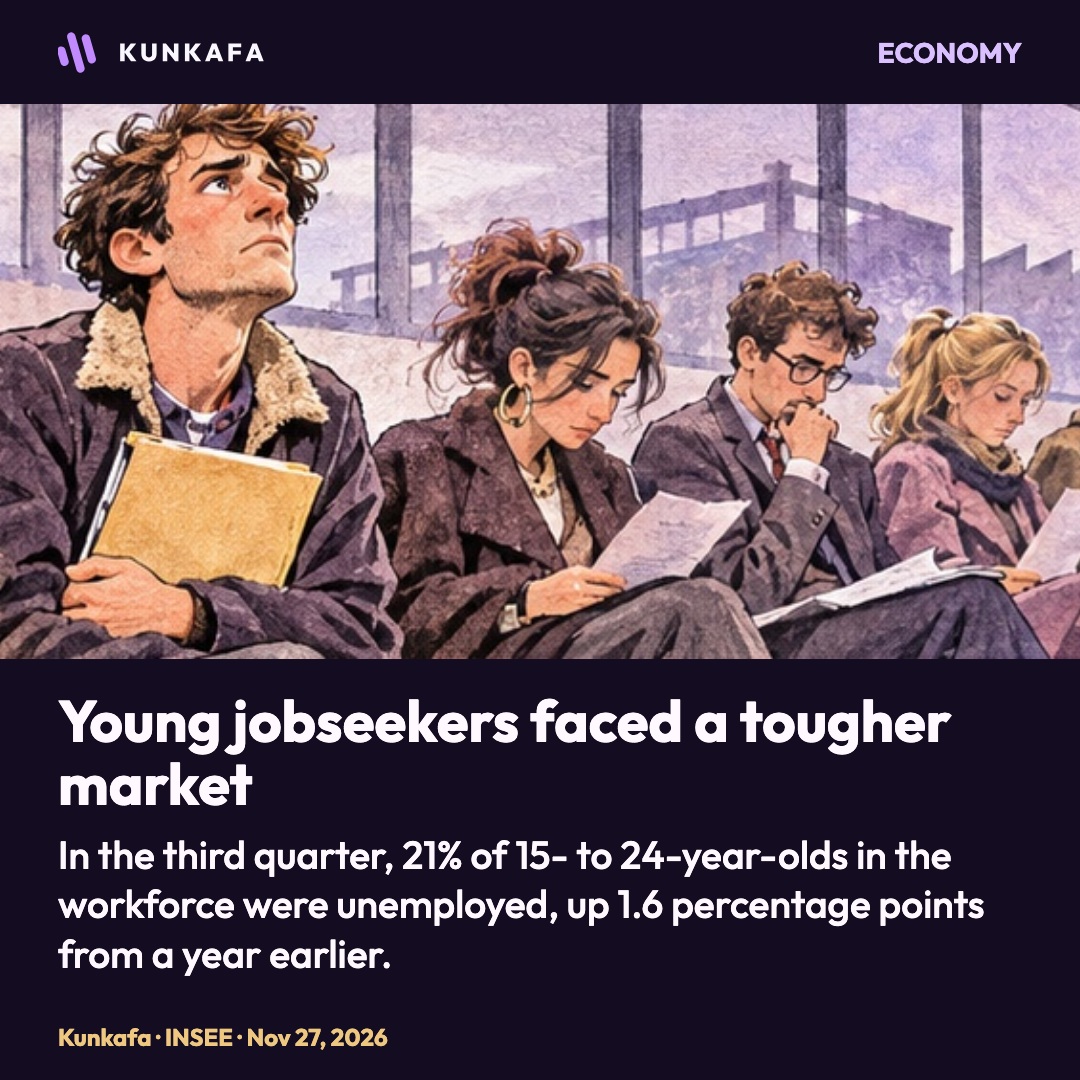
For people looking for work, hiring conditions matter more than the recession label. France’s unemployment rate edged down from 8.3% to 8.2% in the third quarter but was 0.4 percentage points higher than a year earlier. Among 15- to 24-year-olds in the labour force, 21% were unemployed, up 1.6 points over the year. [3]
Why French bonds tell a different story from European shares
France’s neighbours had a stronger summer. Eurostat estimates the euro area grew 0.4% in the third quarter. [4]
On Friday morning, European shares rose. At 11:11 a.m. Paris time, TradingView showed the CAC 40 up 0.28% at 8,131.75 on a 15-minute delay and the pan-European STOXX 600 up 0.95% at 643.02. [5] [6]
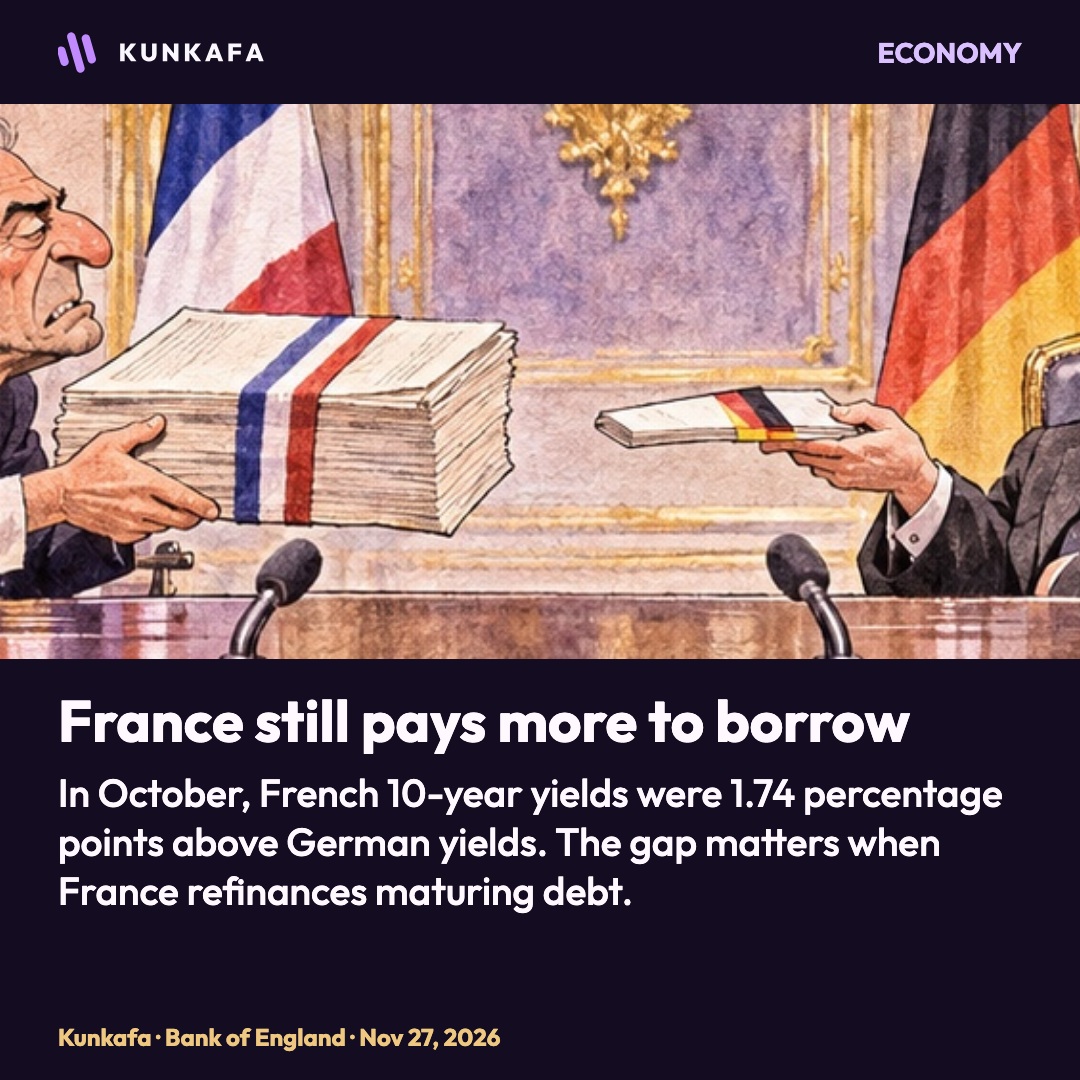
Bond investors have been charging France more to borrow. The Bank of England said the gap between French and German ten-year yields widened from about 0.86 percentage points in early September to 1.74 points in October amid concerns about France’s budget. Italian and Belgian borrowing costs also rose relative to Germany’s, though the bank found limited spillover to other markets. [7]
ING said on Friday that the gap had since narrowed to just under 1.5 percentage points ahead of S&P’s scheduled review of France after the market close. [8]
The premium still matters for taxpayers: as existing bonds mature, the Treasury has to refinance it at prevailing rates. INSEE put the third-quarter public deficit at 5.6% of GDP, up from 5.3% in the spring. [1]
The question now is how long the downturn lasts. On November 9 the Banque de France expected modest fourth-quarter growth. The November 23 business survey was weaker: S&P Global’s private-sector activity index fell to 46.2, below the 50 mark that separates expansion from contraction. INSEE’s first estimate for the fourth quarter is due January 29. [9] [10] [1]
Sources: [1] INSEE, Nov. 27 · [2] AFP, Nov. 27 · [3] INSEE labour survey, Nov. 10 · [4] Eurostat, Nov. 13 · [5] CAC 40, Nov. 27 · [6] STOXX 600, Nov. 27 · [7] Bank of England, Nov. 26 · [8] ING, Nov. 27 · [9] Banque de France, Nov. 9 · [10] S&P Global survey via Reuters, Nov. 23
Kunkafa forecasts
Euro - Dollar
How far it could move, which way, by when, and how confident Kunkafa is.
Check the latest forecasts
More in Economy

3 Best Sources for Comparing Egypt’s Exports by Product
Saudi Arabia narrowly outranked the Netherlands for Egyptian oranges in 2023. The product code, units and reporting country make that comparison reproducible.

US Shoppers Spend a Record $7.1B Online on Thanksgiving
Online spending rose 10.4% from last Thanksgiving as shoppers snapped up games and electronics. Adobe expects $12.9 billion online on Black Friday.

Dubai Awards AED56.5 Billion in Al Maktoum Airport Expansion Deals
New contracts cover the passenger terminal, concourses and power supply as Dubai builds a second aviation hub designed for more than 260 million passengers a year.