Economy · Explainer
Egypt Can Earn More From Exports Beyond Suez Tolls, CEO Says
Majid Al Futtaim CEO Ahmed Galal Ismail says refrigerated transport for growers and digital services sold abroad could help Egypt earn more from the trade routes that cross it.

Kunkafa News · Published · 3 min read
 By Kareem FaridDiscuss with the author on X
Here is a visual story in summary


Key points
- Trade volume through Suez fell 50% year on year in the first two months of 2024 as ships diverted from the Red Sea.
- Egypt earned $7.4 billion from digital exports in 2025.
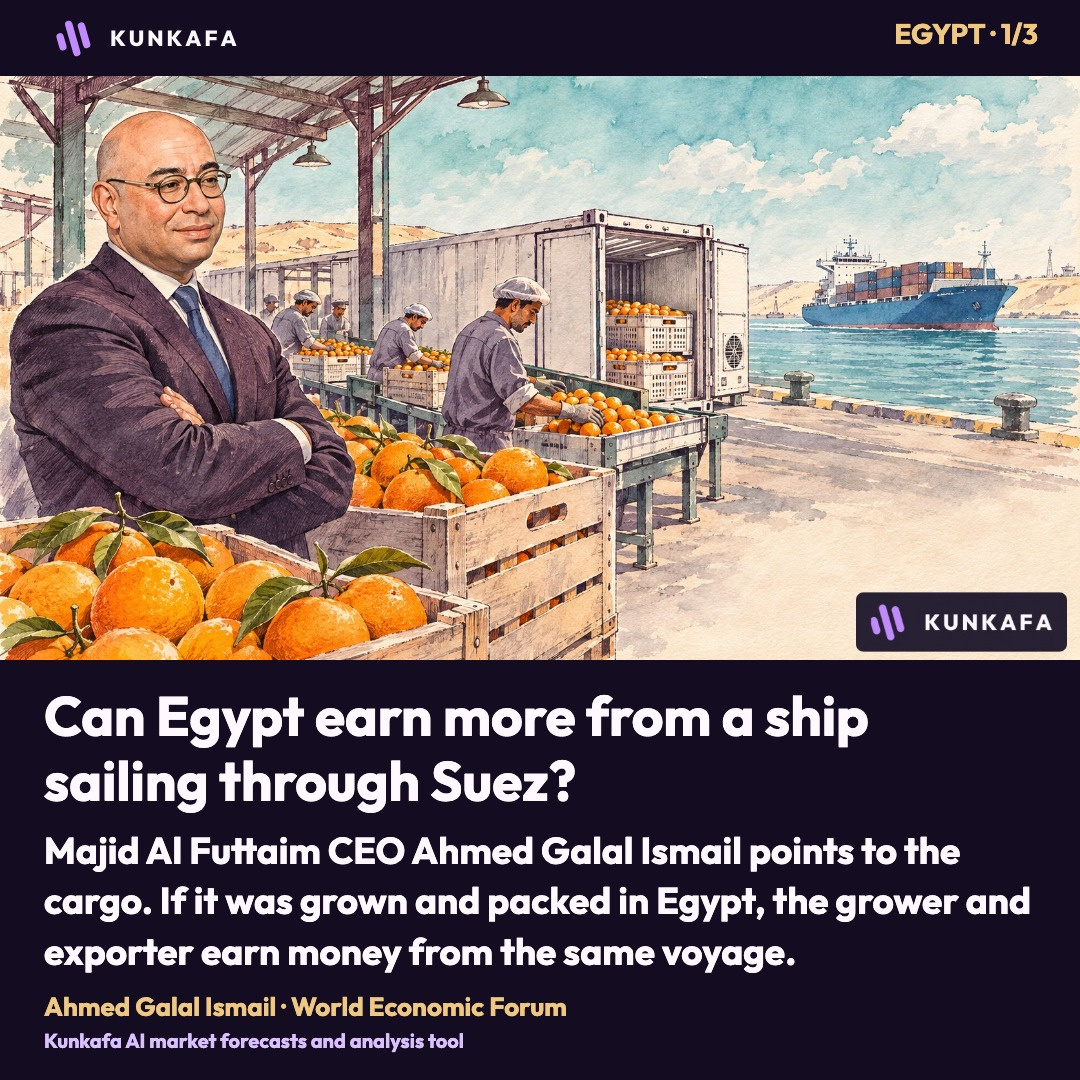
A ship sailing through Suez pays Egypt a toll. If it also carries produce grown and packed in Egypt, a farmer and an exporter earn money from the same voyage. That distinction is at the heart of an argument Ahmed Galal Ismail, chief executive of retail and shopping mall group Majid Al Futtaim, made in a November 16 essay for the World Economic Forum. The Forum shared it as its Egypt investment meeting opened [1] [2].
#Egypt has been central to global #trade routes for centuries. Now, innovative tech and shifting #geopolitics are transforming how it connects with the world. weforum.org/stories/geo-ec…
The risks of relying on passing ships became clear in early 2024. IMF data show that the volume of trade through Suez fell by half in January and February from a year earlier as attacks in the Red Sea prompted shipping lines to sail around southern Africa. For Egyptian growers, Ismail argues, one practical investment would be refrigerated transport that keeps produce fresh long enough to reach Gulf buyers [3] [1].
Ismail sees a similar opportunity in the undersea cables that carry data between Europe and Asia through Egypt. Egyptian businesses can use those connections to sell services overseas, including software and AI-related work. The country already earned $7.4 billion from digital exports in 2025, up from $6.9 billion in 2024, according to Egypt’s cabinet information centre [1] [4].
Majid Al Futtaim estimates that Egypt’s economy could reach $1.5 trillion to $2 trillion over the next three decades. Ismail said the group drew on IMF figures for that scenario. Reaching it, he argued, depends on whether investment helps Egyptian suppliers win export orders, whether workers acquire the skills those orders require and whether businesses can count on predictable rules [1].
Sources: [1] Ahmed Galal Ismail, World Economic Forum, Nov 16, 2026 · [2] World Economic Forum, Nov 16 · [3] IMF, Mar 7, 2024 · [4] Ahram Online, Sep 14, 2026
Kunkafa forecasts
Brent oil
How far it could move, which way, by when, and how confident Kunkafa is.
Check the latest forecastsMore in Economy

Jordan Courts Carmakers With Incentives and a Zarqa Plant Plan
The investment ministry signed a memorandum for a factory worth up to $50 million to build two of China’s Chery brands in Jordan.

France Pushes Back on UK Role in EU Food Rules
Ahead of Friday’s Brussels summit, Britain wants fewer checks on food exports and an early say in the standards its producers would follow.

Chinese Factory Deals Top $8.6 Billion in Egypt’s Suez Zone
Contracts cover 153 factories. The zone’s chairman says he wants to attract more Chinese companies in electric vehicles and artificial intelligence.