Markets · Explainer
Citadel Securities Sees Echoes of 2018’s 19.8% S&P 500 Slide
Frank Flight flagged the warning signs before Monday’s 4.73% rally. Treasury yields could help tell whether the comparison holds.

Kunkafa News · Published · 5 min read
 By Kareem FaridDiscuss with the author on X
Here is a visual story in summary
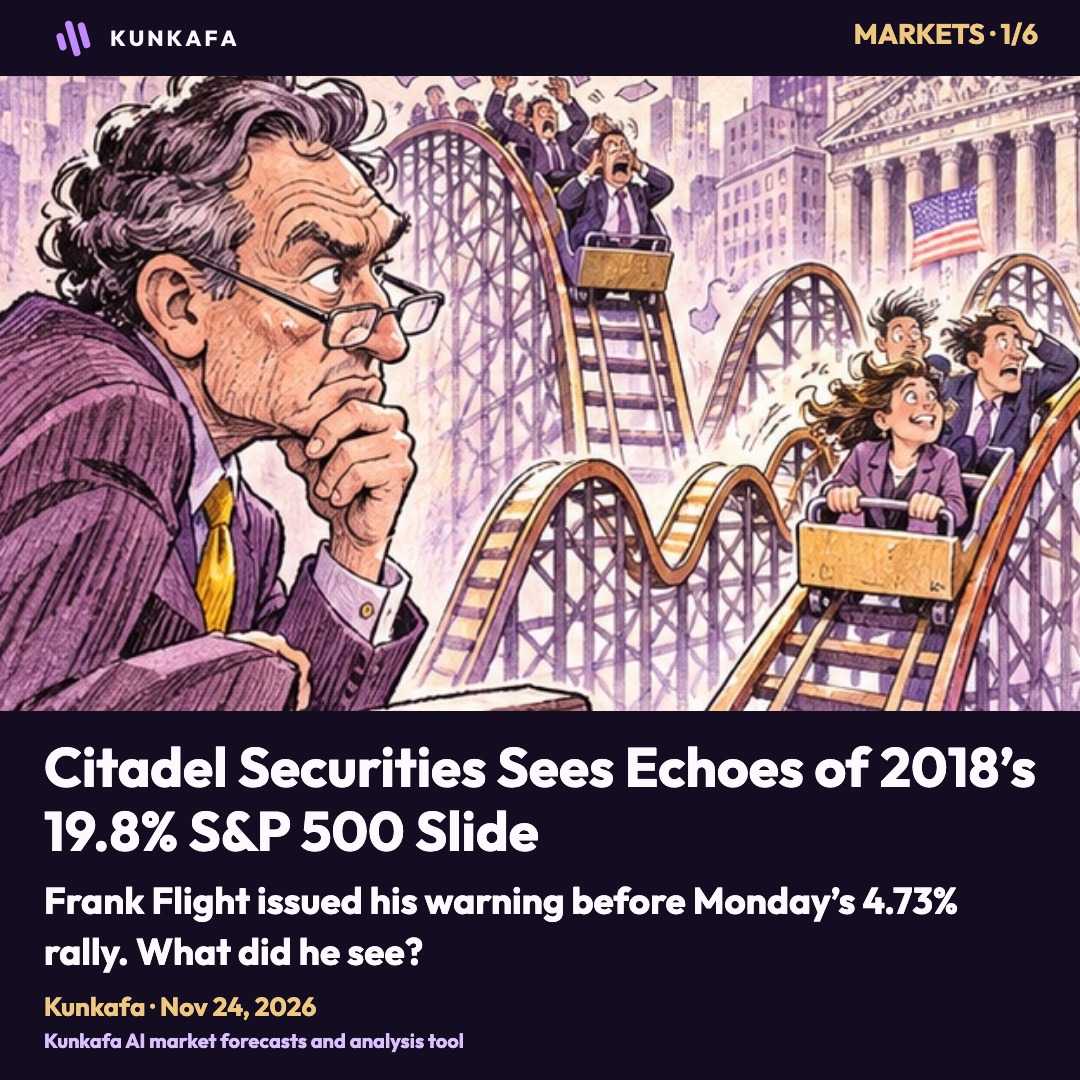
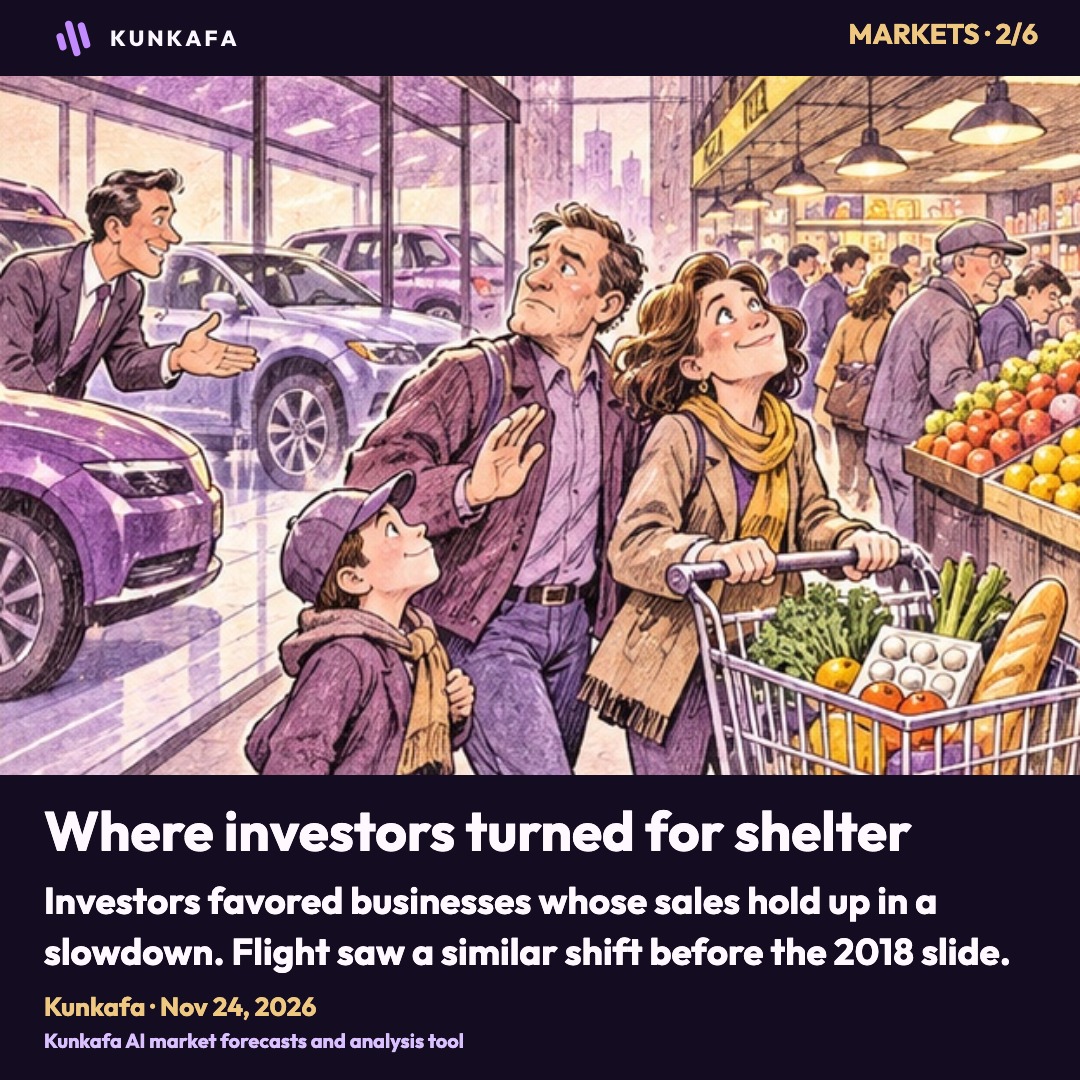
Before the S&P 500 lost 19.8% in 2018, investors had already started selling companies most exposed to the economy and buying ones that could weather a slowdown. Citadel Securities strategist Frank Flight sees that pattern again. He also points to a stronger dollar and a narrowing gap between long- and short-term Treasury yields. In a November 21 note, he warned that an increasingly hawkish Fed and high expectations for AI earnings could leave stocks vulnerable to a deeper decline. [1] [2]
Flight wrote after Friday’s close and before Monday’s rally. The S&P 500 jumped 4.73% to 7,237.17 on November 23 as Nvidia reinstated Jensen Huang. That narrowed the loss from October 6’s record close to 7.4%, from 11.6% on Friday. The rebound changed the scale of last week’s selloff. It also showed how much one chipmaker still matters to the index. [2] [3]
2018 Again..?Frank Flight · Global Macro Strategy · November 21, 2026Citadel SecuritiesKey points
- Treasury yields are one place where the historical paths diverge.
- Flight gives no S&P 500 target or timetable for another leg down.
What happened after the Fed hiked in 2018
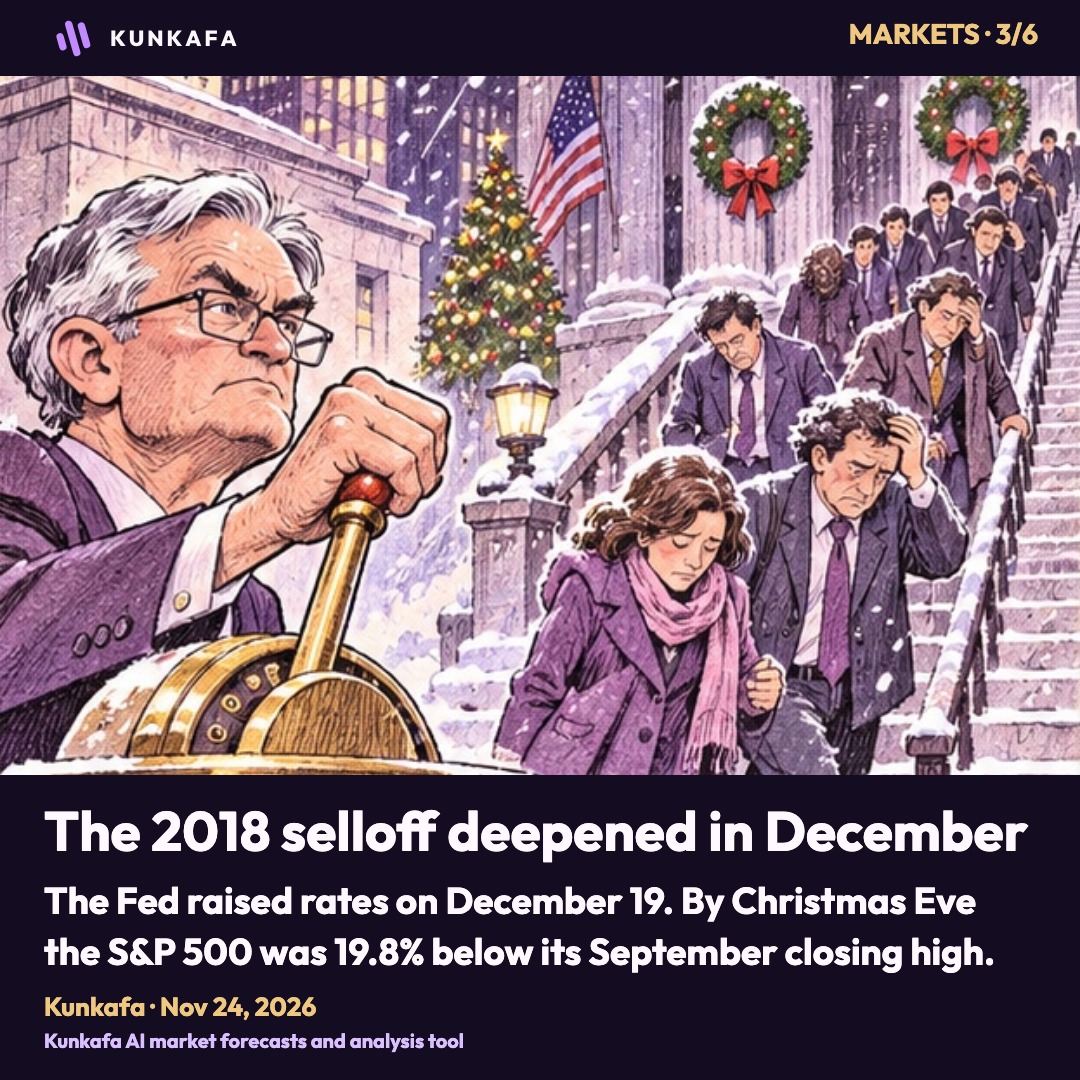
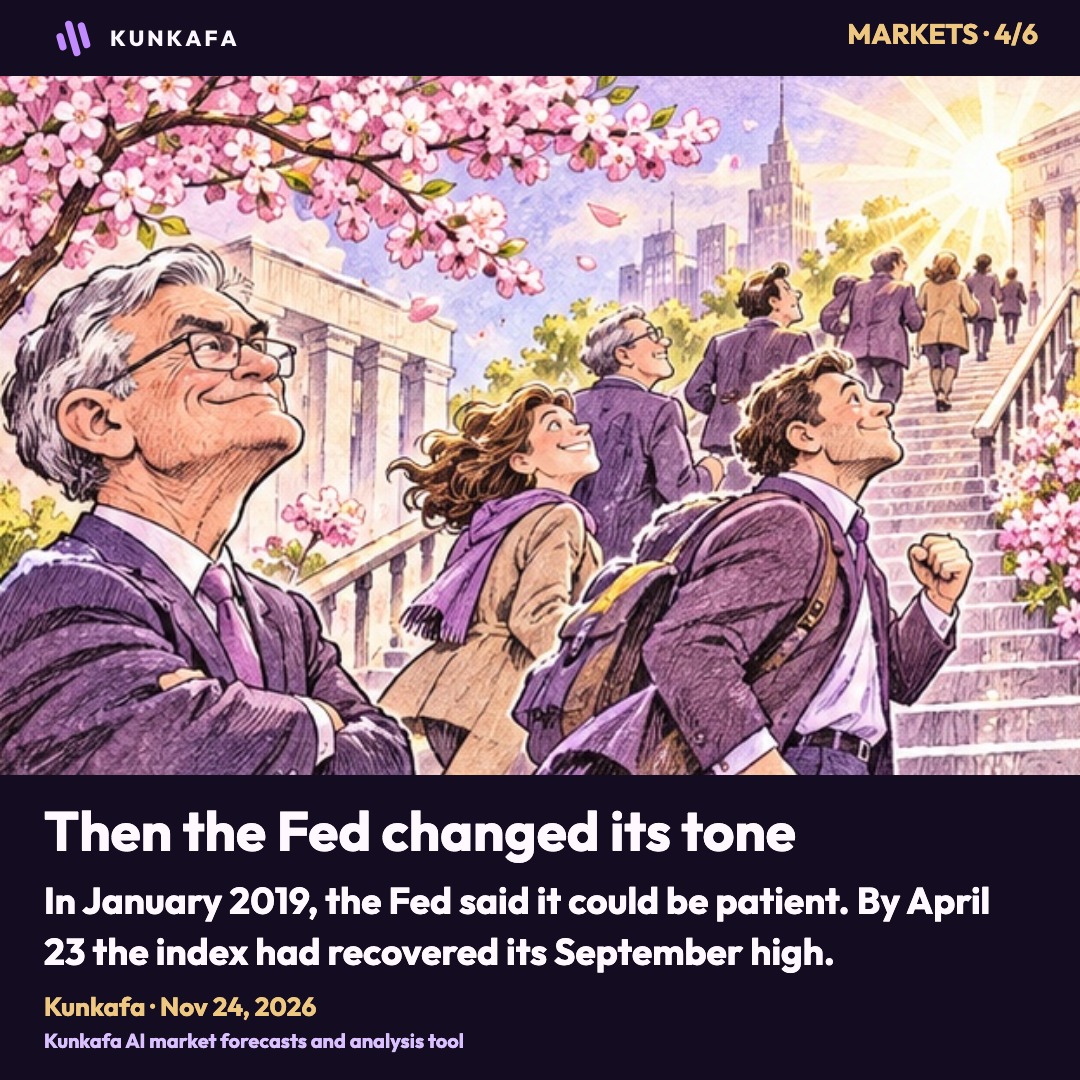
On December 19 the Fed raised its target range to 2.25%–2.50%. By Christmas Eve the S&P 500 closed at 2,351.10, down from 2,930.75 on September 20. The story also had a second half. On January 30, 2019, the Fed said it could be patient. By April 23 the index had regained its September closing high. [4] [2] [5]
What the bond market has yet to confirm
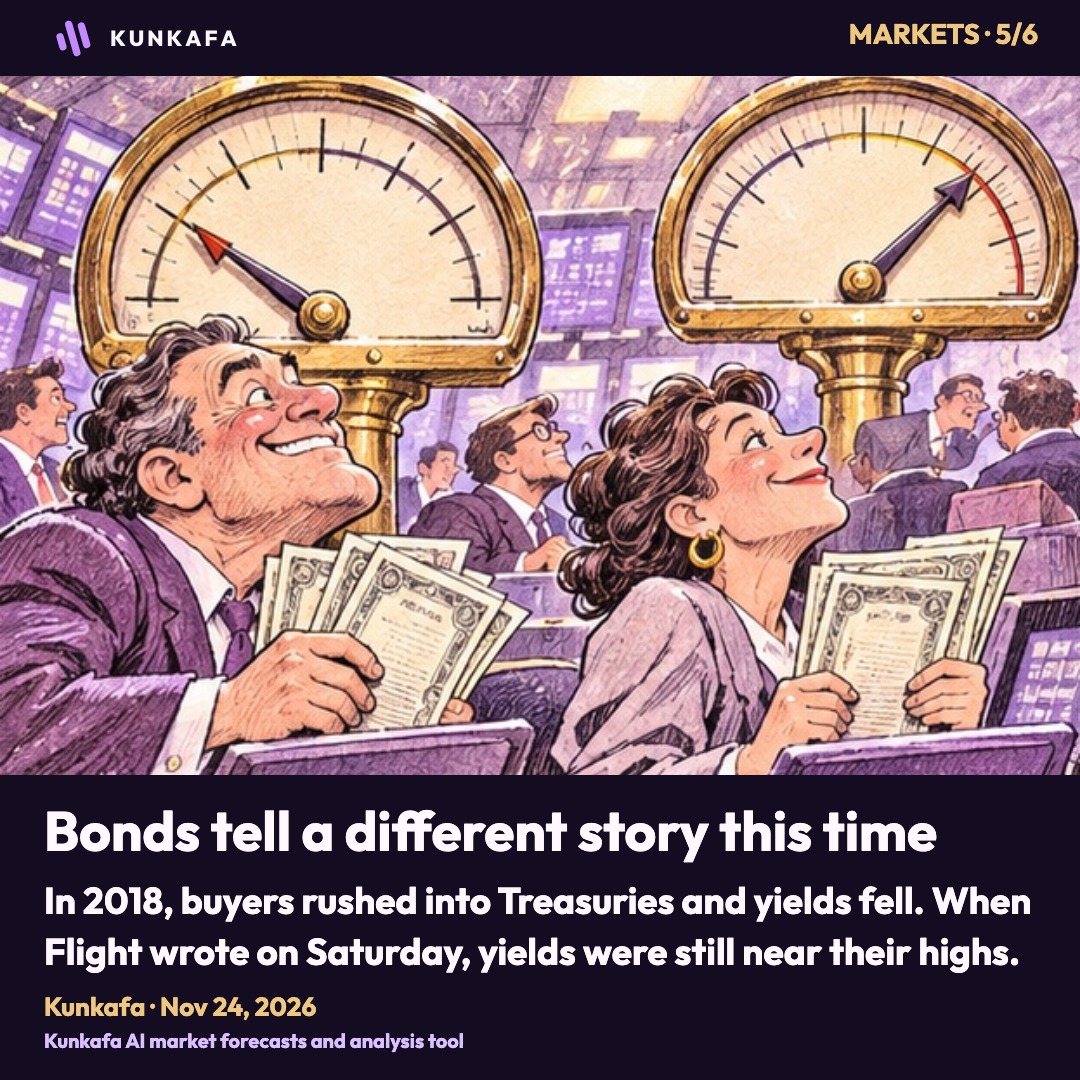
Flight singled out a difference. In 2018, investors bought Treasuries as growth fears spread, pushing yields down. When he wrote on Saturday, yields remained near their highs despite the equity selloff. That matters for AI shares. Higher yields reduce what investors are willing to pay today for profits years away. If customers also scale back orders for chips and data centres, the earnings themselves come under pressure. [1]
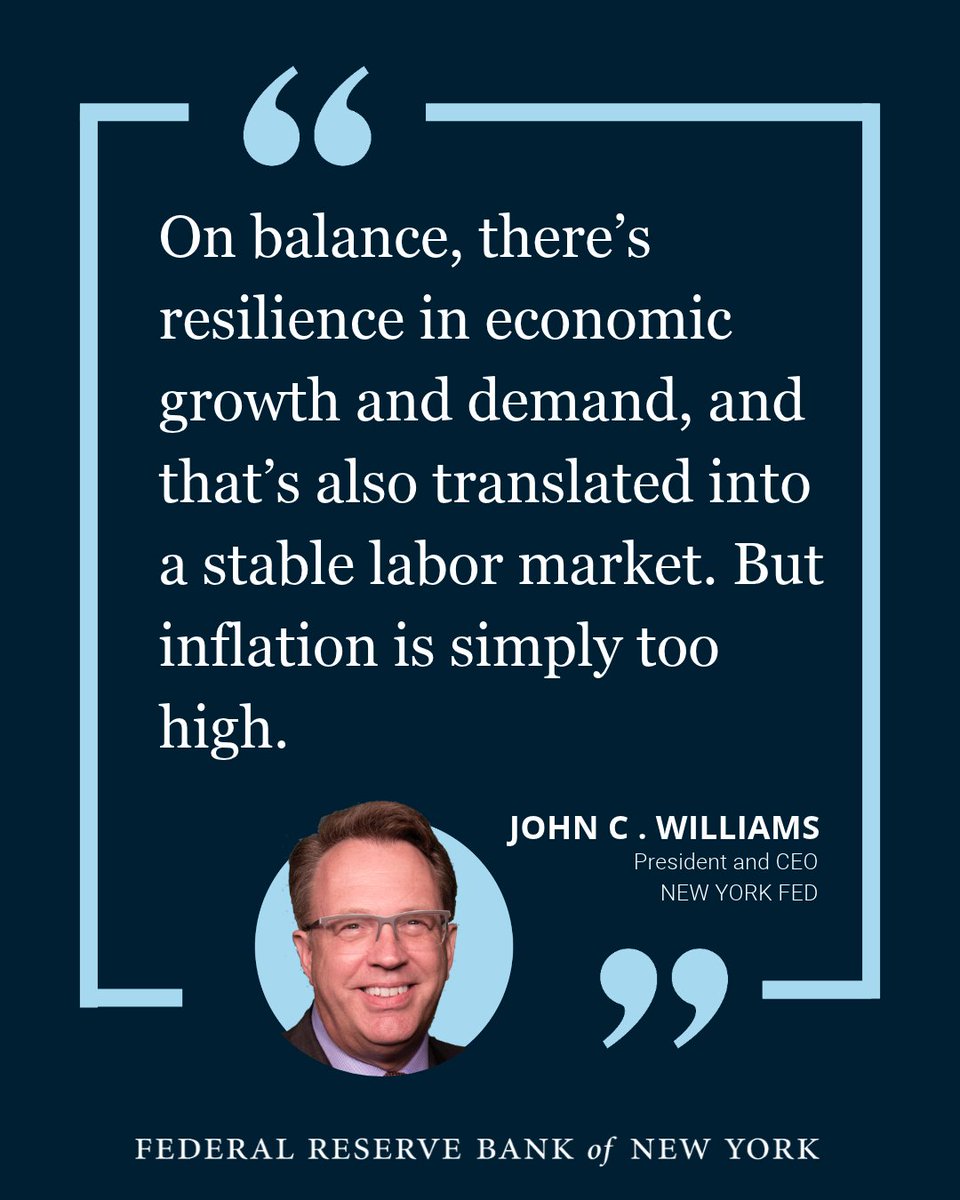
There is a live disagreement about growth. In Monday’s remarks, New York Fed President John Williams put US growth around 2.75% this year and near that pace next year. The Fed held its rate at 3.75%–4% in October. Its minutes left room for further increases. The December vote remains open. [6] [7]
In remarks at the University of Mount Saint Vincent today, New York Fed President John C. Williams discussed the Federal Reserve’s dual mandate goals, how AI is showing up in multiple areas of the economy, and his economic outlook. nyfed.org/4CzGvF8
Michael McDonough’s own market comparison ranked October 2018 closest, though returns after similar periods varied. Fund manager John Tinsman saw scope for another Fed pivot. Jim Bianco questioned whether policy was tight enough. Peter Boockvar and RSM economist Joseph Brusuelas weighed tech spending from different sides.
Perspectives on the Fed, AI spending and the 2018 parallel


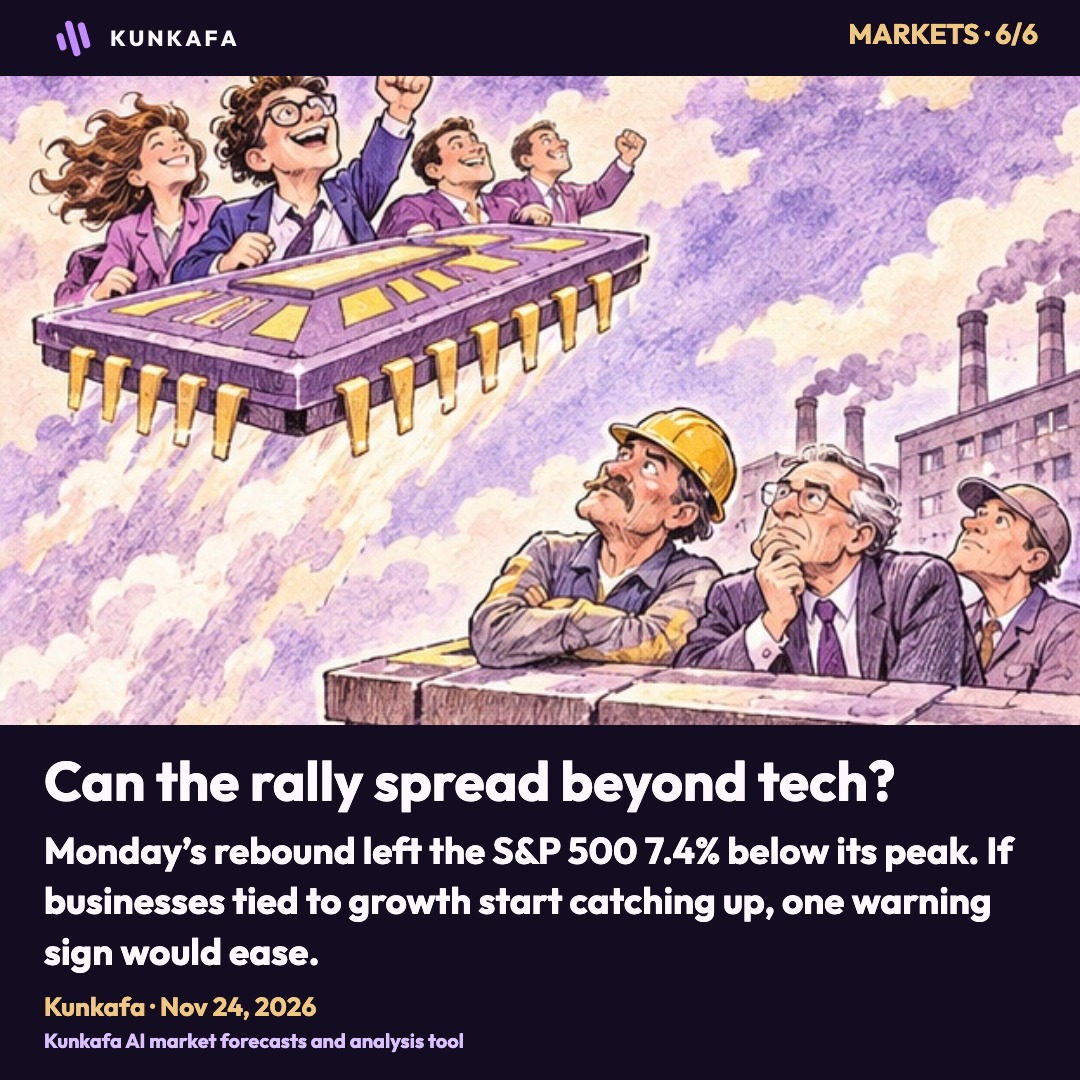
Oppenheimer’s John Stoltzfus takes the more optimistic side. He sees resilient demand and corporate fundamentals, although all 11 S&P sectors fell last week. That makes the next test broader than Nvidia. If companies exposed to the economic cycle start gaining on defensive shares, one of Flight’s earliest warning signs would ease. If they keep losing ground while tech rebounds, his 2018 comparison still has something to say. [8] [1]
Sources: [1] Frank Flight, Citadel Securities, Nov. 21 · [2] S&P Dow Jones Indices via FRED, daily closes · [3] NYSE, Nov. 23 · [4] Federal Reserve, Dec. 19, 2018 · [5] Federal Reserve, Jan. 30, 2019 · [6] John Williams, New York Fed, Nov. 23 · [7] FOMC, October meeting minutes · [8] John Stoltzfus, Oppenheimer, Nov. 23
Kunkafa forecasts
S&P 500 Index
How far it could move, which way, by when, and how confident Kunkafa is.
Check the latest forecastsRelated articles
 MarketsThe World Watches a Year’s Gains Slip Through Its FingersKunkafa ranks the Nasdaq 100 and S&P 500 selloff against decades of price data and measures returns one, five and 21 trading sessions after similar losses.
 EconomyFed’s Williams Signals Rates May Need to Rise FurtherJohn Williams signaled the Fed may need to raise rates further. He sees inflation reaching 2% in 2028 and left the size and timing of another hike open.
More in Markets

Nasdaq Futures Slip. S&P Rally Won Back Just 46% of Losses
Nasdaq-100 futures were down 1.51% at 10:44 UTC. Monday’s rebound had recovered less than half the points the S&P 500 lost from October 23 to Friday.

Sanofi Bets $41 Billion on Insmed and Its Breakout Lung Drug
The $175 cash offer is 46% above Insmed’s share price before deal reports. Brinsupri crossed $1 billion in cumulative sales little more than a year after launch.

Foreign Buyers Return to Dubai Stocks in an AED248m Swing
Dubai Islamic Bank accounted for 93% of the pickup in share trading. Deyaar led on volume even as foreign ownership fell.