Commodities · Explainer
China’s Independent Refiners Test Syrian and Egyptian Crude Oil
Kpler’s Amena Bakr says refiners are seeking alternatives to Iranian and Venezuelan barrels. Competitive prices could turn a trial into repeat orders.

Kunkafa News · Published · 4 min read
 By Kareem FaridDiscuss with the author on X
Here is a visual story in summary
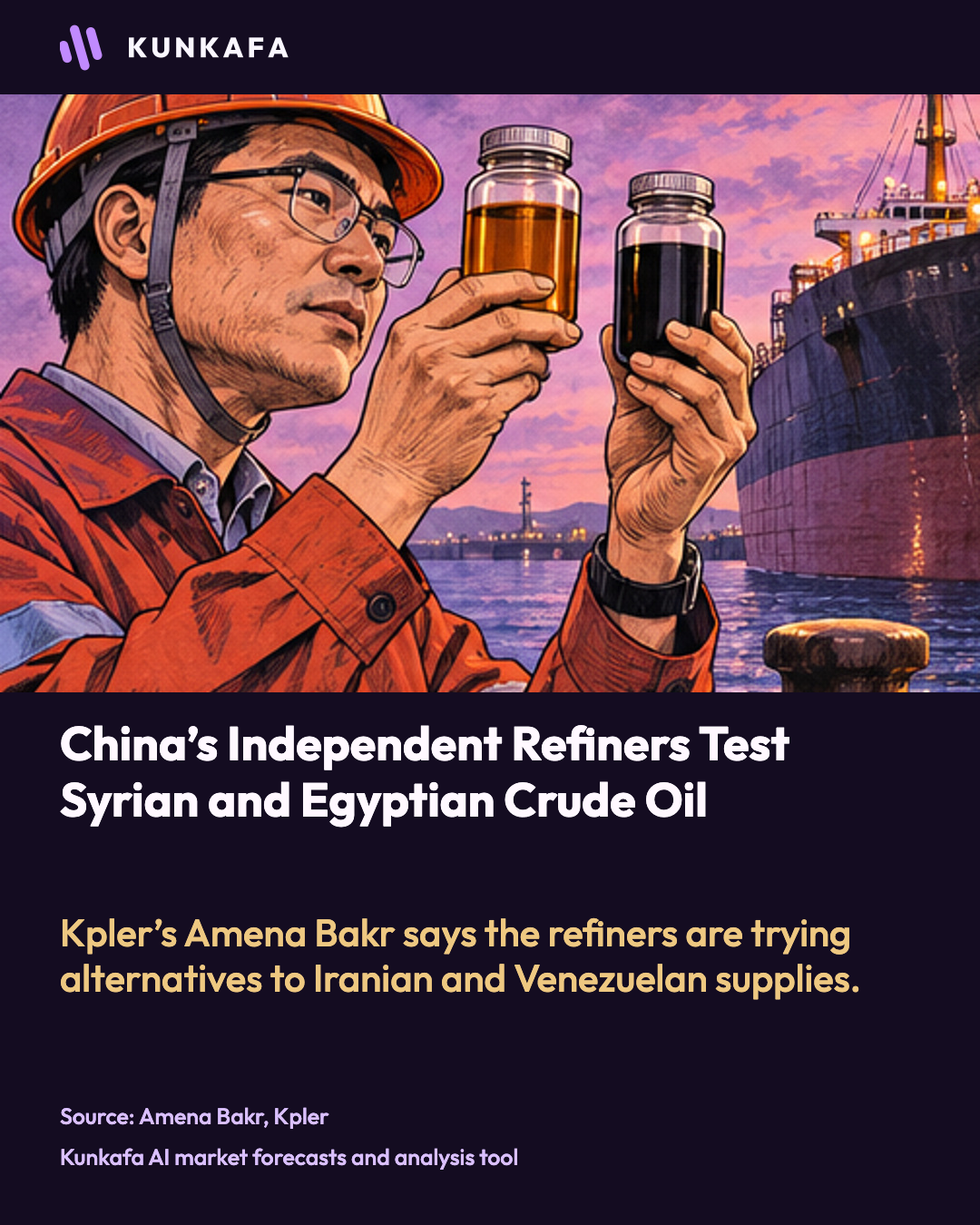
China’s independent oil refiners are testing crude from Syria and Egypt as alternatives to Iranian and Venezuelan supplies, according to Amena Bakr, who leads Middle East energy and OPEC+ analysis at Kpler. Both origins are unusual choices for these buyers. [1]
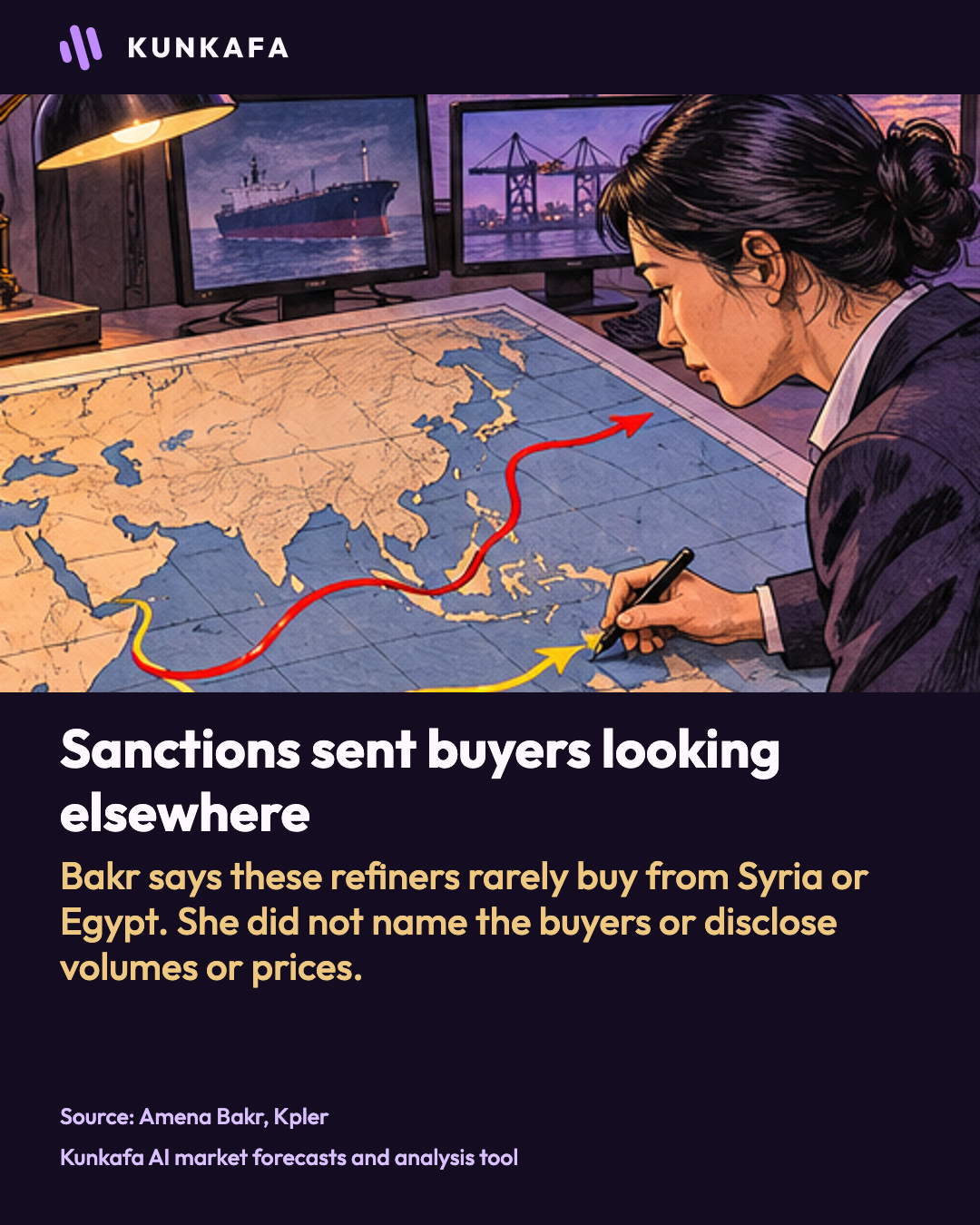
Sanctions gave the refiners a reason to look elsewhere. Price could give them a reason to stay, Bakr wrote on November 26. She did not identify the buyers, grade names, volumes or agreed prices. [1]
New: China’s teapot refiners are diversifying their crude slates, testing rare Syrian and Egyptian grades to replace Iranian and Venezuelan barrels. Sanctions are reshaping trade flows, but competitive pricing could make some of these sourcing shifts permanent. #OOTT #CrudeOil @Kpler
What makes a barrel worth buying twice
For an independent refiner, often called a “teapot” in the oil trade, the useful comparison is how much saleable fuel it can get from a barrel after paying for delivery and processing. A low purchase price alone tells the buyer little about that margin.
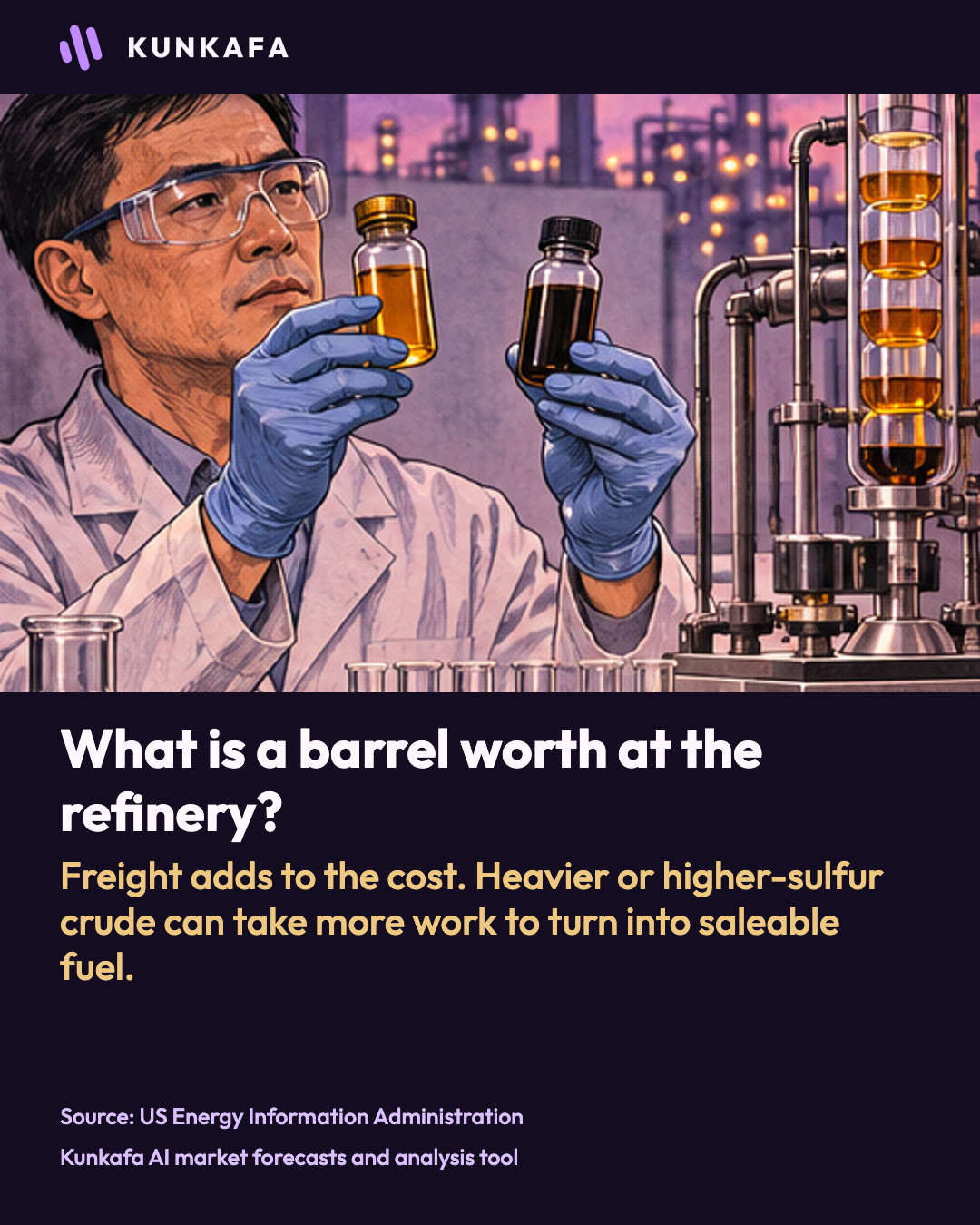
Density and sulfur content change the calculation. A refinery can make gasoline, diesel and jet fuel from light crude with relatively simple distillation. Heavier crudes can require additional processing, while sulfur must be removed to meet fuel specifications, the US Energy Information Administration explains. [2]
China’s wider search for supply
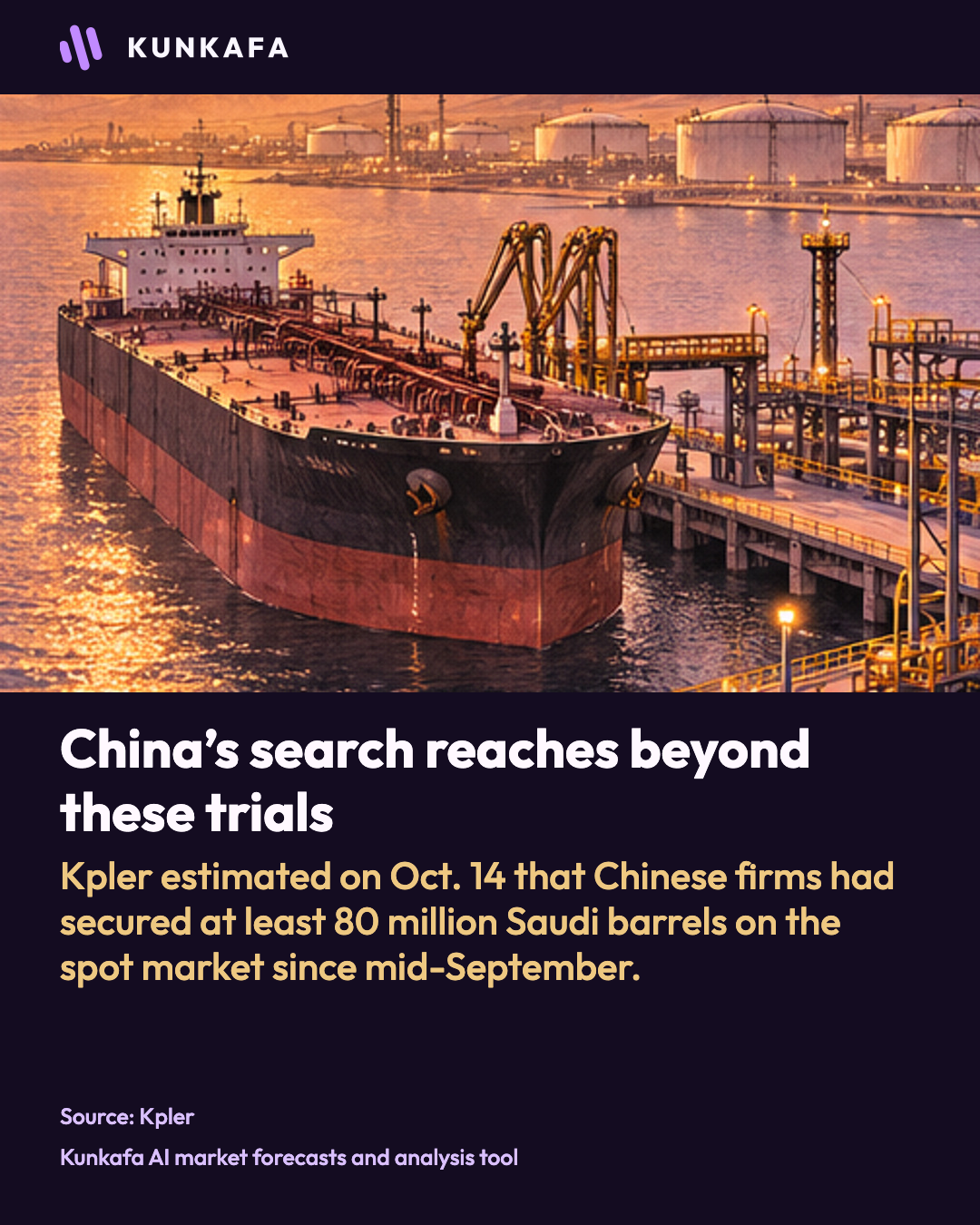
The search for alternatives was already under way this autumn. On October 14, Kpler estimated that Chinese companies had secured at least 80 million barrels of Saudi crude on the spot market since mid-September, for loading from September through November. That estimate covered Chinese firms more broadly. [3]
For Syrian and Egyptian suppliers, repeat orders would be the first sign that these trials are opening a lasting market. Until buyers return for another cargo, the scale of the opportunity remains open.
On November 24, Jack Prandelli compared how Chinese refiners weathered supply shortages, while Giovanni Staunovo highlighted research on the limits of substitution. Earlier posts from Kyrylo Shevchenko and John Kemp examine the price incentive and the scale of the independent sector.
Perspectives on China’s search for crude oil


Sources · [1] Amena Bakr, November 26 · [2] US Energy Information Administration · [3] Kpler, October 14
Kunkafa forecasts
Brent oil
How far it could move, which way, by when, and how confident Kunkafa is.
Check the latest forecastsMore in Commodities

How Qatar Produced a Third of the World’s Helium in 2025
Helium makes up an estimated 0.04% of Qatar’s North Field reservoir. The scale of gas processing turns that trace into a major industrial supply.

Gold Jumps $104 an Ounce After Thanksgiving
Spot gold rebounded to $3,671 early Friday, two days after touching its lowest price since September 2025.

Qatar’s LNG Shipments Recover to Half Their Prewar Pace
Tanker loadings are running at about 1.4 cargoes a day, the fastest pace since the war began. For gas buyers, the next test is whether those cargoes arrive on schedule.