Crypto · Explainer
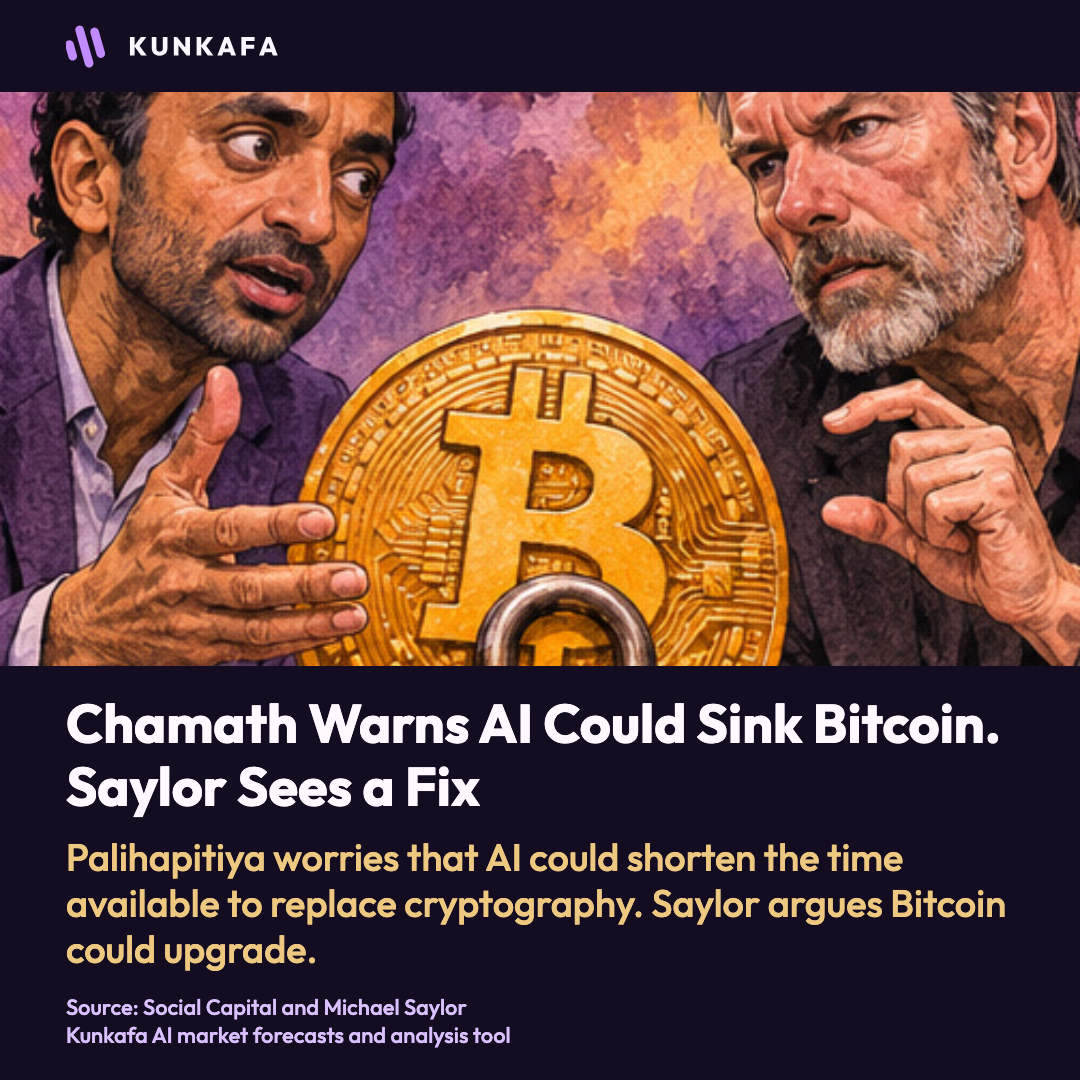
Chamath Warns AI Could Sink Bitcoin. Saylor Sees a Fix
Palihapitiya says AI could shorten the time it takes to break digital locks. Michael Saylor, Adam Back and Muneeb Ali dispute different parts of that argument.

Kunkafa News · Published · 4 min read
 By Kareem FaridDiscuss with the author on X
Here is a visual story in summary


Key points
- Palihapitiya cites a sharp fall in the time needed to solve an old cryptography challenge. Bitcoin signatures use different mathematics.
- Saylor proposes changing Bitcoin’s cryptography. Ali says his team has been working privately on how to make an upgrade possible.
Investor Chamath Palihapitiya asked on November 27 whether AI could render Bitcoin worthless by discovering mathematics that defeats its safeguards. Michael Saylor, founder of Strategy, answered that Bitcoin’s users could change the cryptography while keeping the currency. [1] [2] [3]
https://t.co/QeMNgKLofc
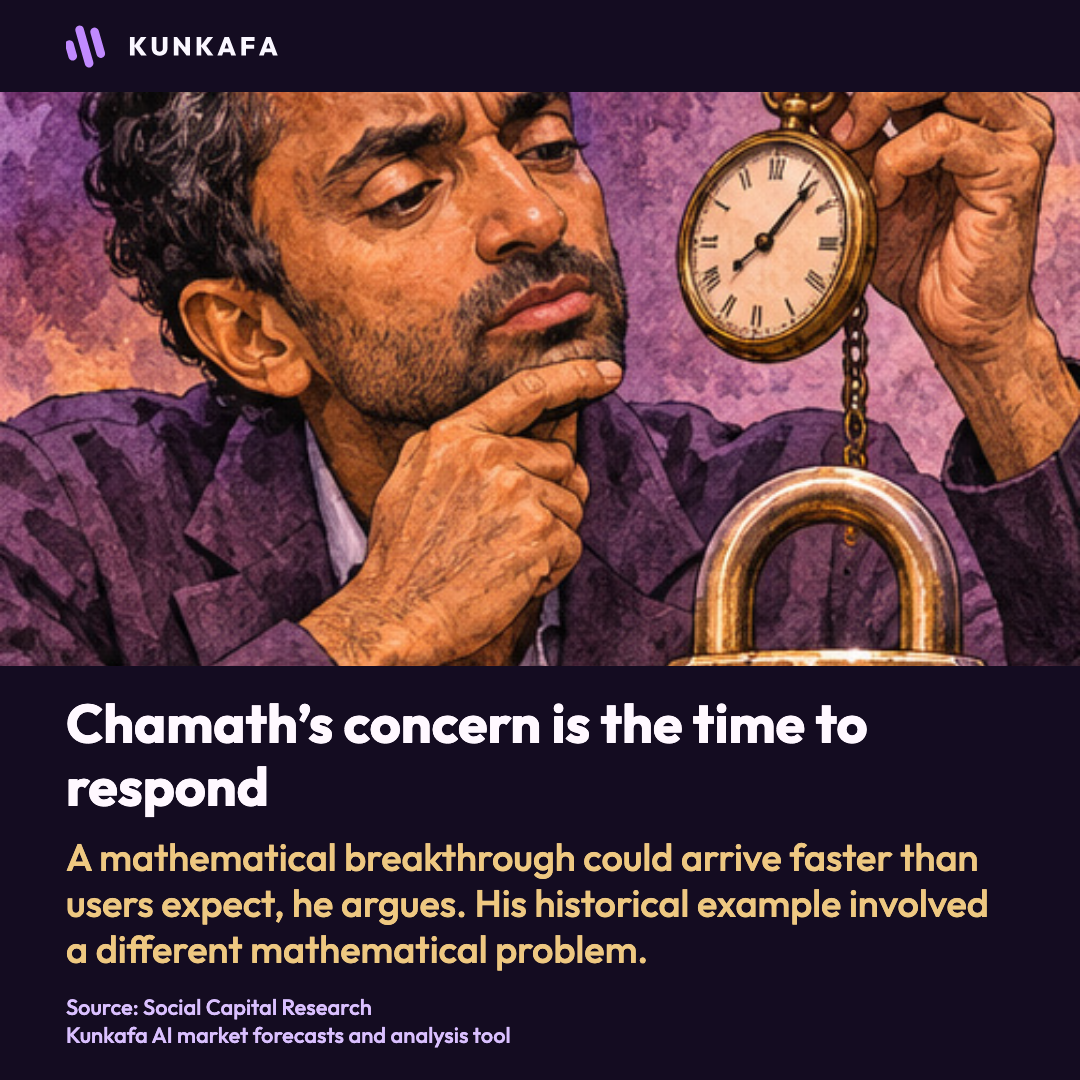
In his Social Capital essay, Palihapitiya pointed to a 1977 estimate that factoring a 125-digit number would take 40 quadrillion years. In 1994, volunteers factored a larger, 129-digit number in eight months. A better method and more computing power changed what was feasible. Bitcoin signatures rely on a different mathematical problem, as he acknowledged. [1]
His more recent example was an Anthropic experiment in which AI improved on a known result for a deliberately weakened cipher. The researchers reported no practical effect on systems in use. Palihapitiya’s concern is the shrinking time available to respond, especially for a currency whose rules are enforced by computers without a bank to intervene. Social Capital reserves the rest of his analysis for subscribers. [1]
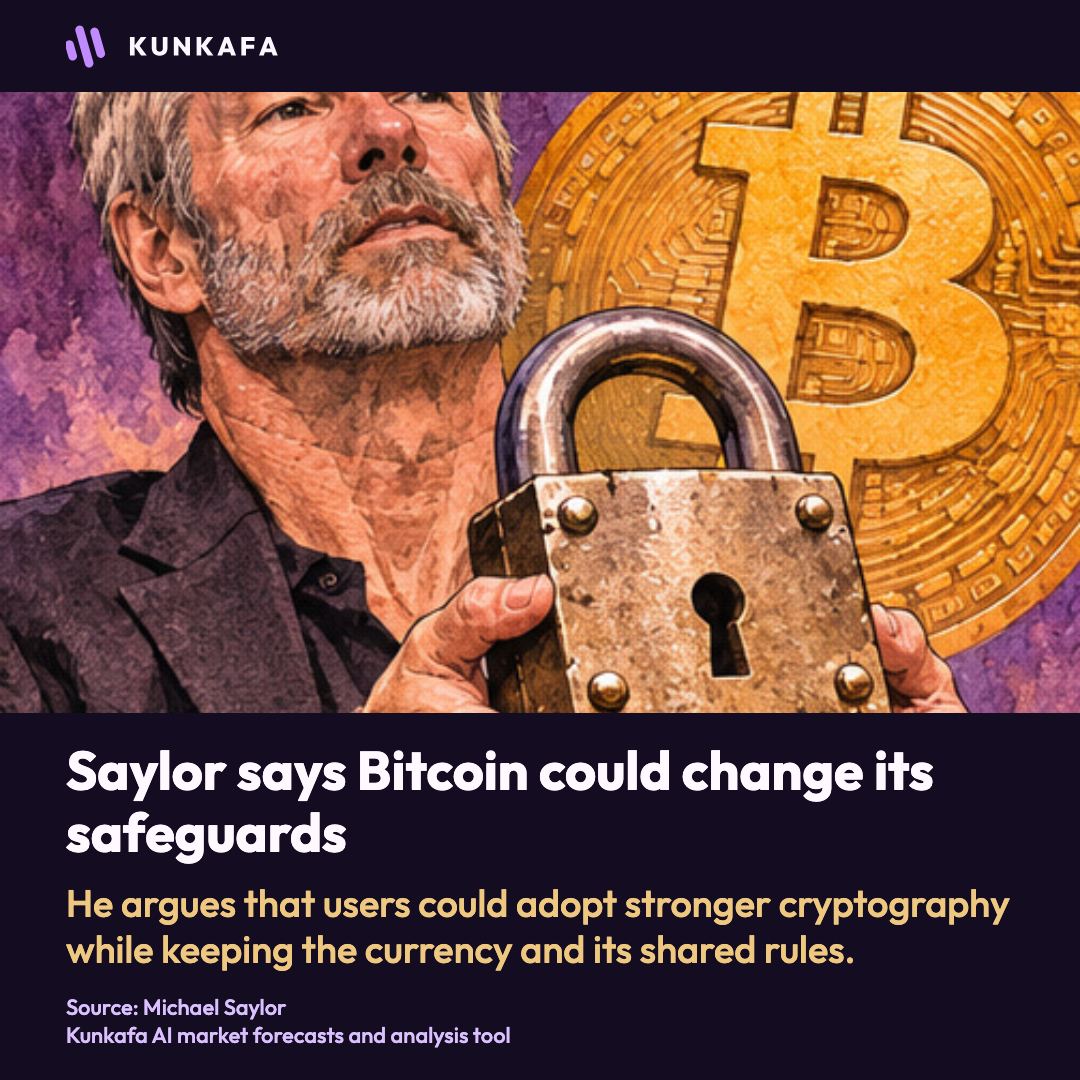
Saylor’s answer turns on what gives Bitcoin continuity. He compared its monetary rules to shared standards such as the metric system. If AI undermined encryption broadly, digital commerce would face the same problem, he argued, and Bitcoin could adopt stronger protections. [3]
This thesis rests on a logical fallacy. Bitcoin isn't software. It's an economic protocol like Arabic numerals, sexagesimal time, the metric system, and English. If AI breaks encryption, all digital commerce is at risk. The solution is an upgrade to next generation encryption.
Cryptographer Adam Back challenged the evidence for a threat to Bitcoin today. He argued that the examples leave elliptic-curve cryptography, the basis for Bitcoin signatures, and RSA unaffected. The essay gives no example of anyone forging a Bitcoin signature. [4] [1]
generic speculation. P!=NP, EC unaffected, RSA unaffected. AI is not magic
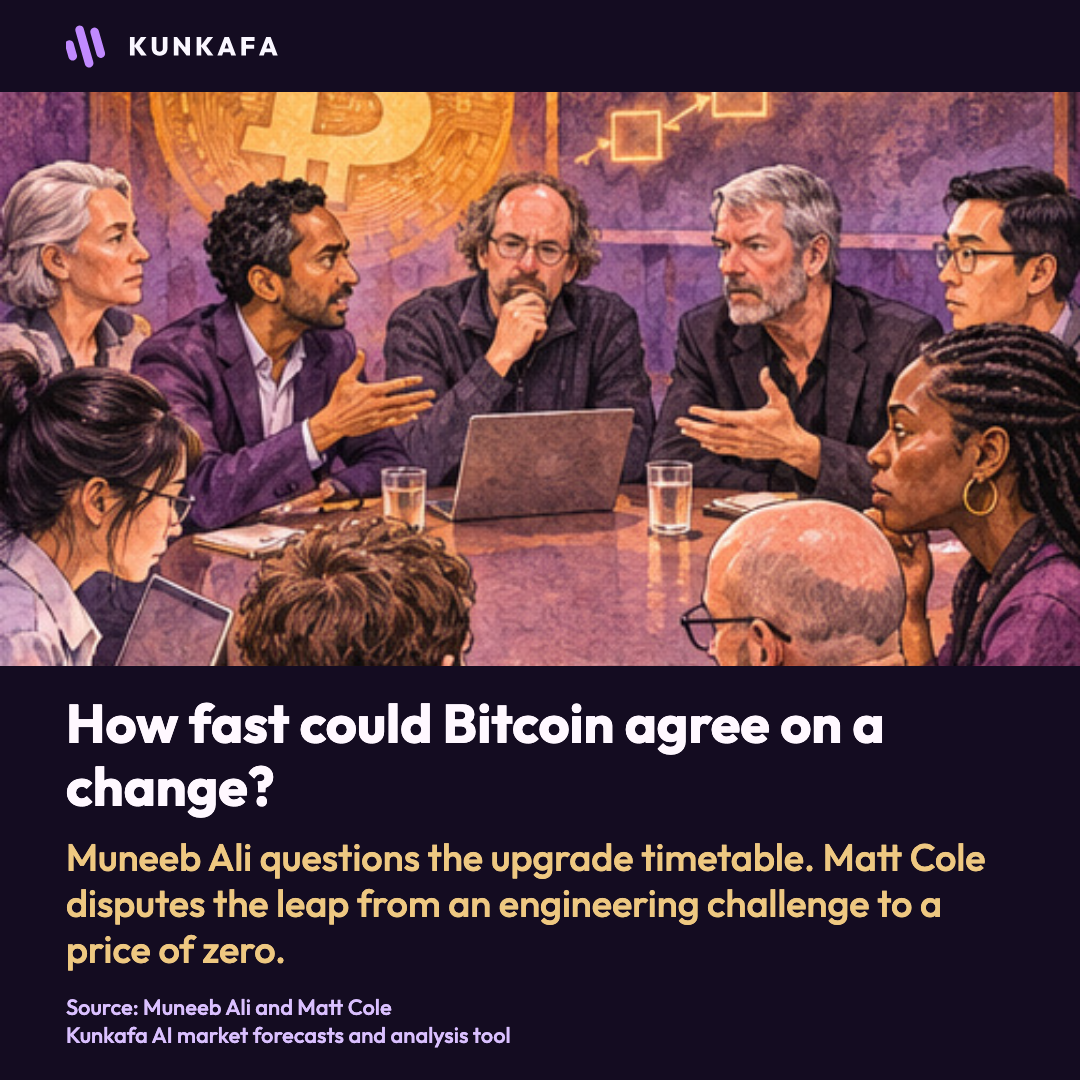
Stacks co-founder Muneeb Ali challenged Palihapitiya on timing. He asked whether evidence that Bitcoin could adopt new cryptography faster than the investor assumed would change his mind. Ali said his team had been working on the issue privately and gave no implementation timetable in the post. [5]
Chamath, would you change your mind on this if I present new information? Specifically, new information that shows you’re underestimating how quickly Bitcoin can ship upgrades and pushing future-proof cryptography is easily achievable. (We’ve been working on this privately.) https://t.co/IoB2XU7Rap
Strive CEO Matt Cole took issue with the leap from an engineering problem to a price of zero. He pushed that logic to its opposite extreme, asking in effect whether a successful upgrade would then imply an infinite price. Neither the essay’s public section nor the replies establish what Bitcoin would be worth after such a change. [6] [1]
The main argument appears to be Bitcoin won’t be able to upgrade quick enough, and will thus go to zero. If proven wrong, that must then mean the opposite is true, and Bitcoin goes to infinity.
Sources: [1] Social Capital Research · [2] Chamath Palihapitiya · [3] Michael Saylor · [4] Adam Back · [5] Muneeb Ali · [6] Matt Cole, November 27, 2026.
Kunkafa forecasts
Bitcoin
How far it could move, which way, by when, and how confident Kunkafa is.
Check the latest forecastsMore in Crypto

Pay Suppliers in Minutes, Binance Tells MENA Blockchain Week
Binance says stablecoins can free up cash tied up in overseas transfers. Coinbase led Dubai’s discussion on institutional payments, and RAKBANK and Zand examined what banks need to handle them.

CME Sees a Bullish Shift. Why Do Bitcoin Puts Still Lead?
A $47,500 put led monthly Bitcoin options trading, while the largest concentration of outstanding calls sat at $100,000.

Ripple Wins a Turkish Bank for Crypto Custody as XRP Slips
Yapı Kredi is safeguarding customer assets with Ripple’s technology. XRP already accounts for 9% of the value held with Turkish crypto providers.