Markets · Explainer
Bloomberg’s Anna Wong Warns Anthropic’s IPO May End the AI Trade
Claude is processing more tokens, but Anthropic is collecting less per million. Wong asks what shareholders gain if price cuts fail to win market share.

Kunkafa News · Published · 4 min read
 By Kareem FaridDiscuss with the author on X
Here is a visual story in summary

Key points
- Anna Wong says Anthropic is earning less per million tokens without gaining a larger share of token usage.
- Quarterly accounts give investors a way to test whether cheaper computing can offset weaker prices.
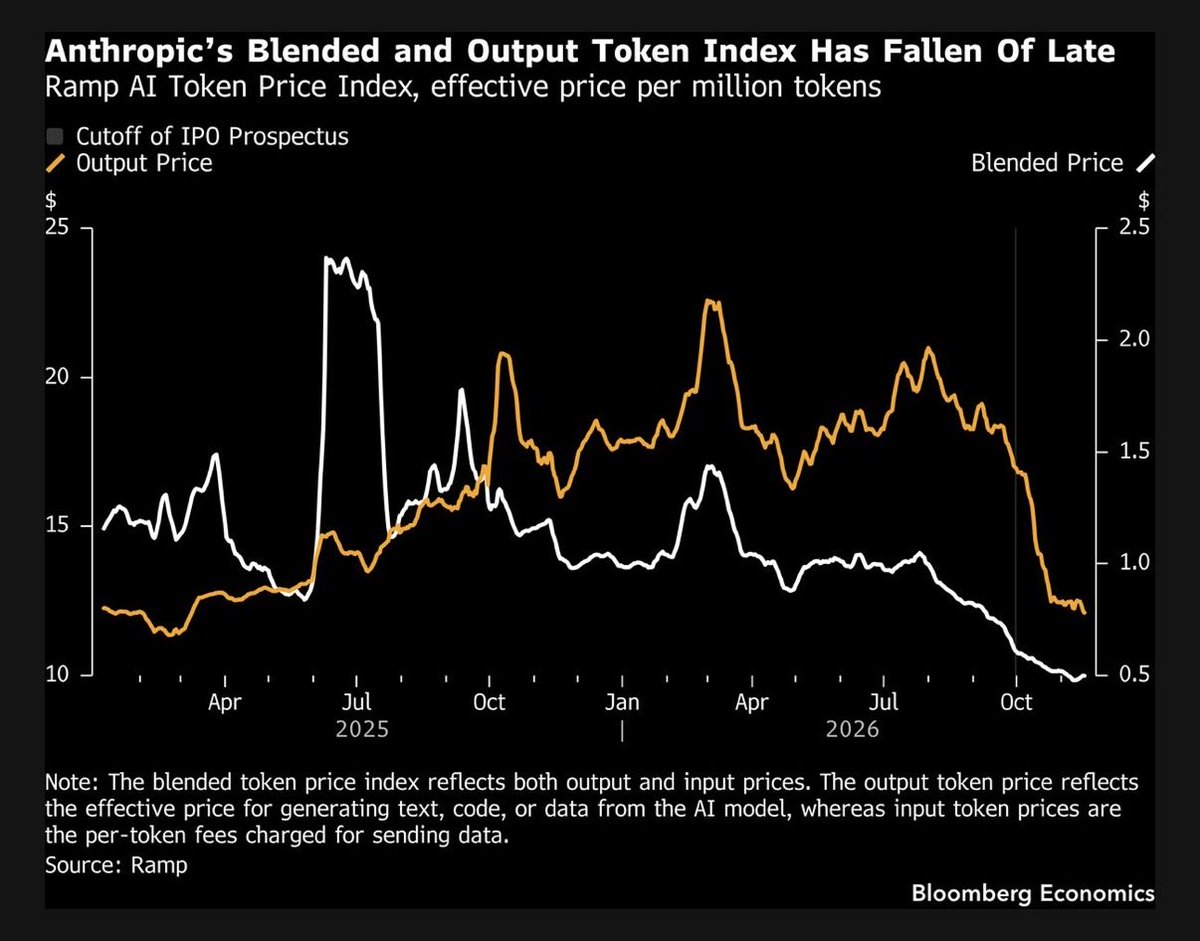
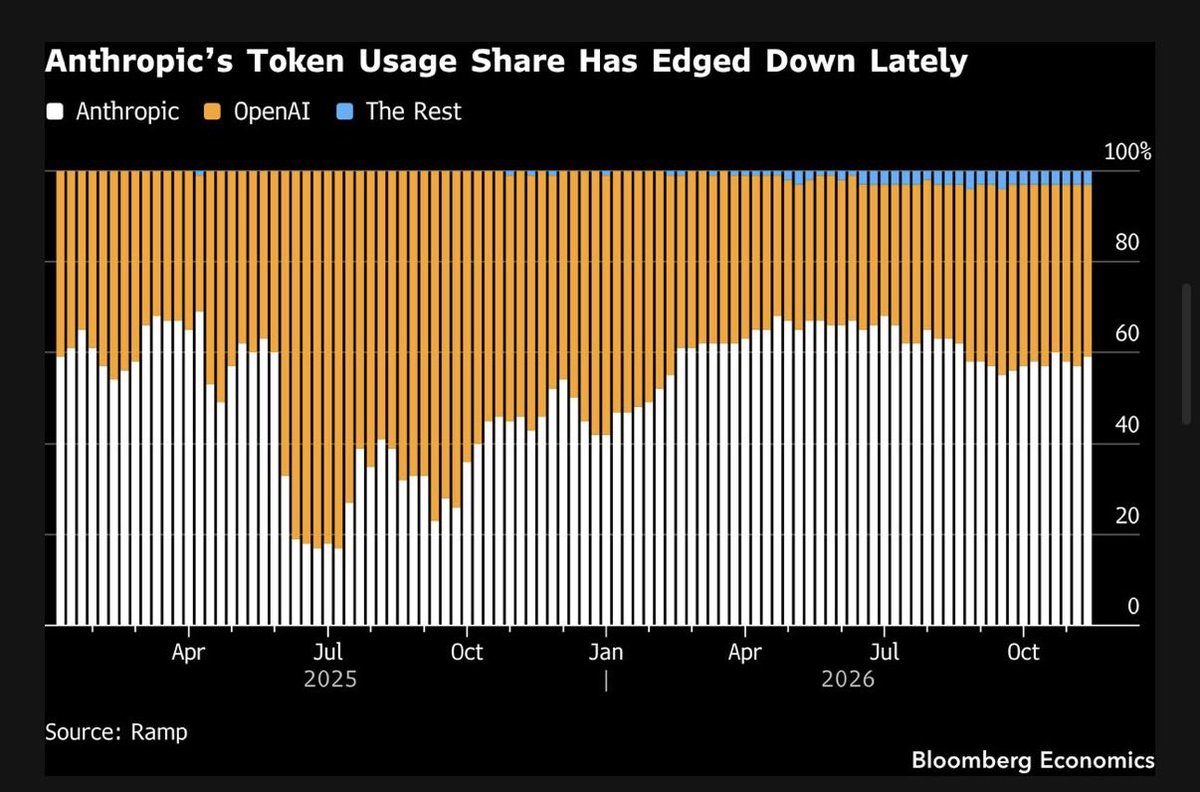
Anthropic’s stock-market debut could mark a turning point for the AI trade, Anna Wong of Bloomberg Economics wrote on Thursday. Her warning rests on what customers pay to use Claude: since the end of September, the effective price Anthropic receives per million tokens has fallen sharply. Tokens are the units of text a model processes. Usage has surged, yet its share of tokens processed has edged down, according to the charts Wong shared. [1] [2]
Consider a customer who sends Claude twice as much work after a price cut. Anthropic can earn more from that customer even as each unit of work brings in less. Wong’s concern is what the company got for giving up part of its price premium. If rivals attract users just as fast, a technical lead may give shareholders little protection against the next round of discounts. [1]
In today’s piece @TheTerminal, I write about why Anthropic IPO may mark the end of the AI trade. blinks.bloomberg.com/news/stories/T… Two charts summarized it the argument: 1) Its effective price per million token has come down sharply of late (its s-1 cutoff date gives financial… Show more

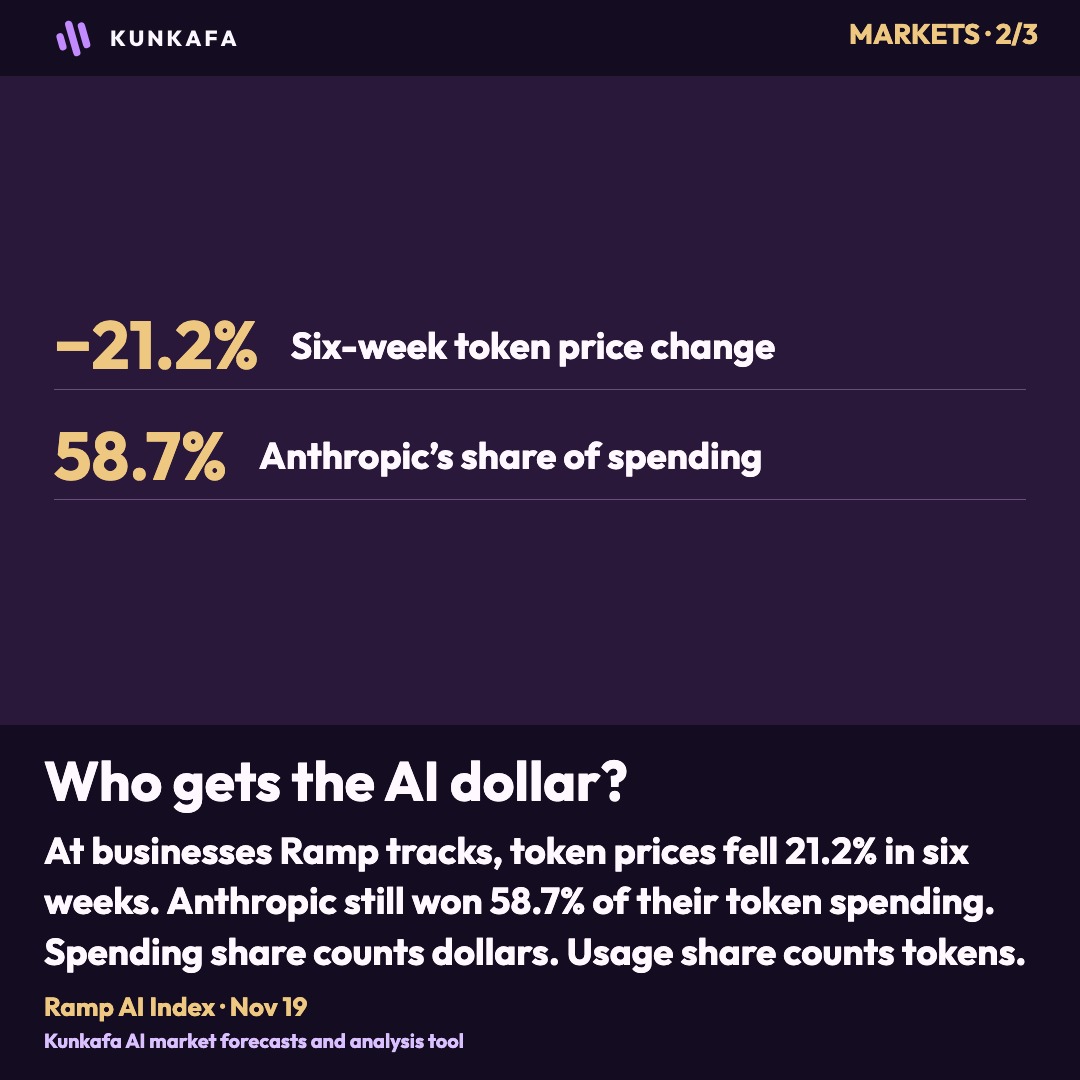
Data from businesses tracked by Ramp offer another view. On November 19, Ramp’s Ara Kharazian reported a 21.2% fall in token prices across its sample over six weeks. Yet Anthropic captured 58.7% of the dollars those businesses spent on tokens, up 3.4 percentage points in a week. Spending share counts dollars. Wong’s usage share counts tokens. A provider can command a larger slice of spending while processing a smaller slice of requests measured in tokens. [2] [3]
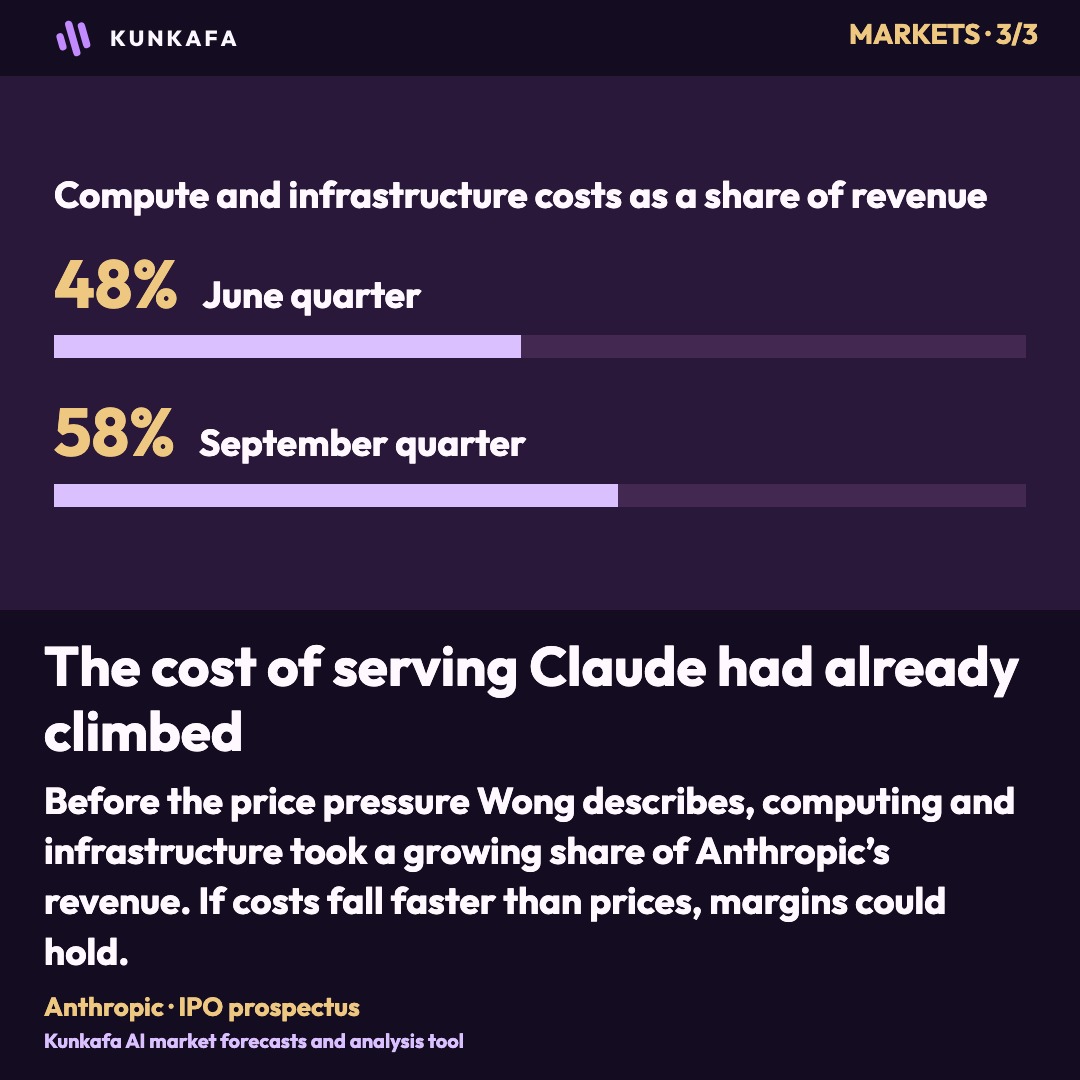
The other half of the equation is the cost of delivering an answer. Anthropic’s IPO prospectus puts computing and infrastructure expenses at 48% of revenue in the June quarter and 58% in the September quarter. The company attributed the increase to additional capacity, including $5 billion of more expensive short-term computing commitments. Those figures predate the price pressure Wong describes. [4]
Wong allows that the capital raised could lift AI stocks in the short term. The harder test for Anthropic’s valuation comes with its quarterly results. If the cost of serving Claude falls faster than the price customers pay, margins could hold up. If prices keep falling while computing stays expensive, investors may reassess what a dollar of AI revenue is worth across the sector. That is the risk Wong sees in the IPO. [1]
Before Wong published her note, Jon Ma argued that demand for AI in finance and law was still in its early stages. In a reply to Ramp’s figures, MartinOL offered a customer’s explanation for rising volumes: cheaper tokens let teams run more agents on the same budget.
Perspectives on Claude’s pricing power


Sources: [1] Anna Wong, Bloomberg Economics, November 19 · [2] Anna Wong, November 19 · [3] Ara Kharazian, Ramp AI Index, November 19 · [4] Anthropic, final IPO prospectus, November 18 · [5] Jon Ma · [6] MartinOL
Kunkafa forecasts
Nasdaq 100
How far it could move, which way, by when, and how confident Kunkafa is.
Check the latest forecasts
More in Markets

El-Erian Says the AI Boom Has a Cost. What Does a VIX of 29 Mean?
The IPO rewarded investors who bought at $83. Across the S&P 500, options traders were paying for protection against bigger swings.

Ross Raises Its Annual Profit Outlook. Why Did Shares Fall 7%?
More shoppers helped lift earnings 21%. The discount retailer still trimmed its forecast for the holiday quarter.

Intuit Beat on Sales and Profit. Its Stock Still Sank 12%.
A weaker Credit Karma outlook took about $173 million off the annual revenue forecast. The pending Mailchimp sale is separate.