Tech
Analog Devices Drops 18.7% After a Record $15.2B Year
The chipmaker beat fourth-quarter earnings estimates. Its January-quarter profit forecast came in seven cents below consensus.

Kunkafa News · Published · 4 min read
 By Kareem FaridDiscuss with the author on X
Here is a visual story in summary
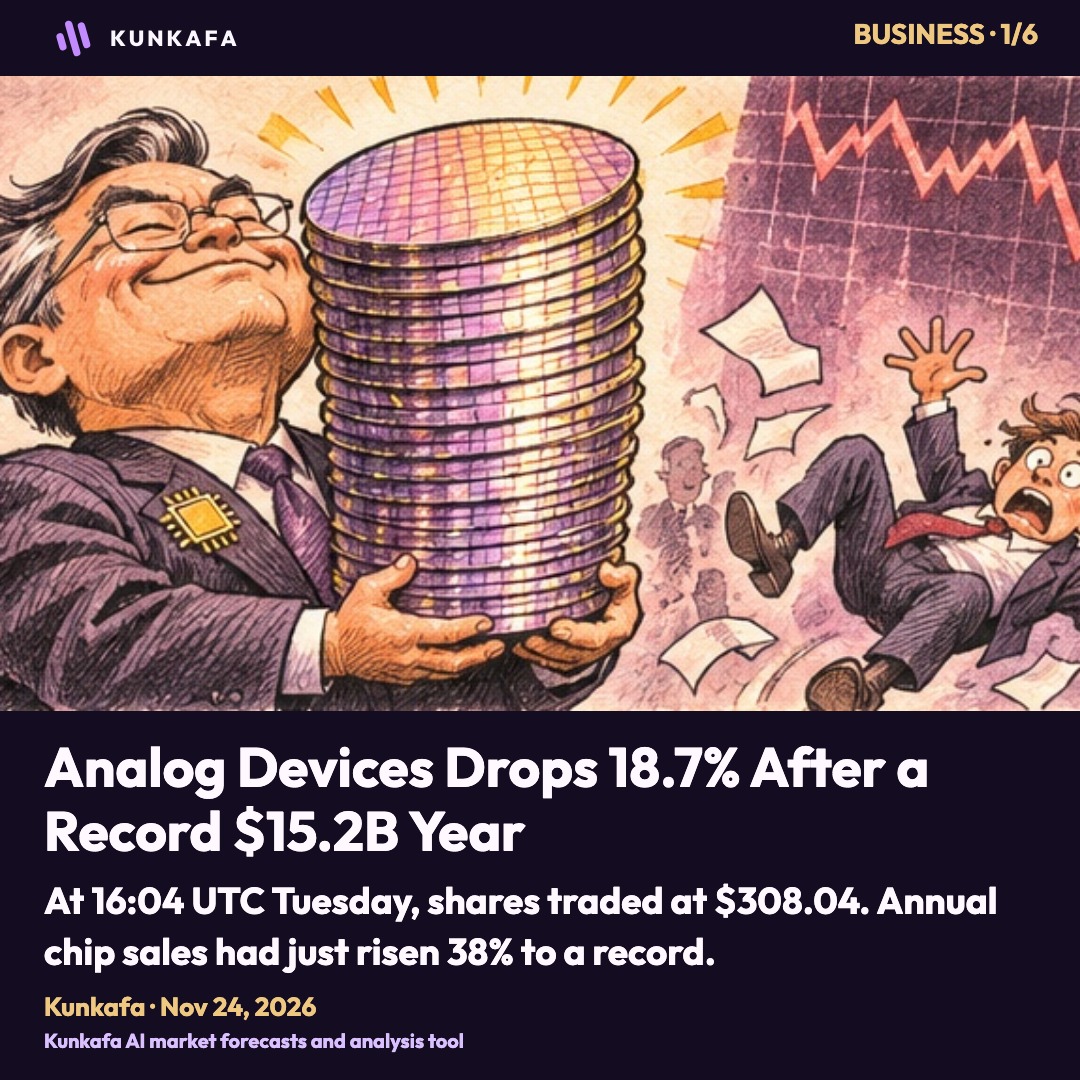



Analog Devices ended its fiscal year with the highest sales in its history. On Tuesday, investors marked its shares down 18.7% to $308.04 by 16:04 UTC, from Monday’s $378.75 close. The chipmaker had just reported $15.2 billion in annual revenue, up 38%. The less welcome figure was its earnings forecast for the three months ahead. [1] [2] [3]
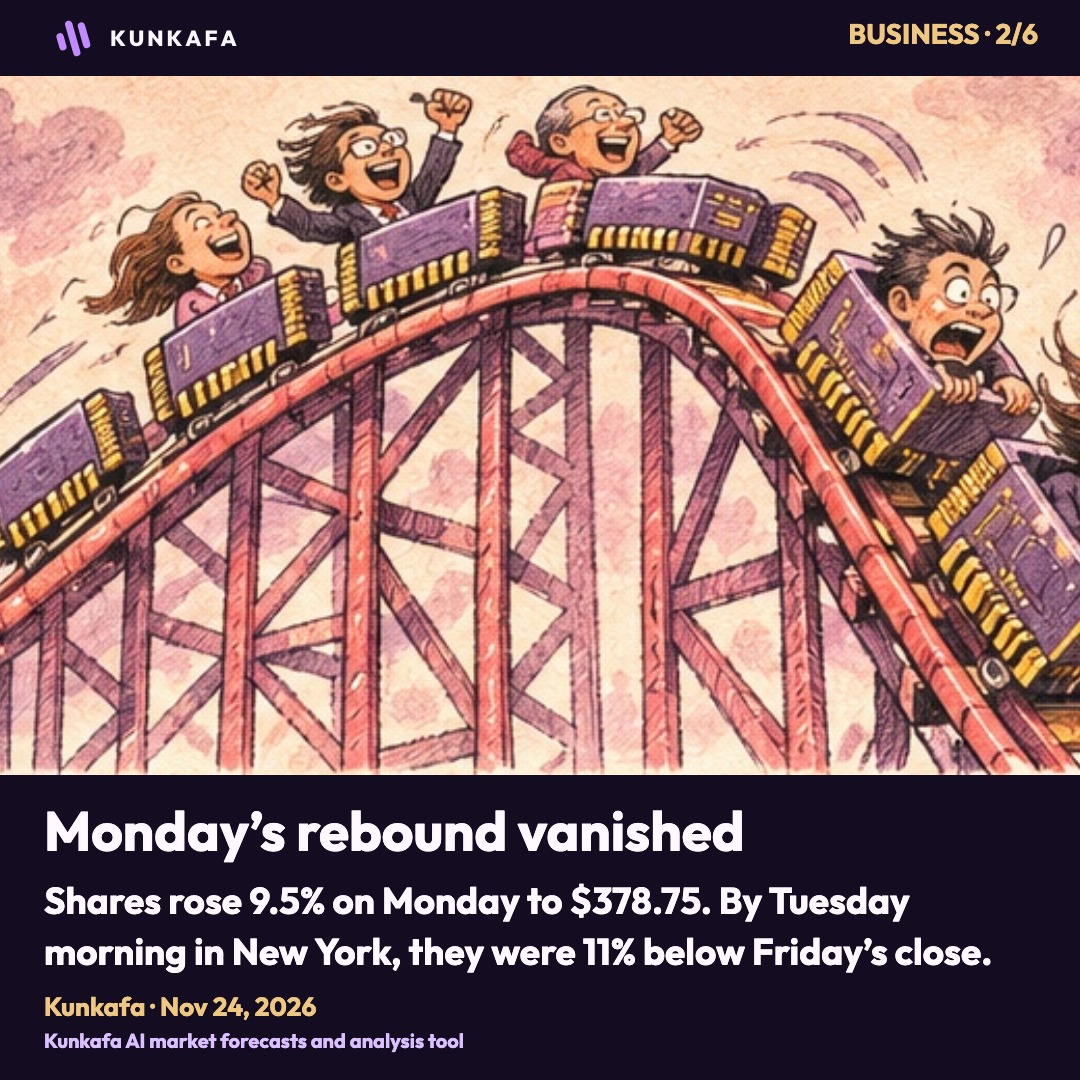
The selloff wiped out Monday’s 9.5% rebound. Nasdaq records show the stock closed at $345.92 on Friday and $378.75 on Monday. By late Tuesday morning, it was 11.0% below Friday’s close. [5]
Why the next quarter matters
Revenue reached $4.37 billion in the October quarter, up 42% from a year earlier. Adjusted earnings rose 80% to $4.06 a share, exceeding the $3.88 analysts had pencilled in, according to Investing.com. Under US accounting rules, diluted earnings more than doubled to $3.40 a share. [2] [3]
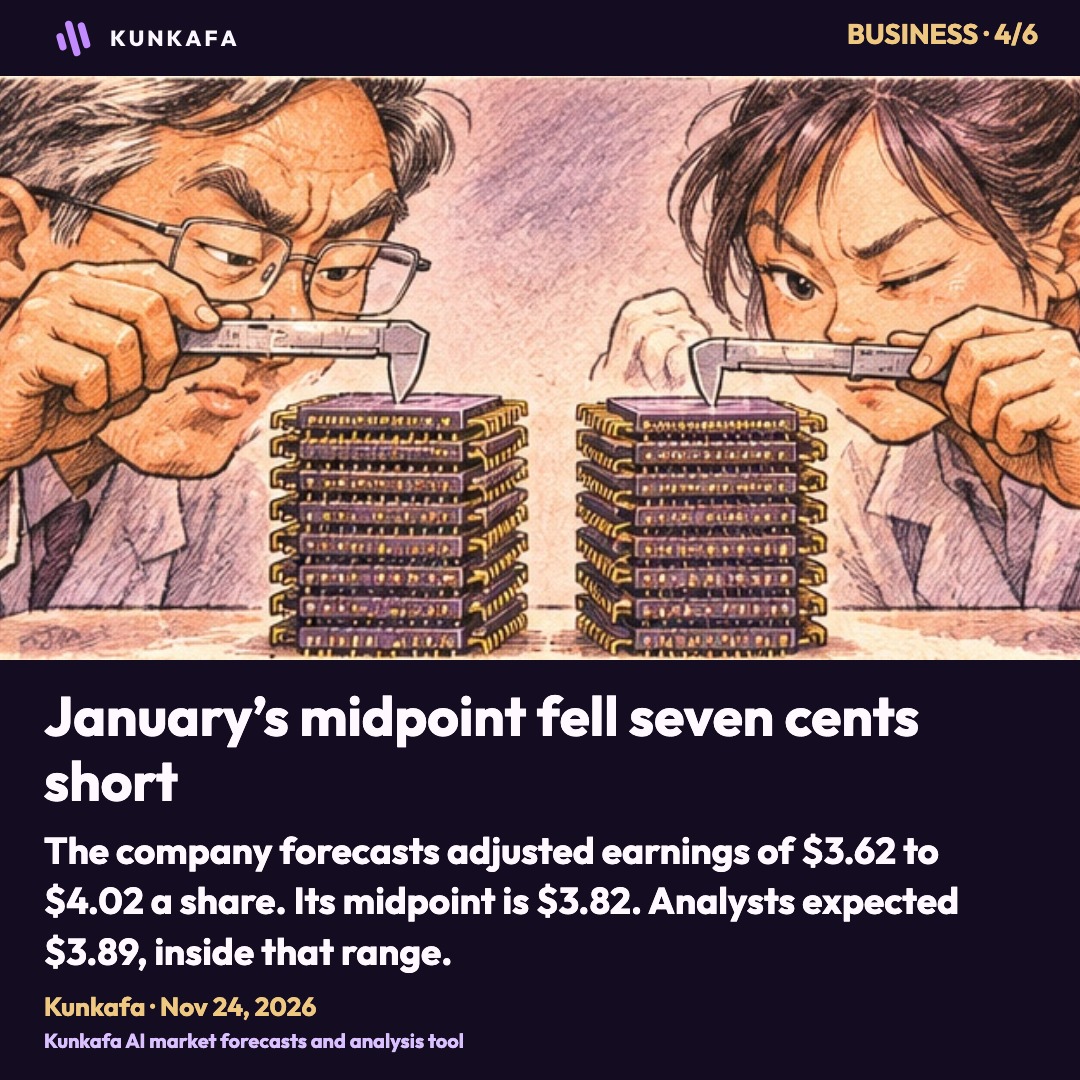
For the quarter ending January 30, ADI put the midpoint of its revenue forecast at $4.4 billion. That would add about $27 million in sales from the October quarter. Yet the midpoint for adjusted earnings is $3.82 a share, down 24 cents from October and seven cents short of the $3.89 consensus cited by Investing.com. The $3.89 estimate still fits inside ADI’s $3.62–$4.02 range. Its adjusted operating margin at the midpoint would also narrow to 50.5% from 52.3% in October. [2] [3]
Where the extra chip sales came from
Half of quarterly sales came from industrial customers. They bought $2.19 billion of ADI products, up 55% in a year. Communications grew fastest, while automotive and consumer sales also rose. CEO Vincent Roche said that more than two-thirds of the company’s growth over the full year came from markets outside AI, even as data centers and chip-testing equipment lifted demand. [2] [4]
| Market | Q4 sales ($ millions) | Share of sales | Year-on-year growth |
|---|---|---|---|
| Industrial | 2,194 | 50% | 55% |
| Automotive | 1,044 | 24% | 21% |
| Communications | 707 | 16% | 81% |
| Consumer | 429 | 10% | 7% |
Analog Devices fiscal Q4 ended October 31, 2026. Figures rounded.
ADI generated $5.5 billion in free cash flow for the fiscal year and returned $5.4 billion through dividends and buybacks. CFO Richard Puccio said the company is directing investment toward research, manufacturing capacity and cash returns to shareholders. For the January quarter, the midpoint points to slightly higher sales alongside lower earnings per share. [2] [4]
After the report, investor Emmanuel asked whether the focus on AI obscured the scale of ADI’s other businesses. Earlier posts described what the company actually sells. Strategist Shay Boloor pointed to power conversion in the iPhone. Engineer Vigram looked at sensors and computing inside wearables and robots. In 2024, Ndubuisi Ekekwe recalled the Apple project that drew him to work at ADI.
Perspectives on what drives Analog Devices’ business


Sources · [1] Nasdaq, ADI intraday quote · [2] Analog Devices fiscal 2026 results and first-quarter outlook · [3] Investing.com, analysts’ earnings estimates · [4] Analog Devices, remarks from Vincent Roche and Richard Puccio · [5] Nasdaq historical closes
Kunkafa forecasts
Nasdaq 100
How far it could move, which way, by when, and how confident Kunkafa is.
Check the latest forecastsMore in Tech

Stripe Eyes $200B-Plus Valuation in Employee Share Sale
An employee tender could lift Stripe’s valuation by more than $41 billion from February. The Wall Street Journal says a deal could close in early 2027.

Google Builds an AI Tool to Explain Bills in Pictures
A conversation in the car gave a DeepMind engineer an idea. Now Gemini drafts letters in short sentences and pictures, and the people who use Easy Read help check every version.

Tesla and SpaceX Weigh a $3.5T Merger. Who Gets What?
Three directors represent Tesla and two represent SpaceX. The exchange ratio they negotiate could determine how much of the combined business each shareholder owns.