In Focus · Explainer

Under an Alexandria Park, a Royal Quarter Comes Into Focus

A Greek-led excavation backed by Egyptian donors uncovered a monumental limestone foundation. Its position offers a clue to how the ancient city was laid out.

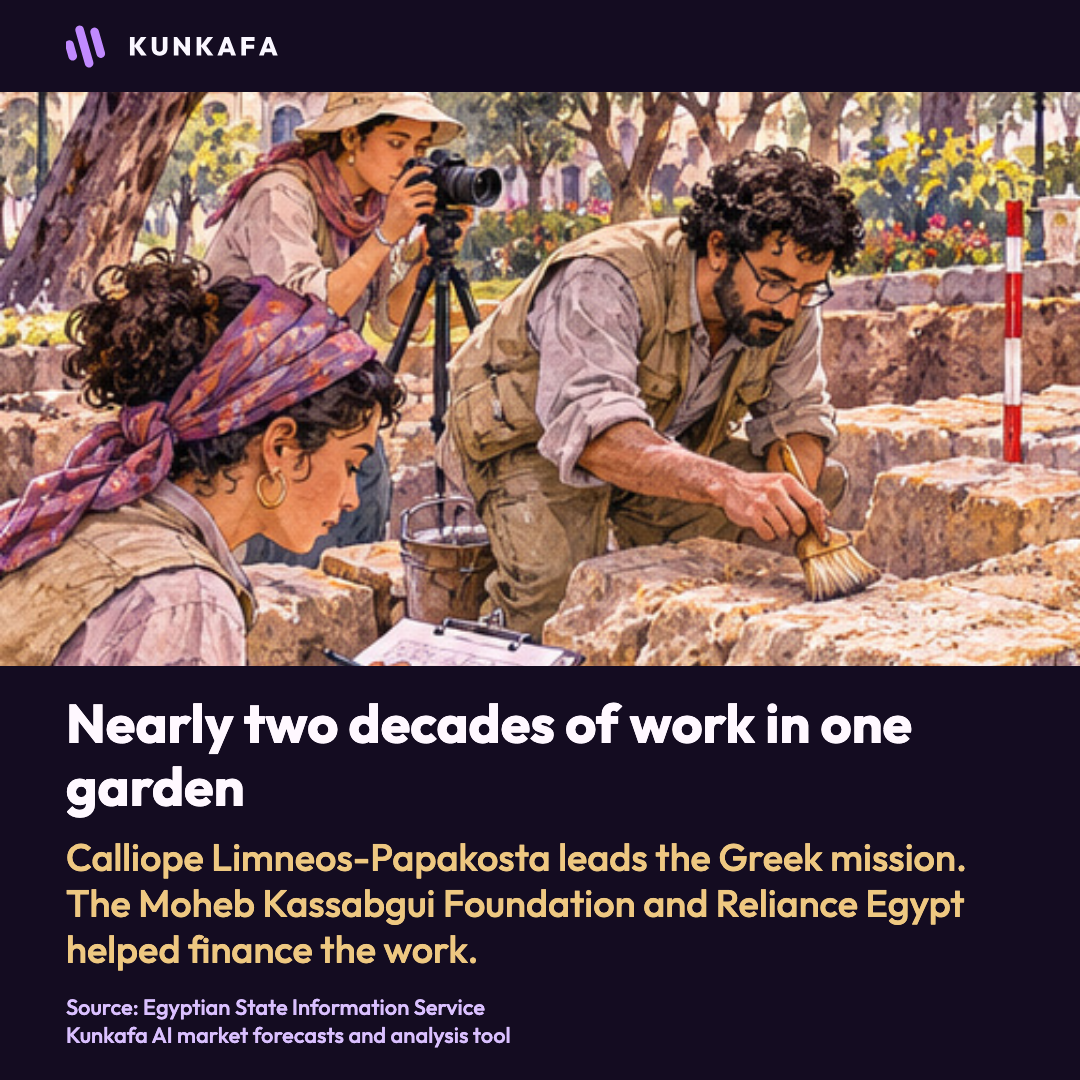
An illustrated archaeological team measures limestone foundations beneath an Alexandria garden.
An illustrated archaeological team measures limestone foundations beneath an Alexandria garden.Kunkafa AI market forecasts and analysis tool

Kunkafa News · Published · 3 min read

Kareem FaridBy Discuss with the author on X

Here is a visual story in summary
1 / 6
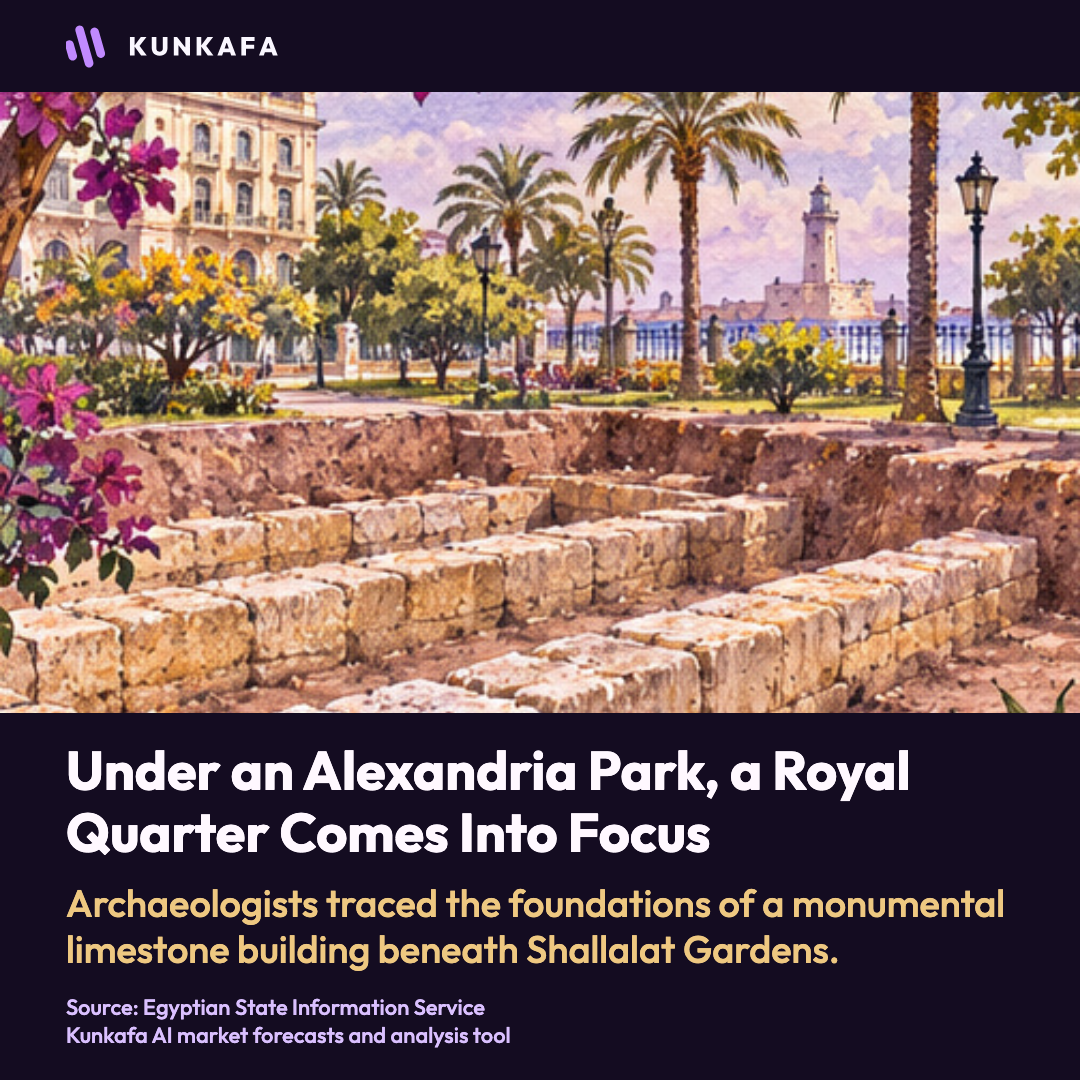
Under an Alexandria Park, a Royal Quarter Comes Into Focus Archaeologists traced the foundations of a monumental limestone building beneath Shallalat Gardens. Source: Egyptian State Information Service
Under an Alexandria Park, a Royal Quarter Comes Into Focus Archaeologists traced the foundations of a monumental limestone building beneath Shallalat Gardens. Source: Egyptian State Information ServiceKunkafa AI market forecasts and analysis tool
Nearly two decades of work in one garden Calliope Limneos-Papakosta leads the Greek mission. The Moheb Kassabgui Foundation and Reliance Egypt helped finance the work. Source: Egyptian State Information Service
Nearly two decades of work in one garden Calliope Limneos-Papakosta leads the Greek mission. The Moheb Kassabgui Foundation and Reliance Egypt helped finance the work. Source: Egyptian State Information ServiceKunkafa AI market forecasts and analysis tool
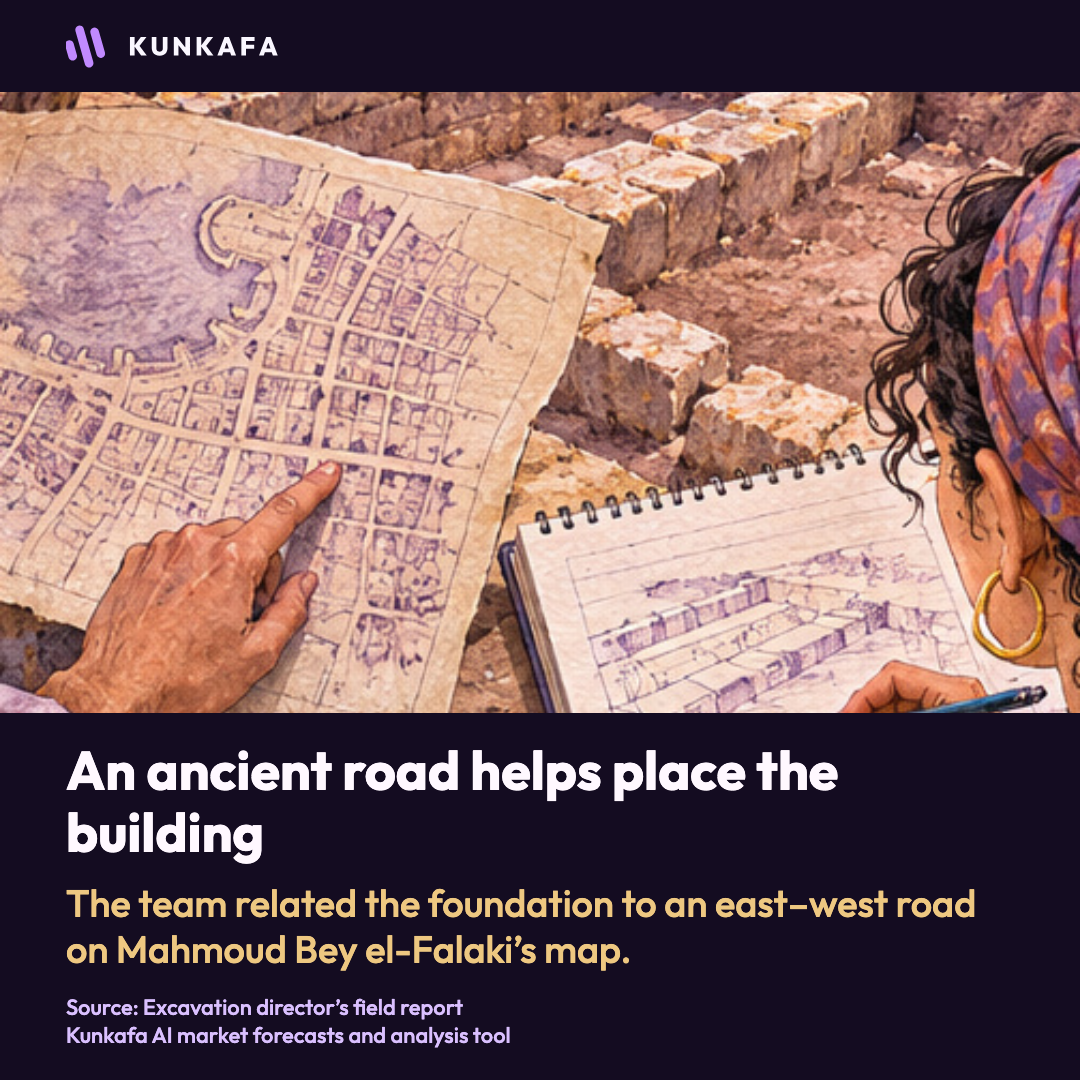
An ancient road helps place the building The team related the foundation to an east–west road on Mahmoud Bey el-Falaki’s map. Source: Excavation director’s field report
An ancient road helps place the building The team related the foundation to an east–west road on Mahmoud Bey el-Falaki’s map. Source: Excavation director’s field reportKunkafa AI market forecasts and analysis tool
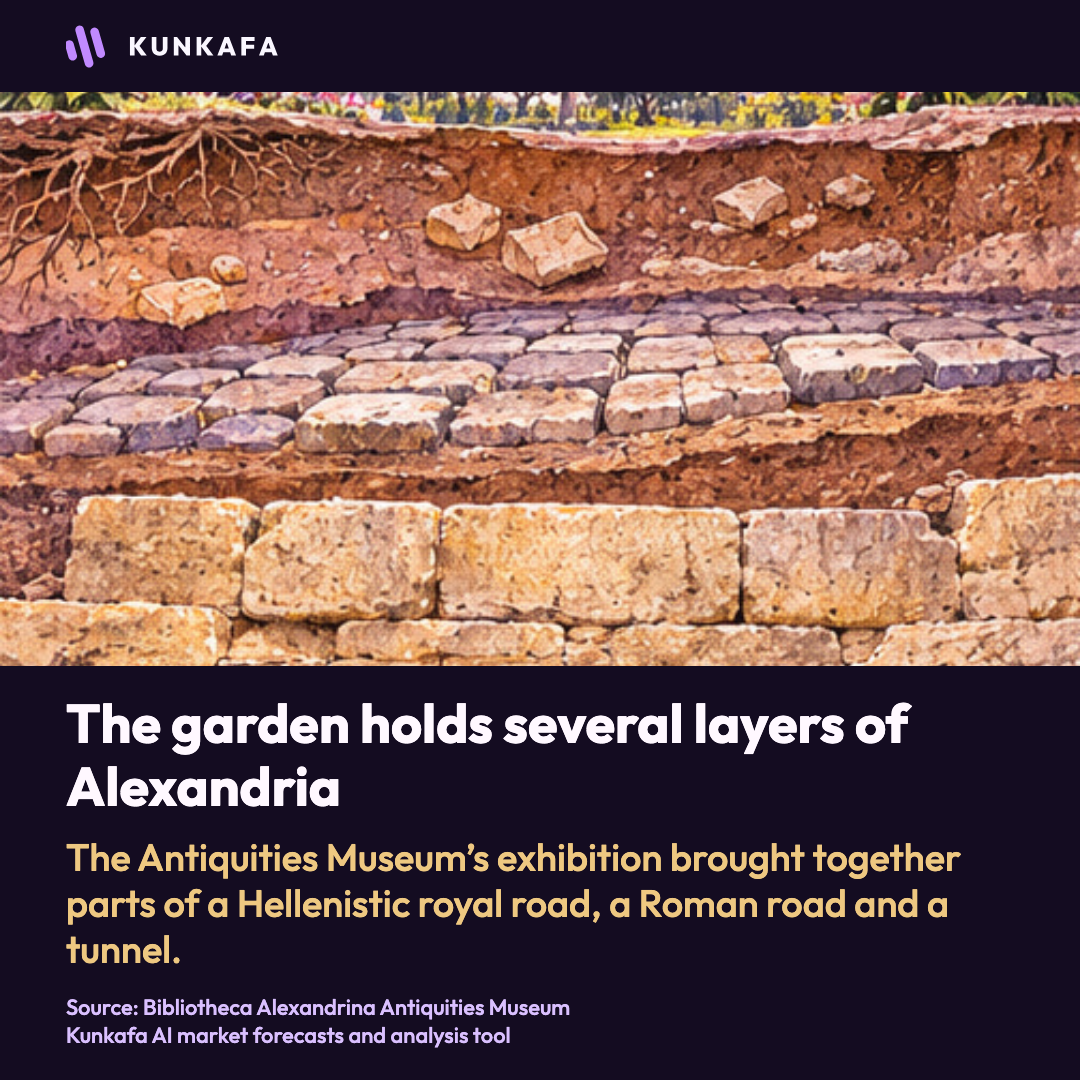
The garden holds several layers of Alexandria The Antiquities Museum’s exhibition brought together parts of a Hellenistic royal road, a Roman road and a tunnel. Source: Bibliotheca Alexandrina Antiquities Museum
The garden holds several layers of Alexandria The Antiquities Museum’s exhibition brought together parts of a Hellenistic royal road, a Roman road and a tunnel. Source: Bibliotheca Alexandrina Antiquities MuseumKunkafa AI market forecasts and analysis tool
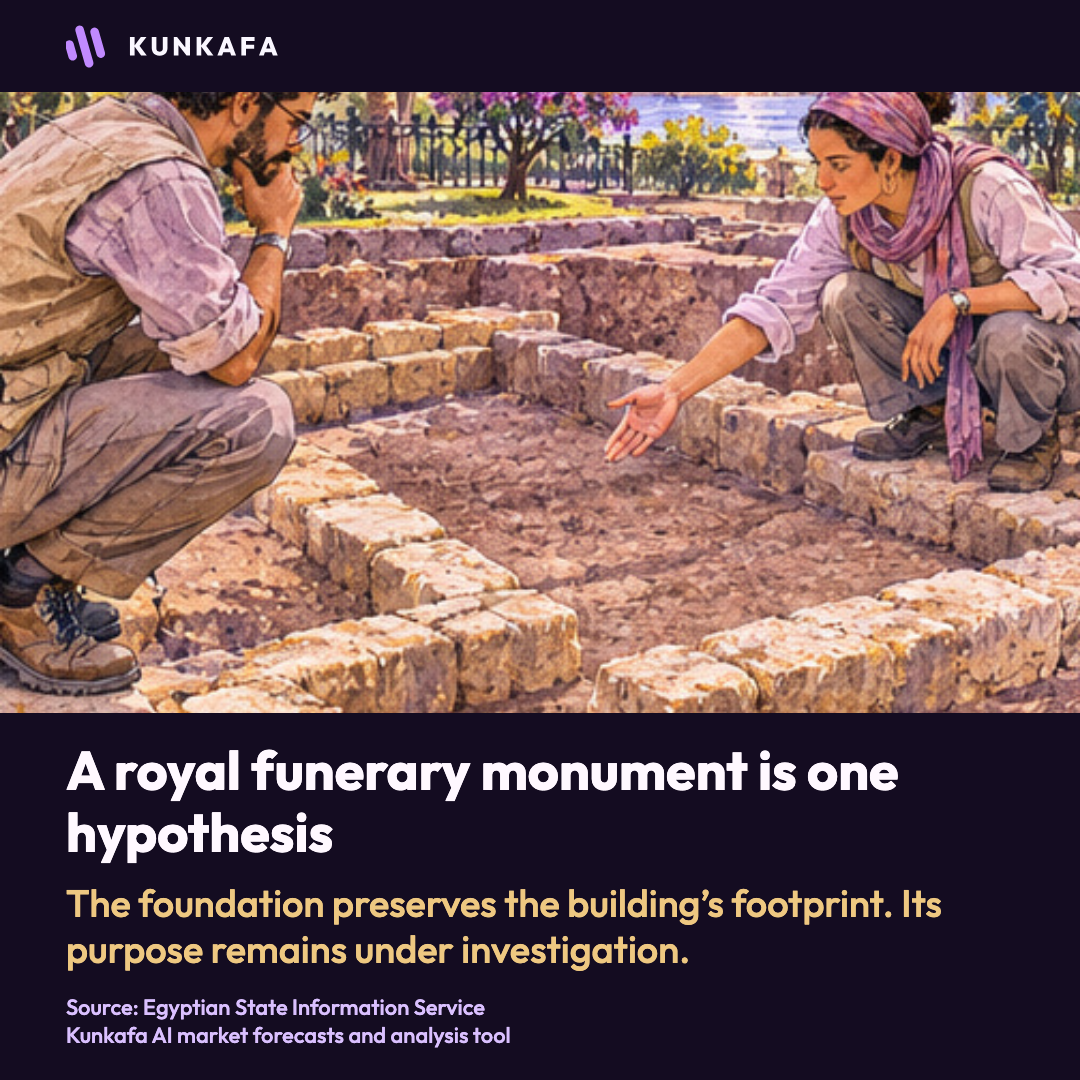
A royal funerary monument is one hypothesis The foundation preserves the building’s footprint. Its purpose remains under investigation. Source: Egyptian State Information Service
A royal funerary monument is one hypothesis The foundation preserves the building’s footprint. Its purpose remains under investigation. Source: Egyptian State Information ServiceKunkafa AI market forecasts and analysis tool
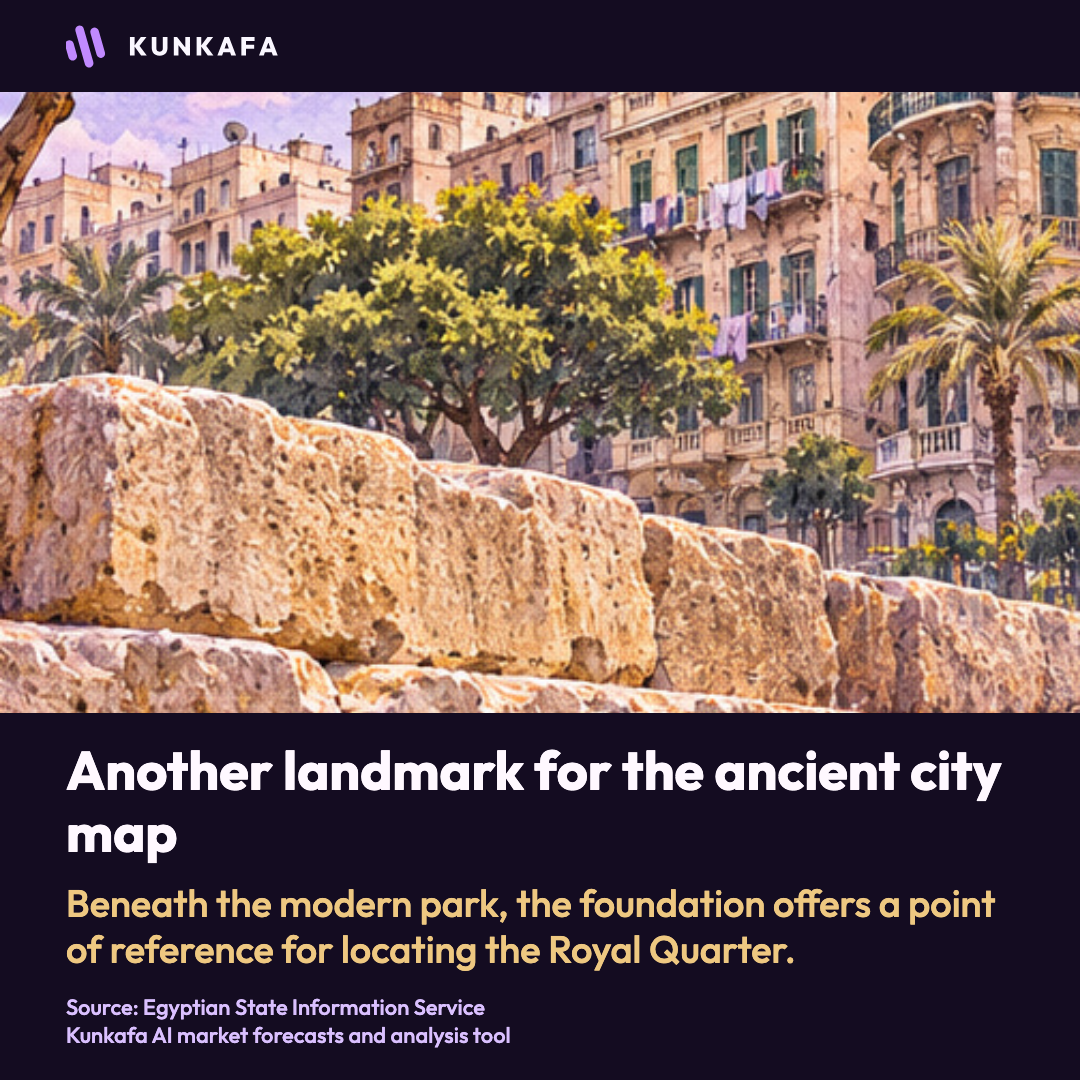
Another landmark for the ancient city map Beneath the modern park, the foundation offers a point of reference for locating the Royal Quarter. Source: Egyptian State Information Service
Another landmark for the ancient city map Beneath the modern park, the foundation offers a point of reference for locating the Royal Quarter. Source: Egyptian State Information ServiceKunkafa AI market forecasts and analysis tool

There is a second Alexandria beneath Shallalat Gardens. In its ancient Royal Quarter, archaeologists have traced the foundations of a monumental limestone building. Egypt’s antiquities ministry announced the find in November. [1]

Calliope Limneos-Papakosta leads the Greek mission that has excavated the gardens for nearly two decades. The Moheb Kassabgui Foundation and Reliance Egypt helped finance that work, according to the ministry. [1]

Working in a modern city gives an archaeologist few opportunities to follow a street from one end to the other. At Shallalat, the team could instead relate the building to an ancient east–west road recorded on Mahmoud Bey el-Falaki’s map, the excavation director wrote in an earlier field report. [3]

In April, the Bibliotheca Alexandrina’s Antiquities Museum brought twenty years of work together in an exhibition. Its account places part of the Hellenistic Royal Road, a Roman road and a subterranean tunnel within the site. Each helps locate a different layer of the city. [2]

A royal funerary monument is one explanation under investigation. A foundation can preserve the plan and scale of a building long after its rooms have disappeared. Identifying who used those rooms is a different question, and the ministry’s announcement leaves it open. [1]

In 2021, journalist Mete Sohtaoğlu drew attention to a different find on Egypt’s Mediterranean coast. The remains of a vessel and funerary complex at submerged Thonis-Heracleion illustrated how ports connected Egypt and Greek merchants.

Perspectives on excavating Egypt’s ancient cities

Mete Sohtaoğlu (@metesohtaoglu) · 2021-07-19 21:49 UTC · #Egypt- Divers have discovered rare remains of a military vessel in the ancient sunken city of Thônis-Heracleion – once Egypt’s largest port on the…
Mete Sohtaoğlu (@metesohtaoglu) · 2021-07-19 21:49 UTC · #Egypt- Divers have discovered rare remains of a military vessel in the ancient sunken city of Thônis-Heracleion – once Egypt’s largest port on the…Kunkafa AI market forecasts and analysis tool

Sources: [1] Egyptian State Information Service · [2] Bibliotheca Alexandrina Antiquities Museum · [3] Excavation director’s field report

Kunkafa forecasts

Euro - Dollar

How far it could move, which way, by when, and how confident Kunkafa is.

Check the latest forecasts

More in In Focus

From the Blog

All articles